Pesticide leftovers caused 69% of rice rejections in Europe, BIRC 2026 hears
Testing laboratories and exporters at the Delhi rice conference say the fix starts on the farm, with farm-to-port tracking for every sack.

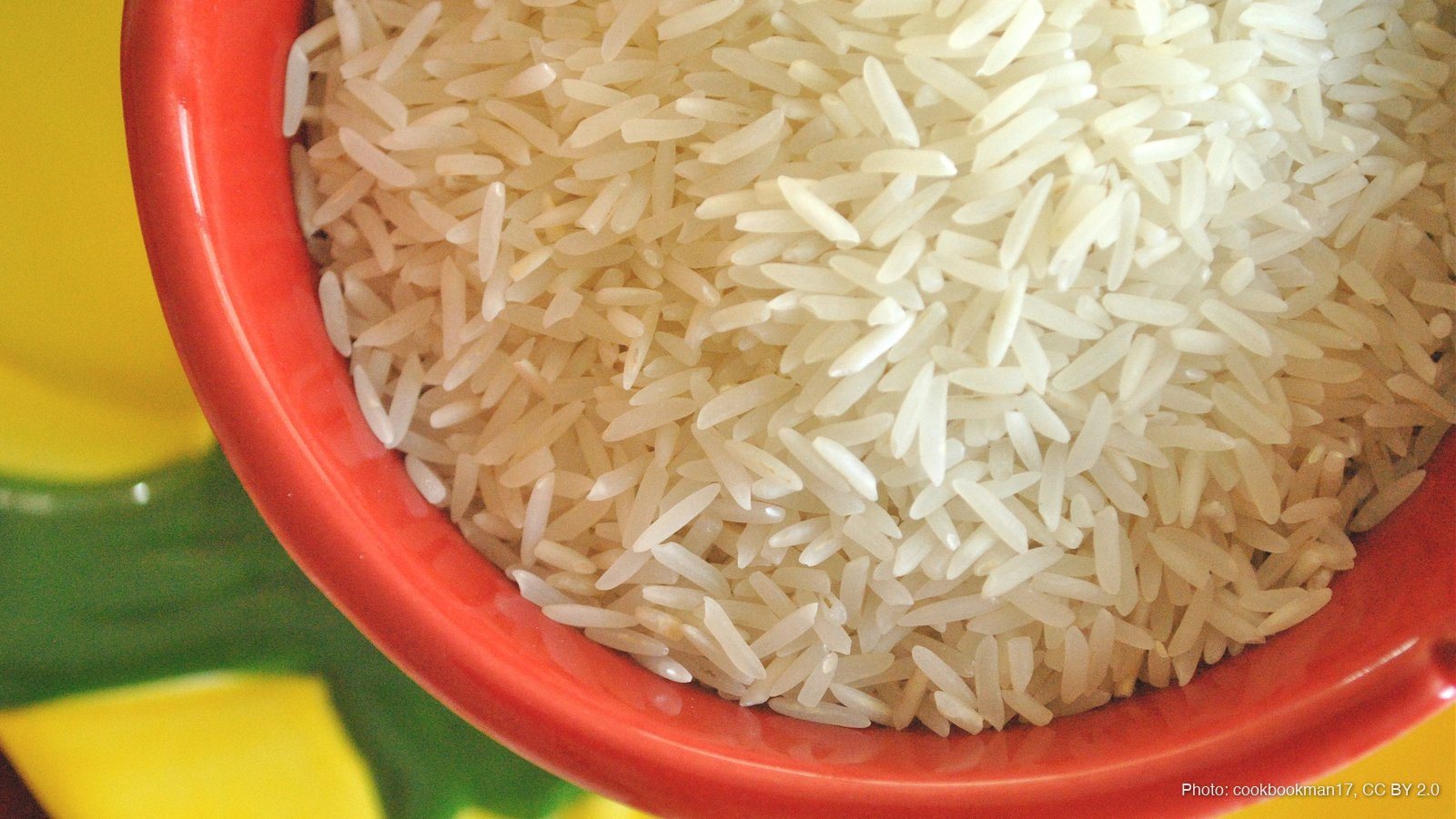
Picture a full container of Indian rice crossing the sea to Europe, only to be turned away at the door. Now picture the reason: tiny leftovers of farm sprays that nobody can see. At the Bharat International Rice Conference 2026 in New Delhi, reported on Saturday, 24 October 2026, an industry speaker shared a striking number. Pesticide residues caused 69% of rice shipment rejections in European markets over the last two financial years.
Testing laboratories and exporters at the same panel said the fix has to start on the farm, long before the rice reaches a port. Here is what that means, in plain words.
First, what is this conference?
The Bharat International Rice Conference, or BIRC, is a big rice trade meet. The Indian Rice Exporters' Federation (IREF) is organising it from 23 to 25 October 2026 at Bharat Mandapam in New Delhi, with foreign delegates from over 120 countries. Think of it as a giant mela where rice sellers meet rice buyers from all over the world. Besides the buyer meetings, the event also held a quieter panel on a costly problem.
India is a heavyweight here. On the opening day, Union Minister Chirag Paswan said India makes up nearly 40% of global rice trade. According to APEDA data cited by IREF, India exported 20.19 million tonnes of rice worth $12.47 billion in 2024-25.
What does "rejection" mean?
An export is when a seller in one country sends goods to a buyer in another. A rejection is when the buyer's country says "no, this cannot come in". The rice fails a check, so it is stopped at the border.
Imagine you order a box of samosas for a school party, and the teacher checks them at the gate. If the oil is wrong, the whole box goes back, even if each samosa looks fine. That is what happens to a rejected rice shipment, except the box is a whole container.
The European Union is known as a market where shipments that break its rules face automatic rejection at the border.
The numbers behind the problem
Mirza Alam, Vice-President of AHK Group, said an analysis of rice shipment rejections in European markets in the financial years 2024-25 and 2025-26 showed this split:
- Pesticide residues: 69% of rejections.
- Aflatoxins and other mycotoxins (toxins made by some moulds): 23%.
- Everything else together: the remaining 8%.
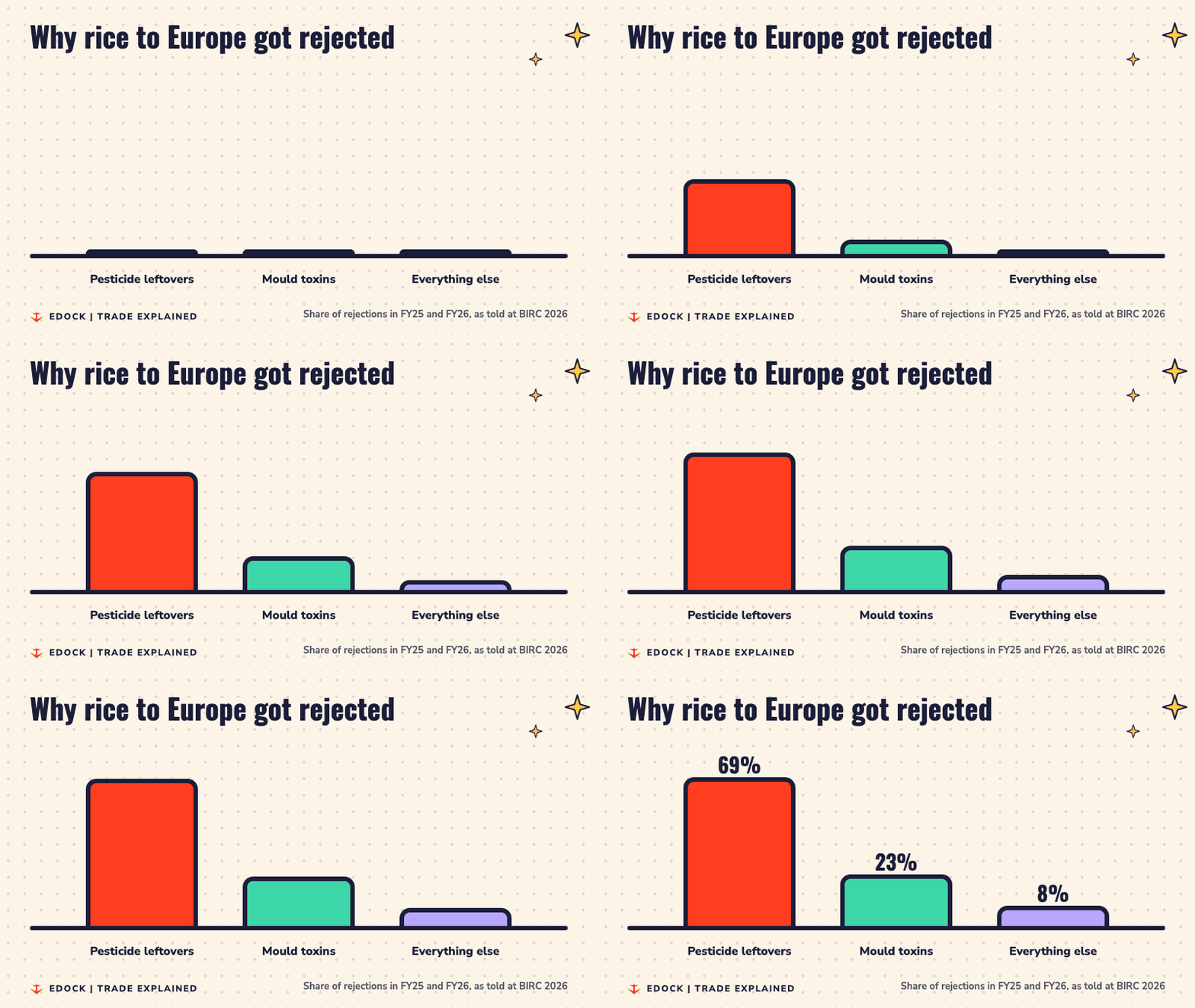
So the big villain is not dirt or bad packing. It is chemical traces from farm sprays.
What is a "residue limit"?
Farmers spray pesticides to protect crops from insects and disease. A tiny trace of that spray can stay on the grain. That trace is called a residue.
The European Commission explains that a maximum residue level, or MRL, is the highest level of a pesticide residue that is legally allowed in or on food when pesticides are used correctly. The Commission sets these limits for all food and animal feed.
Think of it like a speed limit for chemicals. Each pesticide has its own limit, and the rice must stay under every one of them. Go even a little over, and the shipment can be stopped.
Europe also runs an alert system called RASFF, which lets food safety officials in member countries quickly share warnings about risky food. It even has a public search page that shows recent alerts.
Why the fix starts on the farm
The speakers agreed that testing rice just before shipping is not enough. Poorvi Shah, Head of Food Testing Services at SGS India, said: "Industry must move from a model of testing and reacting to one of anticipating and preventing."

Dr Pankaj Jaiminy, Managing Director of Eurofins Analytical Services India, said the answer lies with farmers, along with faster testing and better crop varieties. He said: "Unless we really provide solutions to farmers on how to mitigate that risk, the rejections will not come down." He suggested mobile testing laboratories near agricultural mandis, so good paddy can be spotted before it is bought.
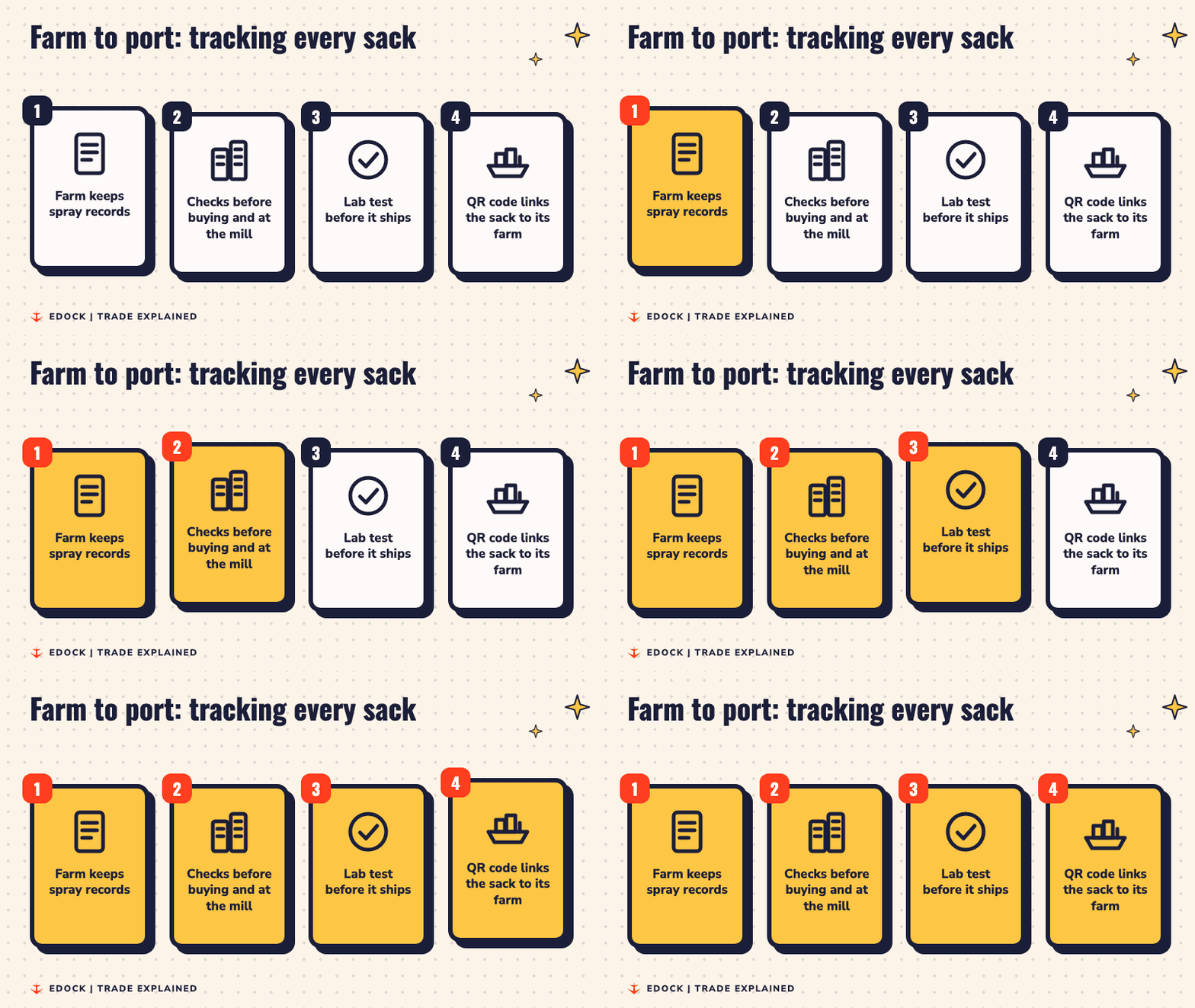
Avinash Maheshwari, CEO of GEO-CHEM LAB, said checks should start before paddy is bought and carry on through milling, sampling and shipping.
Traceability: a tracking number for every sack
Traceability means being able to follow a product back to where it came from. It is like the tracking number on an online order. You can see every stop it made, from the warehouse to your door.
Anand Sharma, Senior Manager at EAS, called for a farm-to-port traceability system. He made a fair point: "A residue finding alone does not prove pesticide misuse." The real cause, he said, must be found with documents and investigation. He said exporters need to link spray records, crop histories, supplier details and lab results.
Sandeep Patankar, National Head of Sales and Marketing at SGS India, pointed to QR codes as a way to track shipments and find the source of a quality failure.
Why this matters to exporters' pockets
A rejection is costly. The speakers warned that failures can hurt both exporters' profits and India's reputation.
Testing itself also costs money. Isha Garg, Director of VI Exports, said repeated testing and certification is a financial burden. When two laboratories give different results, shipments can get delayed, cutting into margins that are already narrow. A margin is the money left after costs, like the few rupees a chai stall keeps from each cup after paying for milk, tea and sugar.
This is not a sudden worry. Back in September, IREF had said it would take up compliance risk at BIRC 2026, from farm-level pesticide use to export paperwork.
Watch: inside BIRC 2026
A Hindi explainer on European alerts about Indian rice:
The big picture
India already sells huge amounts of rice to the world. The message from BIRC 2026 is that selling more is not enough; each sack also has to pass the buyer's checks. Minister Paswan put a similar idea another way on the opening day: India has the volume, and now needs to talk about value, including traceability.
For young Indians, this is a reminder that farming, chemistry, lab work and software all meet in one grain of rice. Cleaner farming, quicker testing and smart tracking could decide how far Indian rice travels next.
Sources
- BusinessLine: Farm-level pesticide control, traceability key to reducing rice export rejections
- BusinessLine: India must shift from rice production to value addition, says Chirag Paswan
- Embassy of India, Bogota: Bharat International Rice Conference 2026
- Global Agriculture: India's rice exporters flag pesticide residue compliance gaps
- European Commission: Maximum residue levels
- European Commission: Rapid Alert System for Food and Feed
- Cover photo: Basmati Rice India, raw, by cookbookman17, CC BY 2.0

You may republish this story under CC BY 4.0: credit Arshdeep Singh and link to this page.