PepsiCo India wants 90 to 100% of its drinks to be zero-sugar or mid-calorie
More than 70% of its drinks list is already there. Here is what zero-sugar and mid-calorie mean, and why drink makers are changing recipes.

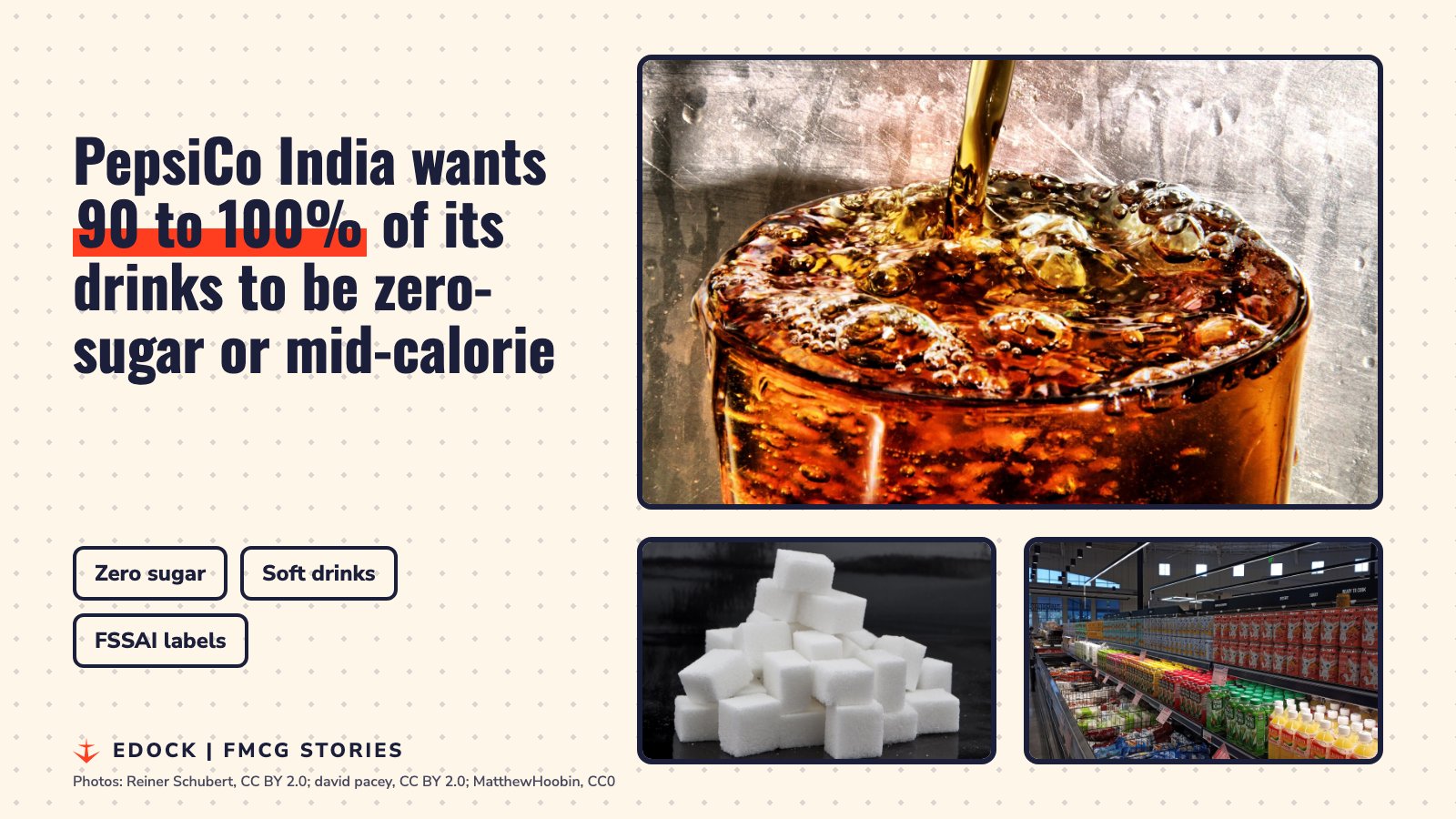
Picture the fridge at your local kirana store. A few years ago, almost every cold drink in it was full of sugar. Now look again. Pepsi Black, 7UP Zero Sugar and Gatorade Zero sit right next to the regular bottles. And one of the biggest drink makers in India wants that change to go all the way.
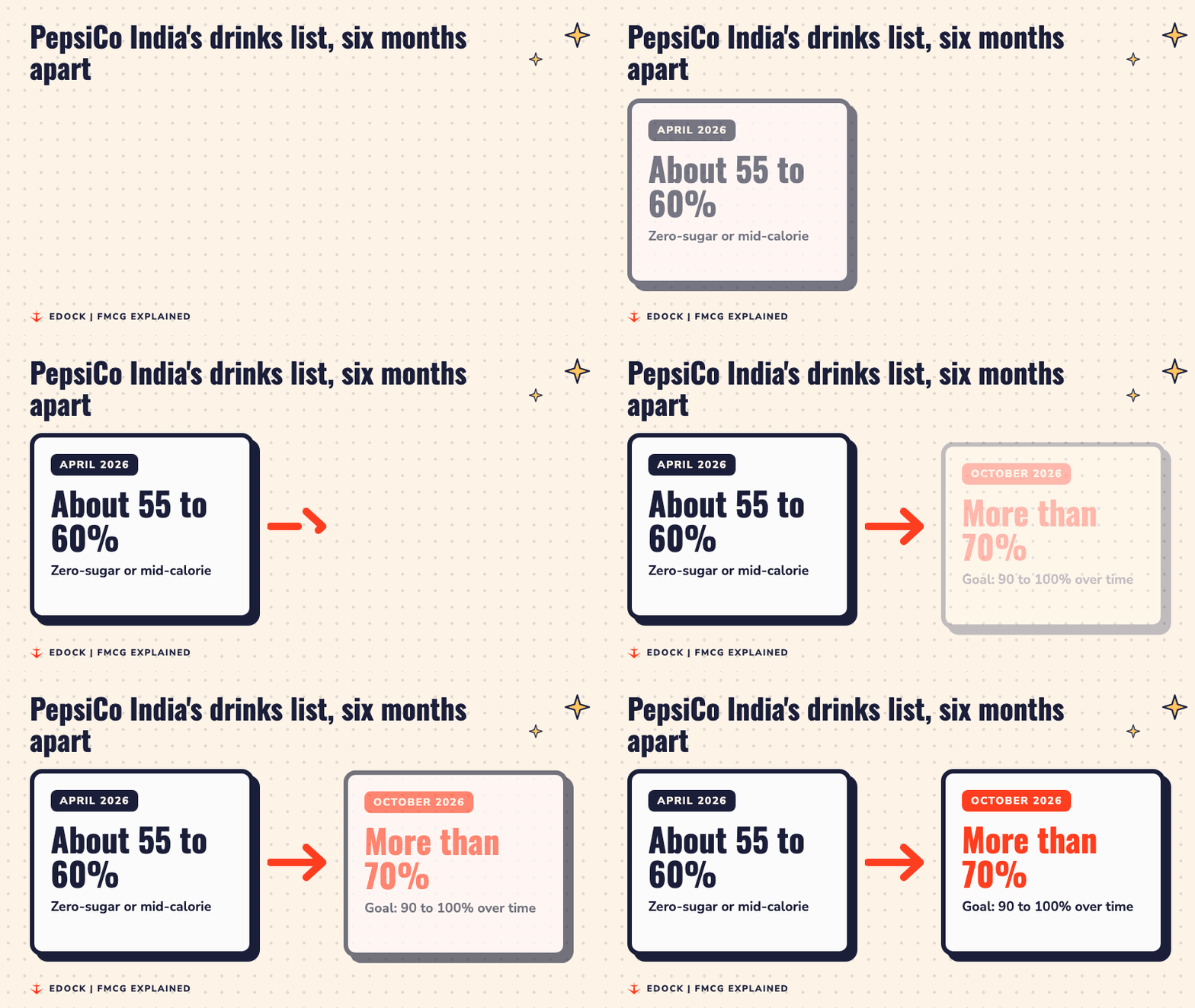
On 17 October 2026, Mint reported that PepsiCo India wants 90 to 100% of its drinks portfolio to be zero-sugar or mid-calorie over time. Today, more than 70% already is. The company has not given a deadline.
So what do these words mean, why is a giant company changing its recipes, and how big is this business? Let us go step by step.
First, what is a "portfolio"?
A portfolio is simply the full list of products a company sells. Think of a samosa stall that sells plain samosas, paneer samosas and jalebis. Those three items together are its portfolio.
For PepsiCo India, the drinks portfolio includes colas, lemon drinks, sports drinks, juices, soda and water. When the company says "more than 70%", it means more than seven out of every ten parts of that drinks list now fall in the zero-sugar or mid-calorie group.
Zero-sugar and mid-calorie, in plain words
Zero-sugar is easy. The drink has no added sugar. It still tastes sweet because companies use other sweeteners that give sweetness without the sugar.
Mid-calorie sits in the middle. A calorie is a unit of energy in food, like a unit of charge in a phone battery. A mid-calorie drink has fewer calories than the full-sugar version, but more than zero. The India announcement does not give an exact number for this group.
PepsiCo does use a yardstick for its drinks around the world. In 2025, 68% of its global beverage volume had no more than 100 calories from added sugar in each 12-ounce serving (a 12-ounce serving is about one regular can). That beat the target the company had set for 2025.
Which drinks are already in the low group in India? Storyboard18 lists Pepsi Black, 7UP Zero Sugar, Gatorade Zero and Nimbooz.
How fast is the change happening?
Quite fast. In April 2026, PepsiCo India and South Asia CEO Jagrut Kotecha had said zero-sugar or mid-calorie drinks made up about 55 to 60% of the drinks portfolio. Six months later, the figure is more than 70%.
Its bottling partner shows the same trend. A bottler is the company that mixes, fills and sells the drinks in a region. Think of it as the franchise owner who runs the kitchen for a famous brand. PepsiCo's big bottler in India is Varun Beverages. It said no-sugar and mid-sugar drinks made up 59% of volumes in October to December 2025, up from 53% a year earlier.
How will the rest get there? PepsiCo India says it is using two tools. One is reformulation, which means changing the recipe of an existing drink, like a cook who quietly uses less sugar in the same chai. The other is launching new low-sugar and no-sugar versions, while trying to keep the taste people know.
Reason one: what buyers want is changing
PepsiCo says growing interest in wellness is the big driver. Yashika Singh, its chief corporate affairs officer for India and South Asia, said the company is expanding options for consumers who are "increasingly mindful of their choices".
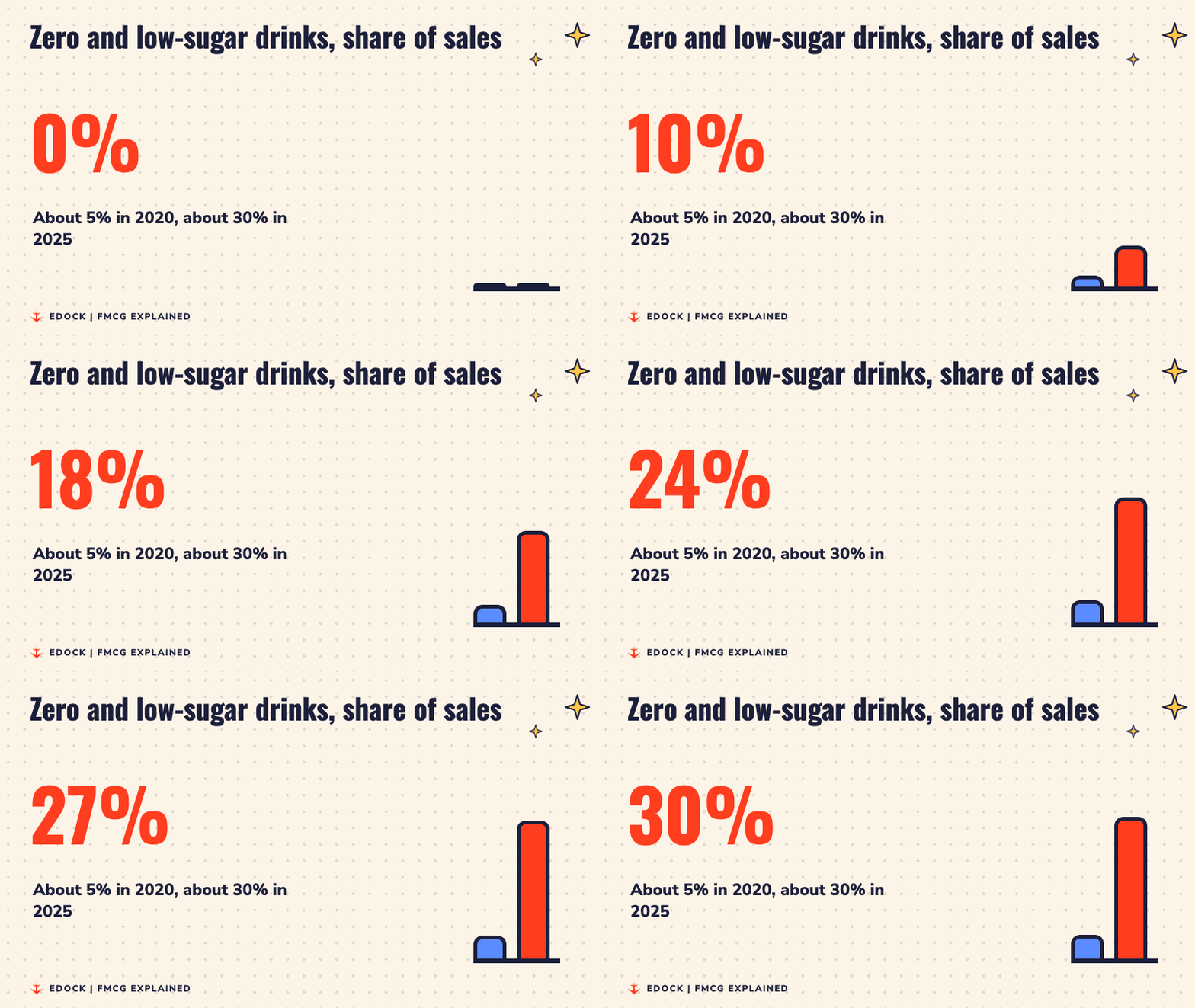
Its own words on choice are echoed in a company statement about "changing consumer needs". The numbers across the market back this up. Industry executives told The Economic Times that zero and low-sugar drinks were about 30% of overall sales in 2025, up from about 5% in 2020, as reported by Moneycontrol. They pointed to Gen Z preferences, more awareness and prices that are easy on the pocket.
The rival is moving too. Coca-Cola's zero-sugar range, including Diet Coke, Coke Zero and Sprite Zero, was a record 30% of its total volume in 2025. Diet Coke volumes doubled in a year.
Reason two: the rules are getting tighter
India's food regulator is the Food Safety and Standards Authority of India, or FSSAI. Think of it as the umpire for packaged food. In August, it said it had sent 150 notices to food companies, including Nestle India, PepsiCo and Coca-Cola India, over alleged misleading ads, false claims and labelling problems.
FSSAI has also proposed a new warning label. It is a red hexagon on the front of the pack for foods high in added sugar, saturated fat or salt. The Supreme Court has been pushing the regulator for a clearer timeline.
In September, FSSAI told the court it now wants a single-phase rollout. A product high in even one of the three would get the warning. The regulator asked for four months to finish the rules, and companies would then get 365 days to switch their packs. These labels are still a proposal, not law yet.
For a drink maker, the business logic is simple. A bottle with a big red warning on the front may be harder to sell. A recipe with less sugar may never need one.
How big is this market?
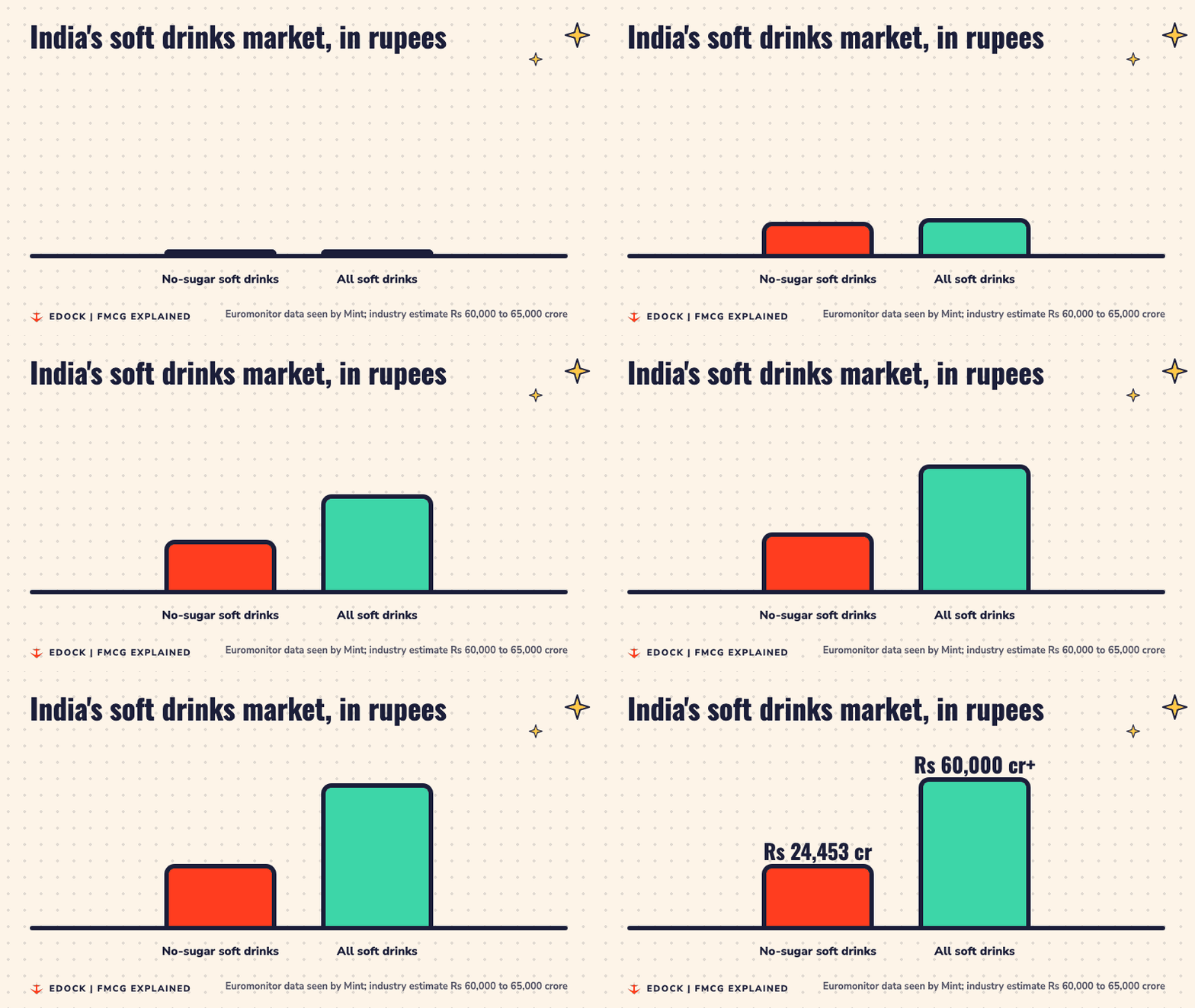
Big, and growing. Data from Euromonitor International, seen by Mint, put India's no-sugar soft drinks market at about Rs 24,453 crore in 2025. That is almost 2.4 times its size in 2021. The whole Indian soft drinks industry is estimated at Rs 60,000 to 65,000 crore.
So no-sugar drinks are already a big slice of the cake. Put next to the industry estimate, Rs 24,453 crore works out to roughly 38 to 41% of it, though the two numbers come from different estimates.
For scale, PepsiCo India earned total revenue of Rs 9,789 crore in the 12 months to December 2025, with a profit after tax of Rs 905 crore. That revenue covers both its drinks and its snacks.
It is not only about drinks
The same push is reaching snacks. PepsiCo India says its whole snacks range, including Lay's, Kurkure, Doritos, Cheetos, Uncle Chipps, Quaker and Red Rock Deli, is made without artificial flavours or colours. It has added Kurkure Jowar Puffs, made with millet, and baked Red Rock Deli chips with 40% less fat.
What should you watch next?
Three things. First, whether PepsiCo India puts a date on its 90 to 100% goal. Second, the final FSSAI label rules and when they start. Third, whether people keep picking the zero-sugar bottle when the regular one sits right beside it in the fridge.
Going from more than 70% to 90% means about 20 more percentage points of the drinks list must change. In cricket terms, the team has crossed the halfway mark of the chase. The last overs are often the hardest.
Sources
- PepsiCo India wants 90 to 100% of its drinks portfolio to be zero-sugar or mid-calorie, Mint
- PepsiCo India aims to increase zero-sugar and mid-calorie beverages to 90 to 100% over time, Storyboard18
- PepsiCo India takes zero-sugar push past 70% of beverages, BestMediaInfo
- PepsiCo India focuses on nutrition as consumer preferences change, ET BrandEquity
- Zero and low-sugar drinks hit 5-year high in 2025, grab 30% market share, Moneycontrol
- Zero sugar is no longer a differentiator for soft drinks, Mint
- Red hexagon on your snack pack: what FSSAI's new proposed warning label means, The Hindu
- FSSAI proposes single-phase front-of-pack nutrition labelling, Storyboard18
- PepsiCo India to invest Rs 5,700 crore by 2030 on capacity expansion, BusinessLine
- Cover photos: Serving ice cold cola, by Reiner Schubert, CC BY 2.0; Sugar Cubes, by david pacey, CC BY 2.0; Beverages and frozen foods in Lotte Plaza Market, by MatthewHoobin, CC0


You may republish this story under CC BY 4.0: credit Pranav Sharma and link to this page.