Paradeep Phosphates signs Rs 4,750 crore MoU for new fertiliser units in Odisha
The fertiliser maker plans a new chemical plant and a bio-fertiliser factory in Odisha. Here is what an MoU is and why phosphate fertiliser matters for India.

Every chapati you eat starts with a seed in the soil. And that seed needs food too. One big maker of that crop food has just promised to put Rs 4,750 crore into new factories in Odisha.
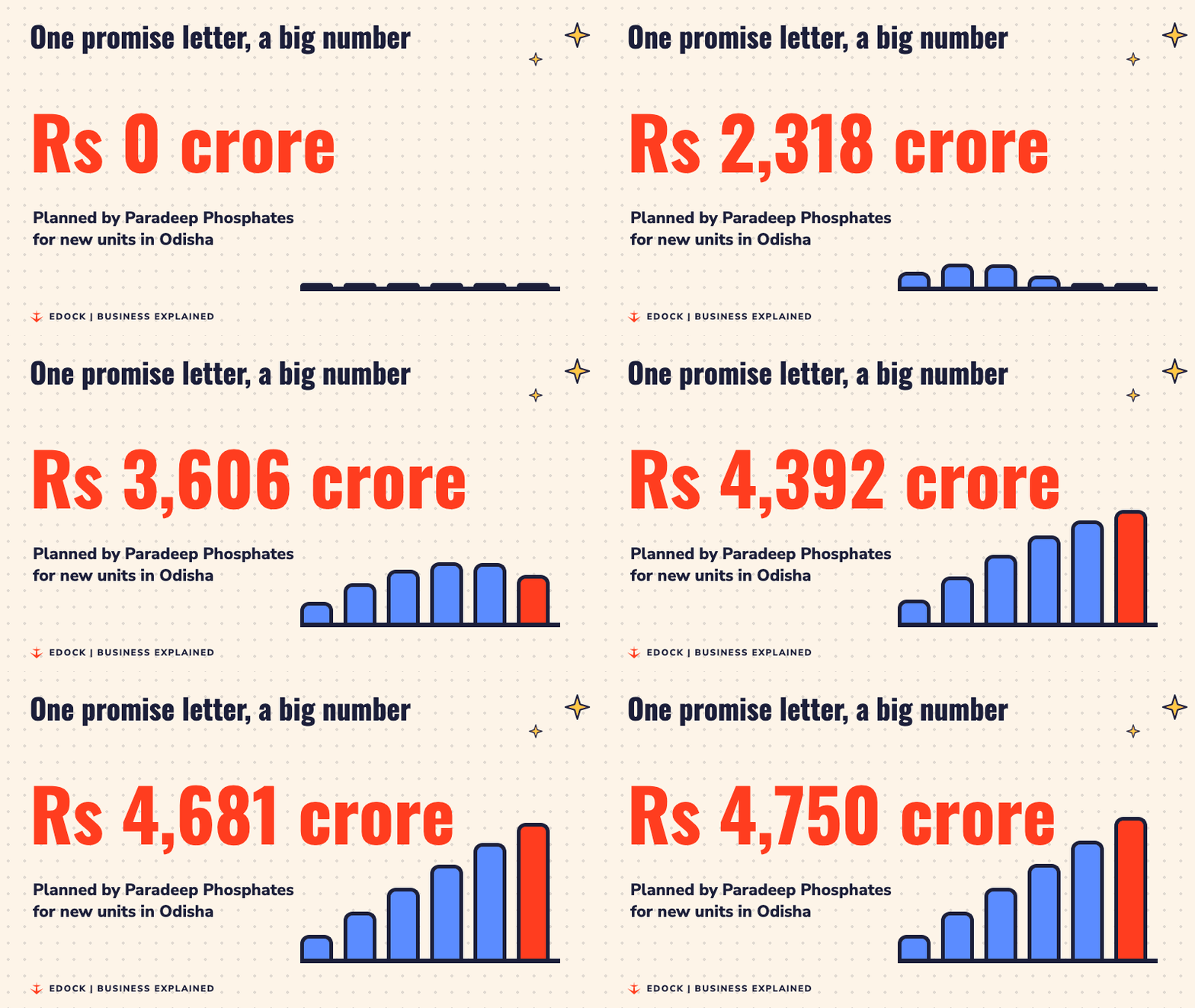
On Friday, 23 October 2026, Paradeep Phosphates signed an agreement with the Odisha government to invest Rs 4,750 crore in a new chemical and fertiliser plant in the state. The deal was signed in Mumbai, at an event called India Chem 2026, with Odisha Chief Minister Mohan Charan Majhi in the room.
Here is who the company is, what it plans to build, and why a sack of fertiliser matters more than it looks.
Who is Paradeep Phosphates?
Paradeep Phosphates, or PPL, makes fertiliser. Fertiliser is food for crops. Think of it like the vitamins and protein a cricketer needs to play well. Plants need nitrogen, phosphorus and potassium in the same way.
The company has been around for more than four decades. It can make 3.7 million tonnes of fertiliser a year in three factories: Paradeep in Odisha, Zuari Nagar in Goa and Mangaluru in Karnataka. Its products are sold under the Jai Kisaan Navratna name. The company says it reaches more than 12 million farmers across 18 states.
It is not a small shop either. In the year to March 2026, PPL's revenue, which is all the money that came in from sales, was Rs 21,826 crore, up 29%. Its net profit, the money left after paying every bill, rose 52% to Rs 1,000 crore.
What exactly did it sign?
It signed an MoU, short for Memorandum of Understanding. An MoU is like a promise letter. Say you and a friend agree to start a samosa stall next summer, and you write it down. It shows you are serious. But no stall exists yet, and no samosa has been fried.
So this is a plan, not a finished plant. The news report says the money will go into a new chemical plant and a bio-fertiliser factory, along with steps to help farms grow more. Bio-fertiliser uses tiny helpful living things, like certain bacteria, to feed the soil instead of only chemicals.
The agreement was signed by Hemant Kumar Sharma, a top officer of Odisha's industries department, and N Suresh Krishnan, the managing director and CEO of Paradeep Phosphates. The plan is to build the facilities over the coming years.
The company says the project will create direct and indirect work across the value chain. Direct work means people hired at the plant. Indirect work means truck drivers, canteen owners and suppliers who earn because the plant exists. According to the Odisha government's numbers, this MoU is expected to give work to 1,000 people.
What is India Chem 2026?
India Chem is a big meeting where chemical companies, ministers and states come together to talk business. Its 14th edition was opened in Mumbai by Union Minister J.P. Nadda. The chief ministers of Maharashtra, Madhya Pradesh and Odisha spoke there and invited companies to invest in their states.
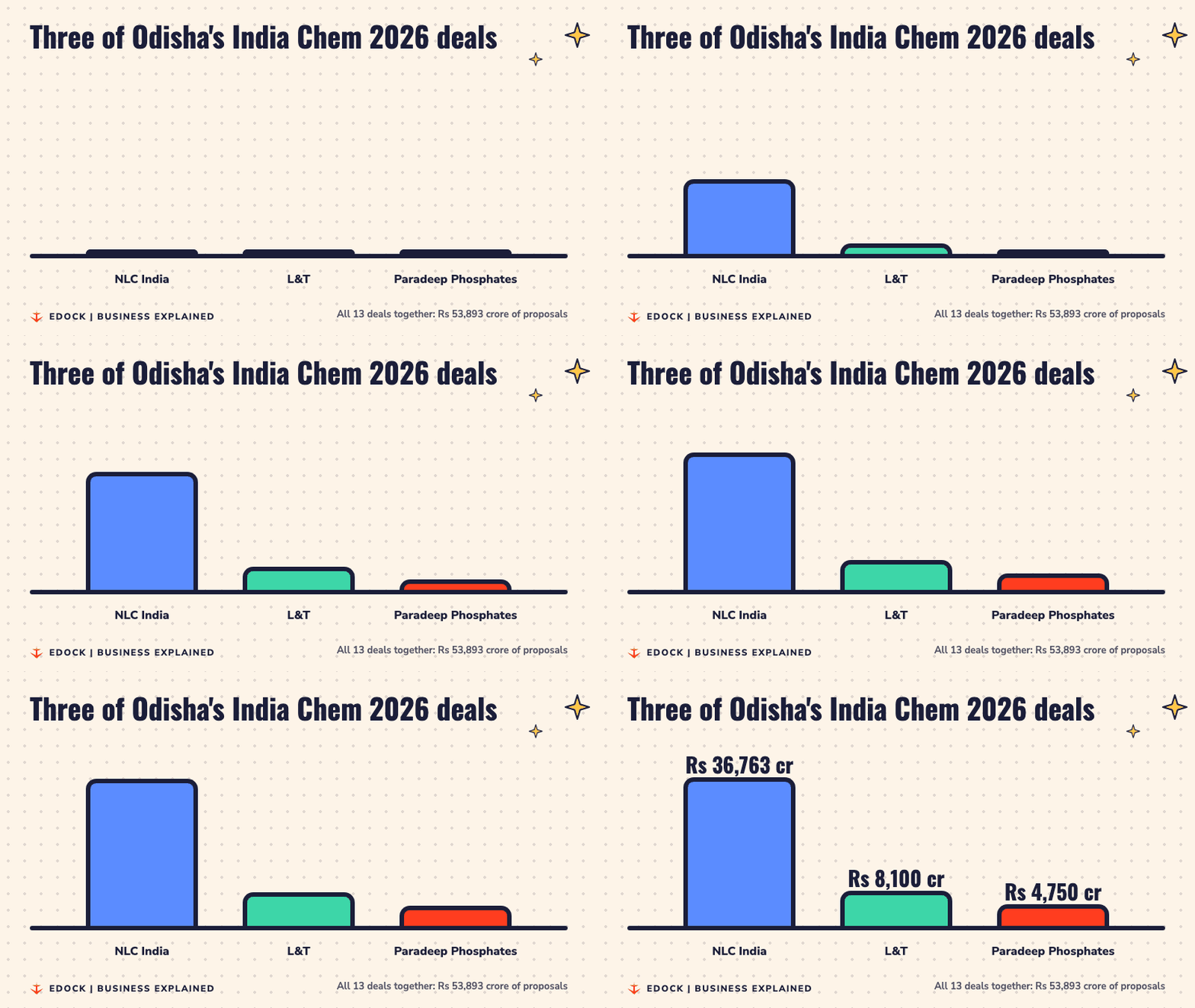
Odisha came back with a full bag. Over the two days, the state signed nine MoUs and received four more statements of interest. Together they add up to Rs 53,893.51 crore of proposed investment, which the chief minister said could create 20,210 openings for workers.
The biggest deals came from NLC India: one MoU for power worth Rs 34,763.51 crore and one for chemicals worth Rs 2,000 crore. Together that is Rs 36,763.51 crore. L&T signed for Rs 8,100 crore. Paradeep Phosphates' Rs 4,750 crore was another of the nine MoUs.
Majhi said the state wants to move its economy, which has mostly been built on metals, towards chemicals too. The idea is to have more factories that turn raw things into more useful products. He also said the state has held talks with the Centre and the industry body FICCI to host India Chem 2027 in Odisha.
Why does phosphate fertiliser matter so much?
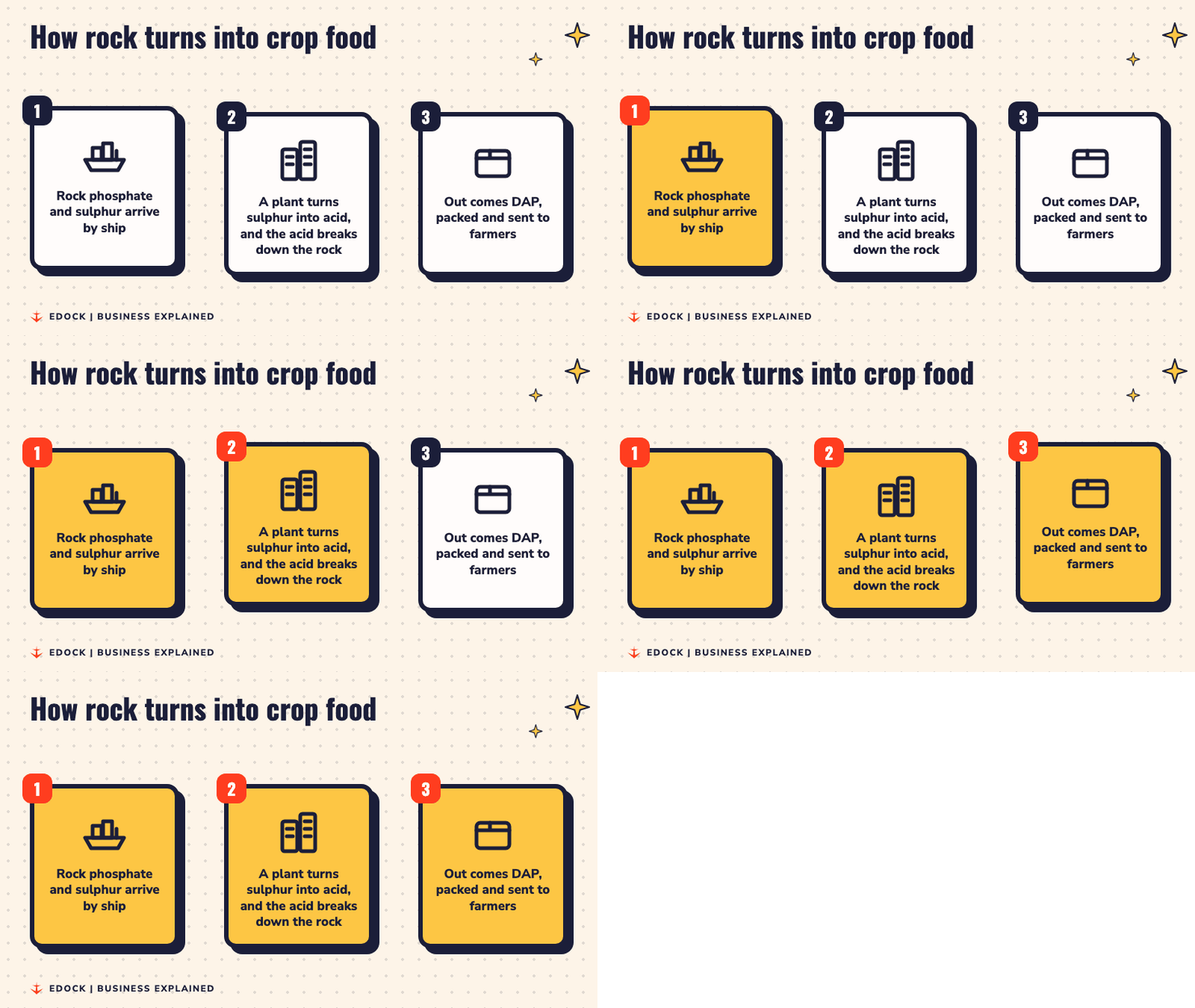
One of the main phosphate fertilisers is DAP, or di-ammonium phosphate. Making it is a bit like cooking. The main ingredient is rock phosphate, a rock dug out of mines. But plants cannot eat rock.
So the rock must first be broken down with sulphuric acid. As The Indian Express explains, sulphur is turned into sulphuric acid, and that acid reacts with the rock to make phosphoric acid. Phosphoric acid is then used to make DAP and other fertilisers.
Here is the catch. India can make only about 2.2 million tonnes of phosphoric acid a year. That is around half of the 4.3 to 4.5 million tonnes the country needs. The rest has to come from abroad. Big makers like Iffco, Coromandel and Paradeep Phosphates get their rock phosphate through tie-ups in Jordan, Senegal and Morocco.
Buying from abroad can be risky. The same report says the landed price of imported sulphur has doubled since the start of 2026 to about $1,050 to $1,100 a tonne, because of wars that hit oil and gas plants. When one ingredient gets costly, the whole recipe gets costly.
What could this mean for India?
More fertiliser making at home means India leans a little less on other countries. PPL itself is already growing. It is doubling its phosphoric acid capacity from 0.5 to 1 million tonnes a year, with the first phase expected in FY27.
For Odisha, the plan fits a bigger dream: to be a home for chemical factories, not just metals. For young people in the state, that could mean new kinds of work close to home, if the plants are built.
That "if" matters. An MoU is a first step. The company still has to plan the factory, get approvals, buy machines and hire people. A promise letter by itself does not build anything. So the number to watch is not the Rs 4,750 crore on paper. It is the day the first bag of fertiliser rolls out of the new unit.
The quick recap
- Paradeep Phosphates signed an MoU with Odisha on 23 October 2026 to invest Rs 4,750 crore.
- The money is meant for a new chemical plant and a bio-fertiliser factory.
- Odisha got Rs 53,893.51 crore of proposals in total at India Chem 2026.
- India makes only about half of the phosphoric acid it needs for phosphate fertiliser.
Sources
- The Times of India: Paradeep Phosphates to invest Rs 4,750 crore in Odisha
- The New Indian Express: PPL to invest Rs 4,750 crore in chemical, fertiliser units
- Indian Chemical News: Paradeep Phosphates plans Rs 4,750 crore investment in Odisha
- The New Indian Express: Odisha bags nearly Rs 54,000 crore investment proposals at India Chem 2026
- PIB: J.P. Nadda inaugurates 14th India Chem 2026 in Mumbai
- Paradeep Phosphates: About us
- AgroSpectrum India: Paradeep Phosphates FY26 performance
- The Indian Express: India has a new fertiliser problem, sulphur
- OTV News English: Odisha bags Rs 53,893 crore investment proposals at India Chem 2026
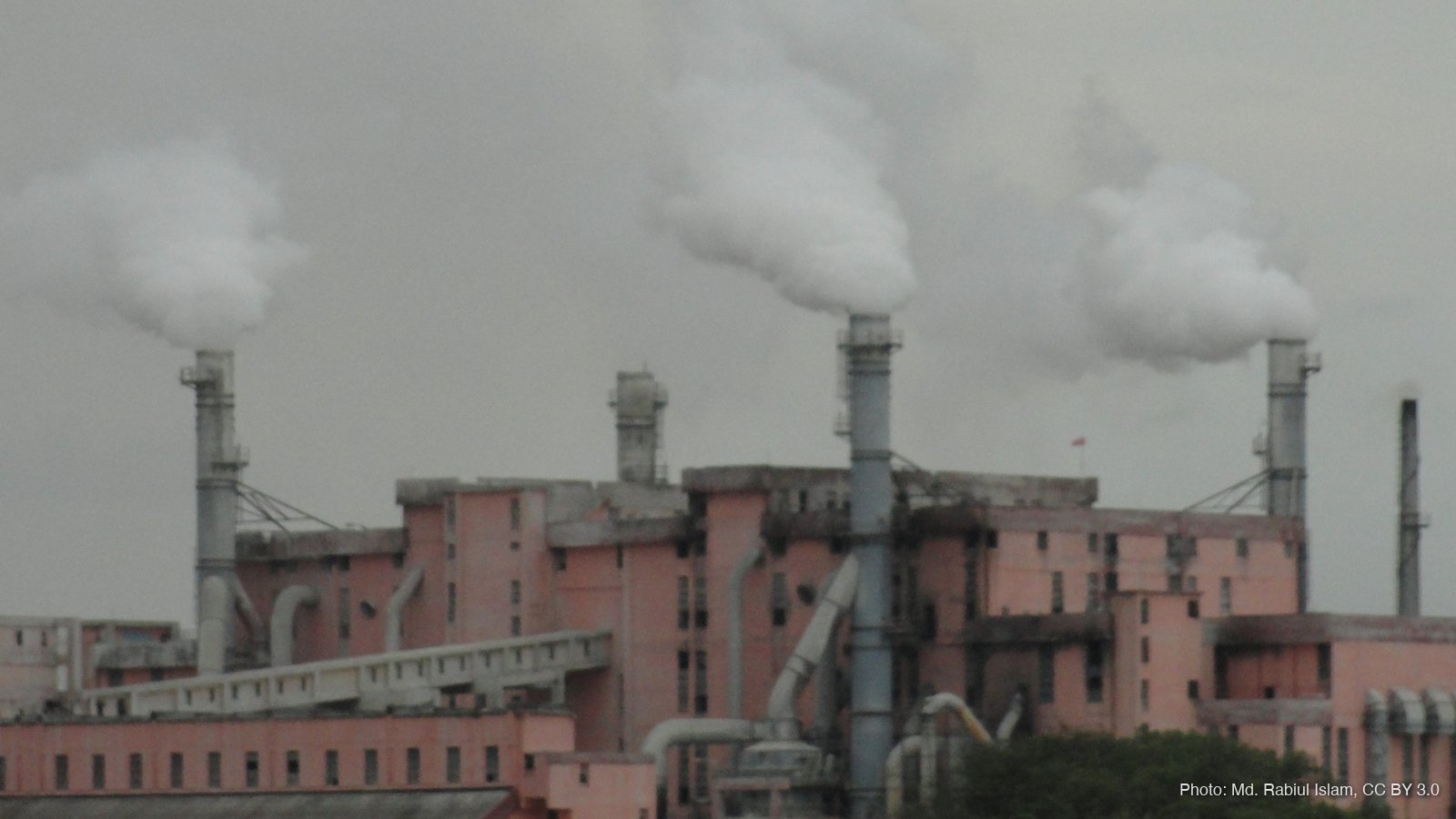
- Cover photo: PPL DAP plant at Paradeep, Odisha, by Md. Rabiul Islam, CC BY 3.0

You may republish this story under CC BY 4.0: credit Arshdeep Singh and link to this page.