Organic palm jaggery from Erode is on its way to Bulgaria: how a farm product reaches Europe
A 1.755 tonne shipment left Tamil Nadu on 15 October. Here is how organic checks, APEDA and a sea route carry a village sweetener abroad.
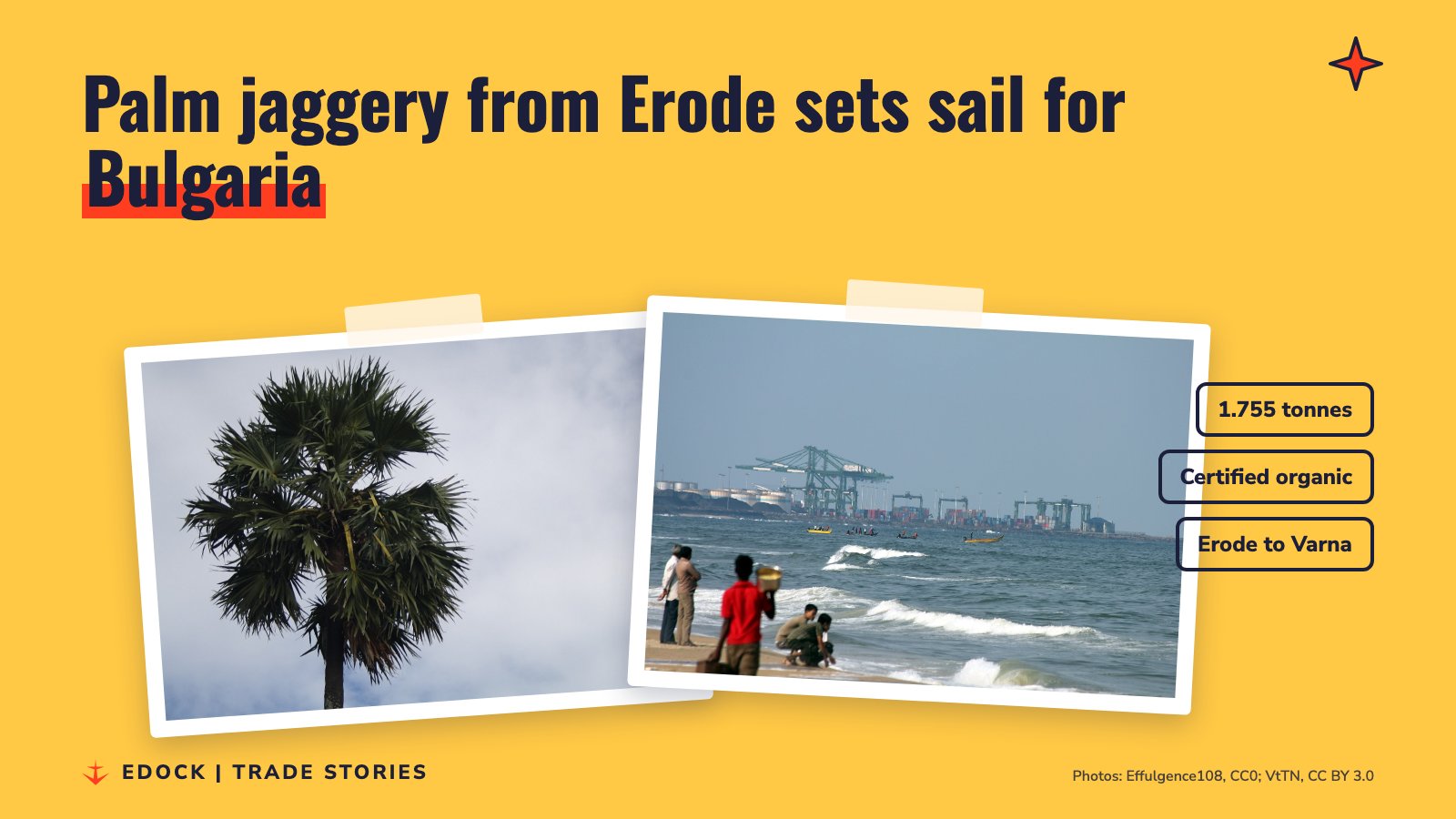
Picture a tall palm tree in a Tamil Nadu village. Soon, a sweet brown powder made from its flowers will be on its way to a city on the Black Sea, in Europe. That trip has already started. On 15 October 2026, India sent its first ever load of organic palmyra jaggery powder to Bulgaria.
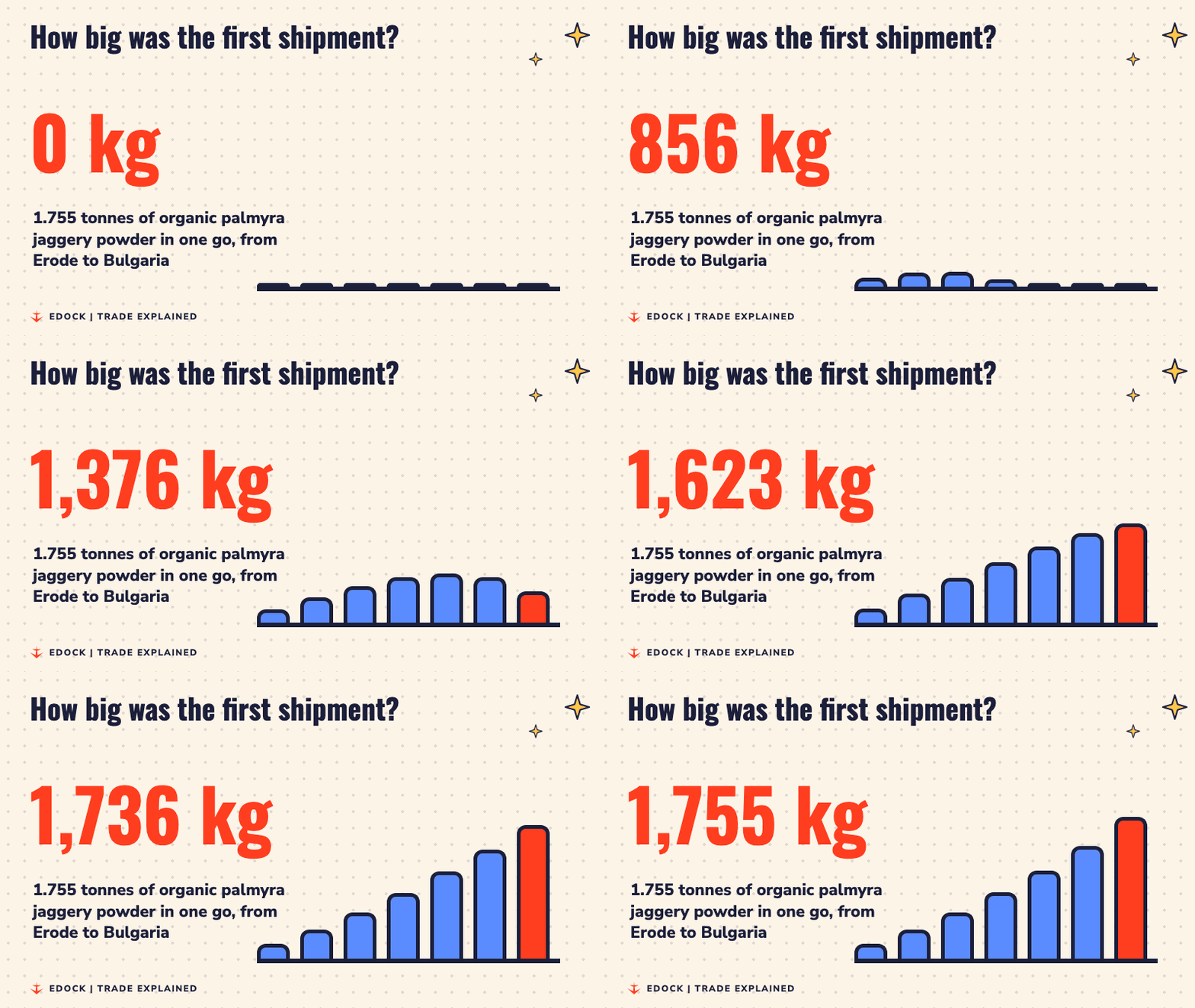
The load weighed 1.755 tonnes, and the commerce ministry shared the news on Friday, 16 October. It is a small shipment. But it shows, step by step, how a farm product from a small town can reach a buyer in Europe.
First, what is palmyra jaggery?
Jaggery is the brown sweetener that many Indian homes use in sweets, chai and payasam. Most jaggery is made from sugarcane. This one is different.
It comes from the palmyra palm, which is the official state tree of Tamil Nadu. Workers climb the tall trees and collect a sweet juice that drips from the young flower stalks. That juice is then boiled down to make jaggery. People in India have made palm jaggery for a very long time. A Greek traveller named Megasthenes wrote about it in the 4th century BCE, more than 2,000 years ago.
The product in this shipment is a powder made from palmyra blossom nectar, which is a fancy way of saying the sweet juice from the palm's flowers.
Who sent it, and who will sell it?
Think of an export like a relay race in cricket fielding: the ball passes from hand to hand until it reaches the keeper. Here is who held the ball this time.
- The maker: Wellbeing Foods, a company from Erode, made the powder and sent it out.
- The helper in Chennai: Chetty Exports Private Limited worked with Wellbeing Foods on the shipment.
- The buyer abroad: Sow Life Ltd, a company in Bulgaria, will bring it in and sell it there.
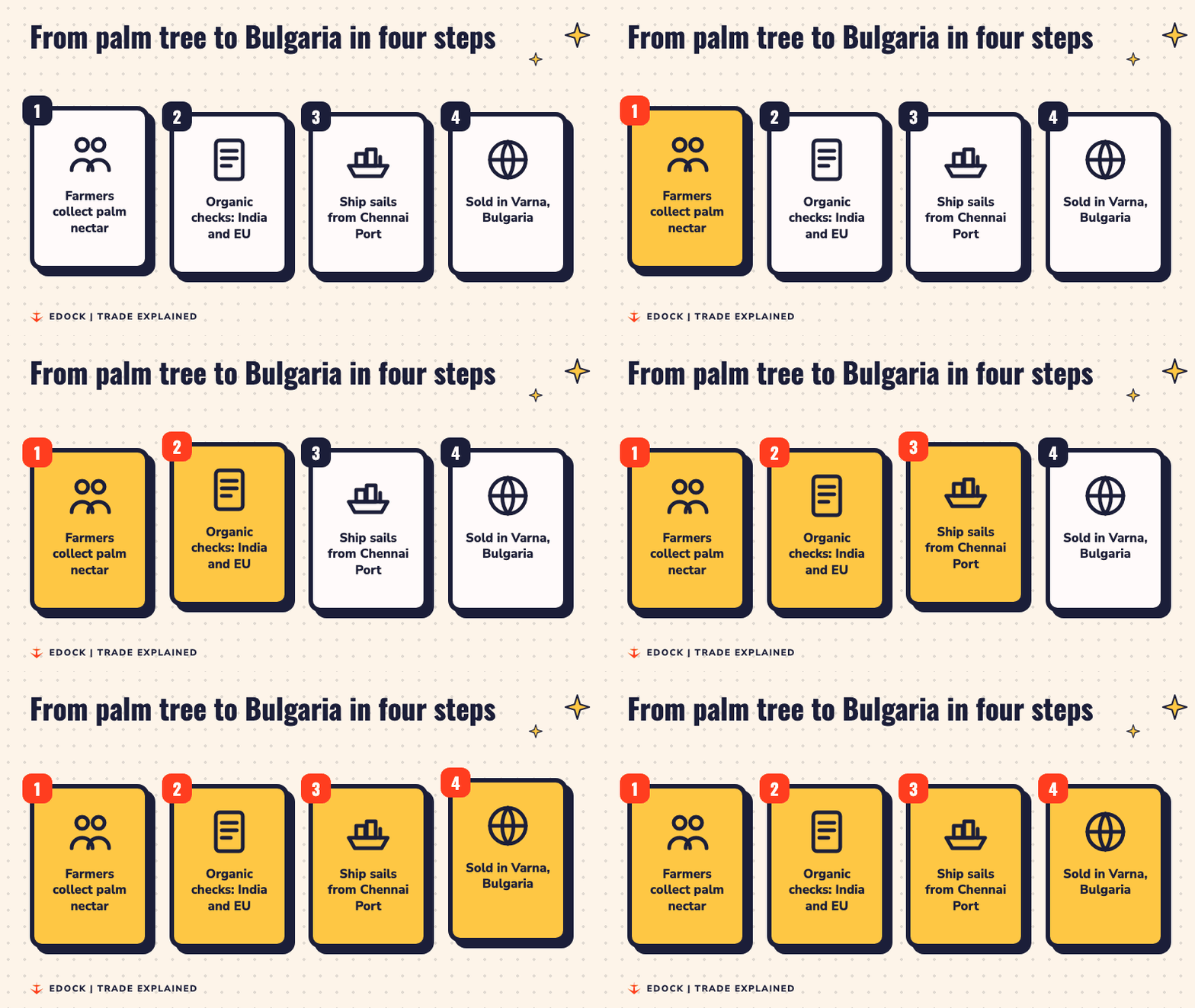
The shipment started from Gobichettipalayam, a town in Erode district. It will travel by sea from Chennai Port to Varna. Varna is the third largest city in Bulgaria and the biggest city on its Black Sea coast.
What does APEDA do?
APEDA is a long name: the Agricultural and Processed Food Products Export Development Authority. In simple words, it is a government body that helps Indian food and farm products get sold abroad.
It was set up in 1986 under the Ministry of Commerce and Industry. Think of it as a senior at college who already knows the rules of every competition and helps juniors fill the right forms, meet the right judges and avoid silly mistakes.
For this shipment, APEDA helped organise the send-off. Its chairman, Abhishek Dev, flagged off the consignment. A consignment is just a trade word for one batch of goods sent together. APEDA's secretary, Dr Saswati Bose, farmers and people from the exporting companies were also there.
Why "organic" is the ticket to Europe
Organic means the crop is grown without chemical fertilisers and chemical pesticides. But a seller cannot just print "organic" on a pack and hope people believe it. Someone has to check.
That is where certificates come in. This powder is certified under two sets of rules: India's National Programme for Organic Production (NPOP) and the European Union's organic standards.
Here is a simple way to think about it. Imagine a school cricket player who wants to play in a tournament in another state. Their own school certificate is good, but the new tournament also wants its own registration. Only with both papers can the player walk onto that pitch. Organic food going to Europe works in a similar way: the right papers open the door.
APEDA also plays a role here. It works as the secretariat for the board that approves the agencies which give out NPOP organic certificates. So it helps decide who is allowed to do the checking.
How much more do farmers earn?
This is the part that matters most for the people who grow the crop. According to the government's release, the project covers 137 acres under organic farming.
The reported price that farmers get is about 15% to 22% higher than what they would get in the Indian market. The manufacturer gets about 17% more. Trade people call this "price realisation", which simply means the money you actually receive when you sell.
Here is an easy example. Say a farmer would earn Rs 100 for some nectar by selling it at home. With a 15% to 22% jump, the same nectar would bring in Rs 115 to Rs 122. Like a samosa seller who finds a new street where people happily pay a little more for the same samosa.

Is 1.755 tonnes a lot?
Not really, for a ship. 1.755 tonnes is 1,755 kilograms. If the powder were packed in 1 kg packs, that would be 1,755 packs.
But first shipments are often small on purpose. They work like a trial match. The seller checks if the product survives the long trip, if the buyer likes it and if customers come back for more. The government release says the first shipment is expected to open avenues for more sales abroad.
Why this small story matters
India sells a lot of farm goods abroad, but many traditional products from villages never leave their own district. A palm tree product from Erode reaching Bulgaria shows a path others can copy: grow it the organic way, get the right certificates, find a partner who knows exports, and find a buyer abroad.
The government release also says the effort aims to build stronger market linkages for Tamil Nadu's palmyra products. Market linkage means a steady connection between the person who makes something and the person who wants to buy it, like a regular customer at a tea stall who comes every morning.
For students thinking about trade careers, this is a neat case to remember. Exports are not only about huge ships of oil or phones. Sometimes they begin with a few tonnes of something sweet from a palm tree.
Sources
- India ships organic palmyra jaggery powder from Erode to Bulgaria, BusinessLine
- India exports first consignment of organic Palmyra Jaggery Powder to Bulgaria, DD News
- APEDA facilitates export of 1.755 MT of organic Palmyra Jaggery Powder from Tamil Nadu to Bulgaria, India Shipping News
- Borassus flabellifer (palmyra palm), Wikipedia
- Agricultural and Processed Food Products Export Development Authority, Wikipedia
- Varna, Bulgaria, Wikipedia
- Cover photo: Borassus flabellifer, Asian Palmyra Palm Tree, by Effulgence108, CC0 1.0; Chennai Port Container terminal, by VtTN, CC BY 3.0


You may republish this story under CC BY 4.0: credit Manpreet Kaur and link to this page.