Oil India finds natural gas under the shallow sea of the KG Basin
Version 1 of 1 saved 24 Oct 2026, 1:03 pm IST · Chain line 207
As it was first published
Oil India finds natural gas under the shallow sea of the KG Basin
The Godavari-1 well sent up to 2 lakh cubic metres of gas a day in tests. Here is what a discovery means, and why it is only step one.
Picture a drill going down more than two kilometres deep in the sea off India's east coast, and gas rushing back up to the surface. That is what Oil India announced on Friday, 23 October 2026: it has found natural gas in the shallow sea waters of the Krishna-Godavari (KG) Basin.
The find came from a well called Godavari-1. Gas flowed up at about 1 lakh standard cubic metres a day, and touched 2 lakh on continuous testing. It is good news, but it is a first step, not a finished gas field. Here is what all of it means, in simple words.
Who is Oil India?
Oil India Limited is a government company that searches for crude oil and natural gas, takes them out of the ground, and moves crude oil through pipelines. It was founded on 18 February 1959 and is headquartered in Duliajan, Assam. The Government of India owns 56.66% of it.
In 2023 it got the "Maharatna" status. Think of it like a top-grade badge that the government gives to a small group of its companies. Oil India was the 13th company to get this badge.
What is the KG Basin?
A "basin" here is a huge area of layered rock where oil and gas can collect over millions of years, a bit like water collecting in a bowl. The Krishna Godavari Basin spreads across more than 50,000 square kilometres around the Krishna and Godavari rivers in Andhra Pradesh. The first gas find there was in 1983, by ONGC.
It is one of India's key areas for oil and gas. Business Standard notes that India's two largest explorers, state-run ONGC and private player Reliance Industries, already run producing fields in the same basin.
What does "shallow offshore" mean?
"Offshore" means in the sea, not on land. "Shallow" is about how deep the water is, not how deep the well goes. In India's oil rules, sea areas where the water is deeper than 400 metres count as deepwater. Shallow water areas are closer to the coast, where the sea is not as deep.
What exactly did Oil India find?
According to Oil India's exchange filing, as reported by Business Standard, here are the key facts:
- The well is Godavari-1, an "appraisal well". That is a well drilled to check and measure an area, like tasting a spoon of dal before serving the whole pot.
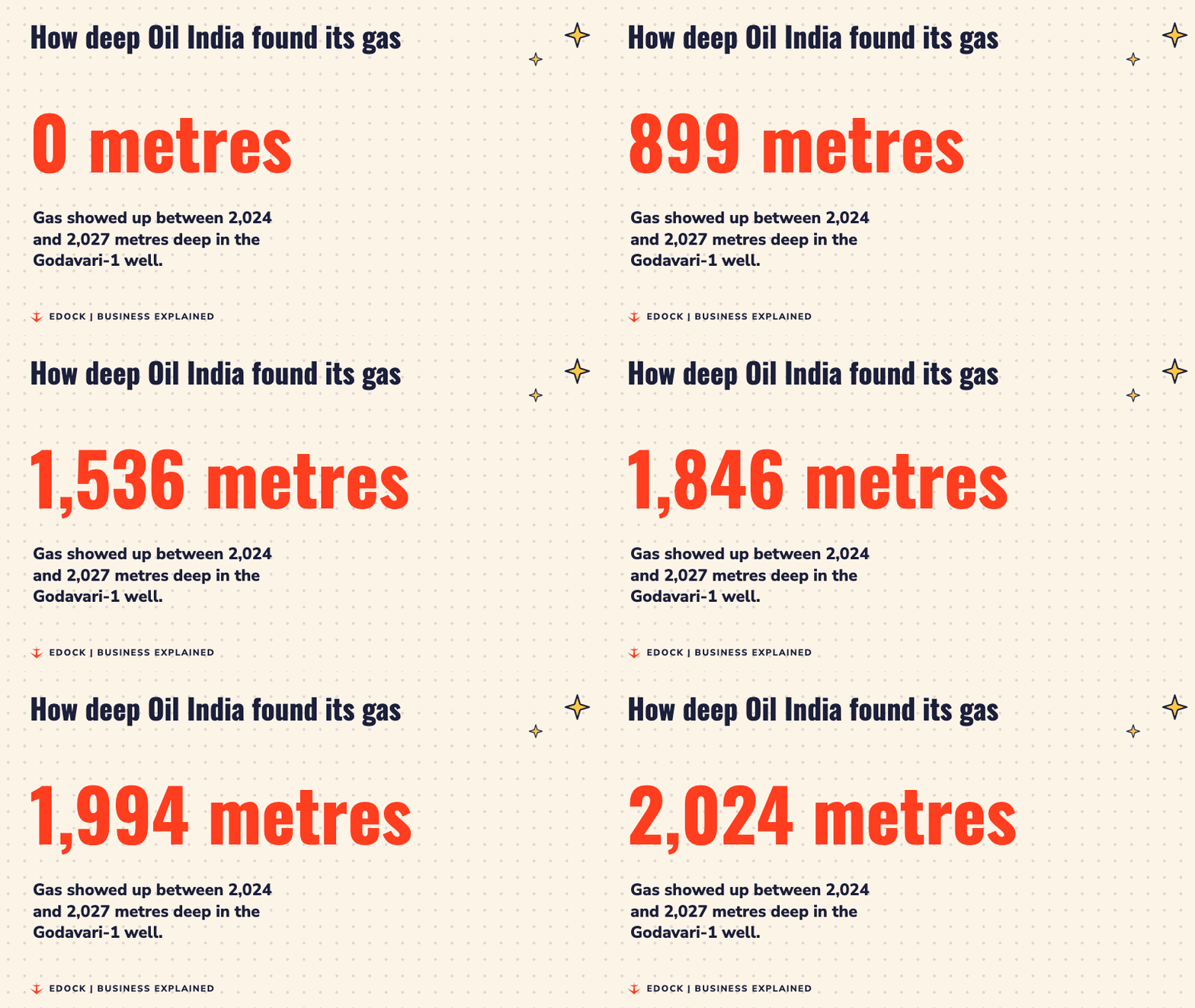
- Gas was found in a rock layer called the Matsyapuri formation, at a depth of 2,024 to 2,027 metres.
- This rock layer had never been checked for oil or gas before.
- Testing started on 16 October 2026.
- Gas flowed at about 1 lakh standard cubic metres a day, with a highest flow of 2 lakh on continuous testing.
- Along with the gas came about 170 barrels a day of condensate, a liquid that comes up with the gas, and some water.
The company is now getting ready to test the next zone, a layer higher up in the same well. So the story is not over yet.

A small field with a big idea behind it
The well sits in a block named KG-DSF/GSKW/2018. "DSF" stands for Discovered Small Field. These are small oil and gas finds that were made earlier but never turned into working fields. The government offers them to companies through bidding rounds. A 2018 Cabinet note on the DSF policy said the aim was to develop such fields faster and add to the country's oil and gas output.
Think of an old empty shop in your market that nobody used for years. The owner rents it out to someone new, hoping they will finally run a busy store there. Oil India won this block in such a round and runs it alone, as the sole operator.
Finding gas is not the same as selling gas
This is the most important part to understand. A discovery is like finding water while digging in your backyard. It is great news, but you still need to know how much water is there, build a proper well, fit a pump and lay pipes before anyone can drink it.
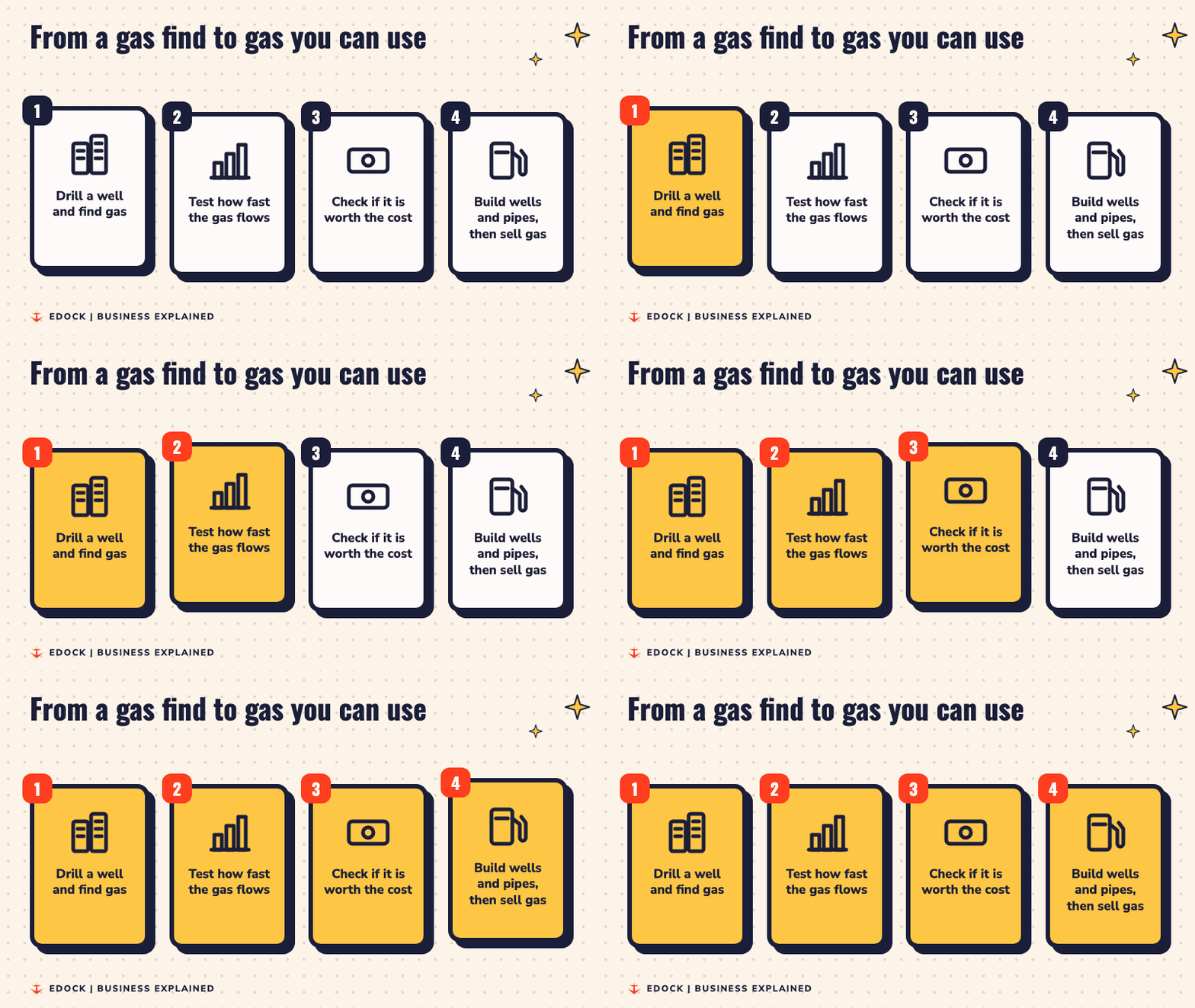
Gas works the same way. First the company tests the flow. Then it checks whether the gas is enough to be worth the cost. Only then does it build wells, platforms and pipelines to send the gas to buyers. Business Standard puts it simply: discoveries that can be developed commercially could help raise India's own supply.
Why India cares about every gas find
India remains heavily dependent on imports to meet its oil and gas needs. Think of a family that buys most of its vegetables from a faraway market instead of growing some at home. Discoveries that can be developed could help India lean less on energy from other countries, the report adds.
This is not the only recent find. ONGC reported a gas discovery in September in a deepwater well in the Mahanadi Offshore Basin off Odisha. In June, Oil India itself reported gas in its Vijayapuram-3 well in the Andaman offshore basin. The government also runs the Samudra Manthan scheme, worth Rs 84,084 crore until 2030-31, to support drilling in deep and very deep waters, Business Standard reports.
What happens next?
Oil India will test the next rock layer higher up in Godavari-1. Those results will help show how much gas the area may hold and whether a full field makes sense. Until then, the right way to see this news is as a promising first step, like a strong opening over in a cricket match. Good start, but the match is still on.
For students, this is a nice reminder that energy is not only about petrol pumps. It is also about geologists, engineers, rigs at sea and long tests before any gas reaches a stove.
Sources
- Business Standard: Oil India discovers natural gas in KG Basin's shallow offshore waters
- Offshore Energy: Natural gas discovery springs up in India's shallow waters
- PM India: Cabinet approves Discovered Small Fields policy bid round II
- NS Energy: India offers 75 oil and gas fields in DSF Round III
- Wikipedia: Oil India
- Wikipedia: Krishna Godavari Basin
- Cover photo: Drilling rig at Makum OCS under Oil India Limited, by Ajay Das, CC BY-SA 4.0
