Nokia picks L&T Technology Services for a five-year research deal in India
LTTS will set up a special centre in India to work on Nokia's 5G and AI tech. Here is what R&D, outsourcing and an offshore centre mean.
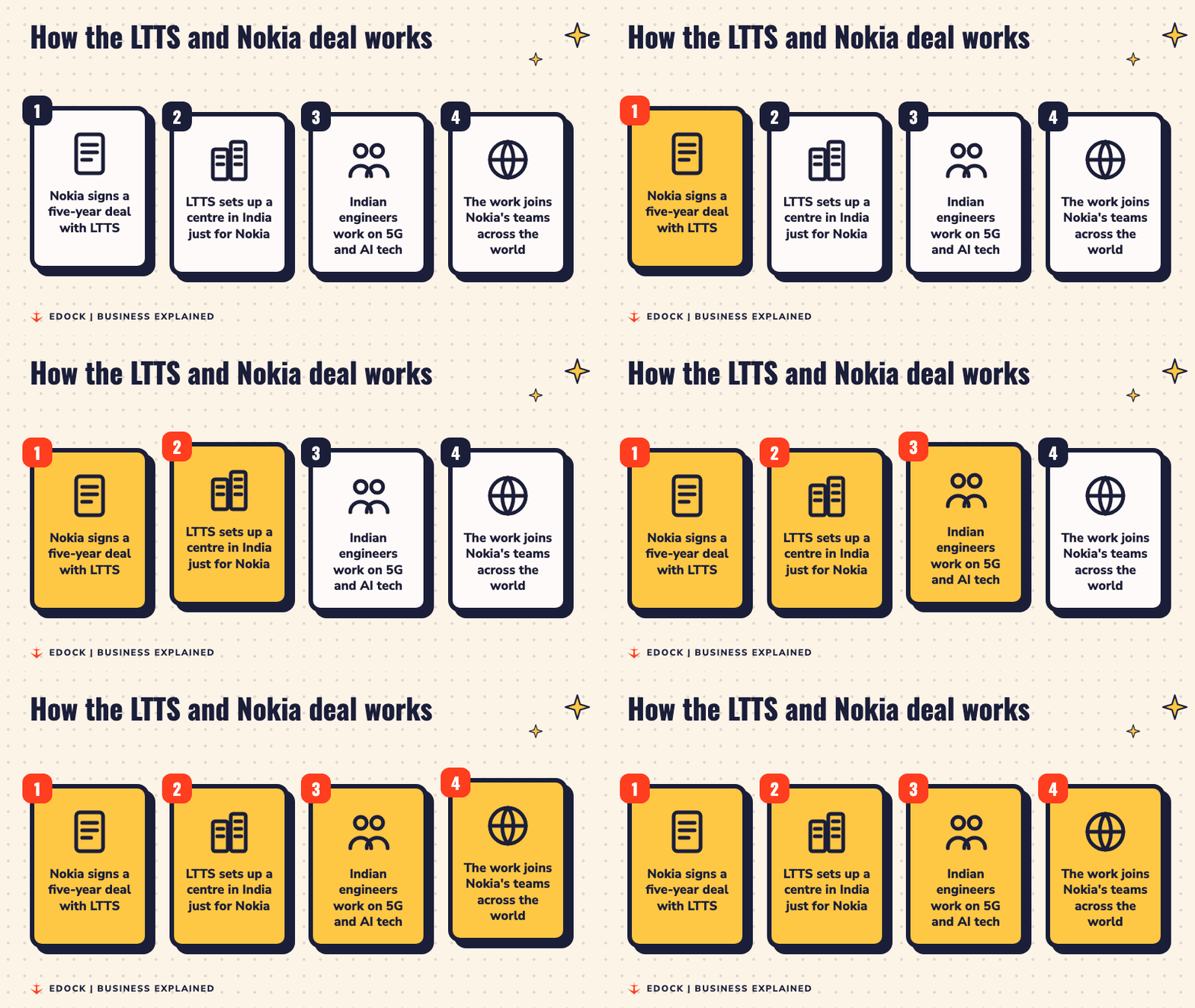
Picture a famous phone and network company from Finland asking a team in India to help invent its next big thing. That is what just happened. On Monday, 26 October 2026, L&T Technology Services said it has won a five-year contract with Nokia to help with Nokia's engineering and research work in India.
L&T Technology Services, called LTTS for short, is part of the Larsen & Toubro group. It does engineering work for other companies. Nokia is the Finnish maker of telecom gear, the boxes and software that make mobile networks run. Yes, it is the same Nokia name that was once famous for mobile phones.
What exactly did LTTS sign?
The deal was shared with the stock exchanges in a filing, which is an official note a listed company must send when something important happens. Under the deal, LTTS will support Nokia's R&D programmes in four main areas: product engineering, software development, system integration and product support.
Those are big words, so here they are in plain English:
- Product engineering: designing how a new machine or gadget should be built.
- Software development: writing the code that tells the machine what to do.
- System integration: making sure all the parts work together, like checking that a new bat, pads and gloves all fit one player.
- Product support: fixing and improving things after they are already out in the world.
The work will also cover new product development, embedded systems and ongoing engineering support, according to the company's press release dated 26 October. Embedded systems are tiny computers hidden inside bigger machines, like the chip inside a washing machine that decides how long to spin.
First, what is R&D?
R&D means research and development. It is the work a company does to invent new products and make old ones better. Think of a bakery that tests new recipes in the back before putting a new cake in the front window. That testing is R&D.
Now imagine the bakery is very busy. So it pays a skilled kitchen down the road to test some of its new recipes. That is called outsourcing: paying another company to do a part of your work. In this story, Nokia is the bakery and LTTS is the skilled kitchen.
A special room just for Nokia
As part of the deal, LTTS will set up a dedicated Offshore Development Center (ODC) in India and will work with Nokia's global R&D teams through what the filing calls an integrated operating model. In simple words, both teams will work as if they are one big team, even though they sit in different countries.
So what is an ODC? Go back to the bakery. The kitchen down the road keeps one room only for this bakery. That room has its own cooks, its own tools and its own rules, and nobody else's cakes are made there. "Offshore" just means it is in another country from the customer. Nokia is in Finland; the room is in India.
The ODC will focus on data-center-grade compute and AI-infrastructure engineering for next-generation telecom solutions. AI infrastructure means the powerful computers, chips and networks that AI tools run on. Every time you ask a chatbot a question, a huge data centre somewhere does the thinking, and fast networks carry the answer back to your phone.
LTTS will also build a dedicated engineering team in India to support Nokia's Technology Center around the world. That team's work will cover 5G networks, intelligent automation, AI-driven operations and AI infrastructure. 5G is the newest mobile network many Indians already use for fast video calls and quick downloads.
What the two companies said
Vivek Jaiswal, Senior Vice President of Engineering at Nokia, said "India is an important innovation hub for Nokia" and called LTTS a critical partner that will help Nokia expand its R&D footprint.
Alind Saxena, an Executive Director and President at LTTS, called the deal "a significant milestone" for the company and its technology segment.
What the reports do not say: how much money the deal is worth, how many engineers will work on it, or which Indian city the new centre will be in.
Why is Nokia doing this now?
Nokia is chasing what it calls the "AI supercycle". That means a long stretch of time where companies spend huge amounts on AI, and on the networks and data centres AI needs.
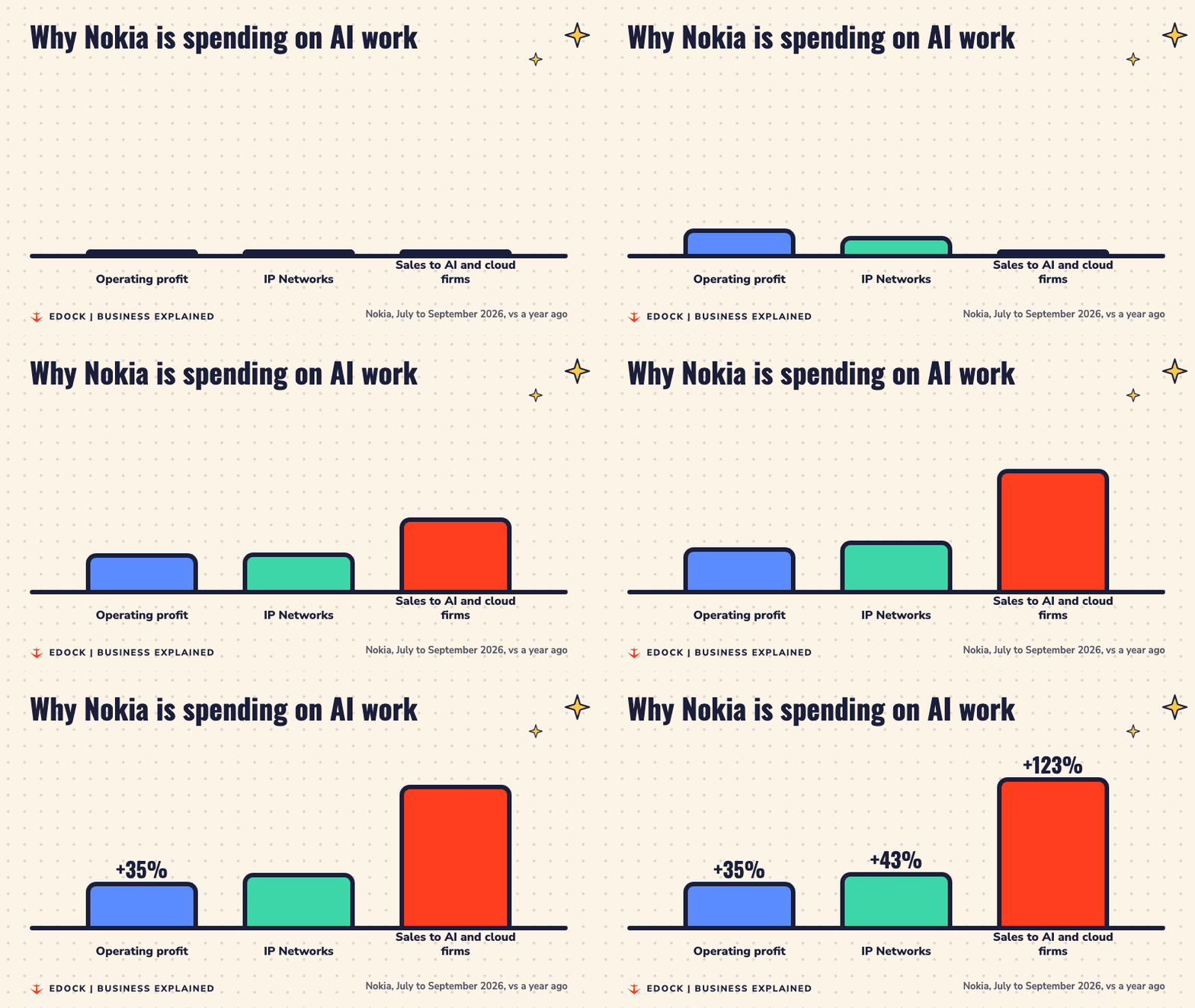
The numbers show why. In its July to September 2026 quarter, Nokia's operating profit rose 35% from a year ago to $677 million, and its sales to AI and cloud customers grew by 123%. Operating profit is what a company keeps from its main business after paying its running costs, like a samosa stall's earnings after paying for potatoes, oil and the helper. Nokia's chief executive also told analysts that AI and cloud demand drove a 43% rise in its IP Networks business, the part that makes the gear moving data around the internet.
Here is a short video from Nokia in which its President and CEO Justin Hotard talks about how Nokia plans to power the AI supercycle.
What is LTTS's Lakshya 31 plan?
"Lakshya" means target. Lakshya 31 is LTTS's five-year plan up to 2031. In its last full-year results, LTTS CEO Amit Chadha said the company aspires to deliver 13 to 15% CAGR over the next five years. CAGR is the average yearly growth rate. If your pocket money grows by about the same share every year, CAGR is that yearly share.
One of the plan's "big bets" is next generation computing and AI infrastructure. LTTS said the Nokia deal fits right into that bet.
For a sense of size: the same results show LTTS earned revenue of ₹1,09,959 million in FY26, which is close to ₹11,000 crore, and had 23,830 employees at the end of March 2026.
CEO Amit Chadha also spoke to ET Now about the company's latest quarter and its AI-led deals in this interview.
How did the share price react?
A share is a tiny piece of ownership in a company, and its price moves when people feel better or worse about the company. On deal day, LTTS shares rose 3.57% to a day's high of ₹4,050, from a previous close of ₹3,910.60. Earlier in the morning, the stock traded 3.18% higher on the NSE at ₹4,034.80 at 10:22 am.

This is not a tip to buy or sell. A share price going up on one day only shows how people reacted to the news that day.
Why this matters for young Indians
This deal is about the early stage of building new products: designing, coding and testing 5G and AI tech. Nokia's own engineering head called India an important innovation hub, and this deal puts a part of that inventing work in an Indian centre for five years.
For students in engineering, electronics or computer science, words like 5G, embedded systems and AI infrastructure are no longer far away ideas. They are the work being done in Indian offices right now, for some of the best known companies in the world.
Sources
- ET Telecom: L&T Technology Services, Nokia sign five-year engineering deal in India
- The Economic Times: L&T Technology Services signs five-year deal with Nokia for R&D support in India
- Moneycontrol: LTTS shares rise over 3% after firm inks 5-year engineering, R&D deal with Nokia
- Business Today: L&T Tech shares jump as IT firm signs five-year Nokia contract
- L&T Technology Services: FY26 results press release
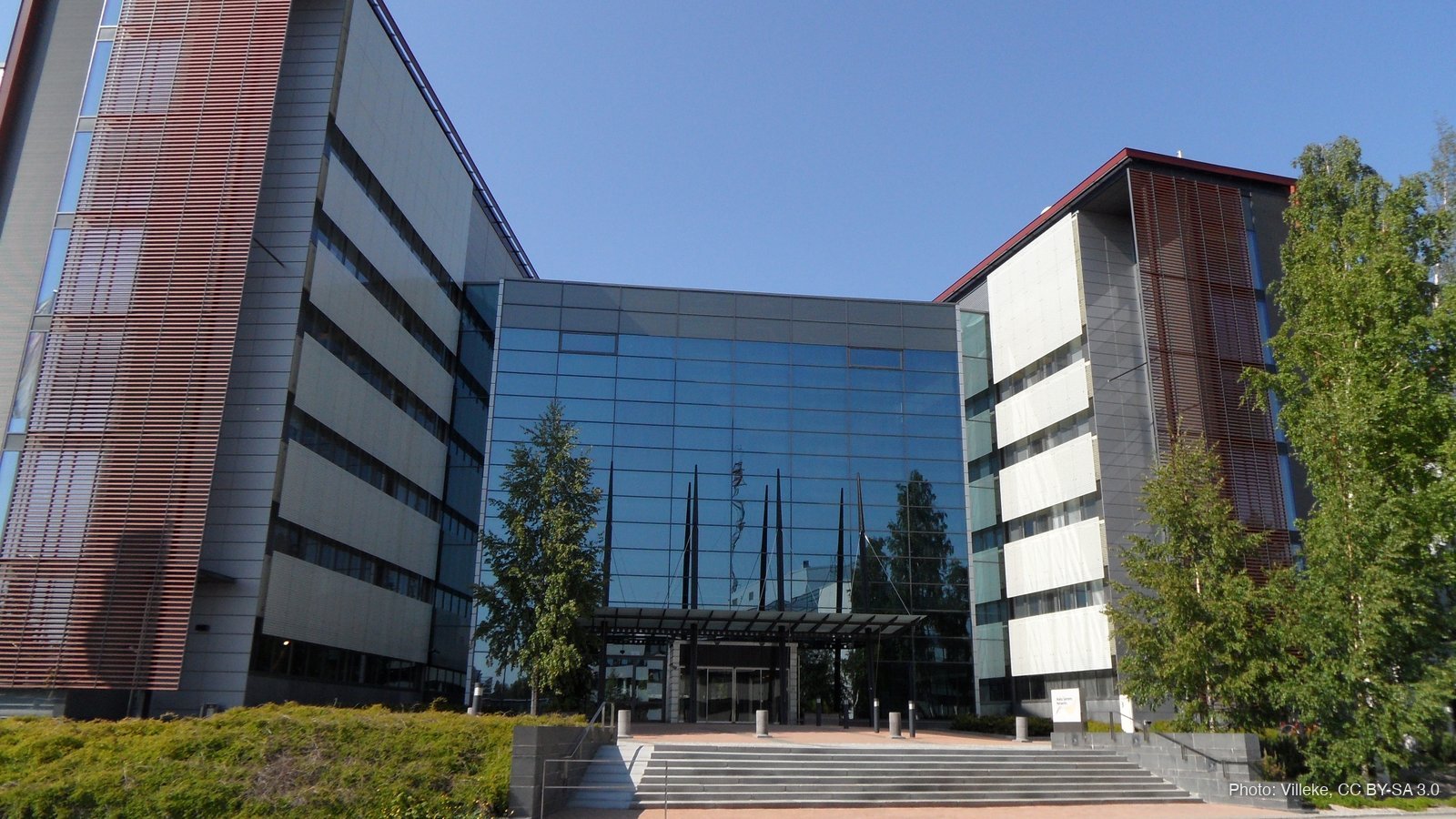
- Cover photo: Nokia headquarters in Espoo, Finland, by Villeke, CC BY-SA 3.0

You may republish this story under CC BY 4.0: credit Manpreet Kaur and link to this page.