NLC India lines up Rs 37,000 crore for a giant power plant and more in Odisha
The government lignite company signed three agreements on 22 October: a 3,200 MW power plant, a beach sand mineral unit and a coal to fertiliser study.

Picture a stack of notes so tall that, if you saved Rs 1 lakh every single day, you would need more than 10,000 years to collect it. That is roughly what Rs 37,000 crore looks like. And that is the amount one government-owned company has lined up for new projects in a single state.
On 22 October 2026, NLC India signed agreements with Odisha's investment agency for a big power plant, a factory that cleans up minerals from beach sand, and a study on turning coal into gas. The signing took place in Mumbai. Business Standard reported the plan on 23 October, with the total at Rs 37,000 crore.
Here is what the company plans to build, and what all the big words mean.
First, who is NLC India?
NLC India used to be called Neyveli Lignite Corporation. It is owned by the Government of India and works under the Ministry of Coal, with its head office in Neyveli, Tamil Nadu. It digs lignite out of huge open mines and burns it to make electricity.
So what is lignite? Think of firewood. Wet, fresh wood burns weakly and smokes a lot. Dry, old wood burns hot. Lignite, often called brown coal, is like the wet wood of the coal family: soft, full of water, and giving less heat than other kinds of coal. Regular coal is more like the dry wood. NLC India now mines both.
What exactly did it sign?
It signed three MoUs with IPICOL, the Industrial Promotion and Investment Corporation of Odisha. An MoU, or memorandum of understanding, is like friends writing down a plan for a trip before anyone books a ticket. It shows what both sides want to do, but it is not the final deal. As Trade Brains points out, MoUs are usually non-binding and the money figures are tentative.
Here are the three plans:
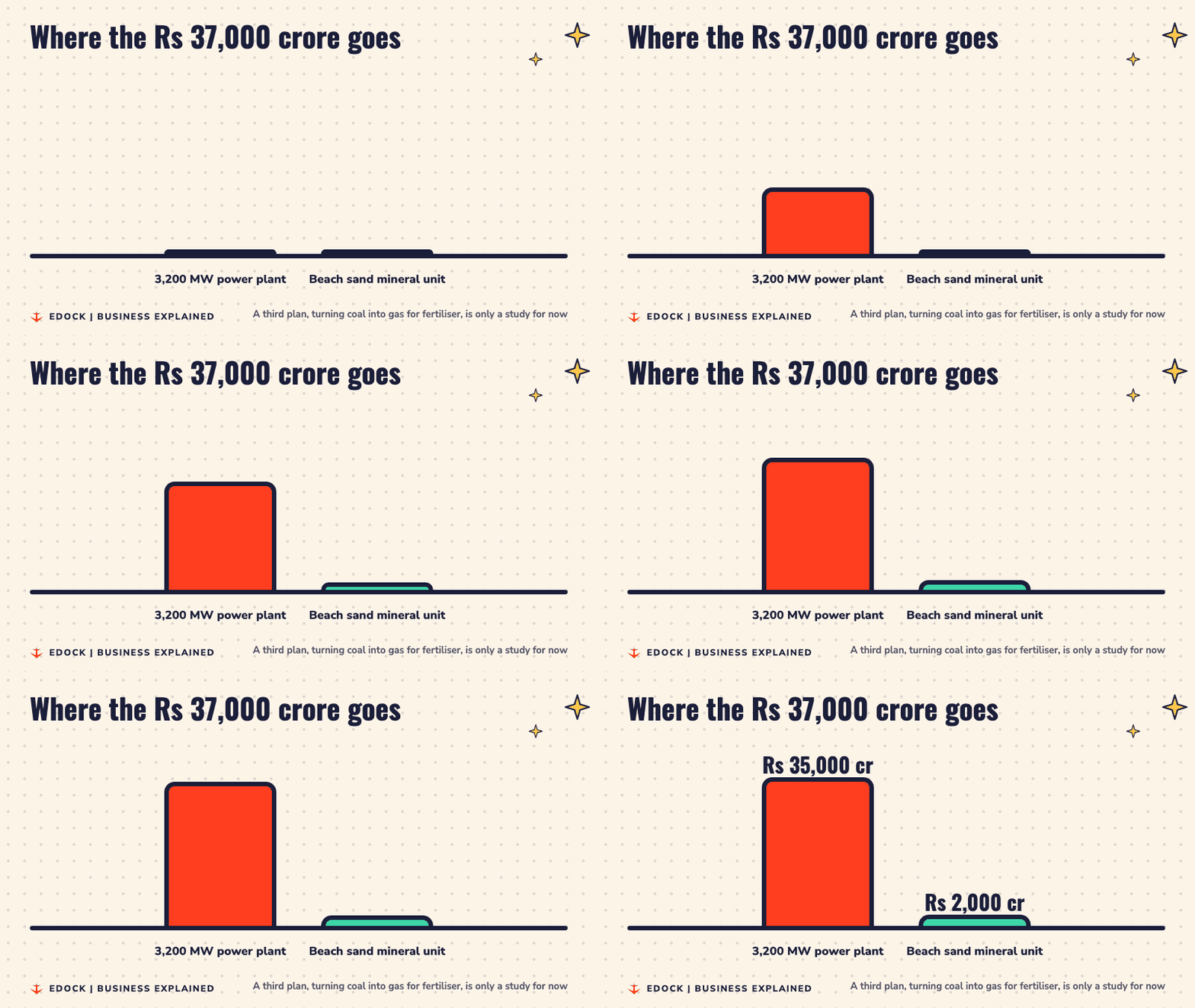
- A power plant: a 3,200 megawatt coal power plant, with a potential cost of Rs 35,000 crore.
- A beach sand mineral unit: a factory to process minerals found in sand, with a tentative cost of Rs 2,000 crore.
- A coal gas study: a check on whether coal from India can be turned into gas to help make fertiliser.
Add the first two: Rs 35,000 crore plus Rs 2,000 crore makes Rs 37,000 crore. The third plan has no money amount announced yet, because it is only a study for now.
How big is a 3,200 megawatt plant?
A watt is a tiny unit of power. One megawatt is 10 lakh watts. So 3,200 megawatts is 320 crore watts. Picture a 10-watt LED lamp: in simple maths, 320 crore watts could light 32 crore of them at the same time.
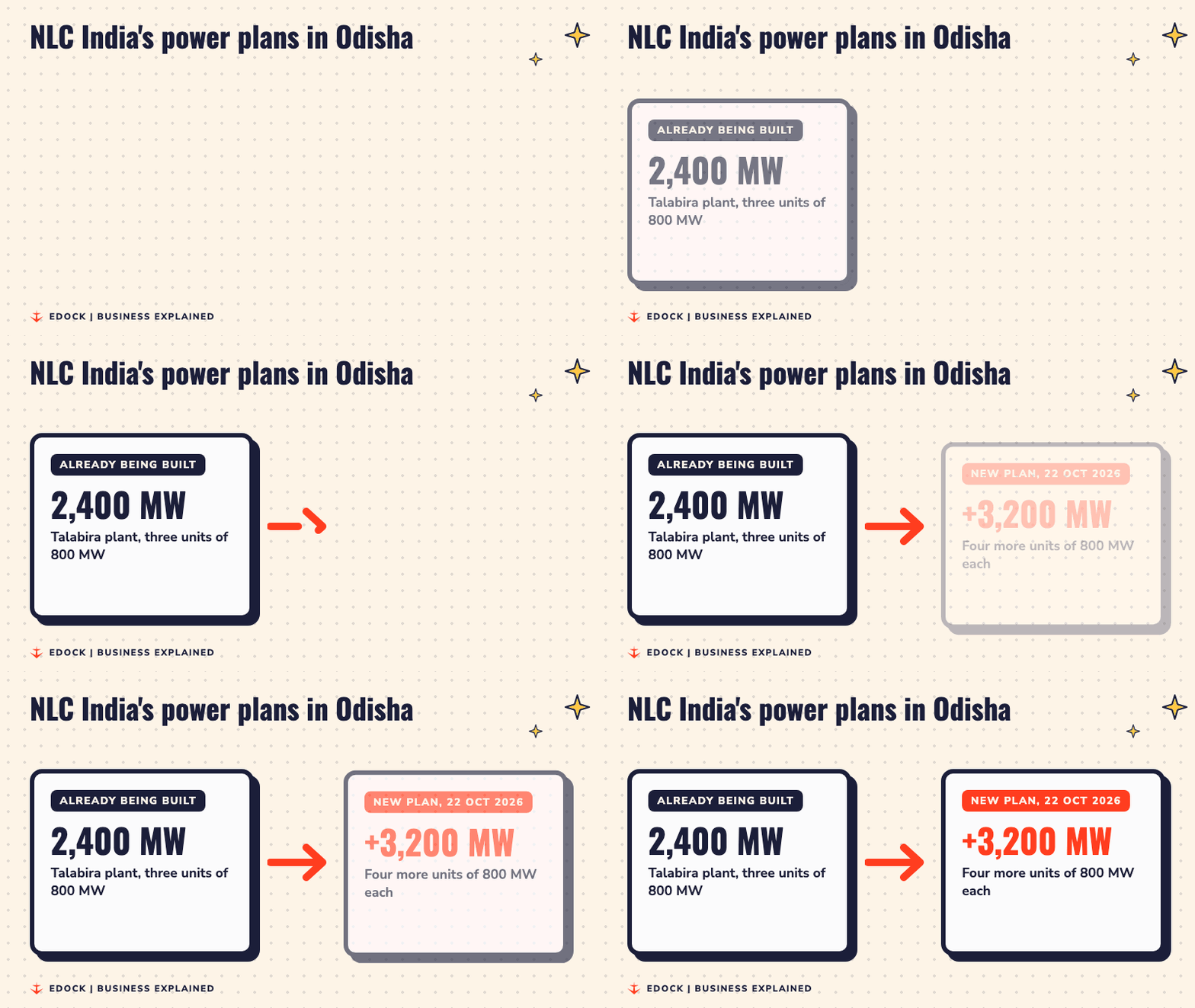
The plant would have four units of 800 megawatts each. Four times 800 makes 3,200. Business Standard quoted a company executive saying the location and land details are at an advanced stage of being finalised.
It is a thermal power plant. That means it burns coal to boil water. The steam spins a giant fan called a turbine, which makes electricity. It works a bit like the whistle of a pressure cooker, where steam pushes hard enough to move something. The plant is called ultra-supercritical, which simply means it runs at very high heat and pressure, so it squeezes more electricity out of the same amount of coal.
Is this NLC India's first plant in Odisha?
No. NLC India is already building a 2,400 megawatt plant linked to its Talabira coal mines in western Odisha. That one has three units of 800 megawatts and an estimated cost of around Rs 27,213 crore. Its Talabira II and III mines can together dig out 20 million tonnes of coal a year.
The company has also been given two more coal blocks in Odisha, which are areas of land where it is allowed to mine. Machhakata in Angul district is planned for 30 million tonnes a year, and New Patrapara South for 12 million tonnes a year. Owning its own coal is like a samosa stall that grows its own potatoes: it does not have to worry as much about buying supplies at a high price.
In July, NLC India also signed a joint venture with Nalco, the government aluminium company, for a 1,080 megawatt power plant at Angul. A joint venture is when two companies team up on one project and share it, here 50 percent each. That plant will give power to Nalco's aluminium work.
Why would anyone process beach sand?
Odisha's coastline has deposits of heavy minerals in its sand. The idea is to add value by processing these minerals, instead of only digging them up and selling them raw.
Think of mangoes. A farmer who sells raw mangoes earns a little. A farmer who turns them into mango pulp or pickle earns more from the same fruit. The Rs 2,000 crore factory is meant to do the pulp-and-pickle part for minerals. The company has not yet shared its location, size or timeline.
Coal into gas into fertiliser?
This is the most unusual of the three plans. Coal gasification turns coal into a gas called syngas, short for synthesis gas. Syngas can be used to make ammonia and other chemicals that go into fertiliser, the plant food that farmers put on their fields.
So instead of only burning coal for electricity, the idea is to use it like a raw ingredient, the way milk can become paneer, curd or ghee. NLC India and IPICOL will first check if it is technically possible.
How many people could find work?
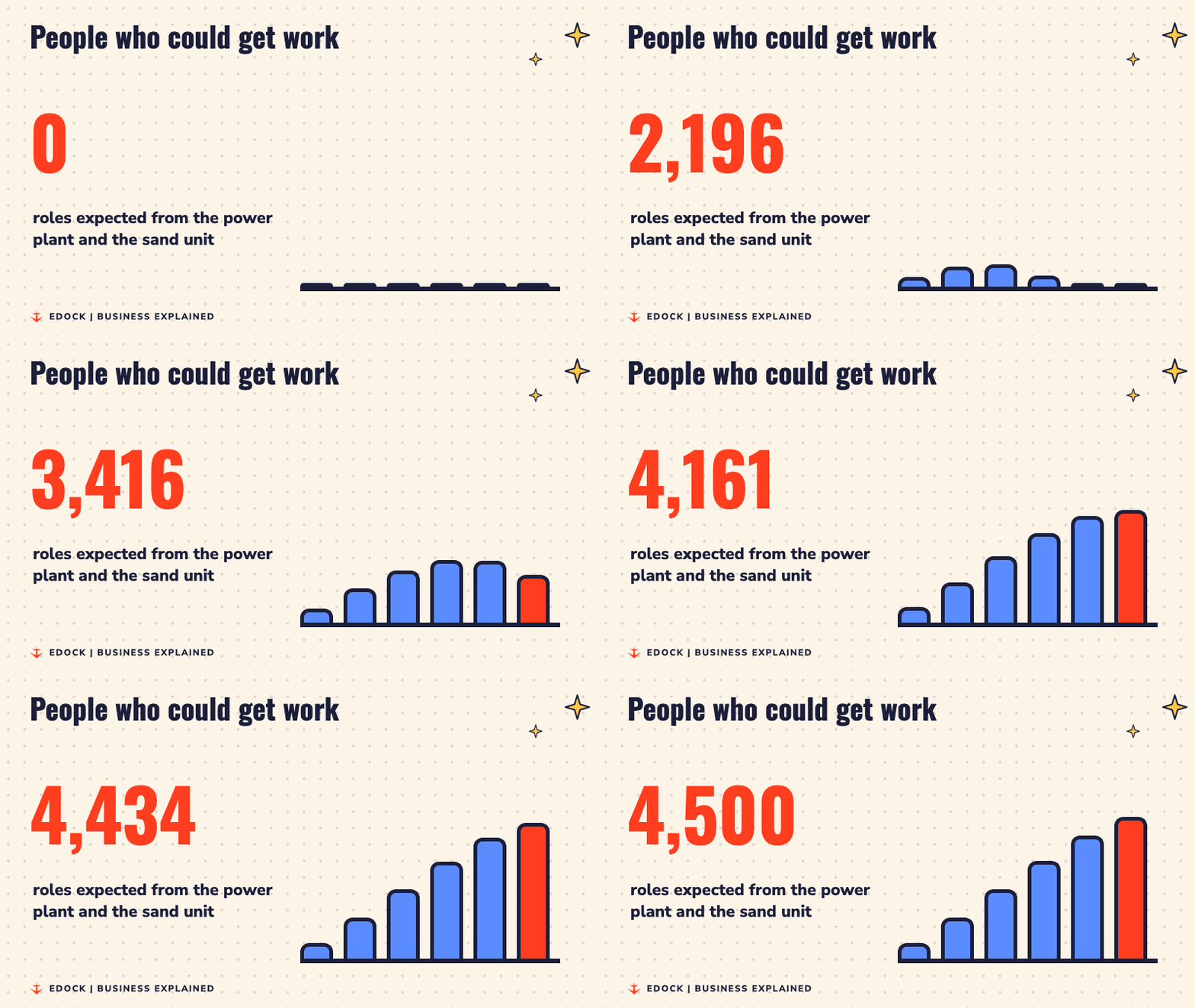
The company expects the power plant to create work for about 4,000 people, and the beach sand unit for another 500. Together that is about 4,500 roles. For students in Odisha studying engineering, mining or chemistry, that kind of number matters.
What happens next?
An MoU is a first step, not the finish line. The power plant still needs its exact site and land, and its timeline and approvals are yet to be set. Trade Brains notes that funding, approvals and the actual building work will decide how much of this really happens.
Still, the direction is clear. A company that started out digging lignite in Tamil Nadu is spreading out: coal mines and power plants in Odisha, a minerals factory, and maybe even a coal-to-fertiliser idea. It is a bit like a chai stall that starts selling snacks, then opens a second shop in a new city. Whether all of it gets built is the story to watch over the next few years.
Sources
- Business Standard: NLC India lines up Rs 37,000 crore for power and mineral projects in Odisha
- Free Press Journal: NLC India signs MoUs for Rs 37,000 crore Odisha investment
- Projects Monitor: NLC India signs 3 MoUs with Odisha
- Trade Brains: NLC India signs MoUs with Odisha
- Wikipedia: NLC India Limited
- Wikipedia: Lignite
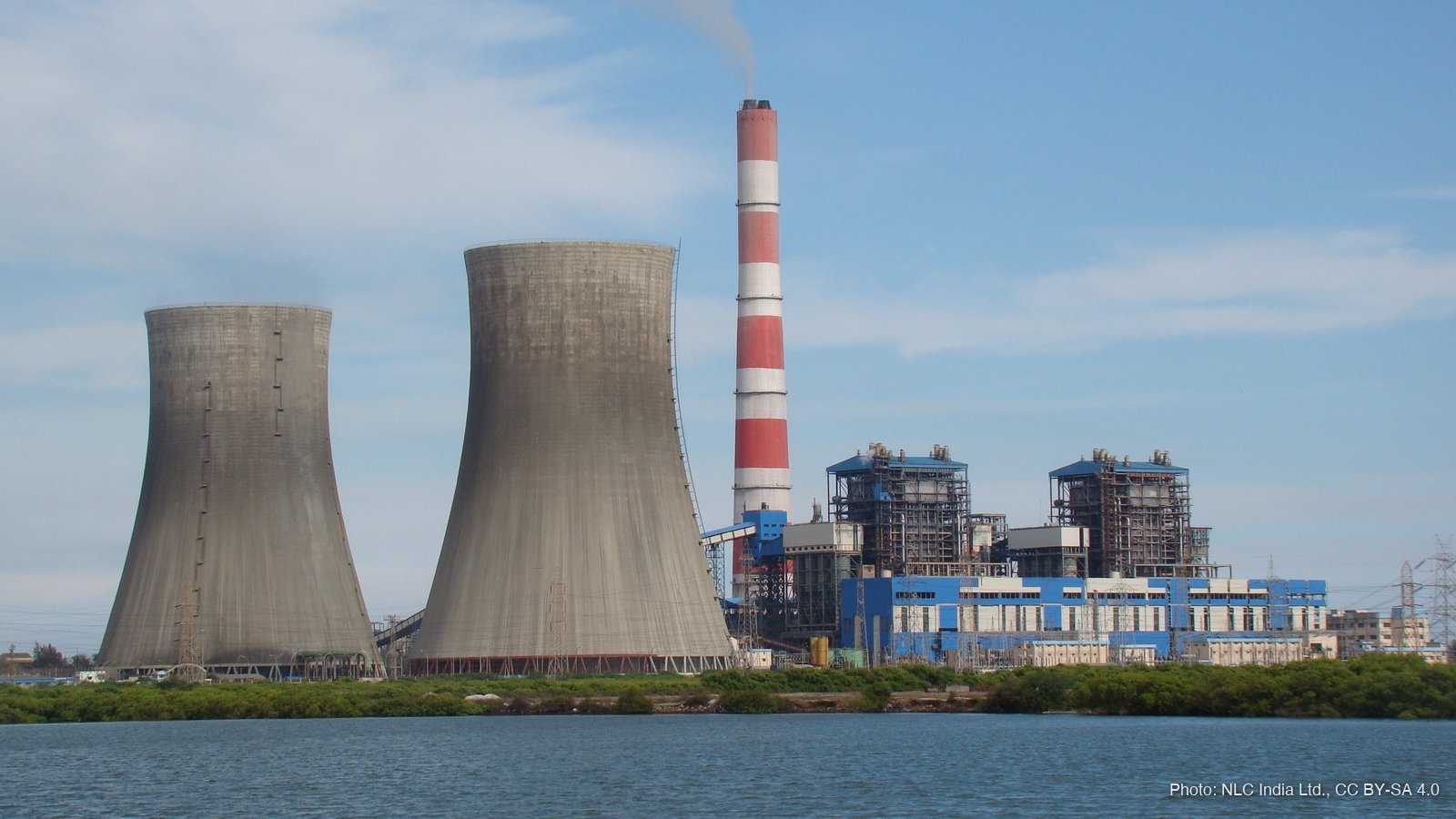
- Cover photo: NTPL thermal power plant, Tuticorin, Tamil Nadu, by NLC India Ltd., CC BY-SA 4.0

You may republish this story under CC BY 4.0: credit Arshdeep Singh and link to this page.