Netflix cuts about 1,000 roles and replaces content chief Bela Bajaria: what is changing
Netflix is still making big profits, yet it is cutting 6% of its workforce and bringing in ex-Disney boss Peter Rice to run its shows and films.


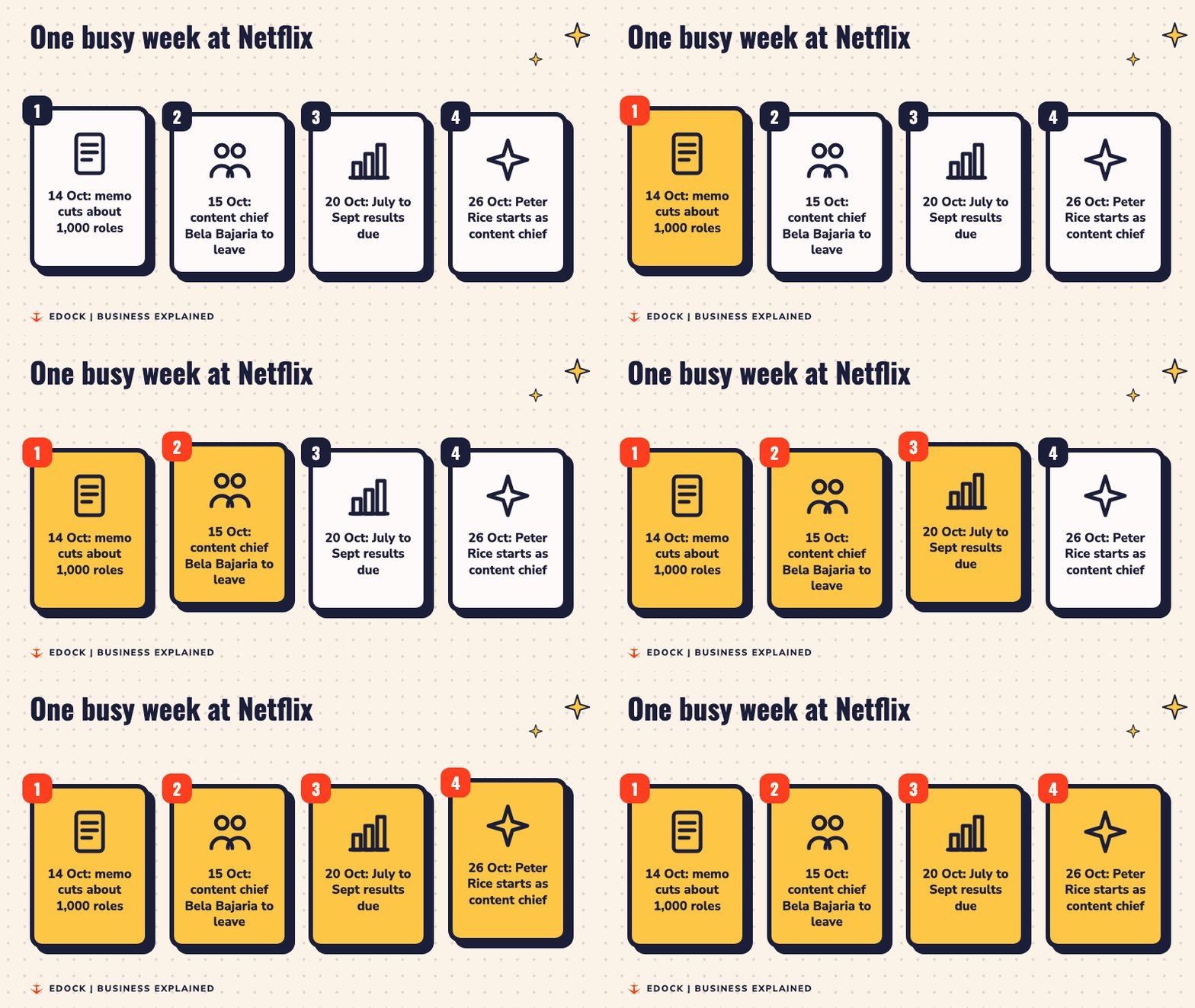
Picture this: a company that made USD 3.4 billion in profit in just three months still decides to let about 1,000 people go. That is Netflix. On Wednesday, 14 October 2026, its two bosses told staff in a memo that roughly 6% of the workforce would be cut. One day later, on 15 October 2026, Netflix said its chief content officer, Bela Bajaria, is leaving and a former Disney boss, Peter Rice, will take her place.
Two big moves in two days. Here is what happened, in simple words, and what it tells us about how big companies think.
What exactly did Netflix announce?
A layoff is when a company tells workers their role is over, not because they did something wrong, but because the company wants fewer people. Workforce simply means all the people who work for a company.
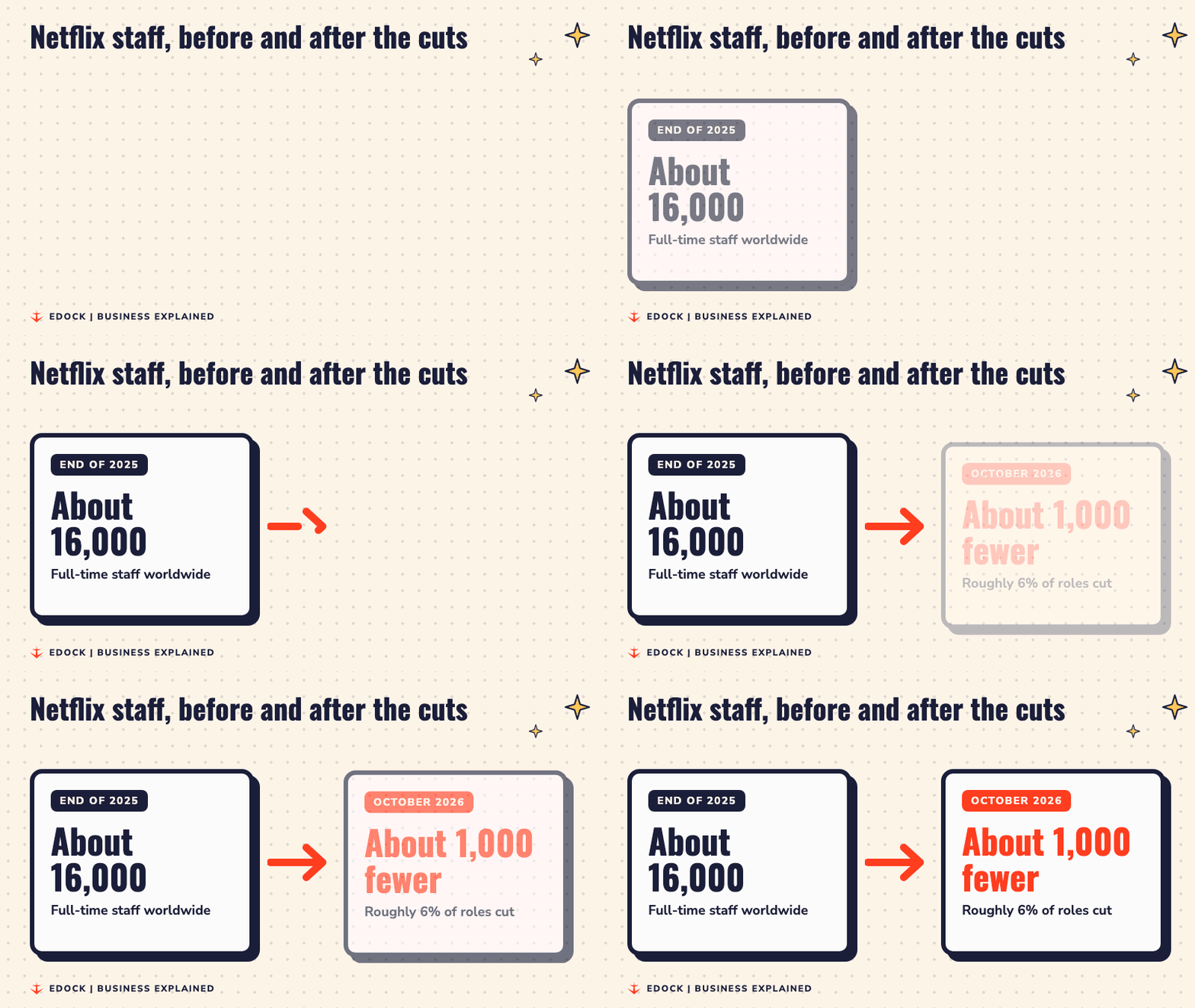
Netflix plans to lay off about 6% of its workforce, nearly 1,000 positions. The memo came from co-CEOs Greg Peters and Ted Sarandos. Co-CEO means two people share the top boss chair, like two captains running one cricket team.
The teams hit hardest are product, tech, legal and HR. HR, or human resources, is the team that hires people and looks after staff.
How big is 6%? At the end of 2025, Netflix had 16,000 full-time employees. Six out of every hundred of 16,000 is 960, which is why reports say "nearly 1,000". It is the biggest round of cuts at the company in years.
Wait, is Netflix losing money?
No. That is the surprising part. In its April to June 2026 quarter (a quarter is a three-month slice of the year), Netflix earned USD 3.4 billion in profit on revenue of USD 12.56 billion. Profit was up 9% and revenue up 13% from a year earlier.
Quick refresher. Revenue is all the money that comes in. Profit is what is left after paying every bill. If a chai stall sells Rs 1,000 of tea in a day and spends Rs 700 on milk, sugar and gas, revenue is Rs 1,000 and profit is Rs 300.
The memo itself said "Our business is strong and growing" and that Netflix was on track to hit its full-year forecast. A forecast is the company's own guess about how much it will earn.
So why cut? The bosses wrote that Netflix must be "disciplined about where we prioritise our people and resources" while it puts money into "high impact areas to improve our service." In plain words: spend less on some teams, spend more where it matters most.
The real worry: people are not watching more
Making money is one thing. Growing fast is another. Netflix's user engagement, which means how much time people spend watching, grew just 2% in the first half of 2026. Co-CEO Ted Sarandos said at an event a few weeks earlier that the company was "not growing as fast as I want."
Here is the puzzle, as CNBC puts it. Netflix still makes solid profits and is the biggest streaming player, but viewing time has stagnated. Most new members recently came from its crackdown on password sharing and its cheaper plan with ads, not from people falling in love with new shows.
Think of a popular samosa stall. It raised prices and stopped friends from sharing one plate, so the money went up. But the crowd is not getting bigger, and nobody is queuing for a new dish.
The competition is crowded too. Netflix holds 19% of the streaming market by one count, with Amazon's Prime Video and Disney+ close behind. CNBC calls YouTube its biggest threat, and TechCrunch notes that apps like TikTok and Instagram are also fighting for the same eyeballs.
And there is a new giant in town. Paramount's USD 81 billion buyout of Warner Bros. Discovery has closed, putting HBO Max and Paramount+ under one roof. Netflix had first agreed to buy Warner's studio and streaming business, but walked away from that offer in February.
Then the content chief exit
A chief content officer decides which shows and films a streaming service makes or buys. It is a bit like the person who picks the playing eleven and the batting order. At Netflix, that person was Bela Bajaria.
She joined Netflix in 2016 and became chief content officer in January 2023. During her time, Netflix opened almost two dozen international offices and put money into local-language shows. She also helped bring in live entertainment, including deals with WWE and the NFL.
Netflix's own announcement thanks her for "a decade of dedication, innovation, creativity and leadership." But the company has not publicly given a specific reason for the change.
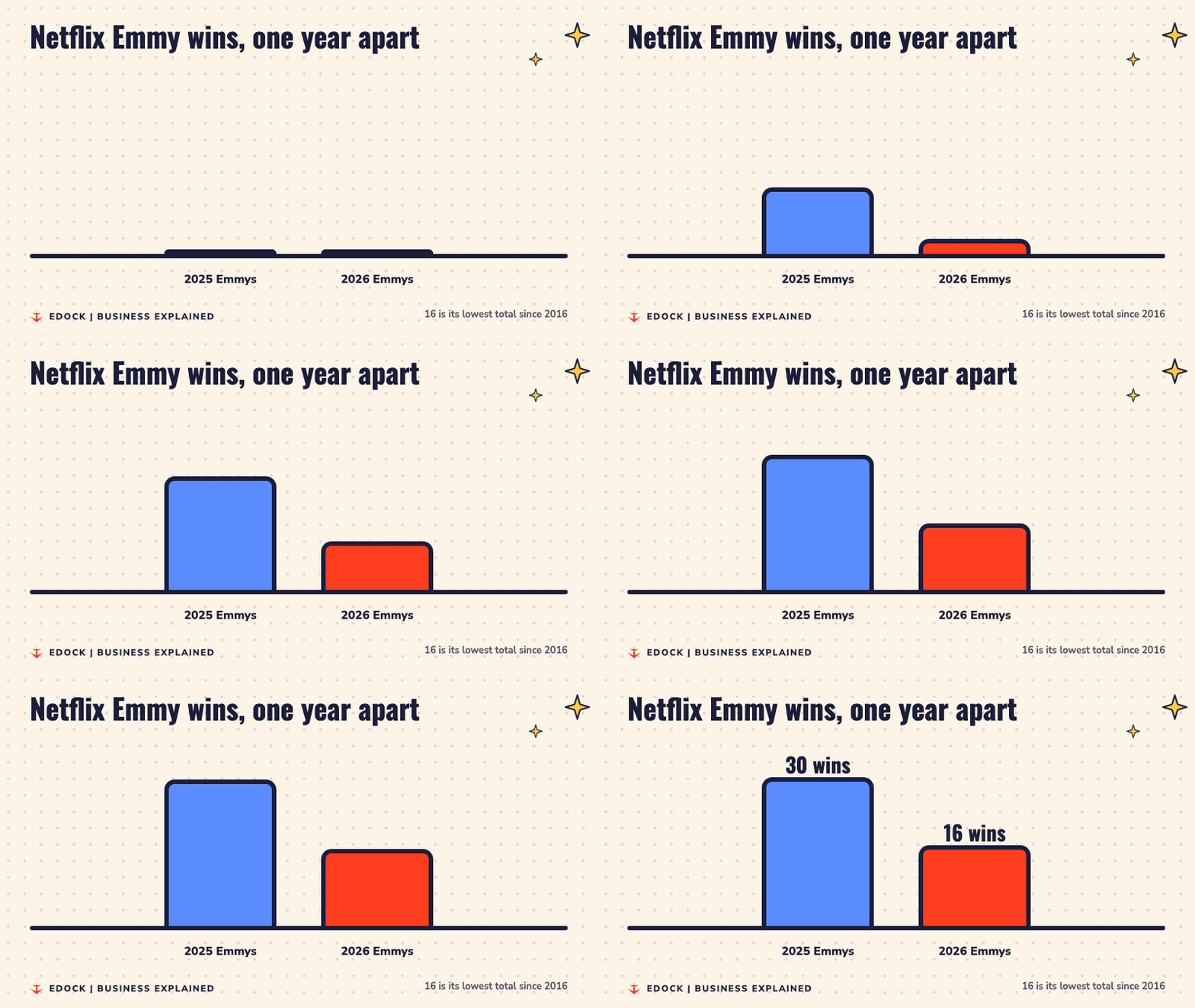
Some numbers in the background: Netflix won just 16 awards at the 2026 Primetime Emmys, down from 30 in 2025, its lowest since 2016. CNBC also points out it has lacked big water-cooler hits like "Stranger Things" and "Squid Game". A water-cooler hit is a show everyone talks about at work or college the next morning.
Who is the new boss?
Peter Rice will become chief content officer from 26 October 2026. He will lead Netflix's global content team: scripted and unscripted series, films, live events and more, across all regions.
Rice was most recently Chairman of Walt Disney Television, where he looked after more than 300 shows and 4,000 hours of television a year. Before that, as President of Fox Searchlight Pictures, he released films such as Slumdog Millionaire. Sarandos called him "one of the most effective at-scale operators in the entertainment industry." "At scale" means he has run very big operations, not just one show.
Why do investors care so much?
Investors are people who buy a small piece of a company, called a share. Netflix's shares are down more than 20% this year. Its own forecast for July to September was below what Wall Street expected. Wall Street is the nickname for the big money world in New York.
The next big test comes soon. Netflix will share its July to September results on 20 October 2026. People will look for any sign of faster growth, and for what the company says about its new content plan.
For context, in all of 2025 Netflix reported revenue of USD 45.2 billion, with ad revenue above USD 1.5 billion. It is also trying games, video podcasts, short videos and a redesigned mobile app to keep people coming back.
What can young professionals learn from this?
- Profit does not mean safety. Even a profitable company can cut roles when growth slows. Companies plan for the future, not only for today.
- Growth is the scoreboard. For big listed companies, investors watch how fast things are growing, not just whether money is coming in.
- Attention is the real currency. Netflix is not only competing with other streaming apps. It is competing with every app on your phone.
- Leaders change when results stall. When numbers stop moving, the people at the top often change too.
Netflix still has a huge audience and strong profits. The question now is whether fewer people and a new content chief can bring back the buzz. The results on 20 October will be the first clue.
Sources
- ETHRWorld (The Economic Times): Netflix is laying off 6% of its workforce
- CNBC: Netflix to lay off roughly 1,000 employees, or 6% of workforce
- TechCrunch: Netflix to lay off 1,000 staff amid intensifying competition for user attention
- About Netflix: Peter Rice named Netflix Chief Content Officer
- CNBC: Netflix Chief Content Officer Bela Bajaria is leaving, will be replaced by Peter Rice
- Mint: Who is Bela Bajaria and why has Netflix fired its powerful content chief?
- Cover photo: Person holds a remote control while sitting on a couch, by Shixart1985, CC BY 2.0

You may republish this story under CC BY 4.0: credit Pranav Sharma and link to this page.