Nestle sees lots of room for Maggi to grow in India after a 20% jump
India grew five times faster than Nestle worldwide from July to September 2026, and the company says many more homes are still left to win.
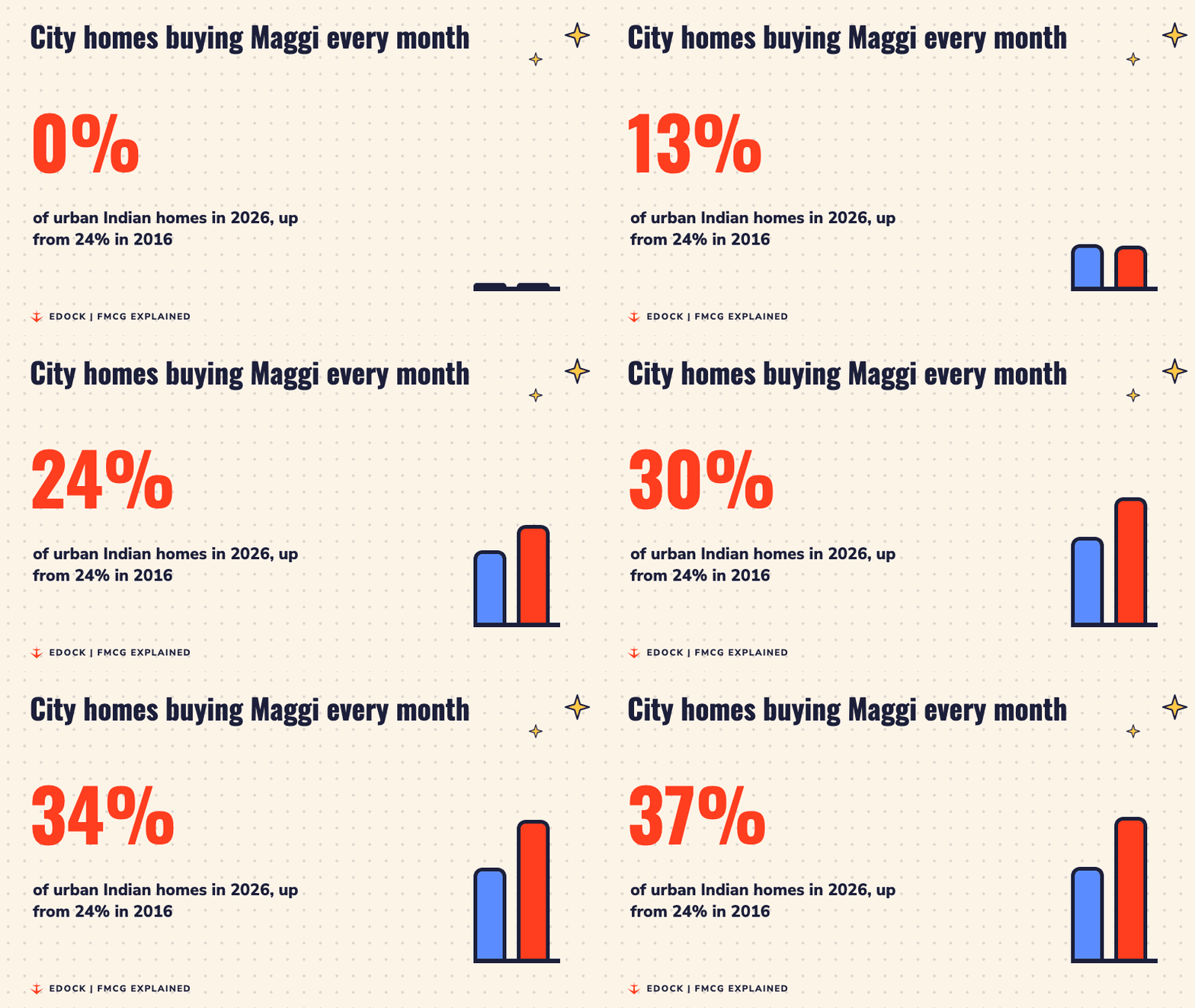
Picture every city home in India lined up in one long street. Walk past 100 doors, and 37 of them bought a pack of Maggi noodles this month. Ten years ago, only 24 doors did. That is the number Nestle, the Swiss company that owns Maggi, shared with investors this week, and it says the street still has plenty of doors left to knock on.
On 22 October 2026, Nestle's global chief executive Philipp Navratil said on a call about the company's results that the noodles business in India has a lot of headroom to grow. Headroom is a fancy word for space above your head. Here it means space to sell a lot more.
First, how big is Maggi in India?
Very big. India is the largest market for Maggi in the whole world, with more than 5.7 billion servings sold, according to Nestle India's annual report for FY26. A serving is one plate. So that is billions of plates of two-minute noodles in one year.
Nestle also said that 37% of urban households in India buy Maggi every month, up from 24% in 2016. That is a jump of 13 points in ten years.
And it is not only noodles. India has also become the largest market for KitKat, the chocolate wafer, the company said earlier this year.
The 20% that made everyone look at India
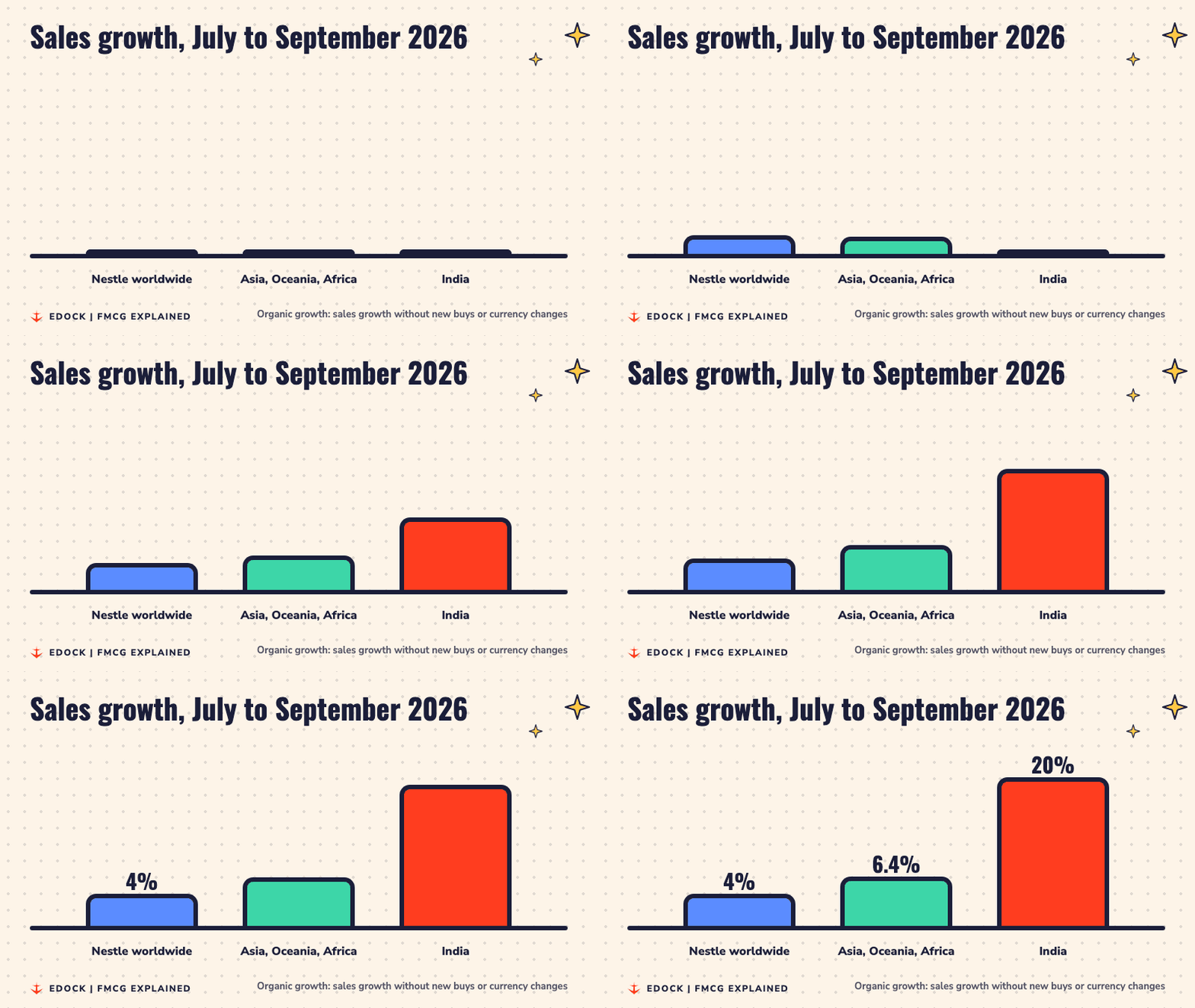
Nestle is a giant. In July to September 2026 alone, it made total sales of 22.8 billion Swiss francs across the world. Its sales grew 4% compared with the same three months last year.
India grew five times faster. Nestle's own sales update says India achieved 20% organic growth, on top of double-digit growth a year earlier, and won more market share.
Two business words need a quick explanation here.
- Organic growth is growth that comes from the business itself: selling more packets, or selling them at a slightly higher price. It leaves out growth from buying another company or from changes in currency values. Think of a chai stall. If it sells more cups, that is organic growth. If it buys the stall next door, that is not.
- Market share is your slice of the pie. If 10 friends buy noodles and 6 of them pick your brand, your share is 60%.
The wider region also did well. Nestle groups India with other countries in a zone called Asia, Oceania and Africa. That zone grew 6.4% in the quarter, and the company said Maggi contributed strongly through its cooking products and noodles.
So what does "room to grow" actually mean?
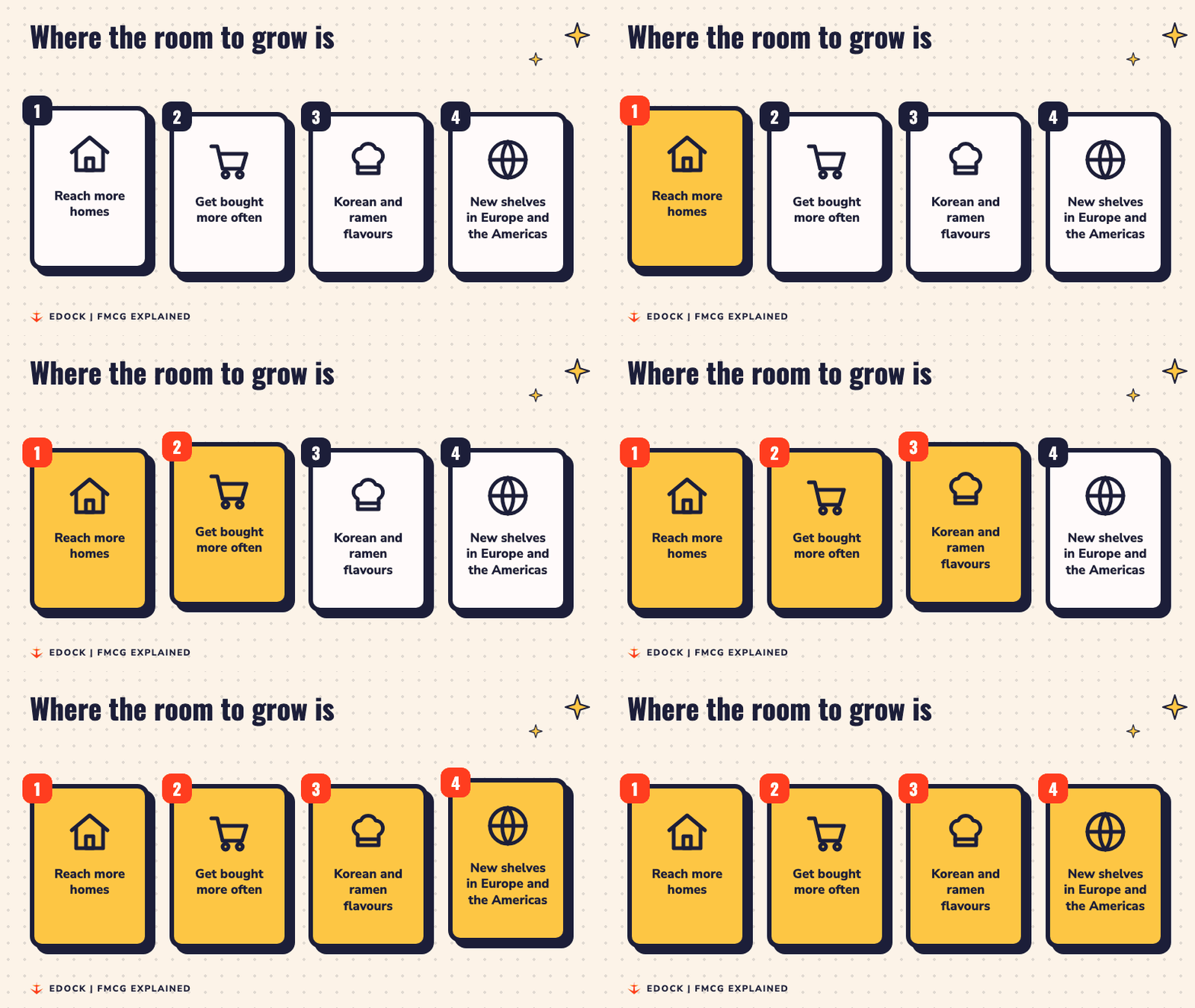
If 37 out of 100 city homes buy Maggi each month, then 63 do not. That gap is the room. Navratil described it as a chance to drive further category penetration and market share.
Penetration means how many people use a type of product at all. Imagine a cricket ground. Penetration is how many seats are filled. Market share is how many of the filled seats are wearing your team's jersey. Nestle wants both: more people eating instant noodles, and more of them picking Maggi.
There is a second kind of room too: how often people buy. Nestle said there is room to grow penetration and frequency even in large markets like India. In a presentation, it also said the instant noodles category in India is growing more than twice as fast as the overall food segment.
Nestle India has also said it is expanding the rural reach of Maggi Noodles, which means getting the packets into more village shops.
Young people want bolder flavours
This part is about readers like you. Navratil said that consumers, particularly younger consumers, are looking to food from around the world for bolder flavours. Nestle says it is going after this with Korean and ramen ranges.
Nestle calls Maggi, KitKat and Milo its "billionaire brands". It says these brands get focused investment in India. Nestle India said its chocolate range grew by double digits in the September quarter, helped by KitKat winning more market share.
Beyond India: Maggi goes west
Nestle also has ambitious expansion plans in Europe and the Americas for noodles. Navratil said people are moving between traditional meals and smaller, quick eating moments.
India already matters a lot to the group. Nestle says India is among its top five emerging markets with yearly sales of at least 1 billion Swiss francs, along with China, Brazil, Mexico and the Philippines.
What about Nestle India's own numbers?
Nestle India is the Indian company that makes and sells Maggi, KitKat, Nescafe and more here. A week before the global call, it reported its results for July to September 2026. Its total sales grew 20.5% to Rs 6,782.2 crore in the quarter.
Profit rose too. Net profit, the money left after paying every bill and tax, went up 35.81% to Rs 1,009.61 crore. For the full year FY26, Nestle India had posted sales of Rs 23,071.5 crore.
How do the packets reach you? A Zee Business report says Nestle India is present in around 6,000 dark stores, the small warehouses that quick delivery apps use. Its overall reach has grown to about 6.2 million shops, up from 5.7 million in 2023.
Not all smooth roads
Costs are a worry. Nestle India warned that food inflation and higher costs of raw materials like edible oils, cocoa and sugar make the environment hard. Inflation simply means prices going up over time, like when your favourite samosa costs Rs 20 instead of Rs 15. When a company pays more for oil and sugar, it must either charge more, sell more, or earn less on each packet.
Still, the message from Nestle this week was clear. India is one of its fastest growing big markets, Maggi already reaches a large share of city homes, and the company sees many more homes, villages and plates left to win.
Sources
- Nestle sees strong growth potential for Maggi noodles in India, The Economic Times
- India's a call-out market, but there's room to grow: Nestle, The Economic Times
- Maggi, KitKat witnessing strong growth in India, headroom for expansion, BusinessLine
- Nestle: Third-quarter and nine-month 2026 sales (company release), Yahoo Finance
- From Maggi to KitKat, why Nestle's biggest brands still have room to grow, Zee Business
- Cover photo: Instant noodles in an aluminium pan with a steel ladle, by Sachinraj CP, CC0 1.0
You may republish this story under CC BY 4.0: credit Manpreet Kaur and link to this page.