Navratri shoppers splurge on clothes and ACs while pricier phones sit on shelves
AC sales jumped over 50% at Vijay Sales, but online phone sales fell 16% as costly memory chips pushed gadget prices up.
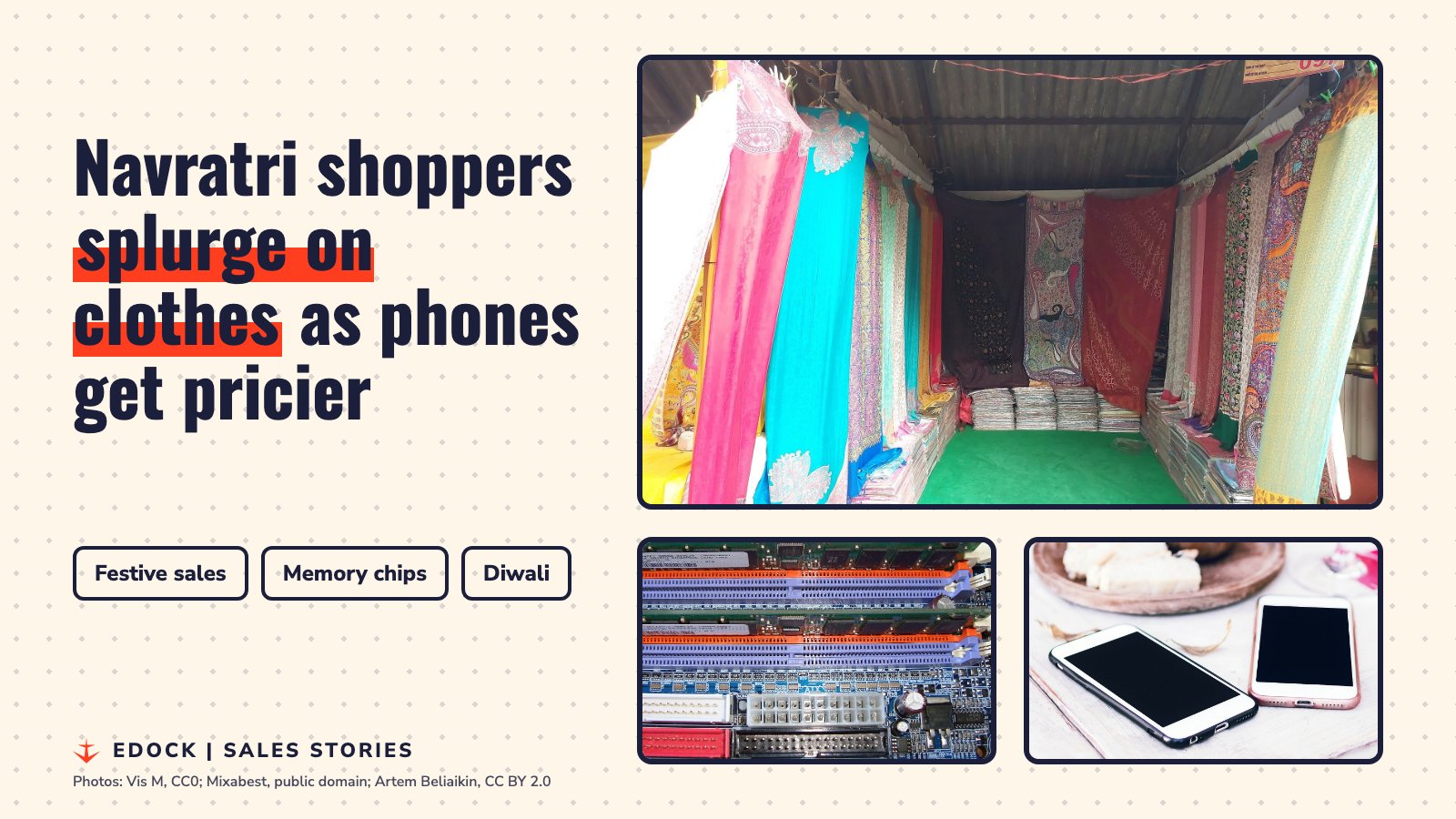
Picture two shops on the same street during Navratri. One sells clothes and air conditioners, and it is packed. The other sells phones and laptops, and it is much quieter. That is roughly what happened across India this festive season. At electronics chain Vijay Sales, AC sales jumped more than 50%. But online smartphone sales fell by 16%.
Navratri ran from 11 to 19 October 2026. On 21 October, The Economic Times shared what shops and brands saw in those nine days. The short version: people spent happily on clothes, shoes and home appliances, but held back on gadgets that keep getting pricier.
What did people buy more of?
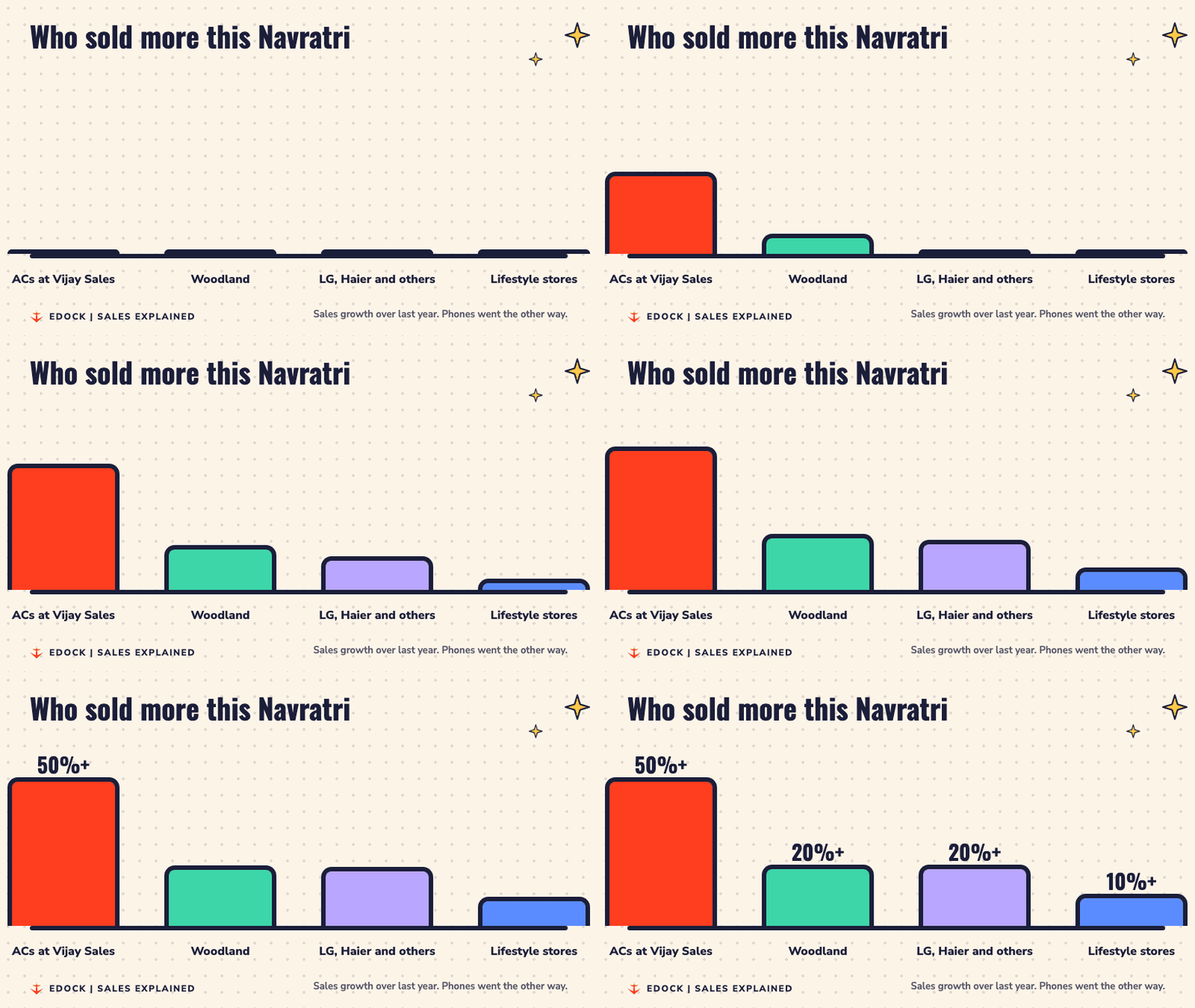
Let us start with the winners. Lifestyle International runs the Lifestyle chain of fashion stores. Its chief executive, Devarajan Iyer, said the average bill went up 6 to 7%, and same-store sales rose more than 10%.
Same-store sales is a simple idea. Take only the shops that were already open last year, and compare their sales now with then. New shops are left out. It is like checking if your old samosa stall sold more this year, without counting the new stall you opened next door. It shows if old customers are really buying more.
Shoe and lifestyle brand Woodland grew by more than 20%. So did electronics chain Vijay Sales. And appliance makers LG, Godrej Appliances, Haier and Lloyd (owned by Havells) all reported sales growth of more than 20% during Navratri, according to industry executives.
Why are people buying clothes instead of trips?
Devarajan Iyer also gave a clue about where the money is going. For the past four to five years, many Indians spent a lot on experiences such as travel and hotels. Now, he said, money is going back into shopping. One small sign: suitcase sales have stalled this year, while people spend more on clothes, handbags and footwear.
Appliances got help from two things. First, last year's GST rationalisation made many products more affordable. GST is the tax added to almost everything you buy, and "rationalisation" here means the government simplified the tax rates. Sanjay Chitkara of LG Electronics India said this better affordability, plus festive EMI schemes, helped demand.
An EMI, or equated monthly instalment, lets you pay for something in small equal parts every month instead of all at once. Think of buying a Rs 30,000 AC by paying Rs 2,500 a month for a year. Electronics companies made these plans longer this year and offered them even on cheaper products.
Brands also made one more move. They had announced a price hike from October. They pushed it to after Diwali, which falls on 8 November. So shoppers who bought now got the old price.
So why did phones struggle?
Here is the twist. Smartphones, laptops and TVs faced pressure on volumes, which means the number of pieces sold. The reason is a tiny part inside them: the memory chip. It is the part that stores your photos, apps and games.
Memory chip prices have gone up two to three times, according to the ET report. When a key part costs more, the phone costs more to make. Brands raised prices again and again. Industry executives say average prices of memory-heavy products are now 15 to 40% higher than at last Diwali.
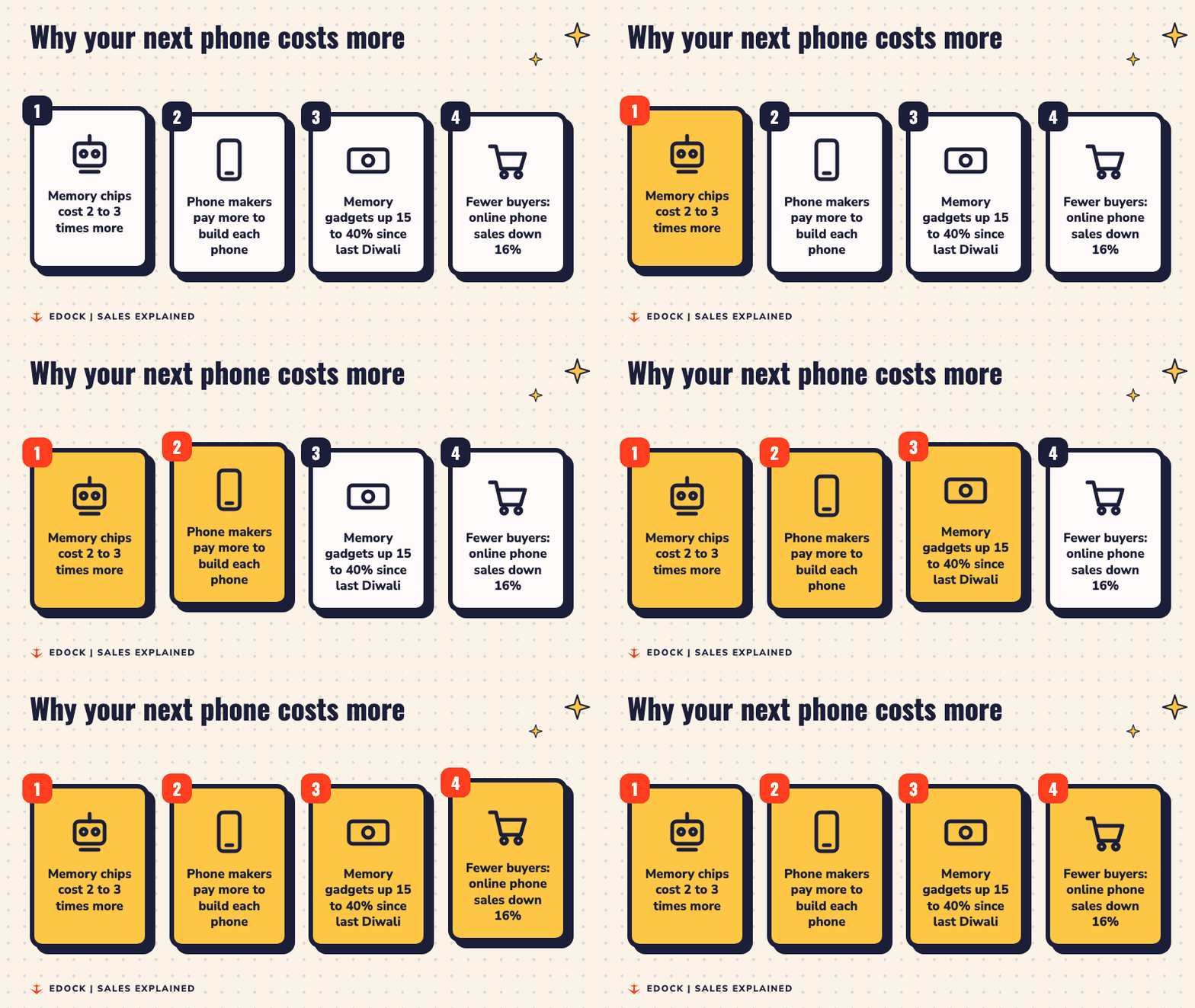
The result showed up in sales. Counterpoint Research estimates that online smartphone unit sales during Navratri fell 16% compared with last year. The All India Mobile Retailers Association, a group of phone shop owners, estimates that sales in physical shops fell by nearly 20% in volume. In value, the total money spent on phones stayed almost flat. Gujarat was the odd one out, with 15% more phones sold.
How can fewer phones bring in the same money? Because each phone costs more. If a chai stall sells 80 cups at Rs 12 instead of 100 cups at Rs 10, it earns Rs 960 instead of Rs 1,000. Fewer cups, almost the same money.
Where did the festive discounts go?
Big discounts are usually the whole point of festive sales. This year, many of them vanished. Mint reported that the iPhone 17 was selling on Flipkart for Rs 86,999, above its launch price of Rs 82,900 in September 2025. That is Rs 4,099 more in a festive sale.

Some brands even raised prices right as the sales began. According to data from the All India Mobile Retailers Association, shared with Mint, Samsung raised prices of two mid-range phones by 5%, and Realme raised prices of three models by up to 13%, between 11 and 12 October.
Not every phone suffered. Amazon said sales of premium Android phones rose 70% in the first two days of its Great Indian Festival sale. Costly phones held up better because buyers could use no-cost EMI and trade-in offers. Budget phones were hit hardest. PCQuest reported that steep price rises on phones under Rs 10,000 and Rs 15,000 pushed some buyers to refurbished phones, or to keep their old phone longer.
This matters because the festive season brings in nearly 30% of India's yearly electronics sales, according to data from IDC and Counterpoint cited by Mint. IDC expects India to sell 125 million smartphones this year, down from 152 million in 2025.
What happens next, at Diwali?
Some brands are hopeful. Haier India chief executive Satish NS said the Navratri buzz had laid the foundation for a strong Diwali.
For phones, the picture is different. Counterpoint Research expects festive season smartphone volumes to fall 12% this year, while the market's total value rises 5% because each phone costs more. And the delayed appliance price hike is still due once Diwali is over.
So this Navratri, more of the festive money went to new clothes and cooler homes, and less to new phones, which now cost more than they did a year ago.
Sources
- The Economic Times: Navratri shoppers splurge on clothes, appliances as gadgets get pricier
- Mint: Fewer festive bargains for smartphone buyers as memory chip costs soar
- PCQuest: India smartphone sales fall 16%
- Cover photo: Saree shop at Shilparamam 2023, by Vis M, CC0; Dual-channel DDR memory use, by Mixabest, public domain; Top view image of two smartphones on a wooden table, by Artem Beliaikin, CC BY 2.0


You may republish this story under CC BY 4.0: credit Manpreet Kaur and link to this page.