Natural rubber hits a record Rs 290 a kg as tyre makers keep buying
Version 1 of 1 saved 23 Oct 2026, 9:09 am IST · Chain line 163
As it was first published
Natural rubber hits a record Rs 290 a kg as tyre makers keep buying
Hot weather, costlier oil and strong tyre demand pushed Indian sheet rubber to its highest price ever, even above rubber in Bangkok.
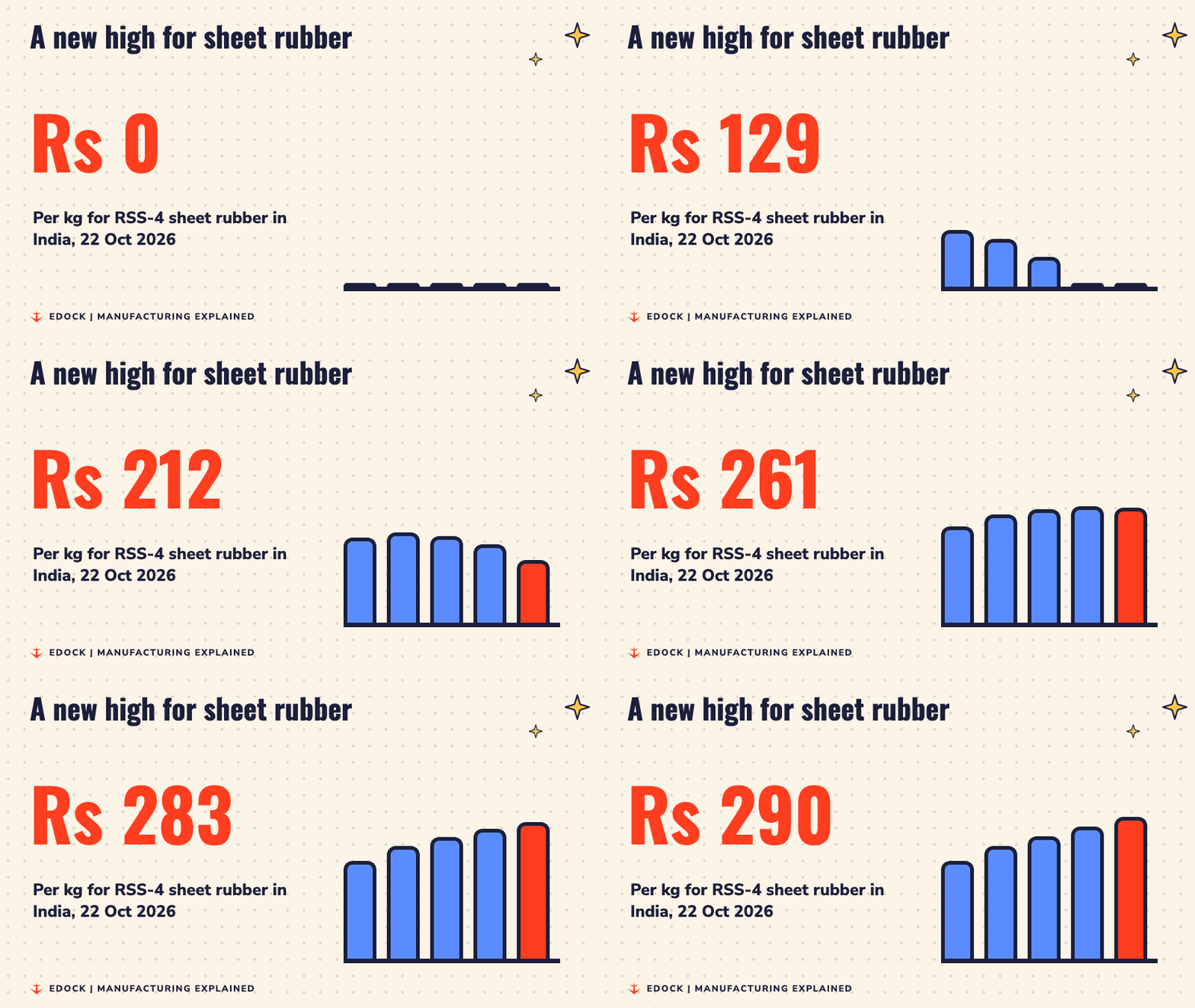
Picture a sheet of rubber, about the size of a doormat, hanging on a rope to dry in a Kerala backyard. Right now, that plain-looking sheet is worth more than ever before. On 22 October 2026, BusinessLine reported that natural rubber touched a record Rs 290 per kg in India, the highest price ever for this grade.
Even more surprising: Indian rubber now costs more than rubber abroad. Here is what natural rubber is, who is buying it, and why the price shot up.
First, what is natural rubber?
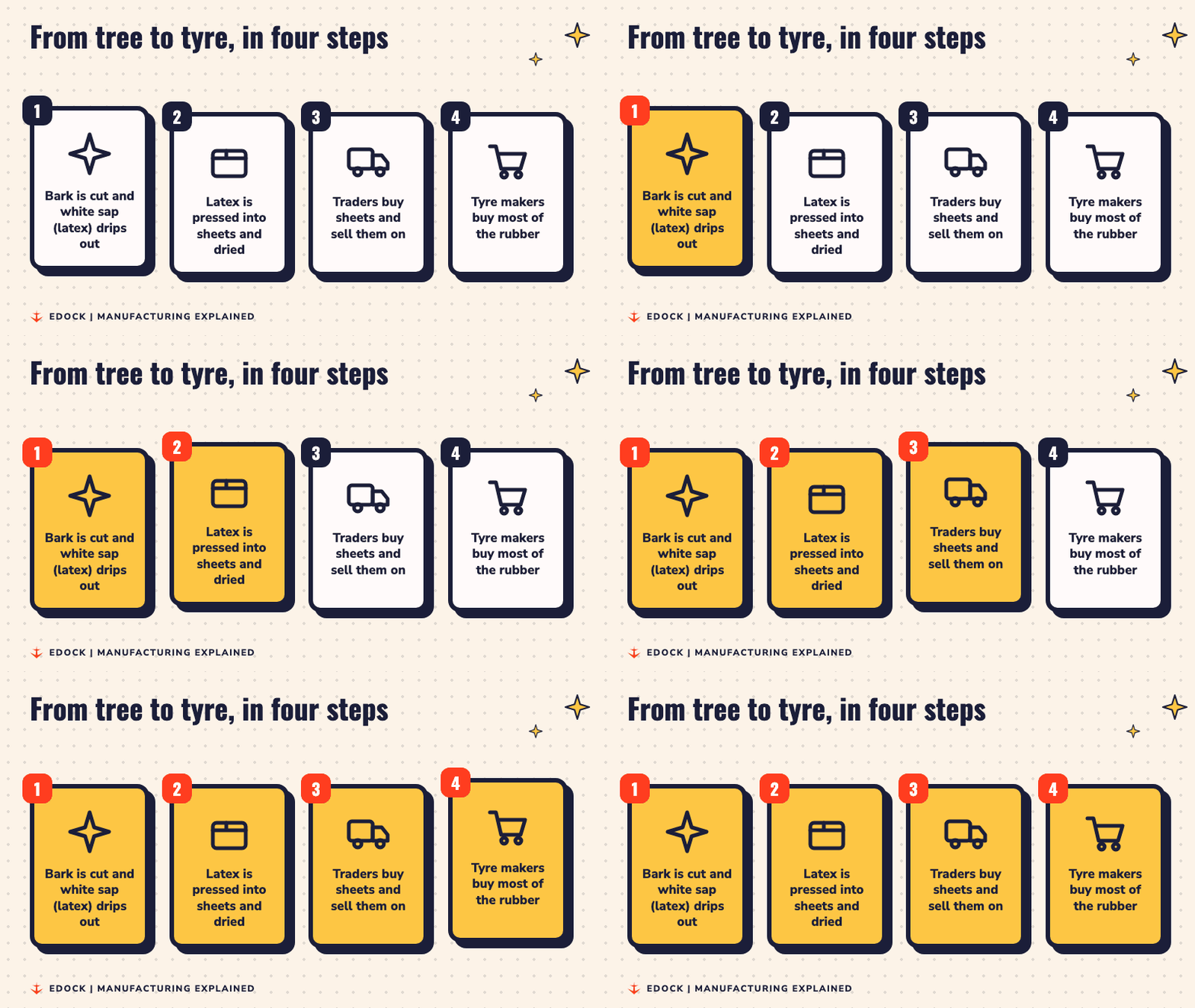
Natural rubber comes from a tree. Workers make a thin cut in the bark, and a white, milky sap slowly drips into a small cup tied to the trunk. This sap is called latex. It is a bit like how sugarcane juice comes out when the cane is pressed, except here the tree gives it drop by drop.
Farmers then turn the latex into flat sheets, dry them and sell them to traders. The record price is for a grade of sheet rubber called RSS-4. Think of a grade like the size label on a T-shirt: it tells buyers exactly what quality they are getting.
Kerala is the heart of this business. The state grows nearly 90 per cent of India's natural rubber, with some more coming from places like Kanniyakumari in Tamil Nadu.
Who buys all this rubber?
Mostly tyre makers. The car, bike, bus and truck tyres you see on the road need a lot of natural rubber. According to the tyre makers' own industry body, the tyre industry uses over 70 per cent of the natural rubber consumed in India.
So when tyre factories want more rubber, the whole market feels it. Traders told BusinessLine that this time the price rise came from strong buying by tyre makers, while supplies stayed tight.
India is now pricier than Bangkok
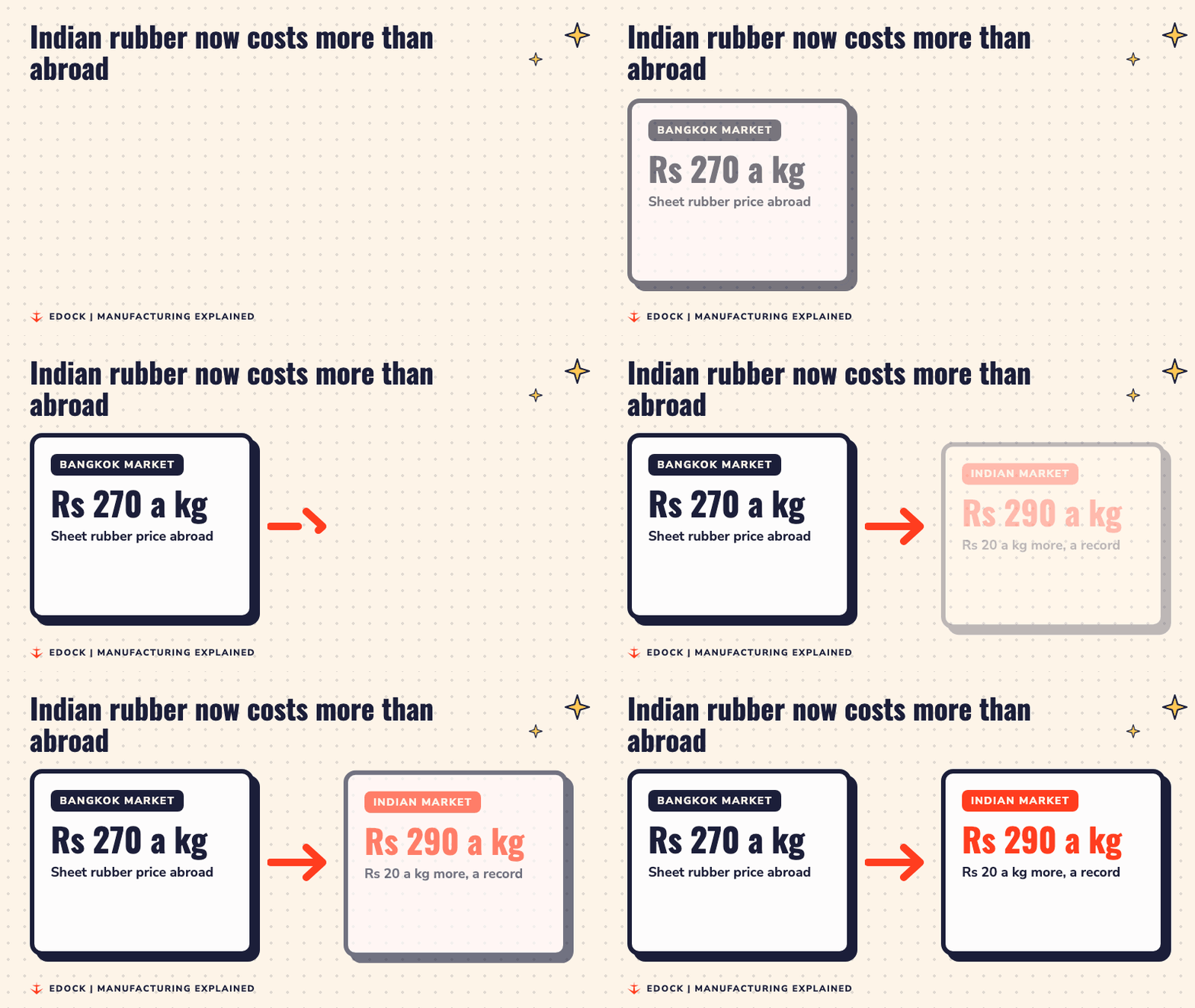
Here is the twist. On the same day, sheet rubber in Bangkok, Thailand, was around Rs 270 per kg. Indian rubber was Rs 20 per kg higher than international prices.
Another type, called block rubber, showed the same gap. It was Rs 273 per kg in India against Rs 245 abroad. That is Rs 28 more for every kilo.
Think of it like samosas at two stalls. If one stall runs short and a big group of customers turns up, it can charge more than the stall across the road. India's rubber stall is short of stock and has very hungry customers.
Why did supply get so tight?
Several things happened at once, according to the people BusinessLine spoke to.
1. Hot weather. An analyst said unusually hot weather cut latex output in southern growing areas. In Kanniyakumari, rubber production dropped by nearly 30 per cent during a hot spell. Fewer drops from the tree means fewer sheets to sell.
2. Farmers chose other products. Latex itself was selling at about Rs 300 per kg, and cup lump (the rubber that dries in the collecting cup) at about Rs 200. These prices pushed some growers to sell latex and cup lump instead of making sheets, which added to the shortage of sheet rubber, said George Valy, president of the Indian Rubber Dealers Federation.
3. Oil got costlier. There is also a man-made cousin called synthetic rubber. Its cost moves with crude oil. The analyst, Harish MV of Harnez Fin Analysis, linked the surge to tension in West Asia, which pushed up crude oil prices. That made synthetic rubber costlier to produce, so manufacturers shifted towards natural rubber. More buyers chasing the same sheets means higher prices.
4. The whole world is short. Industry estimates put 2026 global output at about 15.3 million tonnes against demand of about 15.4 million tonnes. Thailand, the biggest producer, also faced rain trouble in its key tapping areas. When the world wants a little more than it makes, prices stay high everywhere.
How fast has the price climbed?
On 3 September 2026, RSS-4 rubber at Kottayam, Kerala's main rubber market, was Rs 27,300 per quintal. A quintal is 100 kg, so that is Rs 273 per kg. By 22 October, it was Rs 290 per kg. That is Rs 17 more per kilo in about seven weeks, a rise of roughly 6 per cent.
For comparison, in Kanniyakumari, natural rubber typically sells for Rs 17,000 to Rs 18,000 per quintal, or Rs 170 to Rs 180 per kg. The same report said prices there had reached up to Rs 30,000 per quintal this year.
What does this mean for factories?
For a tyre factory, rubber is a raw material, the basic stuff a product is made from, like flour for a bakery. When flour gets costlier, the baker either earns less per loaf or charges more. Tyre makers face the same choice.
Many factories also buy from abroad. Imports of natural rubber and compound rubber (rubber already mixed with other materials) have been averaging around 75,000 tonnes a month, according to the dealers' federation. With Indian rubber now dearer than Bangkok rubber, buying from outside looks more attractive.
Supply worries are not new for tyre makers. In 2024, their industry body warned that a shortage of local rubber could lead to plant stoppages and disruptions.
And for farmers?
Higher prices are good news for growers who have rubber to sell. For comparison, the Kerala government raised its support price for rubber, a kind of safety-net price for growers, from Rs 200 to Rs 250 per kg from 3 July 2026. Today's market price of Rs 290 is Rs 40 above that level.
But a high price helps only if the trees are giving latex. Growers are hoping for better yields in the coming months as the northeast monsoon brings rain to the main growing regions. More rain could mean more latex, and more rubber in the market.
The big picture
A tree sap from Kerala is tied to tyres on Indian roads, oil prices in West Asia and the weather in Thailand. When any one of these moves, the price of a humble rubber sheet moves too. On 22 October, all of them pointed the same way, and natural rubber set a new record.
Sources
- Natural rubber prices hit record high of Rs 290 per kg, BusinessLine, 22 October 2026
- Rubber prices surge to Rs 30,000 per quintal in Kanniyakumari, DT Next
- India's Automotive Tyre Manufacturers Association raises concern over natural rubber production levels, Rubber World
- Natural rubber futures near 2013 highs, Procurement Resource
- Kerala hikes natural rubber support price to Rs 250 per kg, Telangana Today
- Cover photo: Rubber sheet three versions, by Vaikoovery, CC BY 3.0
