Mumbai Port invites global bids for a Rs 922.67 crore yacht marina at Victoria Dock
The marina will hold 604 yachts at full size. The winner builds a hotel, sailing school and yacht club, and runs it all for 45 years.

Picture this. A huge city right on the sea, yet yacht owners say there is no proper place to park their boats. That is Mumbai today. Now the city's port wants to change it, and it has asked companies from all over the world to help.
On 21 October 2026, the Mumbai Port Authority invited bids from Indian and foreign companies to build and run the Viksit Bharat Mumbai Marina at Victoria Dock. The estimated cost is Rs 922.67 crore. At full size, the marina can hold 604 yachts.
So what is a marina, why does a cargo port want one, and how does a global bid work? Here it is, in simple words.
First, what is a marina?
Think of a parking lot, but on water. Cars park in marked spots. In a marina, boats and yachts park in spots called berths. A berth is just a safe slot next to a floating walkway, where a boat can be tied up, filled with fuel, cleaned and repaired.
A marina also needs a wall in the sea to keep big waves out. This wall is called a breakwater. It works like the umbrella over a chai stall: the storm stays outside, and everything under it stays calm.
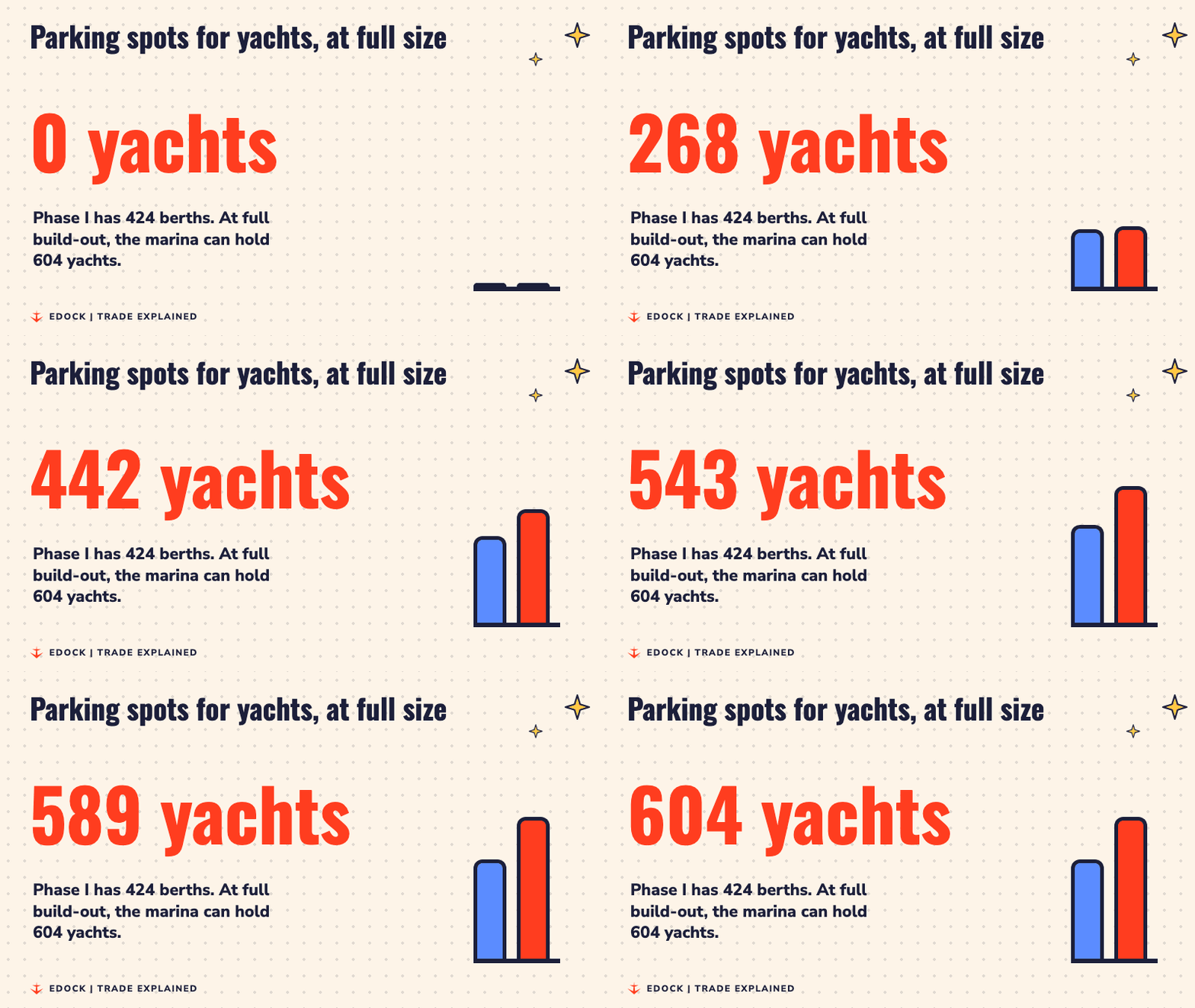
According to the Free Press Journal, the Mumbai marina will have 37.3 hectares of protected water. That is roughly the size of 50 football fields. Phase I will have 424 berths, and the full plan goes up to 604 yachts.
Why does Mumbai need one?
India has a coastline of about 11,000 km. Yet, as Swarajya reported, the country lacks marinas of global standard. Yacht owners in Mumbai have long complained about the mooring spots off the Gateway of India, which come with no proper facilities.
The marina is part of a bigger plan. The port is also pushing cruise tourism, water taxis and heritage waterfront areas, including the Mumbai International Cruise Terminal, the Free Press Journal said.
The chairperson of the Mumbai Port Authority, Dr M. Angamuthu, put it simply in the port's statement: "Mumbai's identity is inseparable from the sea." He said the marina will open a part of the working harbour for marine tourism and sailing, while keeping port operations and safety at the centre.
What will be built there?
This is not only about parking boats. Business Today listed the plans on land:
- A marina terminal building and a yacht club
- A sailing school of international standard
- A yacht repair yard at Haji Bunder and a dry stack, which is like a tall shelf where small boats are stored out of the water
- A fuel station
- A five-star hotel and a tourism business centre
- Food, retail and space for boat shows and events
Who does what?
The port is not waiting for the winner to start. It has already begun the work in the water. This includes a piled breakwater with an approach bridge of about 150 metres, six service platforms on pillars, floating walkways for 424 berths, and dredging. Dredging means digging mud out of the seabed so the water is deep enough for boats, a bit like clearing a blocked drain.
The port also says it has the green and Coastal Regulation Zone (CRZ) clearances for the whole area. These are government permissions that say a project near the sea is safe for nature and follows coastal rules.
The company that wins will build everything on land, add more berths after Phase I, and run the marina for 45 years. After that, it hands it all back to the port.

What is DBFOT, in plain words?
The project uses a model called DBFOT, which stands for Design, Build, Finance, Operate and Transfer. It is a kind of PPP, or public private partnership, where a government body and a private company team up.
Think of it like a school canteen. The school owns the space. A caterer designs the counter, pays for the stoves, runs the canteen for some years and keeps earning from it. When the contract ends, the canteen goes back to the school. Here, the "some years" is a 45-year concession. A concession is simply the right to run something and earn from it for a fixed time.
An earlier Maritime Gateway report said the government approved about Rs 470 crore of the port's own money for the core marine works, with a private developer expected to build the onshore part.
How do ports earn beyond cargo?
Ports usually earn by handling ships and goods. This marina shows a different way. The winning bidder will be chosen by one number: the percentage share of gross revenue it promises to pay the port. Gross revenue means all the money that comes in, before any costs are taken out.
So if a samosa stall on school land agrees to give the school 10 rupees out of every 100 it sells, the school earns every time a samosa is sold. The company that offers the port the biggest share of its sales becomes the preferred bidder.
Companies can bid alone or as a group of up to four members, called a consortium. The tender is a single-stage, two-envelope e-tender. In simple words, everything is submitted online in one round, in two separate parts.

The dates to remember
- 28 October 2026: last day for bidders to send questions
- 30 October and 25 November: the two pre-bid meetings
- 15 December 2026: last day to submit bids
Free Press Journal also covered Mumbai's marina plans in its weekly infrastructure round-up video.
Why this matters for young readers
A marina brings a whole set of new kinds of work: running a yacht club, teaching sailing, repairing boats, managing a hotel and hosting boat shows. It also shows how an old dock in a busy cargo port can find a new life as a place where people come to visit, not just where goods are loaded.
For now, the next big moment is 15 December 2026, when the bids close. Then the world will know which companies want to build and run this new marina.
Sources
- UNI: Mumbai Port Authority invites global bids for Viksit Bharat Mumbai Marina at Victoria Dock
- The Economic Times: Mumbai Port invites global bids for Rs 922.67 crore marina at Victoria Dock
- Free Press Journal: Mumbai Port Authority invites global bids for marina at Victoria Dock
- Business Today: Mumbai to get world class yacht marina at Victoria Dock
- Swarajya: India's first international standard marina to come up in Mumbai
- Maritime Gateway: Centre okays marina at Mumbai Harbour
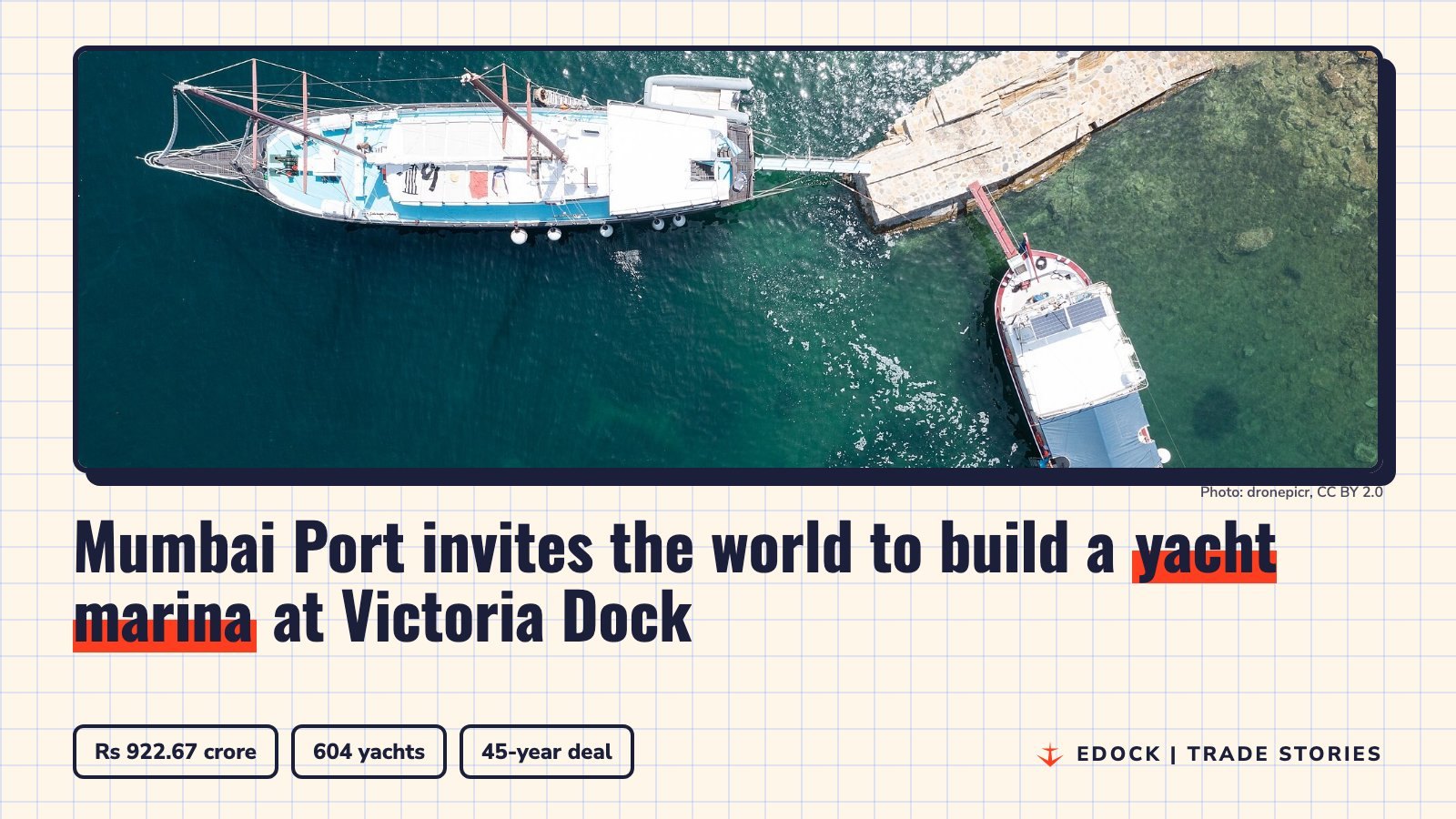
- Cover photo: Top-down aerial of yachts anchored at Kira Panagia Monastery Marina, Greece, by dronepicr, CC BY 2.0

You may republish this story under CC BY 4.0: credit Pranav Sharma and link to this page.