Meta's sales jump 26% to $64.6 billion as it creates a new kind of share
Version 1 of 1 saved 22 Oct 2026, 7:23 pm IST · Chain line 145
As it was first published
Meta's sales jump 26% to $64.6 billion as it creates a new kind of share
A big legal charge cut Meta's profit in July to September while AI spending stays huge. Here is what its new no vote Class C share means.
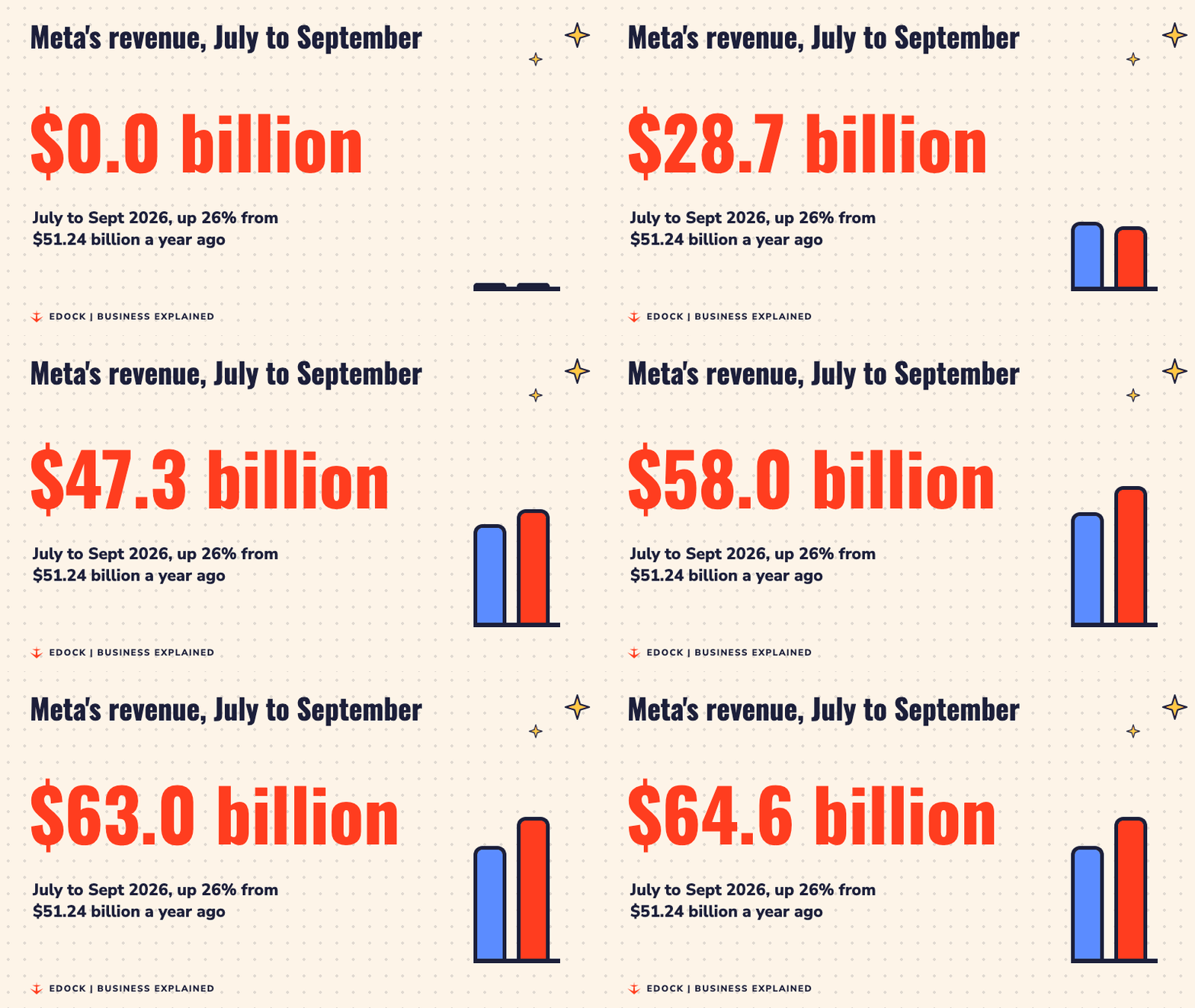
Picture a shop that takes in about $700 million every single day for three months straight. That is roughly what Meta, the company behind Facebook, Instagram and WhatsApp, pulled off between July and September 2026. On Wednesday, 21 October 2026 (US time), Meta shared its results for that period: revenue of $64.60 billion, up 26% from a year earlier.
But the same day brought two twists. A huge legal bill cut into its profit. And Meta said it will create a brand new kind of share, one that comes with no voting rights, to help pay for its giant AI plans.
Here is the whole story in plain words.
First, what are "quarterly results"?
Big listed companies tell the public how they did every three months. Each three month block is called a quarter. July, August and September make up the third quarter of the year, often written as Q3.
Think of it like a school report card that comes four times a year. It shows how much money came in, how much went out, and what was left over.
Two words matter here. Revenue is all the money that comes in from selling things. Profit is what is left after paying every bill. A chai stall that sells Rs 1,000 of tea has Rs 1,000 of revenue. If milk, sugar, gas and rent cost Rs 700, the profit is Rs 300.
Where does Meta's money come from?
Mostly from ads. Every time a brand pays to show you a post on Instagram or Facebook, Meta earns. In this quarter, ad revenue grew 26% to $63.06 billion. So ads brought in almost all of the $64.60 billion.
Two things pushed it up, the same report says. Meta showed 10% more ads than a year ago, and the average price of each ad went up 14%. More ads, and each one a little costlier. Like a cricket stadium that sells more seats and also raises the ticket price.
What does "beating expectations" mean?
Before results come out, experts who study a company guess what the numbers will be. That guess is called the expectation. If the real number is better, the company "beat expectations". If it is worse, it "missed".
Meta beat investor expectations for revenue, The Economic Times reported. But its profit of $9.86 billion came in almost 50% below what investors had expected, the same report said.
Meta also expects to do even better in the last three months of the year. It told investors it expects revenue of $73 billion to $76 billion from October to December.
So why did profit take a hit?
Because of a legal bill. Meta agreed to a legal settlement with nearly all US states, which The Economic Times put at $18 billion. A settlement is when two sides agree to end a court case, usually with one side paying money.
In this quarter, Meta booked a charge of $9.89 billion for this deal. A charge is simply a cost written into the books, like noting a big bill in your monthly budget even before you pay all of it.
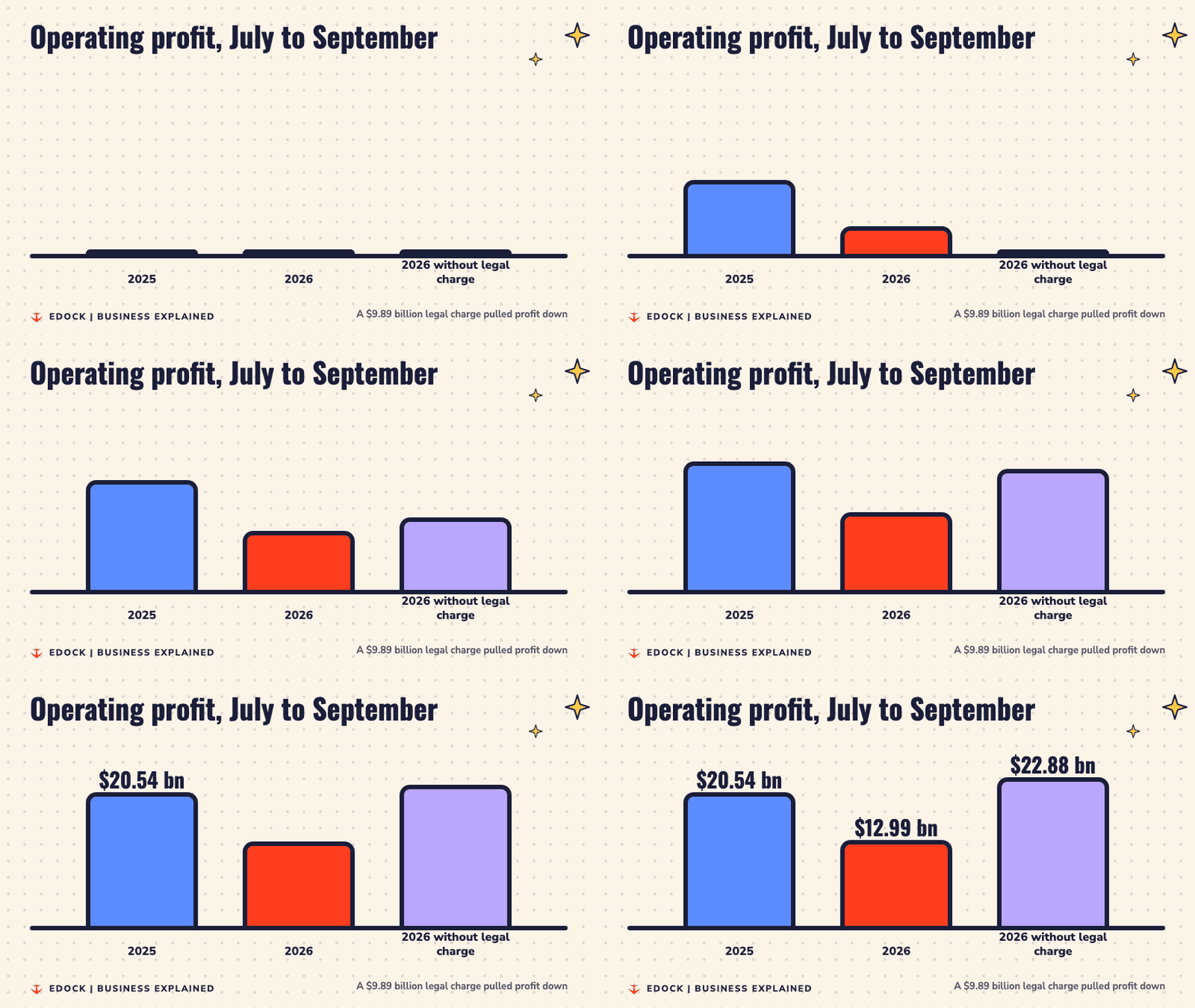
That one cost changed the picture. Meta's total costs and expenses rose 68% to $51.61 billion. Its operating profit, which is the money made from running the business before taxes, fell 37% to $12.99 billion, down from $20.54 billion a year ago. Without the legal charge, Meta said, operating profit would have been $22.88 billion.
There was more legal news the same day. Hours before the results, a judge ruled that Meta must pay $25 billion to the US state of New Mexico in a separate case. Meta's finance chief Susan Li said on the call that the company keeps watching legal matters that could affect its business.
The big spender: AI
Meta is spending heavily on artificial intelligence. AI needs huge buildings full of computers, called data centres. Building them costs a lot.
Money spent on such long term things, like land, buildings and machines, is called capital expenditure. It is like a family buying a new fridge: a big cost now, used for years. Meta spent $35 billion on capital expenditure in the September quarter, a bit below the $41 billion investors expected. For the full year 2026, it now expects to spend between $135 billion and $145 billion.
Its AI helper Muse is a big reason. Meta said that more than 10 million people in the US and Canada have set up Muse personal agents. About 25% of them use it every day, and shopping is one of the top things people do with it, according to TechCrunch.
A new kind of share with no vote
This is the part that got a lot of attention. First, what is a share? A share is a tiny piece of a company. If a company were a big pizza cut into a million slices, owning one slice means owning one share.
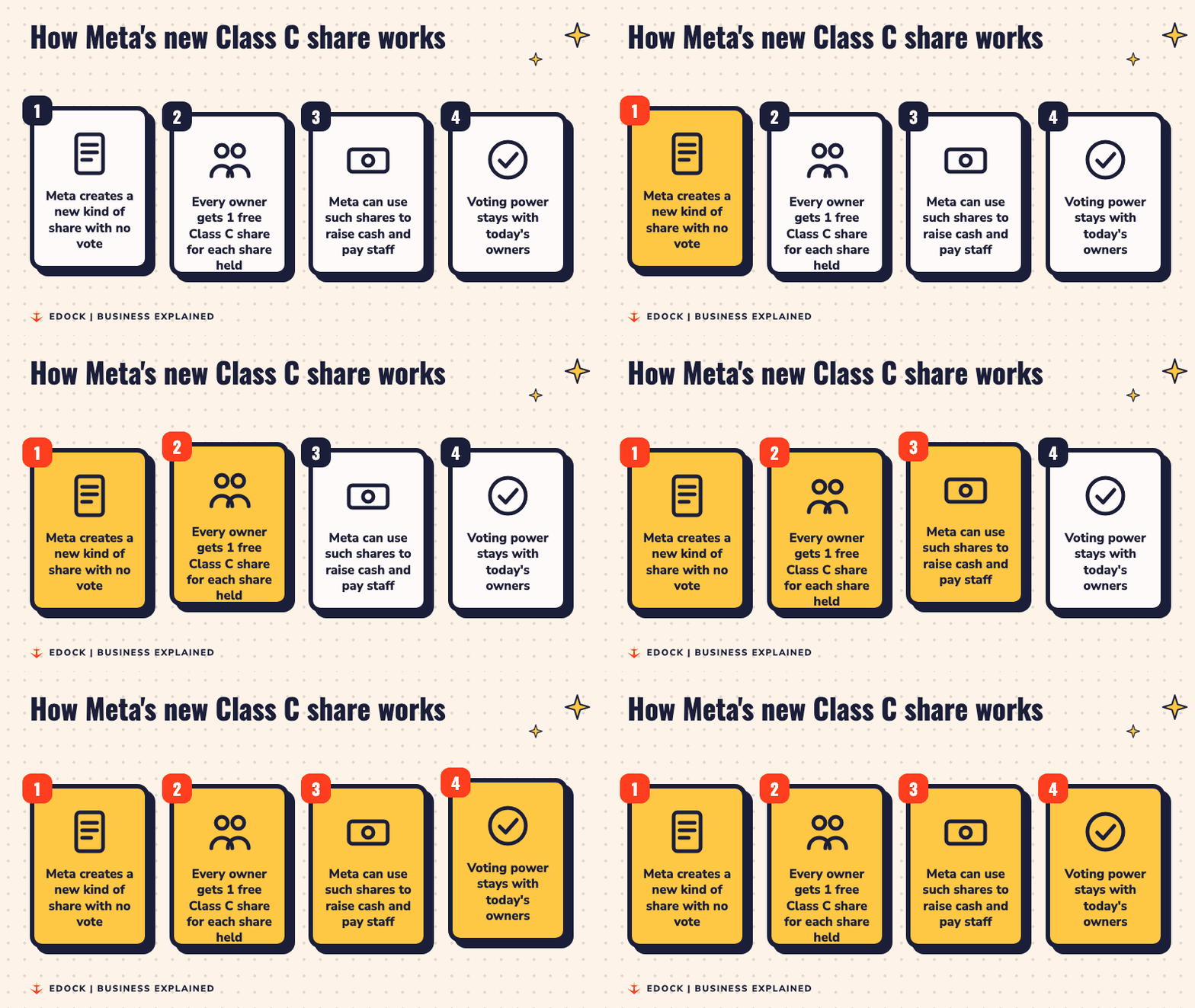
Most shares come with a vote. Owners can vote on big company decisions, like who sits on the board. Meta is now creating a new type called Class C. These shares give no vote on company decisions.
Here is how it works. Meta will hand out the new shares to every existing owner as a stock dividend, which means free extra shares instead of cash. Existing owners get one new Class C share for every share they already own.
Why would Meta do this?
Susan Li explained it on the results call, as reported by TechCrunch. Meta wants a share that can trade in the market and be used for raising money, paying employees and buying other companies, while keeping the voting power of today's Class A and Class B owners the same.
Think of a cricket club that needs money for a new ground. It can invite people to put in money and get a share of the club, but not a say in picking the team. The club gets cash. The people running it keep control.
Li said the new shares let Meta keep its founder led setup, with founder Mark Zuckerberg still in charge, while giving it more ways to fund its AI push.
What it means for you
If you use Instagram or WhatsApp, you are part of this story. Ads are Meta's main source of money, and Meta is spending billions on data centres for AI tools like Muse. Its latest numbers show the ad business is still growing fast, even as legal bills and huge AI costs eat into what is left over.
The new no vote share shows something else too. Even a company that brings in about $700 million a day is hunting for new ways to raise money, because its AI plans cost so much.
Sources
- Meta Q3 revenue rises 26% to $64.6 billion, BusinessLine
- Meta beats expectations but legal penalties hit profit amid AI race, The Economic Times
- Meta wants to pay for its AI buildout with a newly created class of stock, TechCrunch
- Meta says Muse has over 10M users, TechCrunch
- Cover photo: Datacenter Server Racks, by Carl Lender, CC BY 2.0
