Meta's Muse app crosses 10 million US downloads in just 40 days
Version 1 of 1 saved 21 Oct 2026, 1:12 am IST · Chain line 98
As it was first published
Meta's Muse app crosses 10 million US downloads in just 40 days
Only 11 other apps have grown this fast. What the AI helper does, how Meta plans to earn from it, and why it is not in India yet.
Picture a new app that did not exist on 7 September. Forty days later, more than 10 million people in the US have downloaded it. That app is Muse, an AI helper made by Meta, the company behind Instagram, Facebook and WhatsApp. On 20 October 2026, TechCrunch reported that Muse has reached 10.9 million downloads since its September debut, with 10.2 million of them in the US, based on estimates from the app data firm Sensor Tower.
Here is why that is a big deal. Only 11 other apps in history have reached 10 million US downloads within 40 days of launch. Most of them were games.
So what is Muse?
Most AI apps you know are chatbots. You type a question, and they type back an answer. Muse tries to go one step further. Meta calls it a personal AI agent. An agent is like a helper who does the work, not just one who gives advice. A chatbot can tell you which train to take. An agent can try to book the ticket for you.
Meta launched Muse on 8 September 2026 for users in the US. It connects to the apps a person uses every day, like email, calendars and payments. The company says it can send emails, book travel, fill out forms, turn recipe reels into grocery lists, send party invitations and even make purchases. Users choose which apps to connect, one at a time.
In Meta's own launch note, the team explains that Muse has its own computer, with a full web browser, so it can search, fill forms and complete bookings. It keeps working in the background even when the app is closed. Before doing something hard to undo, like sending an email or buying something, it stops and asks the user first.
The brain inside the app is a Meta AI model called Muse Spark. Its newest version, 1.3, is built to handle long tasks, ask questions when an instruction is unclear and confirm before taking big actions.
How fast is "fast"?
Think of a cricket match where a new batter hits a century in very few balls. People check the record books to see who else has done it. That is what happened here.
Sensor Tower said only 11 other apps have hit this mark. The most recent was Meta's own Threads, back in July 2023. Most of the others were mobile games like Fortnite, PUBG Mobile and Pokemon GO. Disney+ was the only other non-game app in the club.
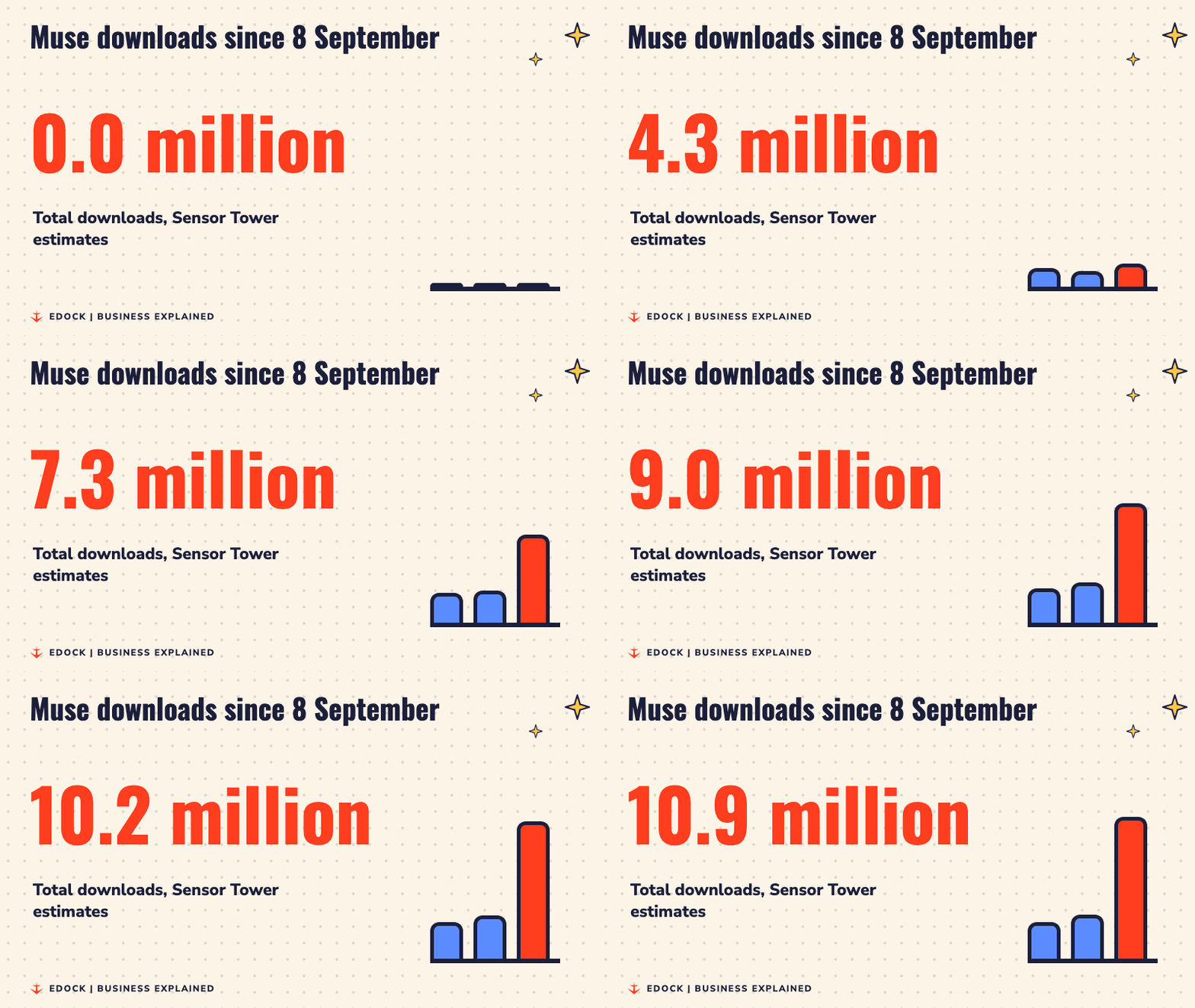
The climb was quick from the start. In its first two weeks, from 8 to 17 September, Muse reached about 2.8 million downloads, as per Sensor Tower. By 25 September, the count was above 3.4 million. On 18 September it became the No. 1 app on the US App Store.
Since launch, it has stayed at No. 1 on the US App Store on every day except 19 October, when a streaming app called Kick briefly passed it. It has since taken the top spot back.
One thing to keep in mind: these are estimates, not counts from Meta. Different data firms guess differently. In September, Apptopia put Muse at 4.3 million downloads while Appfigures said about 2.3 million, on the same day that Sensor Tower said 3.4 million.
Muse vs ChatGPT, Grok and Claude
The natural question is how Muse compares with other AI apps. In their first 40 days in the US, ChatGPT got 3.7 million downloads, Grok got 500,000 and Claude got 200,000. Muse got 10.2 million. That is almost three times ChatGPT's number.
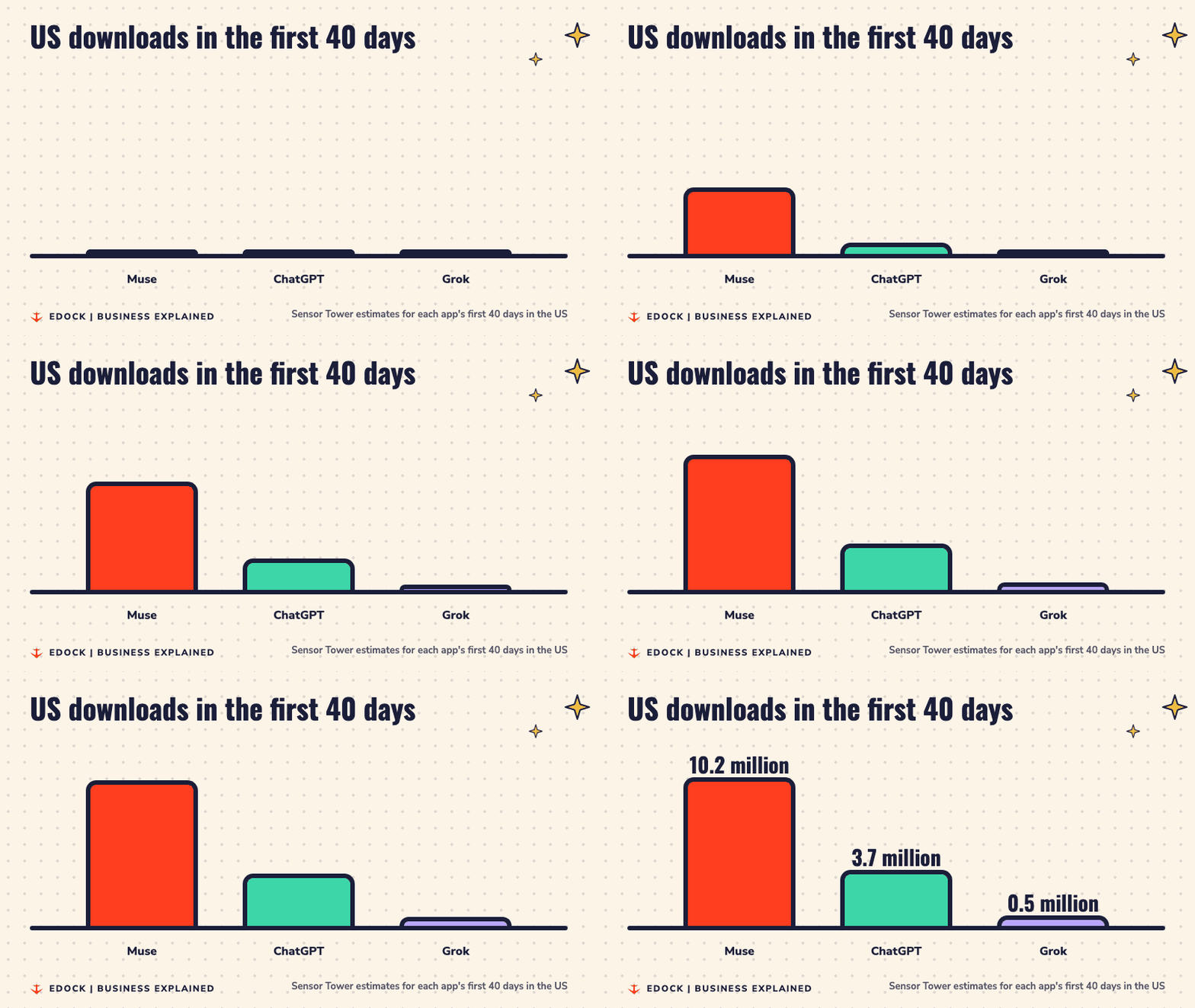
Across the whole world, though, ChatGPT still wins. It reached around 15 million global downloads in its first 40 days. But that is not a fair fight. Muse is only available in the US and Canada for now, while ChatGPT drew users from places like Japan, Brazil and Germany too. Japan alone made up 25% of ChatGPT's installs in those first 40 days.
That also answers a question many Indian readers may have. Muse is not in India yet. No source has given a date for an India launch.
The secret weapon: Meta's own apps
Imagine you own the busiest chai stall in town, and you open a new samosa counter right next to it. Every chai customer walks past your samosas. That is a huge head start.
Meta has the same kind of head start, at a giant size. Its family of apps has 3.6 billion daily active users. Daily active users means people who open an app on a given day. Meta can show Muse to all of them. It did the same with Threads.
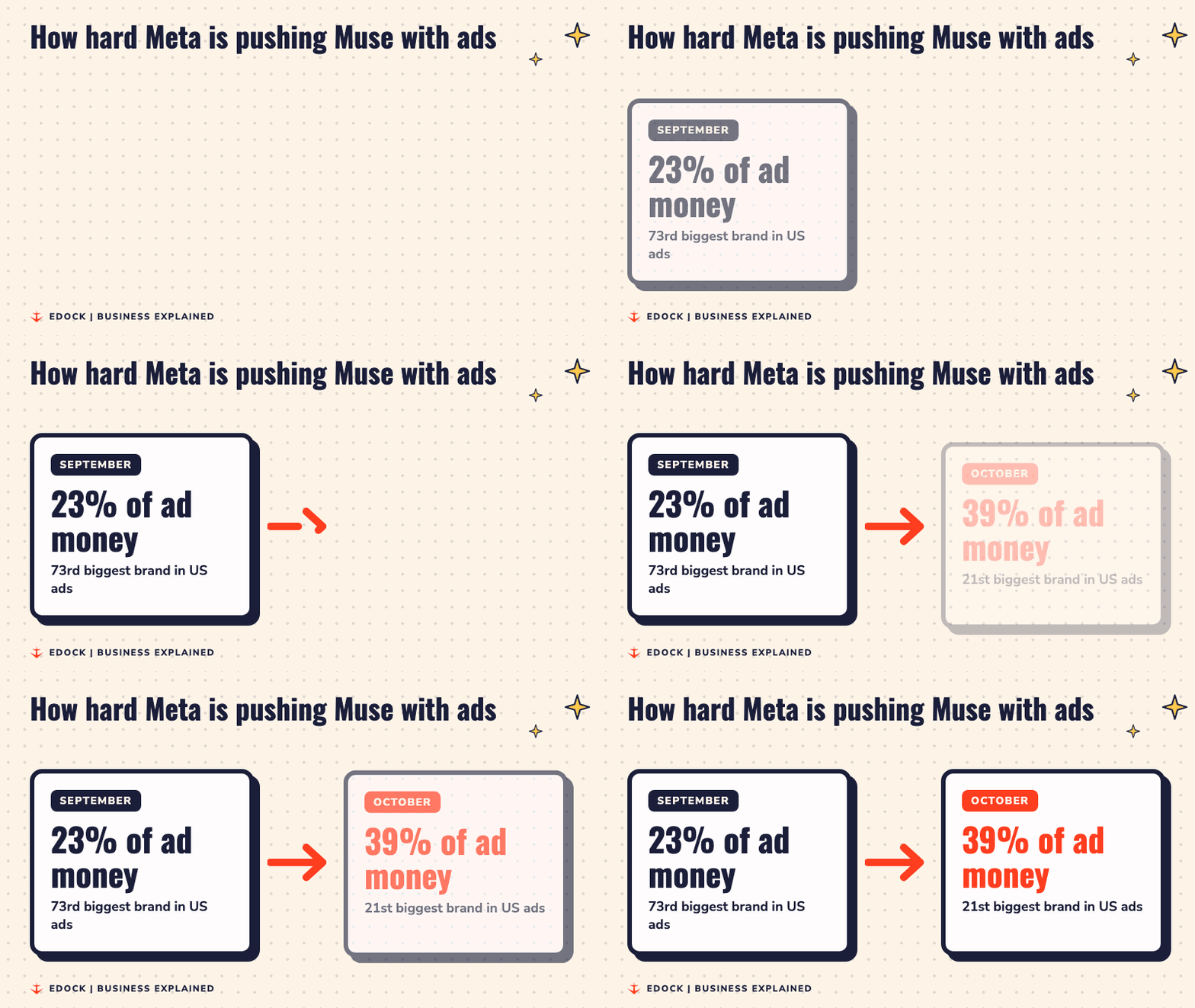
Meta is also spending big on ads. Sensor Tower data shows Meta put 39% of its total ad spending into marketing Muse in October, up from 23% in September. Muse is now the 21st biggest brand in the US by ad impressions this month, up from 73rd in September. Ad impressions are the number of times an ad is shown to people.
Do people keep using it?
Downloading an app is easy. Coming back to it is the hard part. Think of a new gym. Lots of people join in January. The real test is how many still show up in February.
App makers call this retention. In the US, Muse had a 30% retention rate after 7 days and 23% after 14 days. So out of every 100 people who downloaded it, about 30 were still using it a week later. Its AI rivals averaged 19% after 7 days and 16% after 14 days.
Muse also crossed 2.5 million daily active users for the first time on 16 October. That was 15% more than the week before.
How will Meta earn money from Muse?
Muse is free to start, but paid plans kick in as usage grows. That is why it asks for a payment card when you sign up. There are two paid plans: Power at $20 a month and Maximum at $100 a month. Both give more usage for handing off tasks.
Think of it like a mobile data pack. You get some free data. When you use it up, you can top up. Muse has a usage meter that shows how much free usage is left, and it warns users when it runs out. Meta believes most people will stay on the free plan.
For purchases made through Muse, it uses Link by Stripe for checkout, which offers buyers some purchase protection.
The big question: trust
An agent that can read your email and spend your money needs a lot of trust. TechCrunch noted that Muse asks people to share more personal information with Meta than ever before. Meta says Muse runs in its own secure computer and that users can see an activity log of what it is doing and which permissions they have given.
For now, Muse is winning the download race in the US. Whether people trust it enough to keep letting it do their chores is the next test.
Sources
- TechCrunch: Meta's Muse hits 10M US downloads in 40 days
- TechCrunch: Meta debuts its Muse AI agent
- TechCrunch: Meta is putting its muscle behind Muse
- Meta: Introducing Muse
- Meta AI: Introducing Muse Spark 1.3
- Muse on YouTube: Take the full tour of Muse
- Cover photo: Smartphone in Hand, by NeONBRAND, CC0 (screen blurred)
