Maruti sold a record number of cars, so why did its profit fall?
India's biggest carmaker had its best sales quarter ever from July to September 2026, but costlier materials and investment losses pulled profit down about 27%.

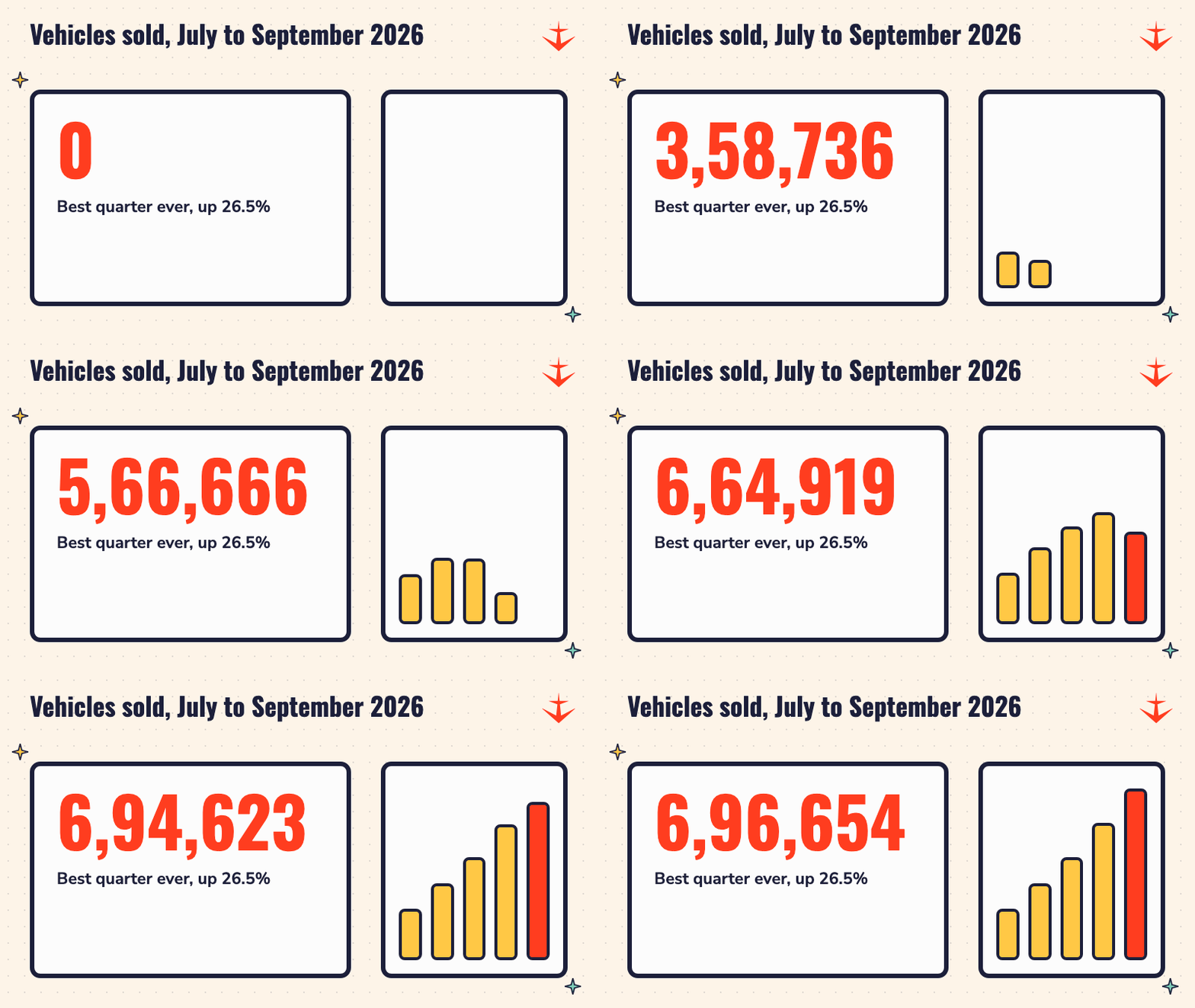
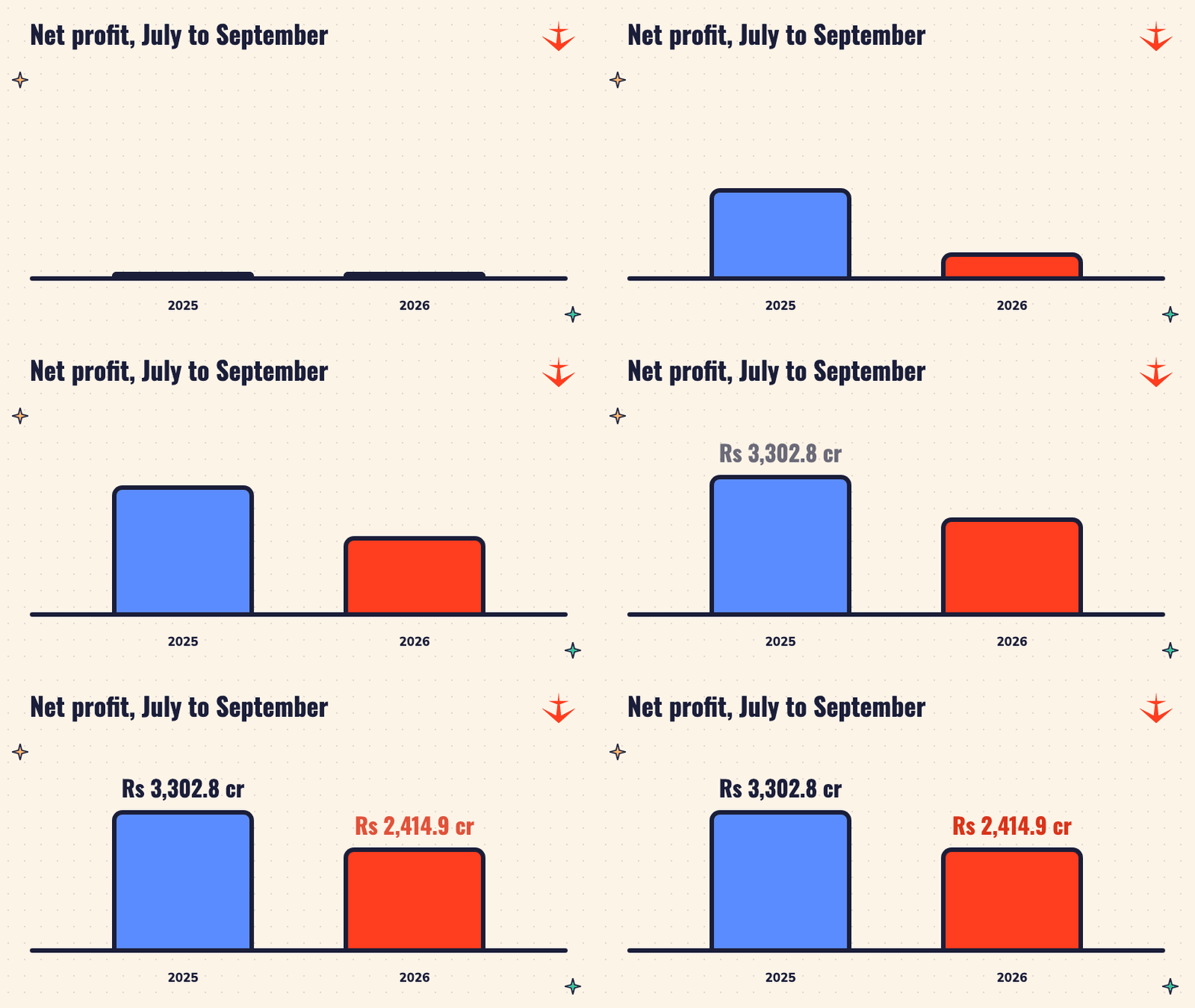
Picture a samosa stall that sells a quarter more samosas than last year, yet takes home less money at the end of the day. That is roughly what happened to Maruti Suzuki. On 27 October 2026, the company said it sold 6,96,654 vehicles from July to September, its best three months ever and 26.5% more than a year ago. Yet the company's net profit fell to Rs 2,414.9 crore, down from Rs 3,302.8 crore, a drop of about 27%.
So India's largest carmaker is selling more cars than ever and earning less on them.
First, a few words in plain English
A quarter is three months. Companies share results every quarter, like a report card four times a year. India's financial year runs from April to March, so July to September is the second quarter, or Q2. FY27 means the year that ends in March 2027.
Net sales (or revenue) is all the money that comes in from selling things. Net profit is what is left after every bill is paid. If a chai stall sells Rs 1,000 of tea in a day and spends Rs 900 on milk, tea leaves, sugar and gas, its profit is Rs 100.
The good news: buyers are lining up
Demand for Maruti cars is very strong. The company sold nearly 5.9 lakh vehicles inside India, up 33.6%. Small car sales rose 35.9% and SUV sales jumped 68.2%, according to the company's results release. Its share of India's passenger car market rose to 40.8%. In simple words, about 4 out of every 10 new cars sold in India in those months were Marutis.
People wanted more cars than Maruti could make. At the end of September, its dealers had only about 17 days of stock, and around 2 lakh bookings were still waiting to be filled. Mint reports that small car demand also got a push from the changes to India's GST (goods and services tax) structure last year.
The money coming in hit a record too. Net sales reached Rs 50,615.5 crore, up 26.1% from Rs 40,135.8 crore a year earlier. Only exports slipped a little, to 1,08,119 vehicles from 1,10,487, which the company linked to the tense world situation.
So where did the money go?
The biggest leak was the cost of materials, all the inputs needed to build every car. Material costs were 79.9% of net sales this quarter, against 75.7% a year ago, as per Kotak Neo's results table. Put simply, out of every Rs 100 Maruti earned from selling cars, about Rs 80 now goes on materials, up from about Rs 76. Mint says raw material costs rose 48% from the same quarter last year.
Why did these costs go up? The company's investor presentation blamed higher commodity prices linked to the conflict in West Asia, and unfavourable foreign exchange movements. A commodity is a basic raw item, like steel or copper, that is bought and sold around the world. Foreign exchange (forex) is the rate at which the rupee swaps for other money, like dollars or yen. When those rates move the wrong way, some bills get bigger.

Total spending grew faster than sales. Business Standard reports that total expenses for the group rose about 29.7% to roughly Rs 50,619 crore, while revenue rose 26%.
A second hit from spare cash
Maruti keeps its spare cash invested, including in mutual funds. When the market value of those funds drops, the company has to show the loss in its books, even if it has not sold anything. This is called a mark-to-market loss. Think of a cricket card collection: if card prices fall, it is worth less on paper, though the cards are still in your drawer.
The company said these losses sharply cut "non-operating income", the money earned outside the main business of making cars. Chief financial officer Arnab Roy called it an accounting adjustment: "On the PBT, there is an impact of the mark-to-market due to the mutual fund, which is an accounting adjustment," he said, as quoted by Business Standard. PBT means profit before tax.
There was one more cost. A new plant and new model dies (the big moulds used to shape car parts) meant higher depreciation, as The Economic Times notes. Depreciation spreads the cost of a big machine over the years the company uses it, a little like counting a bit of your new bicycle's price as used up each year.
What one car earned the company
Divide the net profit by the vehicles sold. This quarter, that works out to about Rs 34,700 per vehicle (Rs 2,414.9 crore across 6,96,654 vehicles). A year ago, Maruti sold 5,50,874 vehicles and earned Rs 3,302.8 crore, or about Rs 60,000 per vehicle. That includes the investment losses, so not all of the fall comes from costlier materials, but the sum shows how much thinner the slice has become.
Why do the news reports show different profit numbers?
Some outlets reported Rs 2,466.1 crore and some Rs 2,414.9 crore. Both are right. Rs 2,414.9 crore is the standalone number, for Maruti Suzuki India alone, which is what the company's own release used. Rs 2,466.1 crore, down 26.4%, is the consolidated number, which adds up Maruti and the smaller group companies it owns, as reported by Business Standard. Mint reported about Rs 2,410 crore. This post uses the company's standalone figure.
Will cars cost more now?
Managing director and CEO Hisashi Takeuchi said at a press conference, as quoted by Business Standard: "We have already increased the prices three times till now in FY27." He added: "In the next six months, we are planning to do some kind of price increase at an appropriate time."
Mint says two of those rises came in the July to September quarter. The company is also trying to control its own spending, including on marketing.
There are some bright spots in the numbers too. The share of sales left over from the main business before some costs, called the EBITDA margin, rose to 9.4% from 8.6% in the April to June quarter, though it was 12.7% a year ago, ET reports. Partho Banerjee, who leads marketing and sales, said demand for CNG cars is strong, partly because fuel prices are higher, but CNG kits are in short supply right now. He also flagged that weak rain in states like Rajasthan, Madhya Pradesh and Karnataka could hurt demand in villages. Maruti's reach into rural markets rose to nearly 52% in April to September, by the company's own measure.
Small cars are here to stay, says the chairman
Chairman R C Bhargava said India will need cheap cars for a long time. "I am personally confident that even by 2047, when India will be amongst the ranks of the developed countries, there will still be a sizable small car market in this country because we have a large population," he said, according to Business Standard.
This video from NDTV Profit explains the results:
And this video from carandbike shows how a Maruti Dzire is put together inside the factory:
The big picture
Selling more is only half the game. If the cost of making each thing rises faster than the price it sells for, profit can shrink even in a record quarter. For buyers, the thing to watch is the price tag: the company has said plainly that another price rise is planned in the coming months.
Sources
- Maruti Suzuki Q2 and H1 FY27 results release, as published by Investywise
- Kotak Neo: Maruti Suzuki Q2 results, key numbers
- The Economic Times: Maruti Suzuki flags West Asia linked commodity costs
- Business Standard: Maruti Suzuki Q2 net profit falls 26.4% to Rs 2,466 crore
- Mint: Maruti Suzuki profit misses estimate as costs squeeze margins
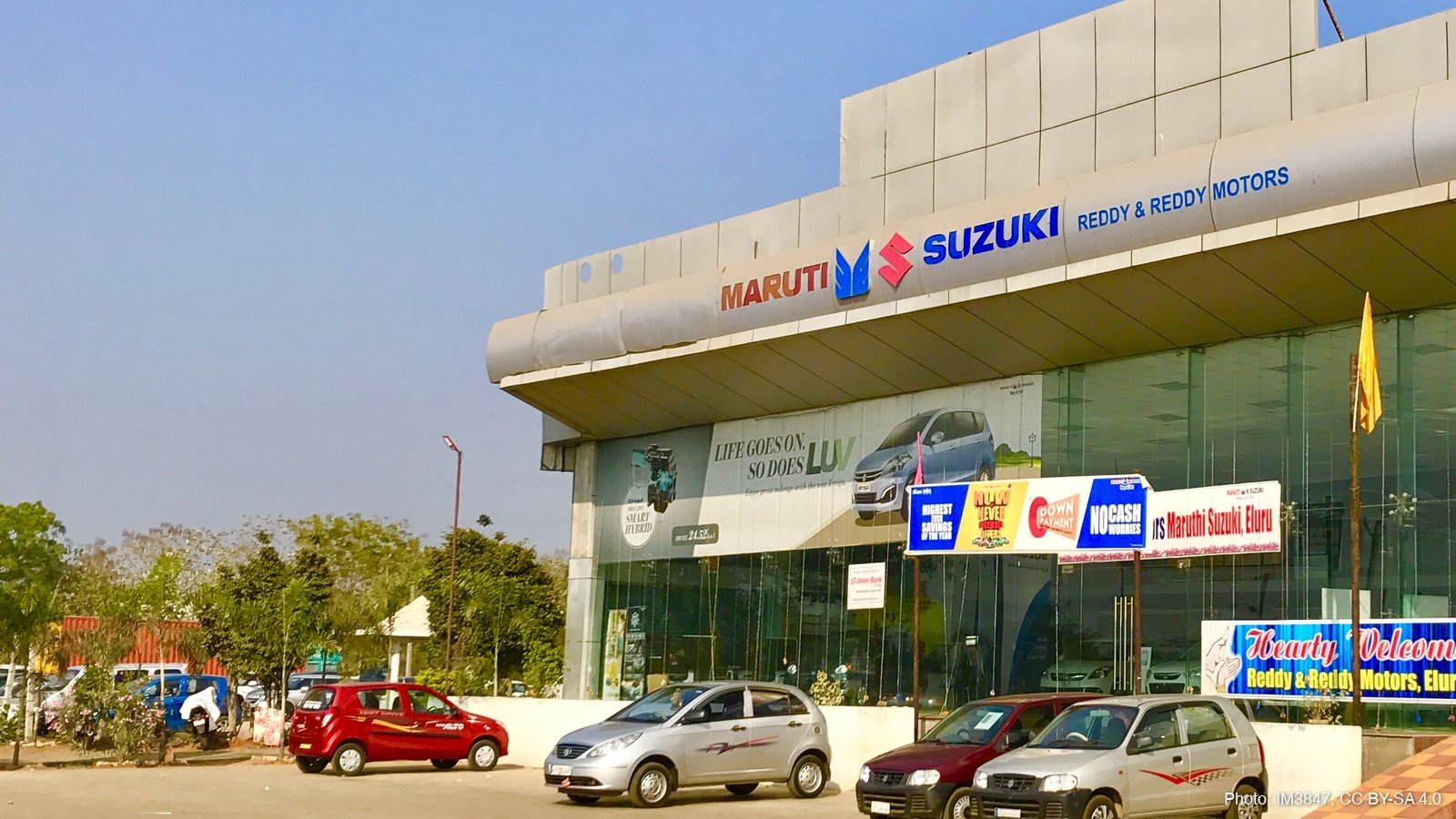
- Cover photo: Maruthi Suzuki showroom near Eluru, by IM3847, CC BY-SA 4.0

You may republish this story under CC BY 4.0: credit Pranav Sharma and link to this page.