Maruti's made-in-India electric cars cross 50,000 exports in 14 months
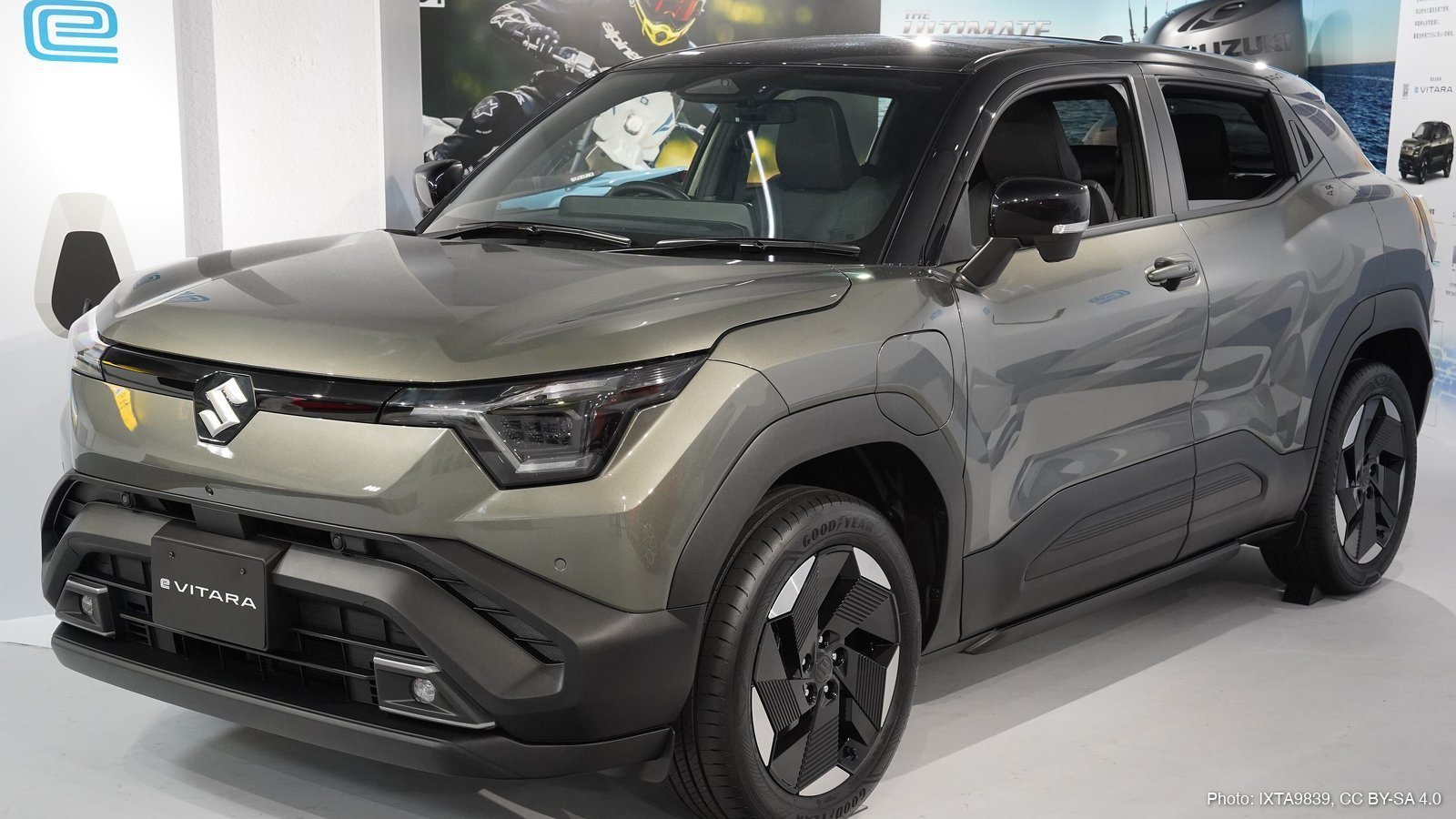
The e Vitara, built only at Hansalpur in Gujarat, now sells in about 50 countries, with Europe its biggest buyer.

Picture a car built in Gujarat, put on a ship, and sold to a buyer in Norway. That trip has now happened more than 50,000 times. On Thursday, 29 October 2026, Maruti Suzuki said its made-in-India electric cars sent abroad have crossed 50,000 units since the first ones left in August 2025.
Those cars are all one model, the e Vitara, an electric SUV. Every one of them comes from a single factory at Hansalpur in Gujarat. Here is what this number means for India's factories, ports and workers.
First, what does "export" mean?
To export is to make something in one country and sell it in another. Think of a samosa stall in your town. If people in the next town start ordering its samosas, the stall now "exports". The money comes back home, and the stall may need more cooks.
An EV, or electric vehicle, runs on a battery instead of petrol or diesel. Maruti is India's biggest carmaker, and the e Vitara is its first electric car. Japan's Suzuki first showed the car in Milan, Italy, in November 2024. Suzuki then made the Hansalpur plant the only factory that builds this car.
How did India get from zero to 50,000?
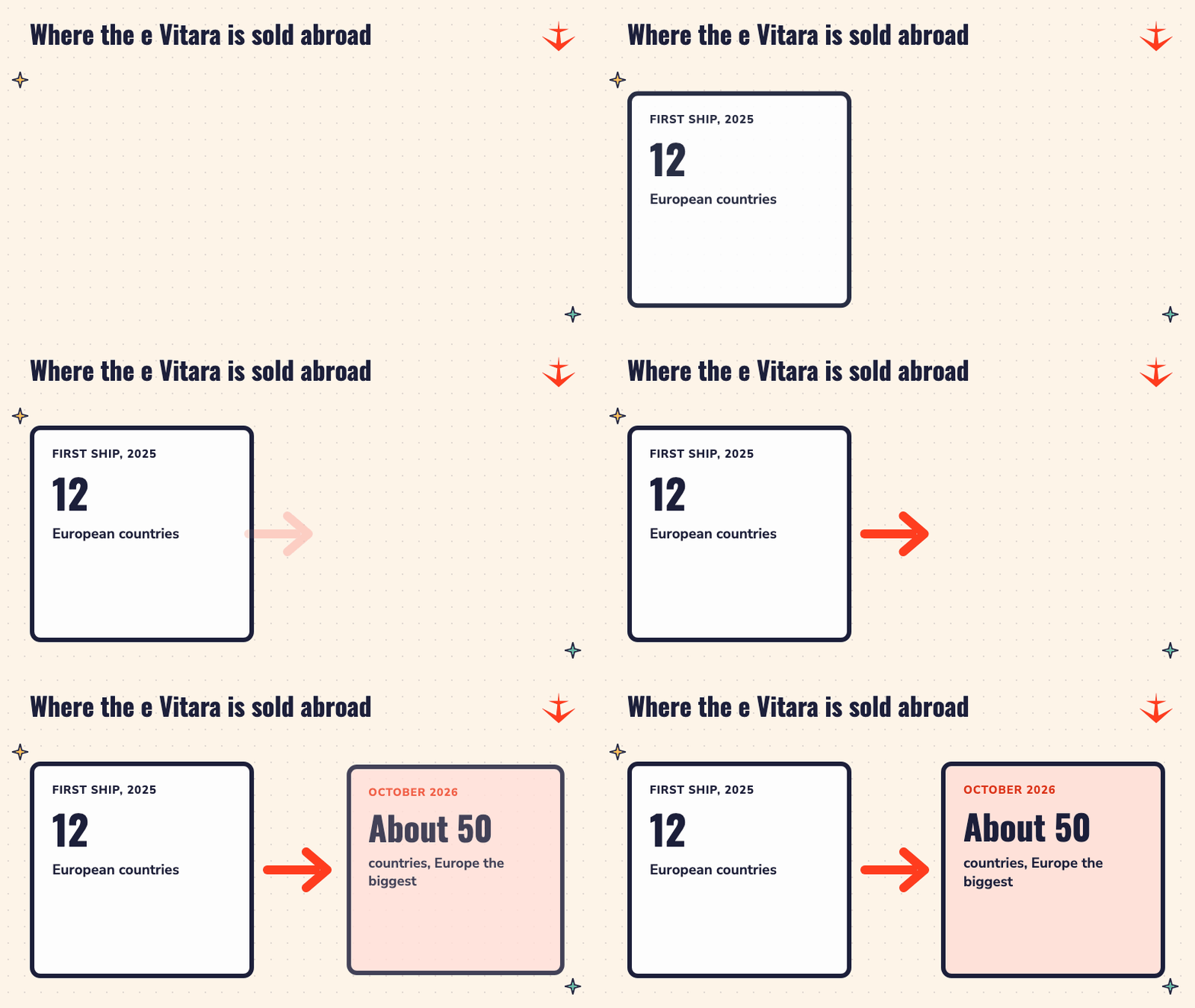
The story moves fast. On 26 August 2025, Prime Minister Narendra Modi visited the Hansalpur plant to mark the start of e Vitara production. Soon after, over 2,900 cars sailed from Pipavav Port in Gujarat to 12 European countries, including the United Kingdom, Germany, Norway and France.
By April 2026, the total had passed 25,000 cars, sent to 44 countries, Maruti said in its own release. Around June, a trade news site counted nearly 36,000 cars shipped overseas. Now the count is above 50,000.
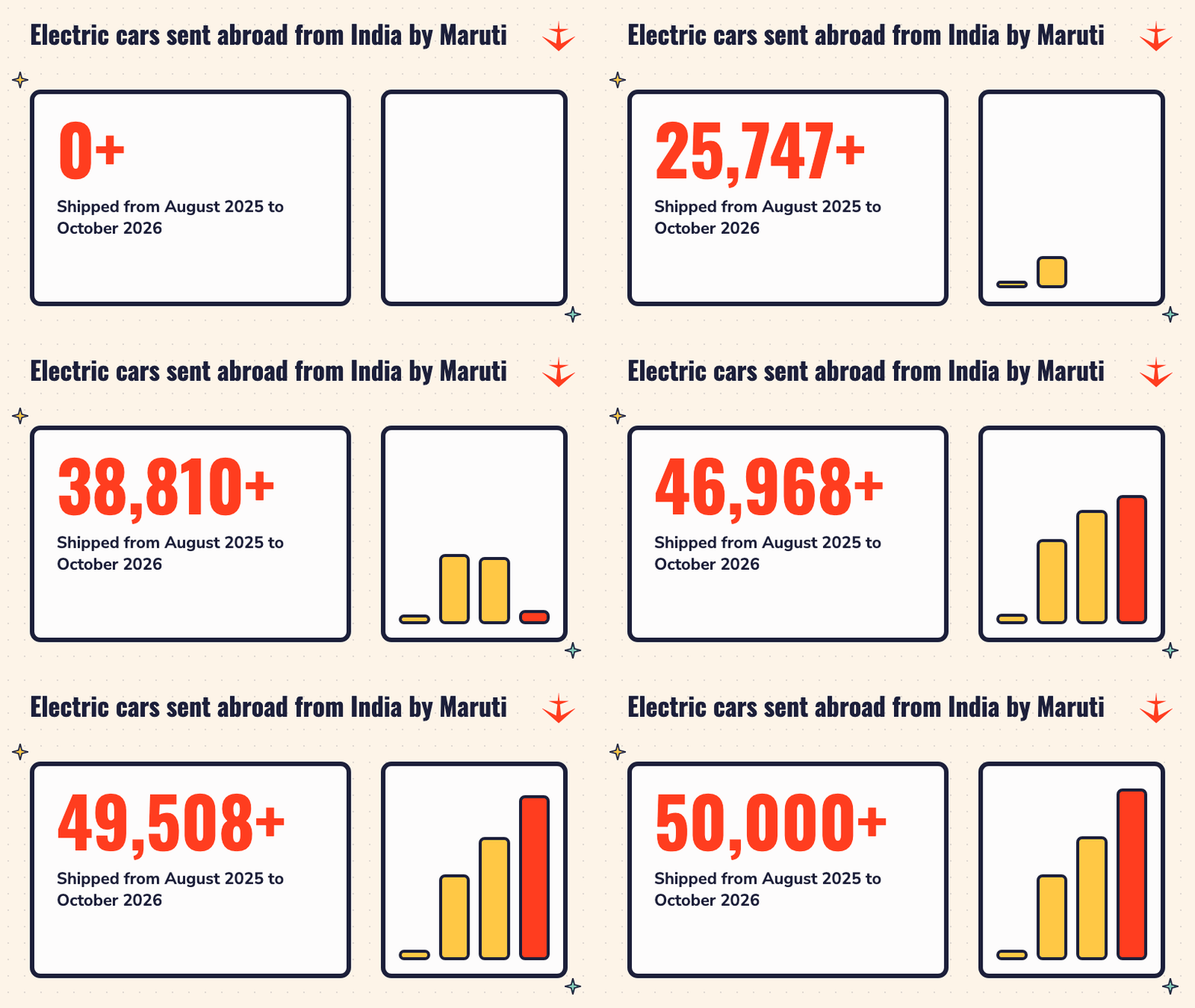
Maruti calls this a "cumulative" number. That simply means "added up from day one". It is like a batter's career runs, not the runs in one match.
Where are these cars going?
The e Vitara now goes to about 50 countries. The list includes the UK, Norway, Germany, Japan and Switzerland, and Europe is the biggest buyer, the company said. Maruti's managing director and CEO, Hisashi Takeuchi, put the point this way:
"Today, Maruti Suzuki exports EVs to nearly 50 of these countries, with Europe being the largest destination."
Is Maruti alone in this?
Almost. From April to September 2026, Maruti made up nearly 93% of India's electric passenger car exports, as per data from SIAM, the industry body of Indian carmakers. Put simply, out of every 100 electric cars India sent abroad in those six months, about 93 were Maruti's.
Maruti also sends many petrol cars abroad. The company now ships 16 models to nearly 120 countries, and held over half of all of India's car exports in the same six months, ET reported. In the year to March 2026, the company exported over 4.47 lakh vehicles, up more than 34% on the year before.
Other Indian carmakers want a slice too. Tata Motors and Mahindra and Mahindra are reportedly working on more electric car exports to Asia, Europe, Africa and the Pacific.
Why one Gujarat factory matters so much
The Hansalpur plant can now make 1 million vehicles a year. Maruti says no other single Suzuki plant in the world has reached that size. Maruti has put in a total of Rs 25,288.7 crore there over the years. The plant sent out nearly half of all the cars Maruti exported in the year to March 2026.
Think of the plant like a big school kitchen. Once the ovens, staff and supply lines are in place, cooking more plates each day costs less per plate. Business people call this "economies of scale": the more you make, the cheaper each piece gets. Business Today noted that higher export volumes are expected to improve this for carmakers.
From the factory gate to the ship
A car for Europe does not drive itself there. After the factory, the cars go to a port and are loaded onto a ship. For the e Vitara, the first big batch left from Pipavav Port on the Gujarat coast.
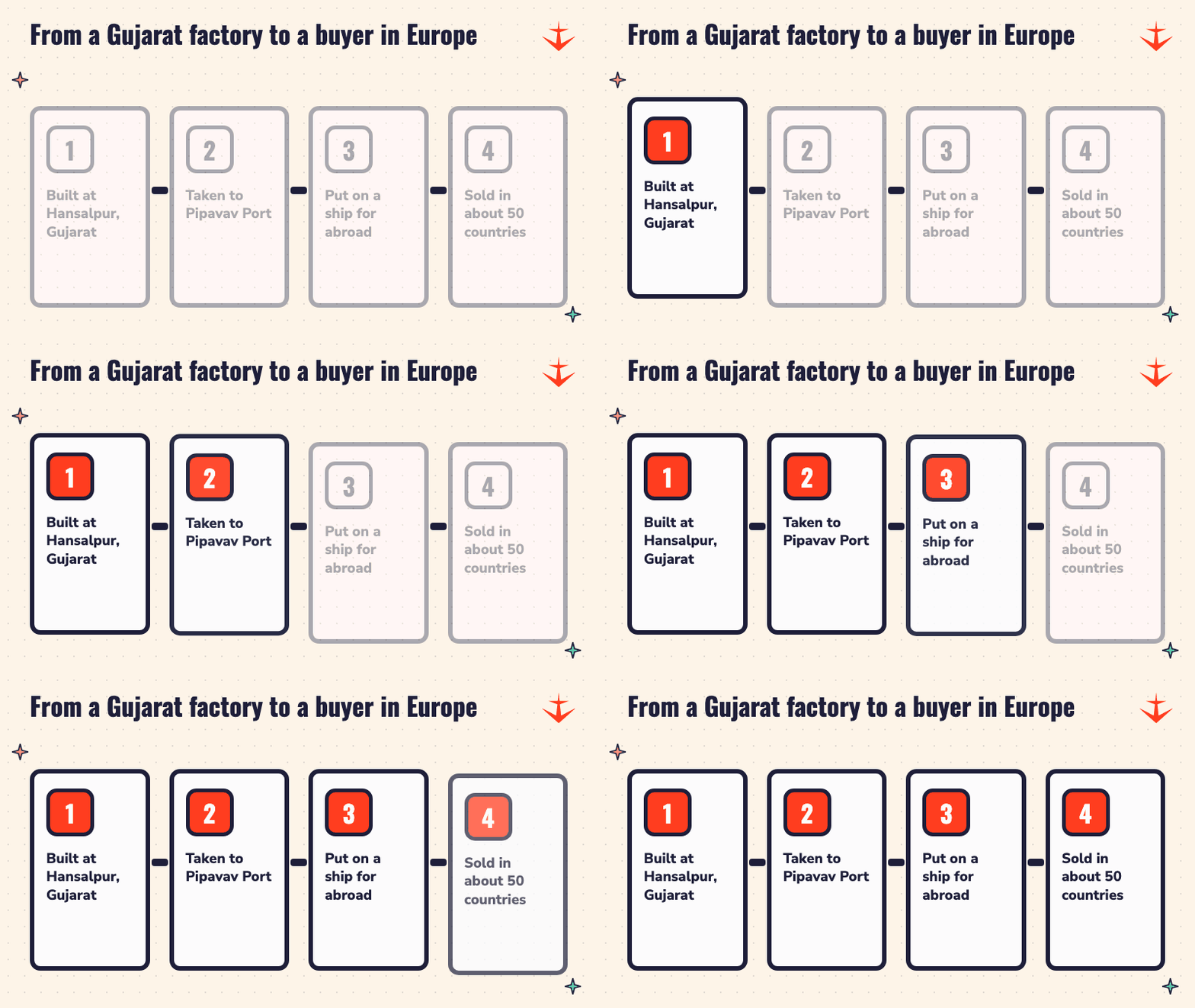
Each step needs people, from workers on the factory line to drivers, port crews and the staff who handle export papers. More ships full of cars mean more of this work.
What about buyers in India?
The e Vitara went on sale in India only on 17 February 2026, months after the first cars left for Europe. Here the price starts at Rs 15.99 lakh. From January to May 2026, an estimated 7,097 e Vitaras were sent to Indian showrooms, while far more of the factory's output was kept for export, Autocar Professional reported.
So, for now, the car sells more abroad than at home. The same report said the company planned to raise e Vitara production from around August or September 2026.
This video from ThePrint shows a drive in the India-built e Vitara in England.
Why should a young Indian care?
A factory in Gujarat now sends electric cars to about 50 countries, with Europe and Japan among them. Export money flows back into India, and factories and ports get more work. And people who want to work in cars, batteries or shipping have one more growing field to look at.
The 50,000 mark is one step. The next thing to watch is whether other Indian carmakers start filling ships too.
Sources
- The Economic Times: Maruti Suzuki crosses EV exports of 50,000 units since August 2025
- Business Standard (PTI): Maruti Suzuki India's EV exports cross 50,000 units since August 2025
- Maruti Suzuki: the company starts the shipment of e VITARA to Europe
- Maruti Suzuki: exports reach an all-time high of 4.47 lakh vehicles in FY 2025-26
- Autocar Professional: Maruti e-Vitara sales in India and exports, mid 2026
- Business Today: Maruti Suzuki drives India's EV export boom in Q1
- Wikipedia: Suzuki e Vitara
- Cover photo: Suzuki e Vitara on display at Hamamatsu Station, Japan, by IXTA9839, CC BY-SA 4.0

You may republish this story under CC BY 4.0: credit Pranav Sharma and link to this page.