MakeMyTrip returns to profit as buses and hotels make up for costly flights
Version 1 of 1 saved 27 Oct 2026, 6:12 am IST · Chain line 259
As it was first published
MakeMyTrip returns to profit as buses and hotels make up for costly flights
Its real profit was $1.8 million, but its adjusted profit was $46.2 million. What that gap means, and why hotels earn the app more than flights.
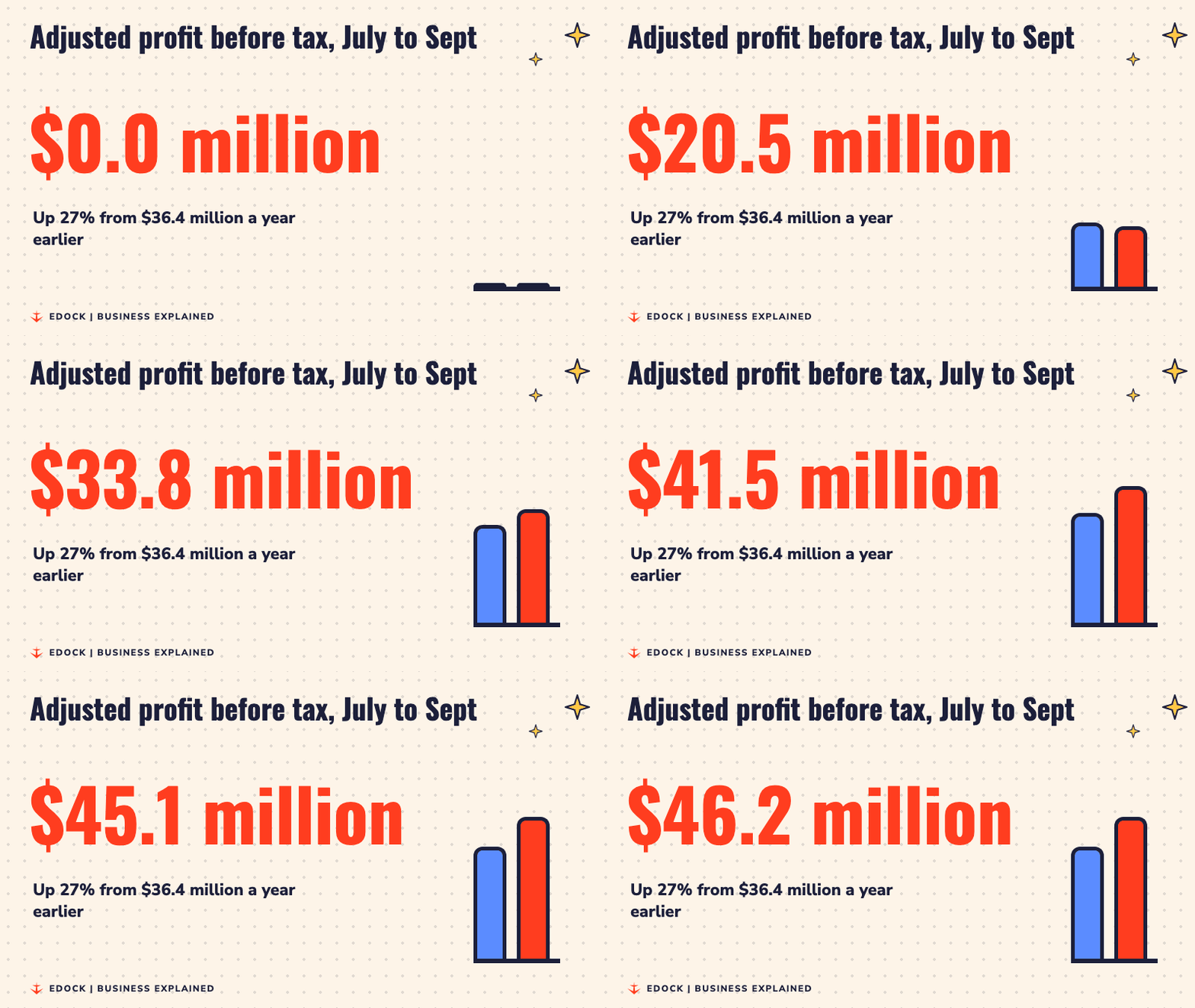
Picture two report cards for the same student. One says 1.8 marks. The other says 46.2 marks. Both are true. That is what happened with MakeMyTrip, the travel app many Indians use to book flights, hotels and buses. On 26 October 2026, it shared its results for July to September 2026. Its real profit was $1.8 million. Its "adjusted" profit before tax was $46.2 million, up 27%.
So which number should you believe? And why did hotels and buses save the quarter while flights got costly? Let us break it down.
First, the money in rupees
MakeMyTrip is listed on Nasdaq, an American stock exchange, so it reports in US dollars. To make the numbers easy to feel, this post uses one dollar = Rs 95.19. That is where the rupee closed on 26 October. It is only a rough guide, because the rupee moved during the quarter.
- Real profit: $1.8 million, about Rs 17 crore.
- Adjusted profit before tax: $46.2 million, about Rs 440 crore.
- Revenue (the money the company itself earns): $235.2 million, about Rs 2,240 crore.
- Gross bookings (the full price of every trip people booked on the app): $2.72 billion, about Rs 25,900 crore.
A year earlier, in the same quarter, the company had a loss of $5.7 million. So this time it is back in profit, even if only a small one.
Real profit vs adjusted profit, in samosa terms
Imagine a samosa stall. In one month, it sells samosas, pays for potatoes, oil and rent, and is left with Rs 4,600. But the owner also took a loan to buy a big new fryer, and pays interest on it. He also gave his helper a small share in the stall as a reward. After the interest and the share reward, only Rs 180 is left.
Now the owner says, "Without the loan interest and the share reward, my stall made Rs 4,600." That is an adjusted profit. It is not a lie. It shows how well the samosas sell. But the interest is real money that still has to be paid.
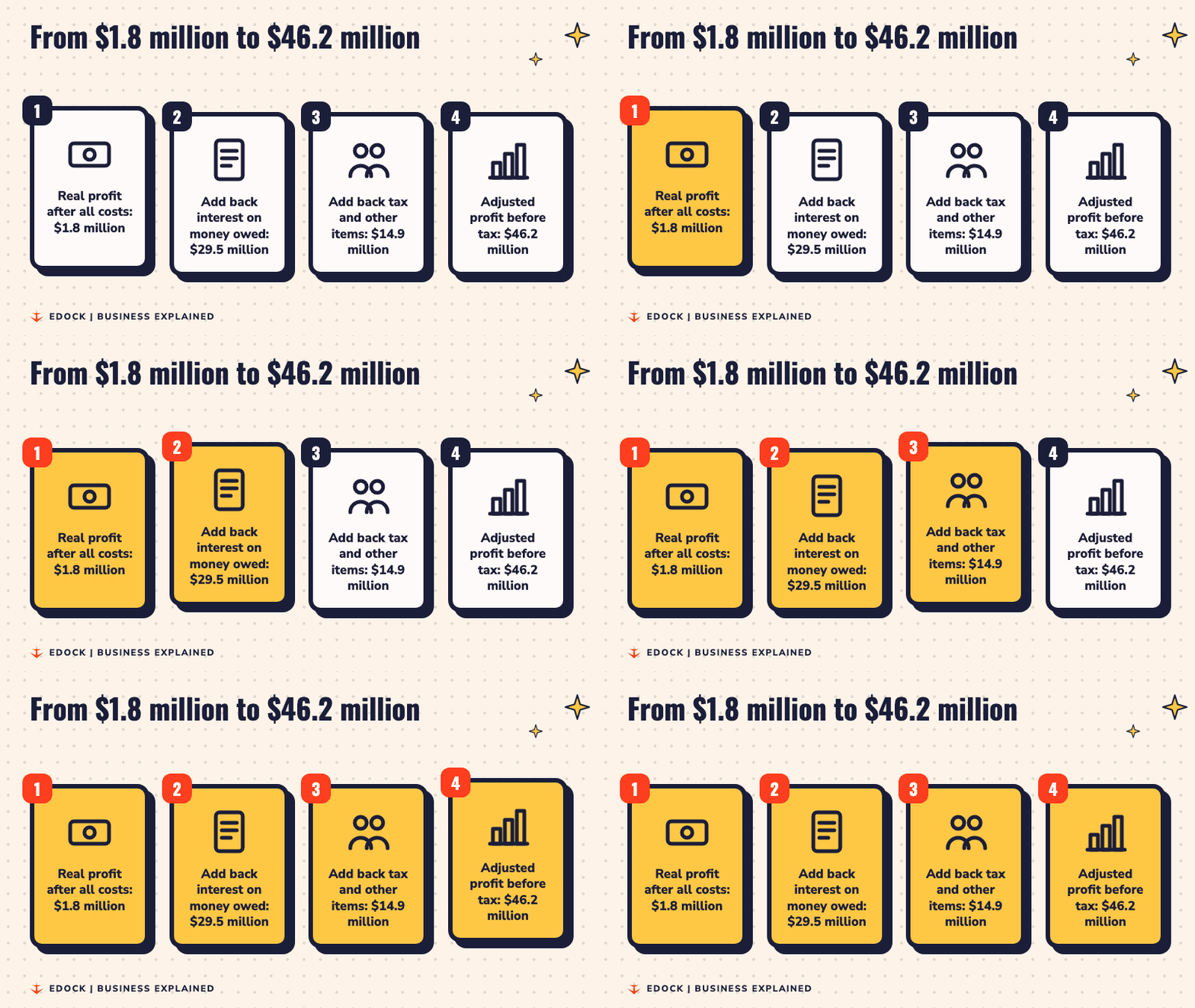
MakeMyTrip did something similar. Its earnings release shows how it gets from $1.8 million to $46.2 million. It adds back:
- About $29.5 million of interest on money the company owes.
- About $6.3 million of share awards given to staff.
- About $3.2 million, a paper cost for the value of businesses it bought in the past.
- About $5.1 million of income tax, plus a few small items.
Add those up and you reach $46.2 million. The company itself says this is a "non-IFRS" number. IFRS is the official rulebook for company accounts. So the adjusted figure is the company's own way of counting, and the $1.8 million is the official one.
Flights got costly, so fewer people flew
This quarter was hard for air travel. Travel news site Skift reports that domestic air departures in India fell 7%, while fares rose about 25% to 30%. The company also said that long trips abroad from India stayed weak. High fuel prices pushed up airfares, and a weak rupee made foreign trips more expensive for Indians, as BusinessLine reported from the company's statement.
That is why revenue from air tickets fell 7.2% to $56.7 million. Strong travel inside India, the company said, partly made up for these problems.
Buses and hotels did the heavy lifting
While flights slowed, the other parts of the app grew fast:
- Bus tickets sold went up 24.7%. Bus revenue rose 16.6% to $39.1 million. The group runs the redBus app along with MakeMyTrip and Goibibo.
- Hotel room nights (one room booked for one night) went up 18.5%.
- Intercity cab rides grew more than 40%, though from a small base, says Skift.
Everything other than flights now makes up 63.2% of all bookings, up from 61.5% a year earlier. So if you took an overnight bus to a wedding, or booked a hotel for a short trip, you were part of this story.
Why a hotel booking is worth more than a flight
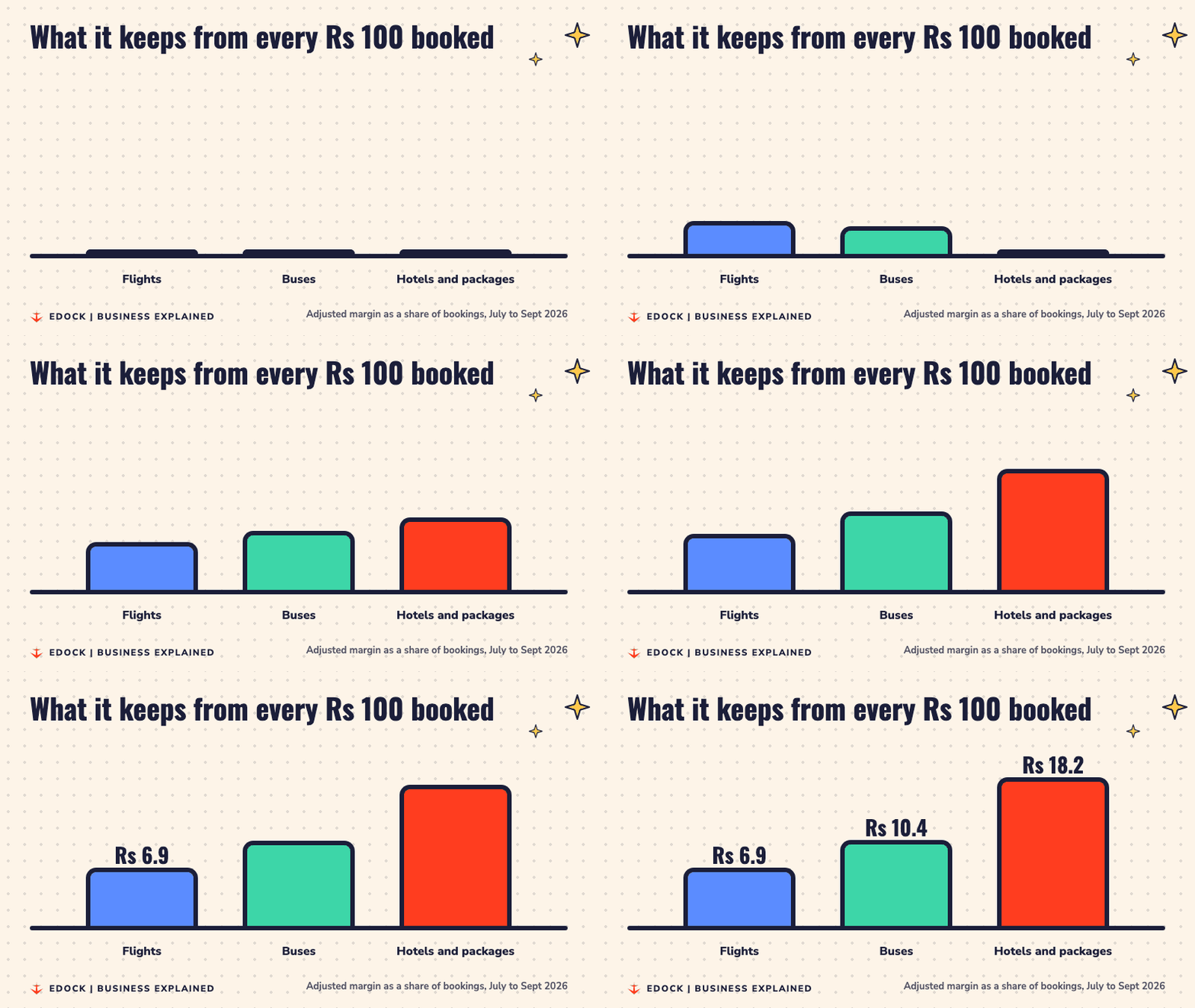
Here is a fun fact. When you book a Rs 5,000 flight on the app, most of that money goes to the airline. MakeMyTrip keeps only a small slice. The company calls the slice it keeps its "adjusted margin".
From the company's numbers for this quarter, out of every Rs 100 booked:
- Flights: it kept about Rs 6.9.
- Buses: it kept about Rs 10.4.
- Hotels and packages: it kept about Rs 18.2.
Think of it like a tea stall that also sells snacks. Tea brings people in, but the snacks earn more on each sale. For MakeMyTrip, a hotel booking earns more than twice as much as a flight on each Rs 100. So when flights slow down and hotels and buses grow, its earnings can still go up.
Discounts are a big cost too
Ever got cashback or a coupon on a travel app? Someone pays for it. MakeMyTrip spent about $108.9 million, around Rs 1,040 crore, on such offers to customers this quarter, up from $89.1 million a year earlier, its release shows. These offers are taken out of revenue. That is one reason revenue grew only 2.5% in dollars, even though bookings grew much faster.
The weak rupee hurt too. The rupee lost about 10% against the dollar in a year. So the same rupee sales look smaller when counted in dollars. Without that effect, the company says, revenue grew 11.2%.
AI is now taking bookings
MakeMyTrip has an AI helper called Myra. It handled over 90,000 chats a day, and more than 55% came from smaller Tier II and Tier III cities, Moneycontrol reported. It helped with over 3,000 completed bookings a day. People who used Myra made about 1.7 times more bookings than people who did not.
Group CEO Rajesh Magow said in the company's statement, "We delivered strong growth despite a challenging travel environment."
What this means for you
For travellers, the story shows a shift: when flights get pricey, more people pick buses, cab rides and nearby trips, and apps follow the money. For anyone starting a career, it is a lesson in reading results. A headline can say "profit up 27%" or "profit of just $1.8 million", and both can be right. Always check which profit is being talked about, and what was left out.
Sources
- MakeMyTrip press release and filing, 26 October 2026
- MakeMyTrip earnings release, quarter ended 30 September 2026
- BusinessLine: MakeMyTrip adjusted net profit grows 27% to $46.2 million
- Moneycontrol: MakeMyTrip back in black with $1.8 million profit
- MediaNama: MakeMyTrip swings to Q2 profit
- Skift: MakeMyTrip uses an air travel dip to reach beyond flights
- Moneycontrol: Rupee ends at 95.19 per dollar on 26 October
- Cover photo: Hyderabad metro ticket makemytrip, by Debanjanasingh, CC BY-SA 4.0
