Mahindra Finance's profit jumps 55% to Rs 882 crore as it lends more
The rural lender gave out 22% more loans in July to September 2026, and fewer of its loans went bad. Here is what it all means.

Picture a farmer in a village who needs a new tractor. The tractor costs lakhs of rupees, and the farmer does not have that much cash. So a lender pays for it today, and the farmer pays the money back bit by bit over the next few years. One of the biggest lenders doing this in India just had a very good three months.
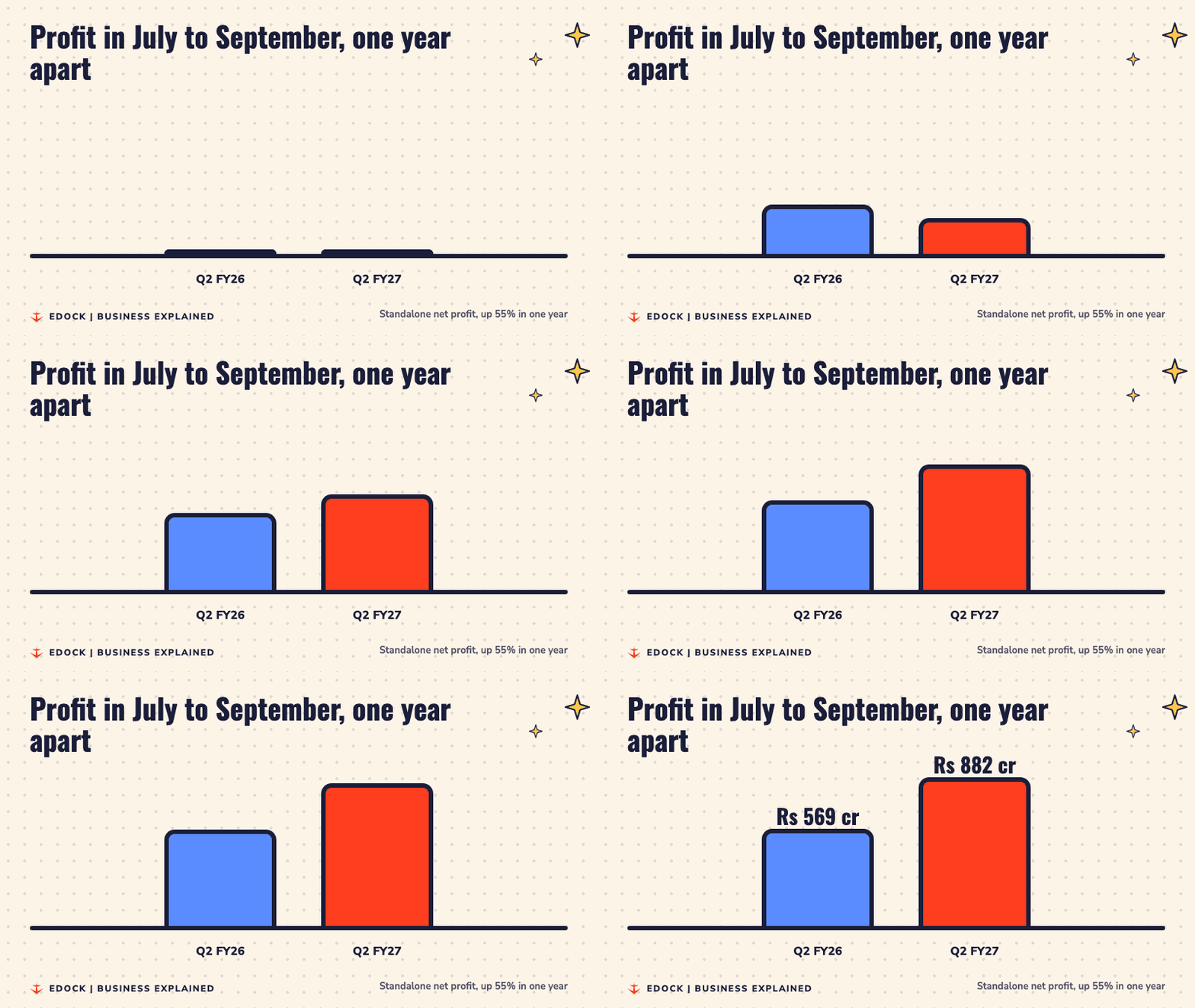
On Wednesday, 21 October 2026, Mahindra & Mahindra Financial Services, better known as Mahindra Finance, said its net profit rose 55% to Rs 882 crore for July to September 2026. A year earlier, the same three months gave it a profit of Rs 569.31 crore. That is about Rs 312 crore more profit in one year.
Let us break down what this company does, and what all these results words mean.
What is a non-bank lender?
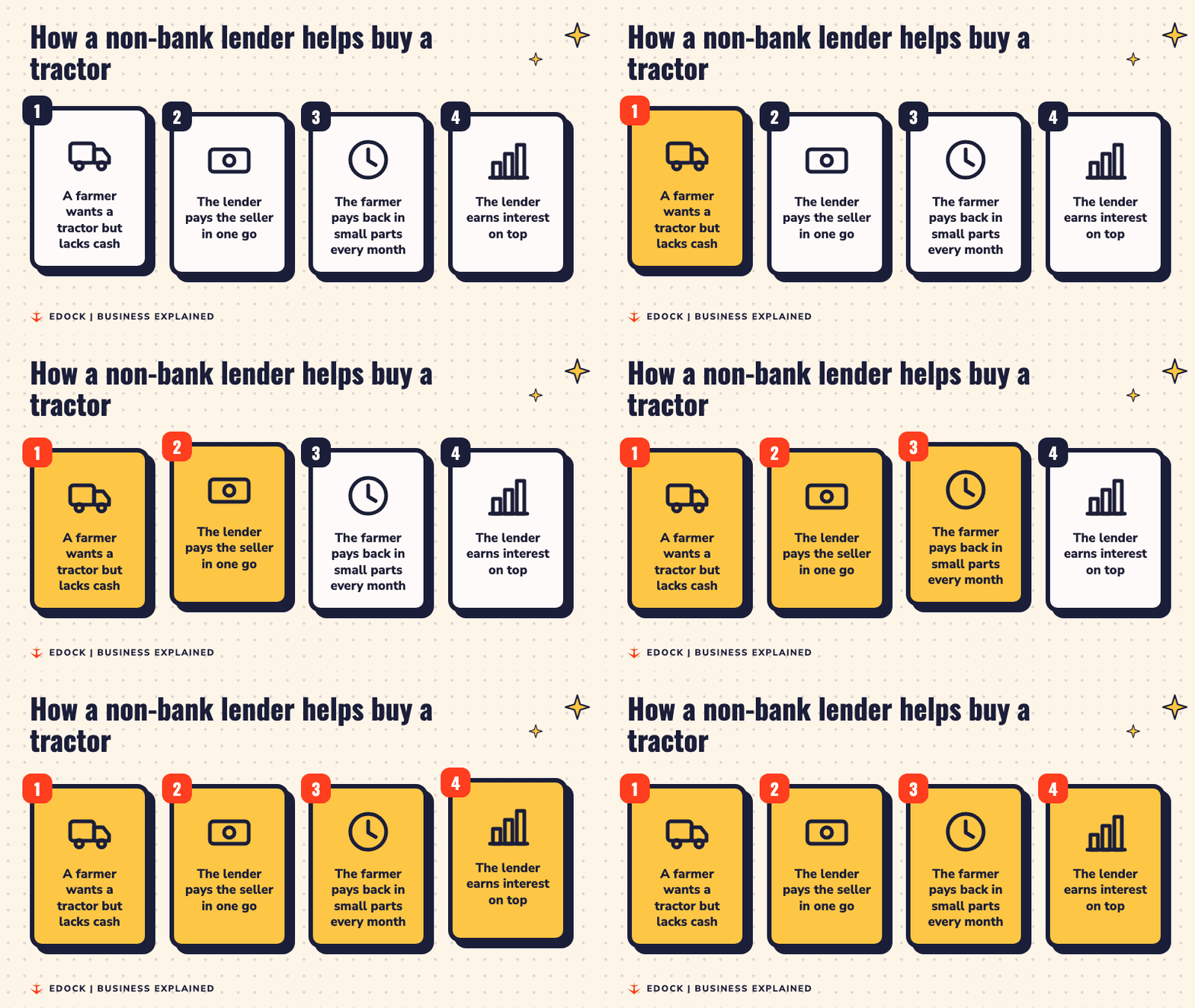
Mahindra Finance is an NBFC, short for non-banking financial company. It lends money like a bank does, but it is not a bank. Think of it like a trusted shop in a small town that lets farmers take a tractor home and pay in parts. The shop does not run savings accounts like a bank, but it is very good at lending.
Mahindra Finance is a rural NBFC based in Mumbai. It started in 1991, is among the top tractor lenders in India, and has more than 1,000 offices across the country. It is part of the Mahindra Group.
Most of its loans are for vehicles, such as tractors, cars and commercial vehicles. Its boss, Raul Rebello, said on a call with analysts that 80% of its group's loan assets come from wheel-related lending, and 20% from other kinds of loans.
How does a lender make money?
Imagine you lend your friend Rs 100 for a cricket bat. Your friend agrees to return Rs 110 over a few months. The extra Rs 10 is interest, your reward for lending. A lender like Mahindra Finance does this on a giant scale.
But a lender also borrows money itself, and pays interest on that. Mahindra Finance paid finance costs of Rs 2,341.04 crore this quarter, mostly the interest on its own borrowing. The gap between the interest it earns and the interest it pays is a big part of its earnings. Mahindra Finance's net interest margin stayed flat at 7%. You can think of this as the "profit per rupee lent" before other costs.
What is a "quarterly profit"?
A quarter is three months. Indian companies count their money year from April to March. So July to September 2026 is the second quarter of the year that ends in March 2027. People write it as Q2 FY27.
Profit is what is left after paying all the bills. Think of a samosa stall. Sales bring money in. Oil, potatoes, rent and wages take money out. What stays in your pocket at the end is profit.
Here is how it worked for Mahindra Finance this quarter, using the company's own numbers reported by BW Businessworld:
- Total income: Rs 5,174.79 crore, up from Rs 4,489.24 crore a year ago.
- Total expenses: Rs 4,012.91 crore, up from Rs 3,741.71 crore.
- Profit before tax: Rs 1,161.88 crore, up from Rs 747.53 crore.
After paying tax of Rs 280.36 crore, the profit came to Rs 881.52 crore, which rounds to Rs 882 crore. The key point: income grew by about Rs 686 crore, but bills grew by only about Rs 271 crore. That gap is why profit jumped.
What is a "loan book"?
A loan book is the total money a lender has given out that is still to be paid back. Imagine a notebook where a shopkeeper writes down every customer who owes money. Add up every line, and you get the loan book.
Mahindra Finance calls this its assets under management. It grew 15% to Rs 1.46 trillion, which is Rs 1.46 lakh crore. In the same quarter, it gave out new loans, called disbursements, worth Rs 16,499 crore. That is 22% more than a year earlier.
The company is also lending more for things beyond vehicles. New loans in these other areas, like loans to small businesses, personal loans and home loans through Mahindra Rural Housing Finance, grew 52% from a year ago, Business Standard reported.
What are "bad loans"?
Not everyone who borrows pays back on time. If your friend stops returning your Rs 100, that loan has gone bad. Lenders sort loans into groups. "Stage 3" loans are the ones that are badly stuck.
At Mahindra Finance, Stage 3 loans fell to 3.4% from 3.9% a year ago. Stage 2 loans, which are late but not yet badly stuck, fell to 4.7% from 5.8%. The company also collected 97% of the money due to it, up from 96%.
When loans go bad, a lender must keep money aside to cover the loss. This is called credit cost. It is like a stall owner keeping some cash in a box in case a customer never pays. Mahindra Finance's credit cost fell to 1.6% of its average assets, from 2.2%. In rupees, the money set aside for loan losses fell to Rs 629.51 crore from Rs 751.38 crore, about Rs 122 crore less.

Is the lender safe?
Lenders must keep enough of their own money as a cushion, in case many loans go bad at once. This is called the capital adequacy ratio. For Mahindra Finance it was 17.98% at the end of September, down from 19.50% a year earlier. Business Standard rounds it to 18%.
The first half of the year
Add April to June and July to September together, and you get the first half of the year. Mahindra Finance's profit for these six months was Rs 1,780.17 crore, up from Rs 1,098.81 crore a year earlier.
Looking ahead, the company wants a return on assets of 2.2% to 2.5% by FY31. Return on assets means how much profit it makes for every Rs 100 of loans and other assets. It was 2.2% this quarter.
Here is the company's call with analysts about these results:
Why should a young reader care?
Many first bikes, first cars and family tractors in India are bought with a loan, not with full cash. Lenders like Mahindra Finance decide who gets that loan and at what cost. When more people borrow and also pay back on time, it is a sign that money is moving well in towns and villages.
It also shows the simple rule of any lending business, from a big company to a friend lending pocket money: giving loans is easy, but getting the money back is what really decides the profit.
Sources
- Mahindra Finance Q2 net profit rises 55% to Rs 882 crore on loan growth, Business Standard
- Mahindra Finance Q2 results: profit rises to Rs 882 cr, revenue up 15%, BW Businessworld
- Mahindra Finance reports unaudited Q2 and H1 FY27 results, Equitybulls
- Mahindra Finance Q2 FY27 results, Kotak Neo
- Mahindra & Mahindra Financial Services, Wikipedia
- Cover photo: Mahindra tractor in India, by Ninara, CC BY 2.0

You may republish this story under CC BY 4.0: credit Manpreet Kaur and link to this page.