Live near a toll plaza? A Rs 1,500 yearly FASTag pass starts 1 November
Version 1 of 1 saved 27 Oct 2026, 11:34 pm IST · Chain line 278
As it was first published
Live near a toll plaza? A Rs 1,500 yearly FASTag pass starts 1 November
The road ministry has created a cheaper annual local pass for private vehicles whose owners live within 20 km of a national highway toll plaza.
Picture a teacher who drives to a school on the other side of a highway toll plaza. Every morning and every evening, a little money leaves her FASTag. From 1 November 2026, she may be able to pay once for the whole year: Rs 1,500 or Rs 3,000, and then cross that one plaza as often as she needs.
The Ministry of Road Transport and Highways notified the change on 26 October 2026. The new pass is meant for people who live close to a national highway toll plaza and cross it for daily life.
What exactly is new?
The government has created a "concessional local pass". Concessional simply means "at a lower price for a special group", like a student discount at a cinema. Here, the special group is people living near a toll plaza.
The price depends on where the toll plaza sits. In the words of the ministry's notification, as quoted by The Economic Times:
"The annual pass will cost Rs 1,500 if the toll plaza is located outside municipal or local town limits, while commuters using toll plazas within municipal or local town limits will have to pay Rs 3,000 annually."
Municipal limits are the borders of a city or town, the area run by its local body. So a plaza out in the countryside gets the cheaper Rs 1,500 pass, and a plaza inside a town gets the Rs 3,000 one.
The ministry did this by changing an old rule book, the National Highways Fee (Determination of Rates and Collection) Rules, 2008. These are the rules that decide how much toll is charged on national highways and how it is collected.
Who can buy the pass?
Not everyone. According to the notification, these are the conditions:
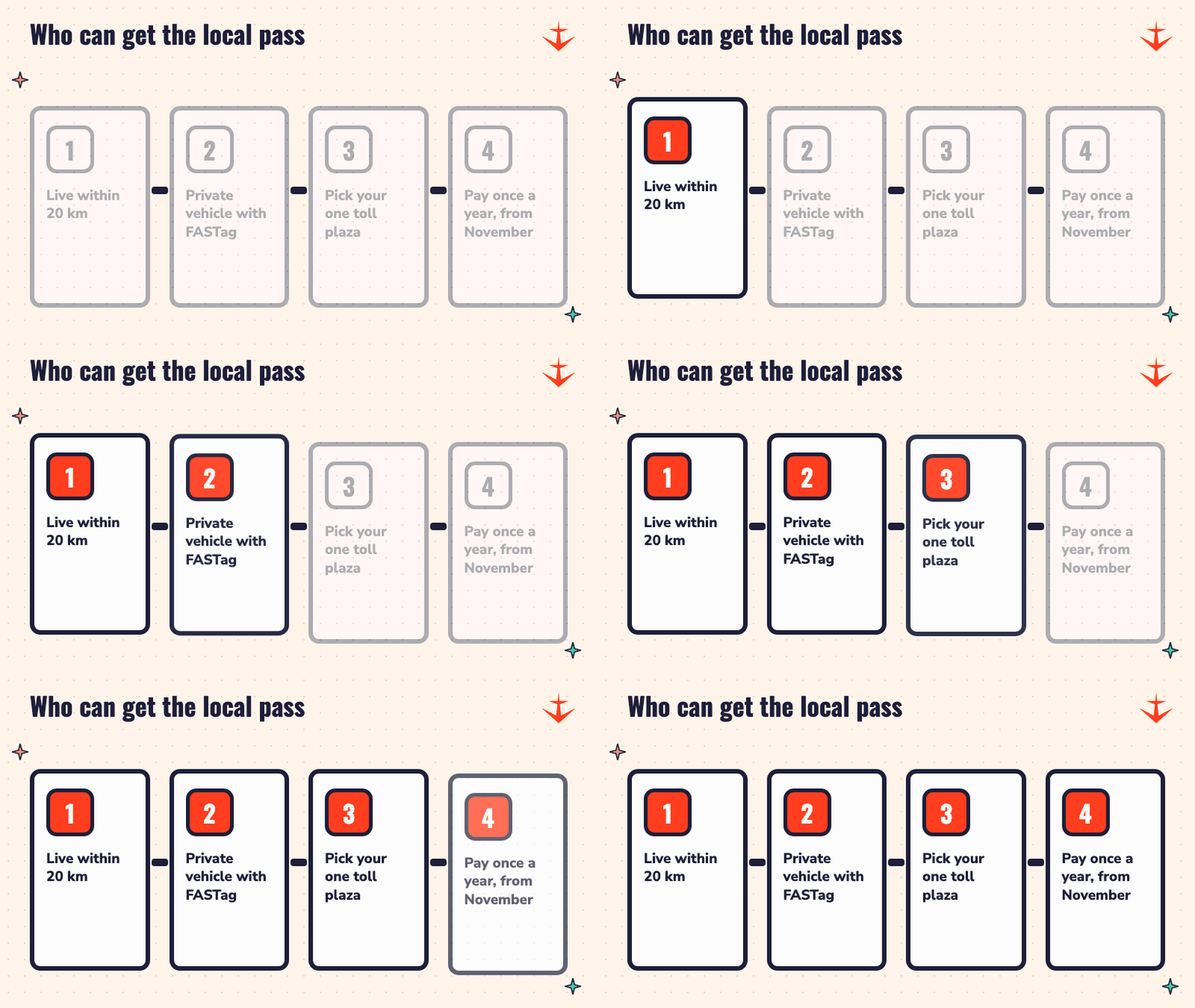
- The owner must live within 20 km of the toll plaza.
- The vehicle must be non-commercial, so a family car, not a taxi or a goods truck.
- It must have a valid, working FASTag registered for non-commercial use.
- The pass works only at the one toll plaza for which it was issued. It cannot be used at any other plaza.
Think of it like a season ticket for one cricket ground. It lets you into that stadium all season, but not into a stadium in another city.
Where will it not work?
There are two big exceptions. First, the pass will not be offered on highways or expressways where toll is collected under a closed user fee collection system. On such roads, you pay for the distance you drive between an entry point and an exit point, a little like a metro ticket priced by stations.
Second, people will not get the pass if a service road or another road is available for the same trip. The idea is to help people who have no other way around the plaza.
So even if a person lives close to a plaza, the plaza itself may not qualify. Zee Business notes that Uttar Pradesh alone has 135 toll plazas run by the National Highways Authority of India (NHAI), and the pass will not be offered at all of them.
How does FASTag work, anyway?
FASTag is a small sticker on a car's windscreen. Inside it is an RFID chip, a tiny radio tag that a reader at the toll plaza can sense from a short distance. When the car rolls into the lane, the reader spots the tag and the toll is cut from the prepaid wallet or bank account linked to it. No cash, no stopping to count coins.
The system is run by NHAI. It started on the Delhi to Mumbai stretch of the Golden Quadrilateral on 4 November 2014, and it became compulsory for all vehicles from 15 February 2021. Just how big is it? In January 2024 alone, FASTag payments were worth Rs 5,559.91 crore.
The video below shows how the tag and the toll reader talk to each other.
Was there no local pass before?
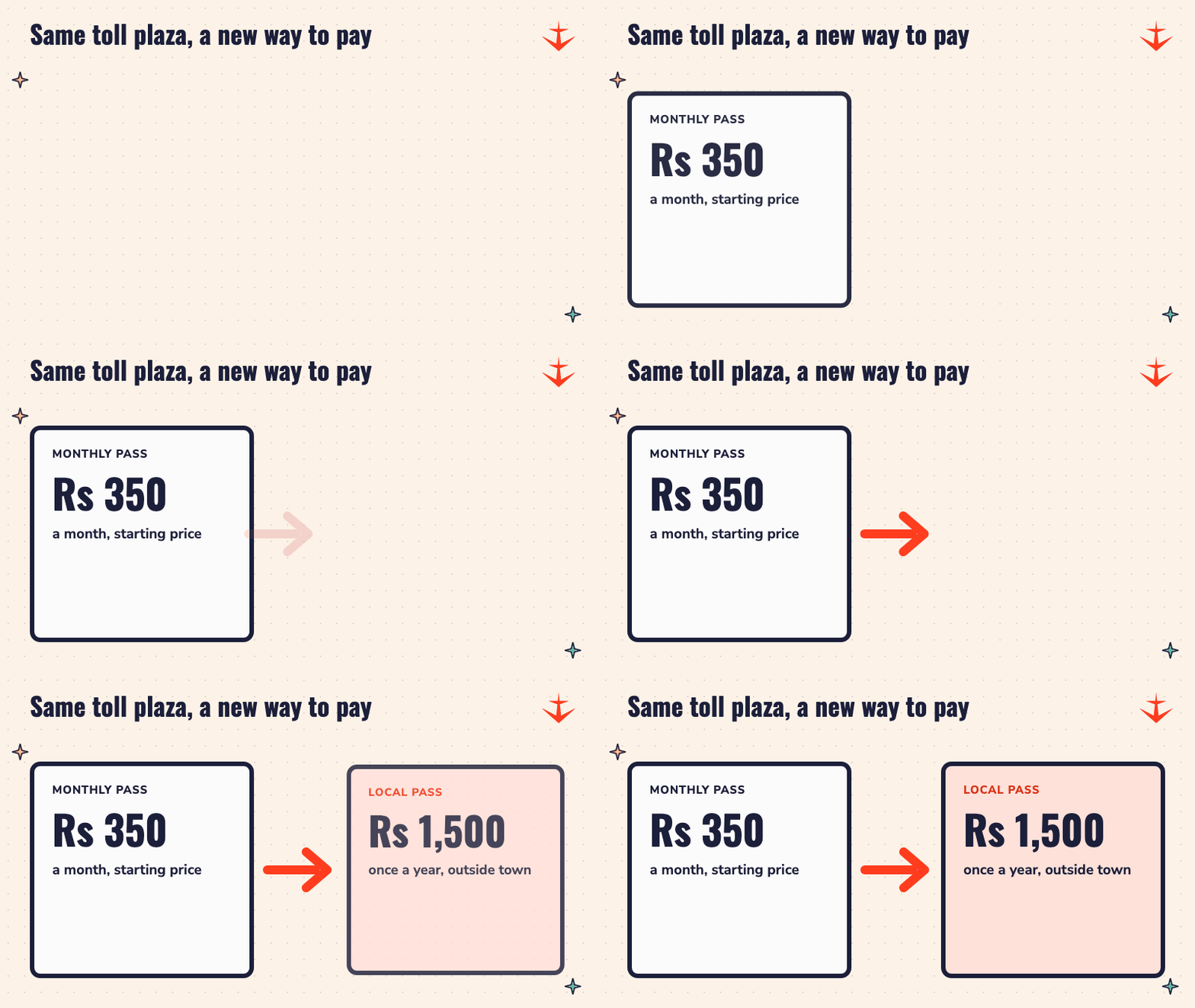
There was, but only month by month. NHAI already runs a monthly local pass for people living within 20 km of a plaza. According to Business Today, this pass starts at Rs 350 and gives unlimited crossings at that plaza for the month.
Buying that monthly pass also became easier this year. It went digital in July 2026 at the Mundka to Bakkarwala toll plaza in Delhi, and by August the service had reached 121 toll plazas through the Rajmargyatra app. The app checks a person's address and vehicle papers through DigiLocker and VAHAN, the government's online records, and then uses maps to confirm the home is within 20 km.
Under the new rules, owners can pick either the monthly pass or the new annual local pass, but not both for the same vehicle.
So how much does a local commuter save?
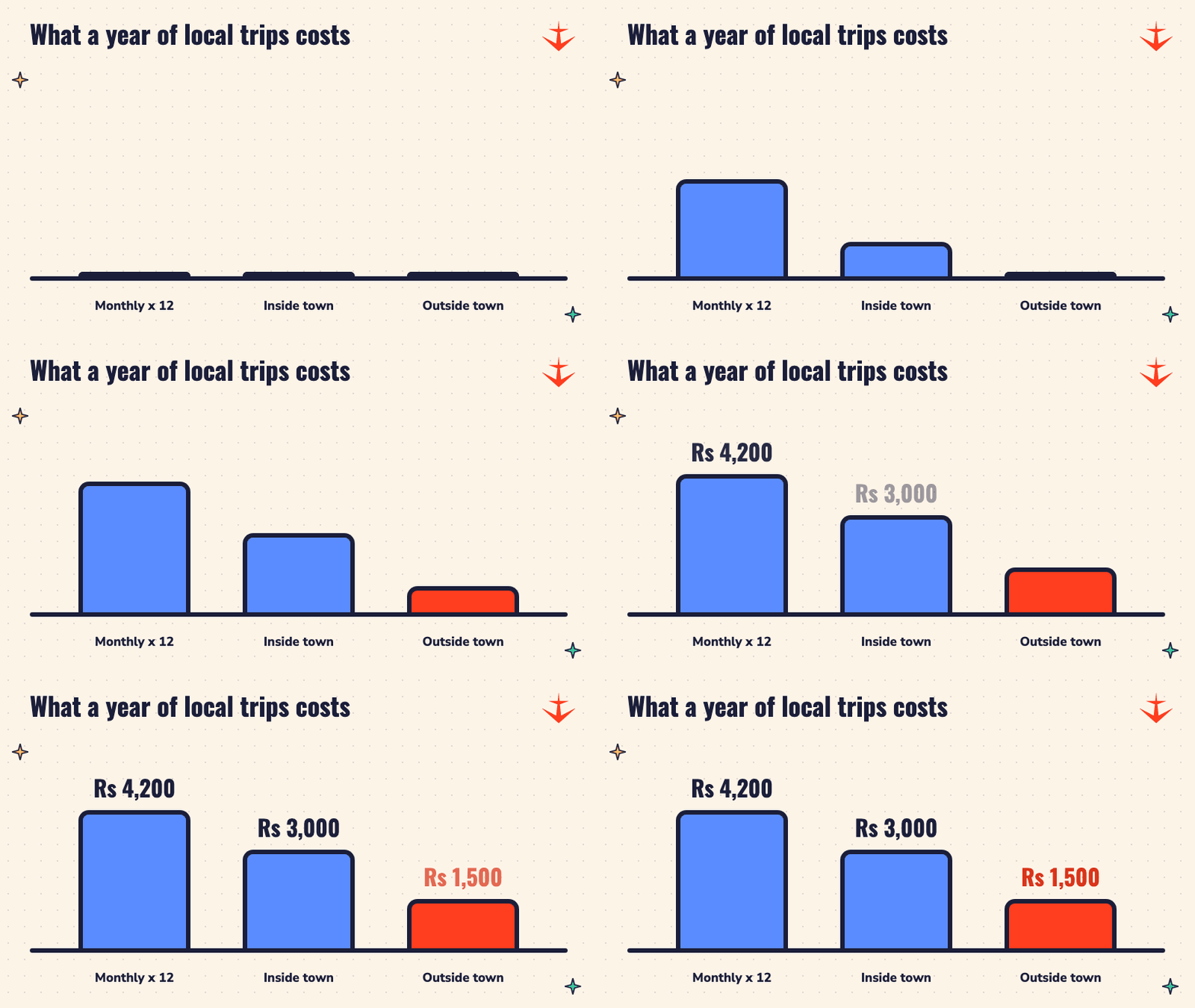
Here is some simple maths using the prices above. If the monthly pass costs Rs 350, twelve months of it come to Rs 4,200.
- With the Rs 1,500 pass (plaza outside town), the saving is Rs 2,700 a year.
- With the Rs 3,000 pass (plaza inside town), the saving is Rs 1,200 a year.
That is real pocket money, saved just by paying once instead of twelve times.
Now think per trip. Say someone crosses the plaza twice a day, 25 days a month. That is 50 crossings a month, or 600 in a year. Spread over 600 crossings, the Rs 1,500 pass works out to Rs 2.50 a crossing, less than a cutting chai. The Rs 3,000 pass works out to Rs 5 a crossing.
Of course, the saving depends on how often a person really drives through. As Zee Business points out, the pass makes the most sense for people who cross many times a week. Someone who crosses only now and then may be better off paying per trip.
How is this different from the Rs 3,000 FASTag annual pass?
This is easy to mix up. Since 15 August 2025, there has also been a national FASTag annual pass. It was launched at Rs 3,000 for up to 200 toll crossings or one year, whichever comes first, and it works at fee plazas across national highways. At launch prices, that is Rs 15 a crossing.
That pass is useful for long highway trips that cross many plazas. The new local pass is for the daily run to office, college or the market, through the same single plaza near home. One is a tourist bus pass; the other is a local train season ticket.
The video below, from Cars24, walks through how a FASTag local pass is turned on in the Rajmargyatra app.
Why does this matter?
For someone who lives on one side of a plaza and works, studies or shops on the other, toll is not a holiday cost. Toll is a daily cost, like bus fare.
The notification says the pass is meant for people who cross for work, education and other local needs. For a young person driving to a first office near the city edge, or a family doing the school run, a fixed yearly price makes the monthly budget easier to plan.
Anyone who wants the pass should first check that their own toll plaza qualifies, and then compare it with what they pay today.
Sources
- The Economic Times: Road ministry introduces concessional local pass for FASTag users living near toll plazas
- Zee Business: New highway toll rules from Nov 1, who qualifies and what the pass costs
- UNI: Govt sets annual toll pass rates for local residents from November 1
- Business Today: NHAI's Rs 350 monthly toll pass now available
- Swarajya: Digital FASTag local passes now available at 121 toll plazas
- The Tribune: Rs 3,000 for 200 trips, NHAI rolls out prepaid FASTag annual pass
- Wikipedia: FASTag
- Cover photo: Hilalpur Toll Plaza, by In Transit, CC BY-SA 4.0
