Legal AI startup Legora raises $550 million at an $8.8 billion valuation
Version 1 of 1 saved 22 Oct 2026, 11:18 am IST · Chain line 135
As it was first published
Legal AI startup Legora raises $550 million at an $8.8 billion valuation
Its yearly repeat revenue crossed $200 million about three years after it was founded. What Series E, valuation and ARR mean, in simple words.
Picture a company that did not exist four years ago. Today, investors say it is worth $8.8 billion. Its customers are not gamers or shoppers. They are lawyers. That company is Legora, and it sells AI software that helps lawyers get their work done.
On 21 October 2026, Legora announced that it has raised $550 million in a Series E round at an $8.8 billion valuation. Those are a lot of big words. So let us break them down one by one, the simple way.
What does Legora actually do?
Lawyers spend a huge part of their day reading. They go through long contracts, old court cases and new rules. They write notes, check facts and fill in forms. Much of this is slow, careful, repeat work.
Legora's software helps automate and assist with these workflow tasks for legal professionals. A workflow is just the chain of steps needed to finish a job, like the steps to make chai: boil water, add tea leaves, add milk and sugar, strain, serve.
Legora calls its product the Legora aOS, an "agentic operating system" that lawyers and their AI agents work in. An AI agent is software that does not just answer one question. It can carry out a job with many steps on its own, a bit like a helper you send to the market with a full shopping list instead of one item.
The company says legal teams are moving beyond AI assistants toward agents that carry out multi-step work. New products it plans include agentic in-take, horizon scanning and legal research.
What is a Series E?
Startups usually raise money in steps, called rounds. Think of school classes. First comes a small "seed" round, then Series A, B, C, D and so on. Each new letter is a bigger class, with bigger money and bigger expectations. Series E is the fifth lettered round.
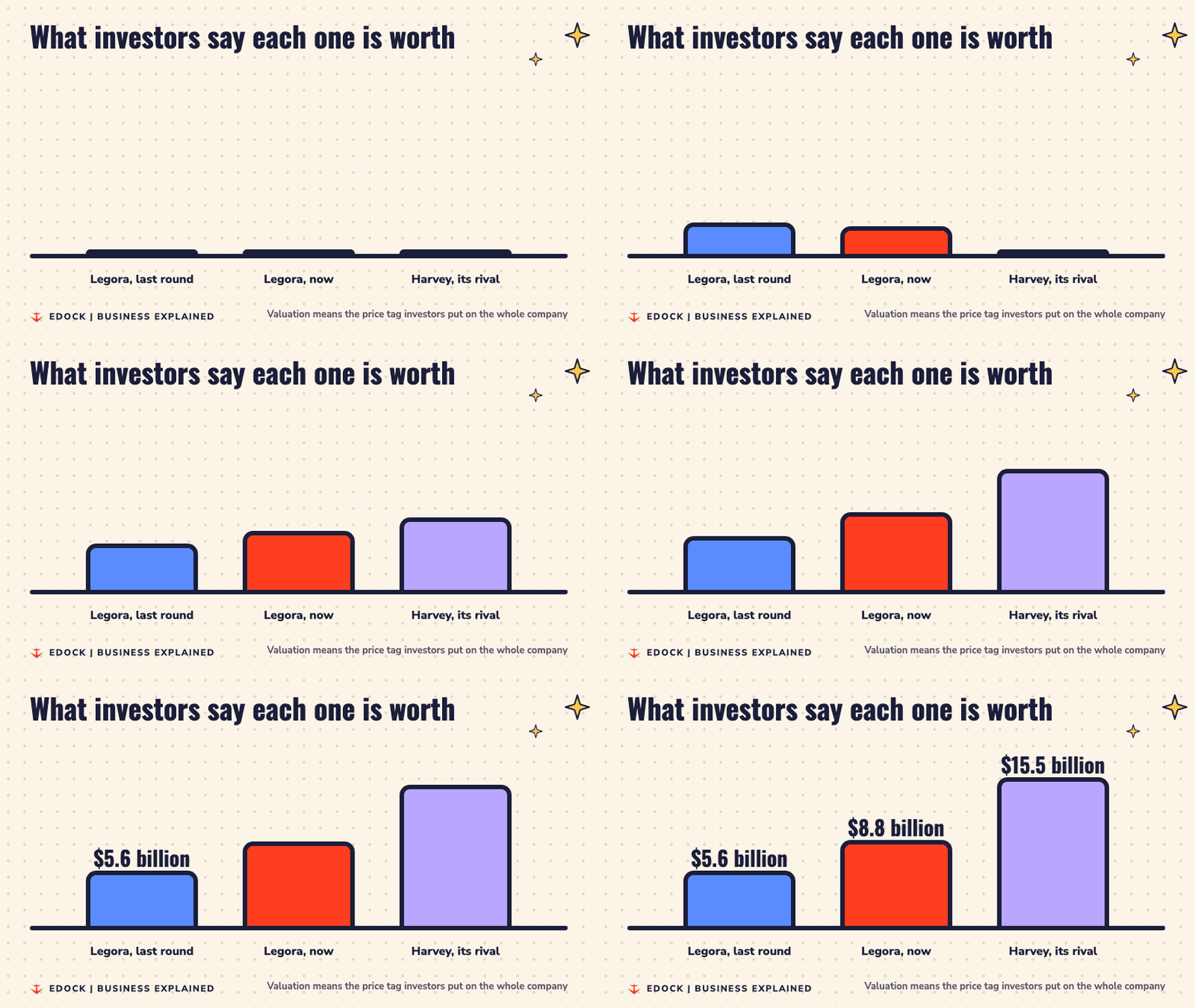
Legora's last round was its Series D. In April, the company announced a $50 million extension of a $550 million Series D round, which valued it at $5.6 billion. Now, just about six months later, it has raised another $550 million.
What does "valuation" mean?
Imagine a samosa stall that sells out every evening. A friend offers you money to own a small slice of the stall. To agree on how much that slice costs, you first need a price tag for the whole stall. That price tag is its valuation.
Legora's new price tag is $8.8 billion. The company says this is a "post-money" valuation, which means the new $550 million is already counted inside it. Its last round valued it at $5.6 billion. So in one step, its price tag grew by more than one and a half times.
Who put in the money?
The round was led by Atreides Management. To lead a round is like being the captain of a cricket team for that match. The lead investor usually puts in a big share and helps set the price.
New investors joining include Baron Capital, Capital Group, Fidelity Management and Research Company, Glade Brook Capital Partners and J.P. Morgan. Older investors such as Accel, Benchmark, Bessemer Venture Partners, General Catalyst and Salesforce Ventures also put in money again. When old backers come back for more, it usually shows they still believe in the company.
The number investors love: ARR
The key number in this story is ARR, or annual recurring revenue. Think of a tiffin service. Customers pay every month, and most keep paying month after month. If you add up what all of them pay over one year, that is your ARR. It is money the company can expect to keep coming in, not a one-time sale.
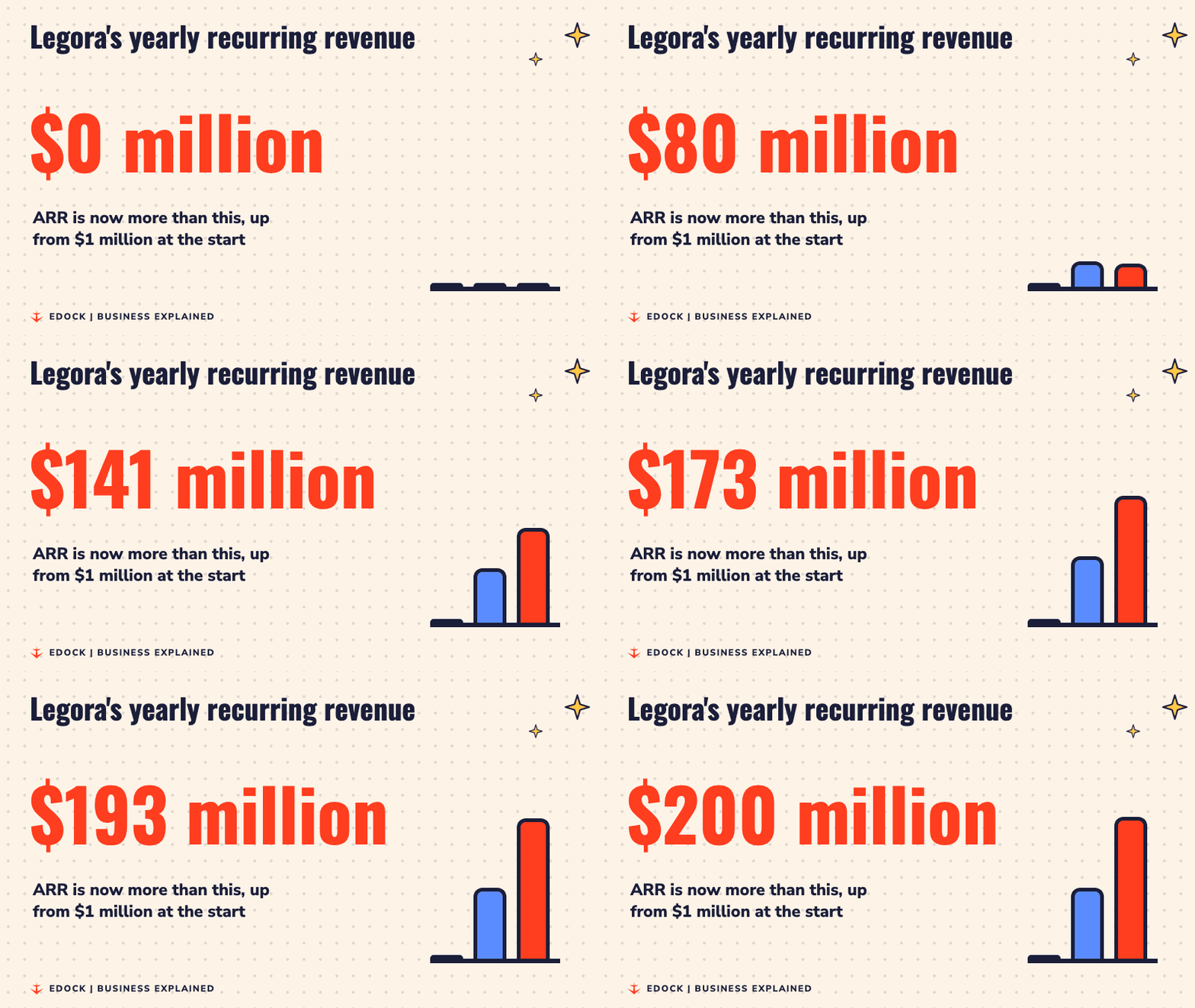
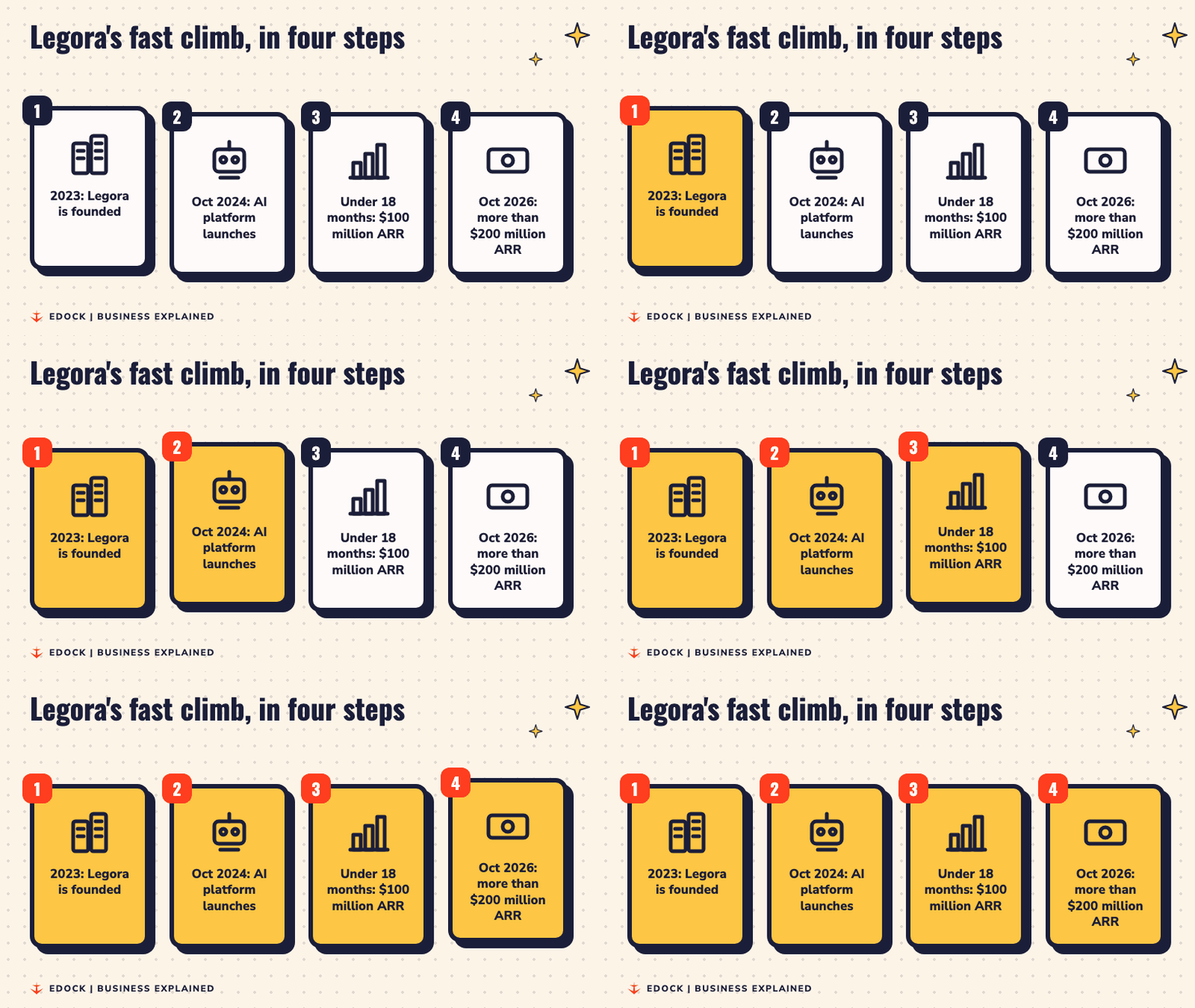
Legora's growth here is very fast. The company says it went from $1 million to $100 million in ARR in less than 18 months. The next $100 million took less than six months. Its ARR is now more than $200 million.
Legora was founded in 2023 and launched its platform in October 2024. Today it has more than 1,000 employees across 18 offices. Its software is used by more than 140,000 legal professionals at more than 2,400 law firms and in-house legal teams, across over 80 markets.
Who are Legora's customers?
There are two main kinds. The first is law firms, companies made up of lawyers who work for many clients. The second is in-house legal teams, the lawyers who work inside one big company, like a school having its own doctor instead of visiting a clinic.
A year ago, in-house teams were only a small part of Legora's customers. In July to September 2026, they made up more than 40% of its new customers.
The United States is now Legora's largest market by revenue. More than half of the AmLaw 50, a well known list of big American law firms, are its customers. And it opened its first US office only in spring 2025.
A two-horse race in legal AI
Legora has a big rival called Harvey. Just a month before Legora's news, Harvey announced a $550 million raise at a $15.5 billion valuation. Back in March, Harvey said its ARR was more than $200 million.
So both companies raised the same amount of money, and both now say their ARR is above $200 million. But investors put a bigger price tag on Harvey, $6.7 billion more than Legora's. It is like two cricket teams with similar scores, where one still has more fans cheering for it.
Why is so much money going into AI for offices?
Office work is full of reading, writing and checking. That is exactly the kind of work today's AI tools are good at. Legal work is a strong example, because it is slow, costly and full of documents.
Legora's CEO and co-founder Max Junestrand said in the company's statement that AI is changing the role of the lawyer, with more time for judgment and advice. In other words, the software takes over repeat tasks, so lawyers can spend more time thinking and advising.
Investors are betting that customers who start with a tool like this will keep paying and use it more each year. That is why a fast-rising ARR gets so much attention.
Where will the $550 million go?
Legora says the money will support expansion in North America, where it has offices in New York, Denver, Chicago, Houston, San Francisco, Toronto and Mexico City. It will also grow in its markets across Europe and Asia-Pacific, and put more money into building the Legora aOS.
For students thinking about law, business or tech, this story shows one big shift. Software is now being built for very specific kinds of work, like a lawyer's day, and some of the fastest growing companies are the ones that understand that work best.
Sources
- Legora raises $550 million Series E at $8.8 billion valuation, Legora newsroom
- Legal AI startup Legora raises $550M Series E at $8.8B valuation, TechCrunch
- Legora raises $550m at $8.8bn valuation, Artificial Lawyer
- Introducing the Legora Agent, Legora on YouTube
- Legora raises $550M at an $8.8B valuation, RuntimeWire on YouTube
- Cover photo: Indiana Supreme Court Law Library rare books shelf, by Dominic, CC0
