Kochi tea auction: 40% of orthodox tea finds no buyer as exporters hold back
Prices fell about Rs 6 a kg in Sale 43 as West Asia shipping worries and Puja holidays kept buyers careful. A simple guide to how tea is sold.

Picture a big weekly tea sale in Kochi. Sellers put their leaf up for bids, and then nobody bids for a big part of it. That is what happened in Sale 43 of the Kochi tea auctions, reported on 23 October 2026. Around 40% of the orthodox leaf tea on offer stayed unsold, and the average price fell by around Rs 6 a kg.
Two things were blamed by traders: Puja holidays in North India, and rising tensions in West Asia that made overseas buyers careful. Here is what all of this means, in plain words.
First, what is a tea auction?
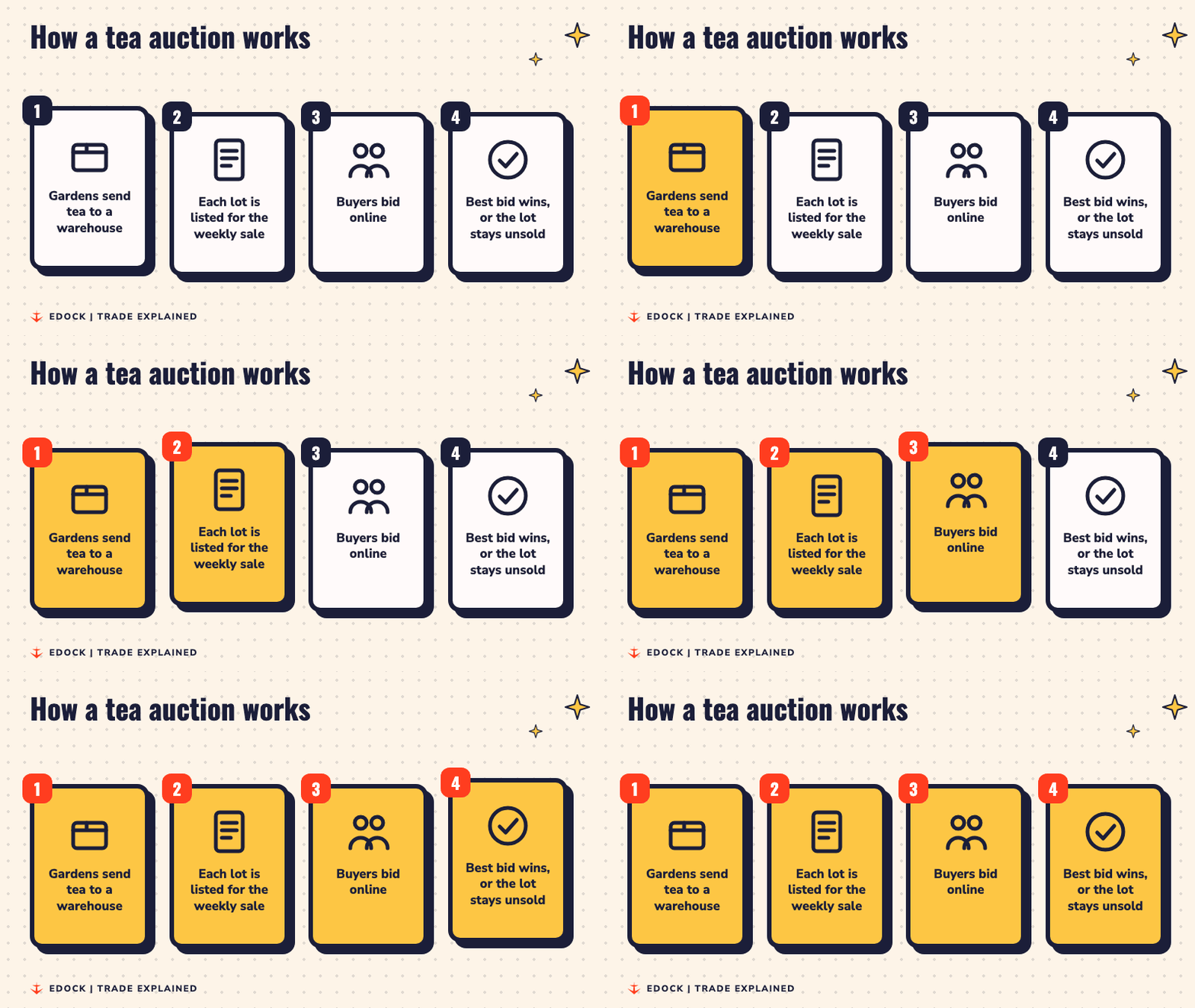
Think of a vegetable mandi. A farmer brings a pile of tomatoes, traders shout their prices, and the one who offers the most takes the pile home. A tea auction works the same way, only the bids now happen on a screen.
India has run public tea auctions for a long time. The first tea auction centre was set up in Kolkata in 1861, and today seven centres, including Cochin (Kochi), use an online e-auction system supervised by the Tea Board of India. Live e-auctions started on 8 April 2009.
Each week, tea from the gardens is listed in "lots", which are like numbered bags at the mandi. Buyers bid. If the best bid is too low for the seller, the lot is pulled back and stays unsold. Traders call this a "withdrawal".
Orthodox and CTC: two ways to make the same chai leaf
The report talks about two kinds of tea, so it helps to know the difference.
Orthodox tea is made the older way. The leaves are rolled into strips, so the final tea looks like twisted, whole or large broken leaves. Think of a full roti, folded.
CTC tea stands for crush, tear, curl. Machines with sharp-toothed rollers crush and tear the leaves into small, hard round grains. Think of the roti broken into tiny bits. It brews strong and dark very quickly, which is why it suits tea bags and the boiled chai common in Indian homes. Over 80% of India's tea production is CTC.
What happened in Sale 43
Here are the numbers from the BusinessLine report:
- 1,28,928 kg of orthodox leaf tea was offered, and around 40% of it stayed unsold. That is roughly 51,000 kg of tea with no buyer.
- Prices of several tea grades fell by Rs 5 to Rs 10 a kg, with heavy withdrawals.
- Whole leaf grades saw weak demand.
- For CTC, 5,90,994 kg was offered and 78% was sold.
- CTC dust, a grade made of very fine bits, fell by Rs 2, from Rs 156 to Rs 154 a kg.
- Blenders, the companies that mix different teas to make the packet you buy, together took 70% of all the CTC tea sold.
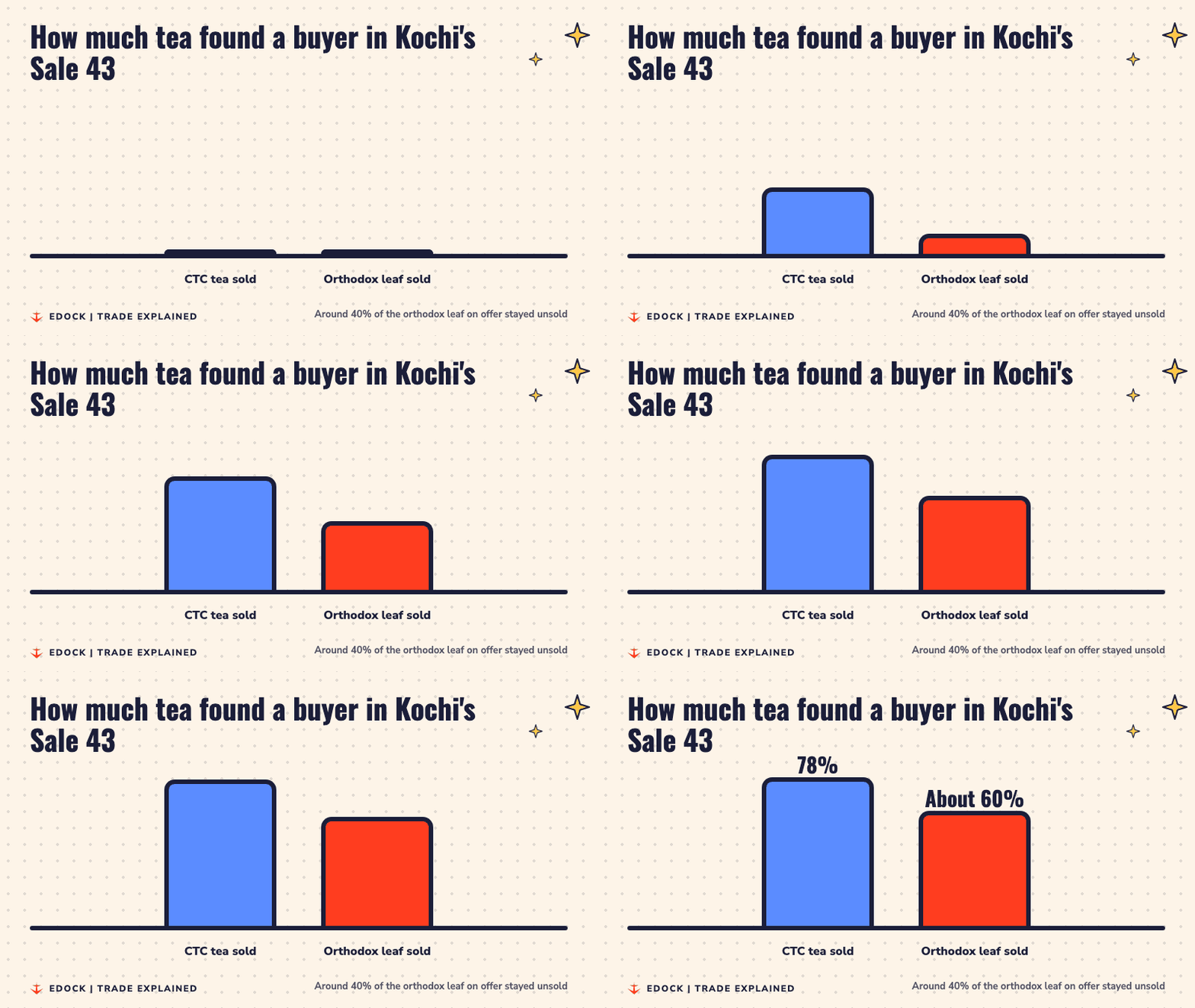
So the CTC side held up better. The orthodox side, where overseas buyers were cautious, took the bigger hit.
Why buyers held back
1. Puja holidays. Anil George Joseph of the Tea Trade Association of Cochin said fewer buyers took part because of Puja holidays in North India. "Upcountry" buyers are traders from other parts of India who buy at Kochi. When many of them are on holiday, there are fewer bidders, so prices slip. It is like a school canteen on a half day: the samosa seller sells less.
2. West Asia worries. Auctioneers Forbes, Ewart and Figgis said overseas buyers were careful because rising tensions in West Asia had led to container shortages and higher shipping costs. A container is the big steel box that goes on a ship. If boxes are hard to find and each trip costs more, an exporter thinks twice before buying a lot of tea that may be costly to send.
3. More tea arriving. The north-east monsoon in the high ranges has improved the quality of the crop, so more tea reached the auction. More supply on the table also pushed prices down, traders said. It is like a mango season with a great harvest: more mangoes, lower price per kg.
One bright spot: exporters to CIS countries (the Commonwealth of Independent States) gave fair support, the report said.
Why West Asia matters so much for Indian tea
West Asia is one of the biggest shelves for Indian tea abroad. The Tea Association of India has warned that nearly 41% of India's tea exports could face disruption if trouble around the Strait of Hormuz grows. Countries like Iran, the United Arab Emirates and Iraq are major buyers of Indian tea, and their cargo usually sails through that narrow sea route. The same report said some buyers had started to delay new purchase deals until shipping settles down.
The bigger picture: exports are down this year
The Kochi sale fits a bigger trend. According to Tea Board of India figures reported by The Sentinel, India exported 155.33 million kg of tea from January to August 2026, against 183 million kg in the same months of 2025. That is a fall of 27.67 million kg, or 15.12%.
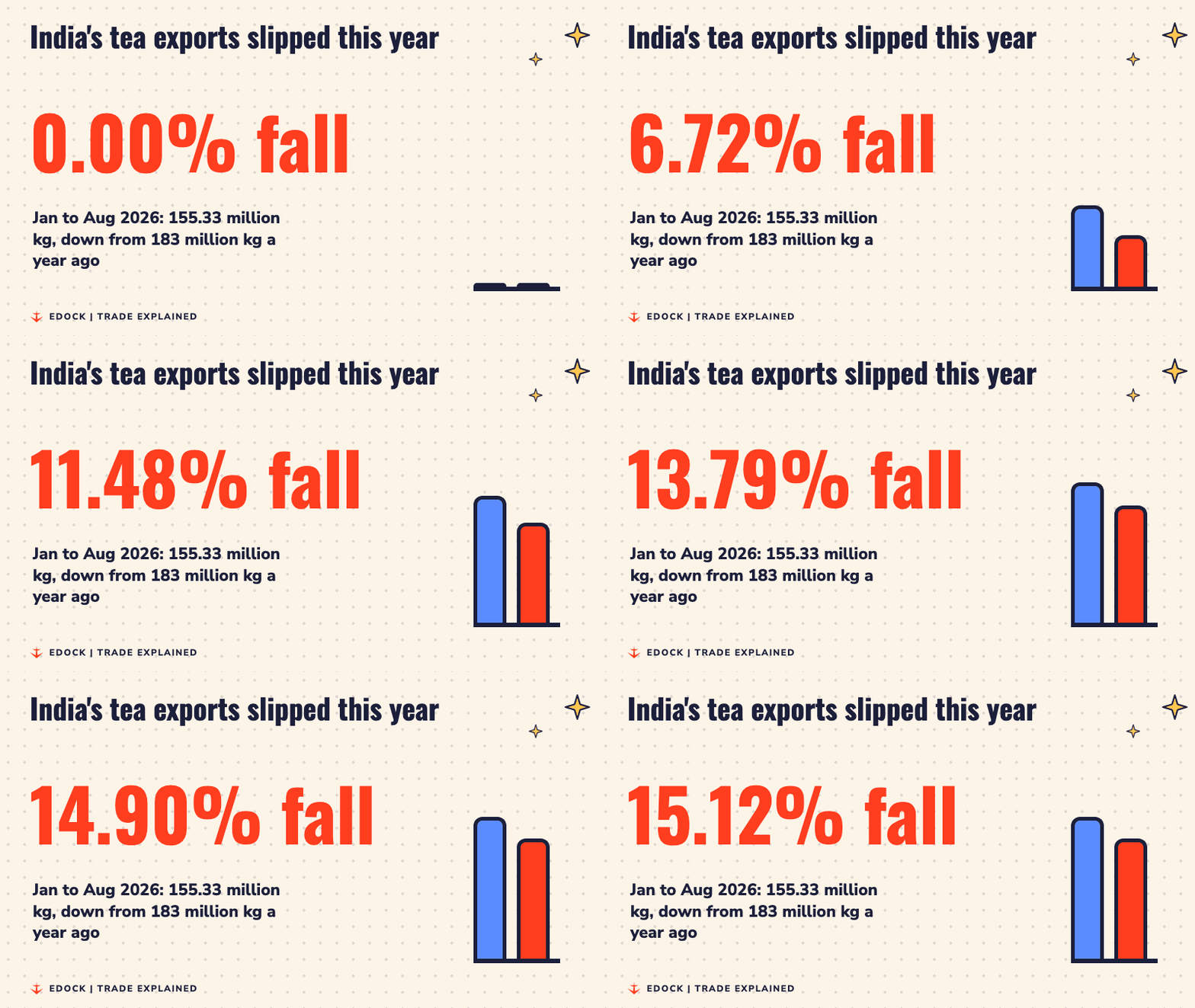
There is a small silver lining. The tea that did go abroad earned a bit more. The average price was Rs 307.42 a kg in the first eight months of 2026, against Rs 298.44 a kg a year earlier. That is about Rs 9 more for every kg. The same report linked the drop in volume to the West Asia crisis and to ships taking different sea routes.
What this means for young readers
Every cup of chai has a long trip behind it: a garden in the hills, a warehouse, an online auction, a blender or an exporter, a ship, and finally a shop. When one link in that chain gets costly, like shipping, the effect travels all the way back to the auction room in Kochi.
For anyone thinking of a career in trade, this is a neat lesson. Prices are not only about how good a product is. They also depend on holidays, weather, the cost of a steel box on a ship, and how calm or tense far away sea routes are. Watch the next few Kochi sales to see whether buyers come back once the holidays end and shipping costs ease.
Sources
- BusinessLine: West Asia tensions, Puja holidays drag Kochi tea auction prices lower
- The Sentinel: India's tea exports plunge by 15% amid global challenges
- India Sea Trade News: Hormuz tensions put 41% of India's tea exports at risk, says TAI
- Vikaspedia: e-Auction of tea
- Wikipedia: Crush, tear, curl
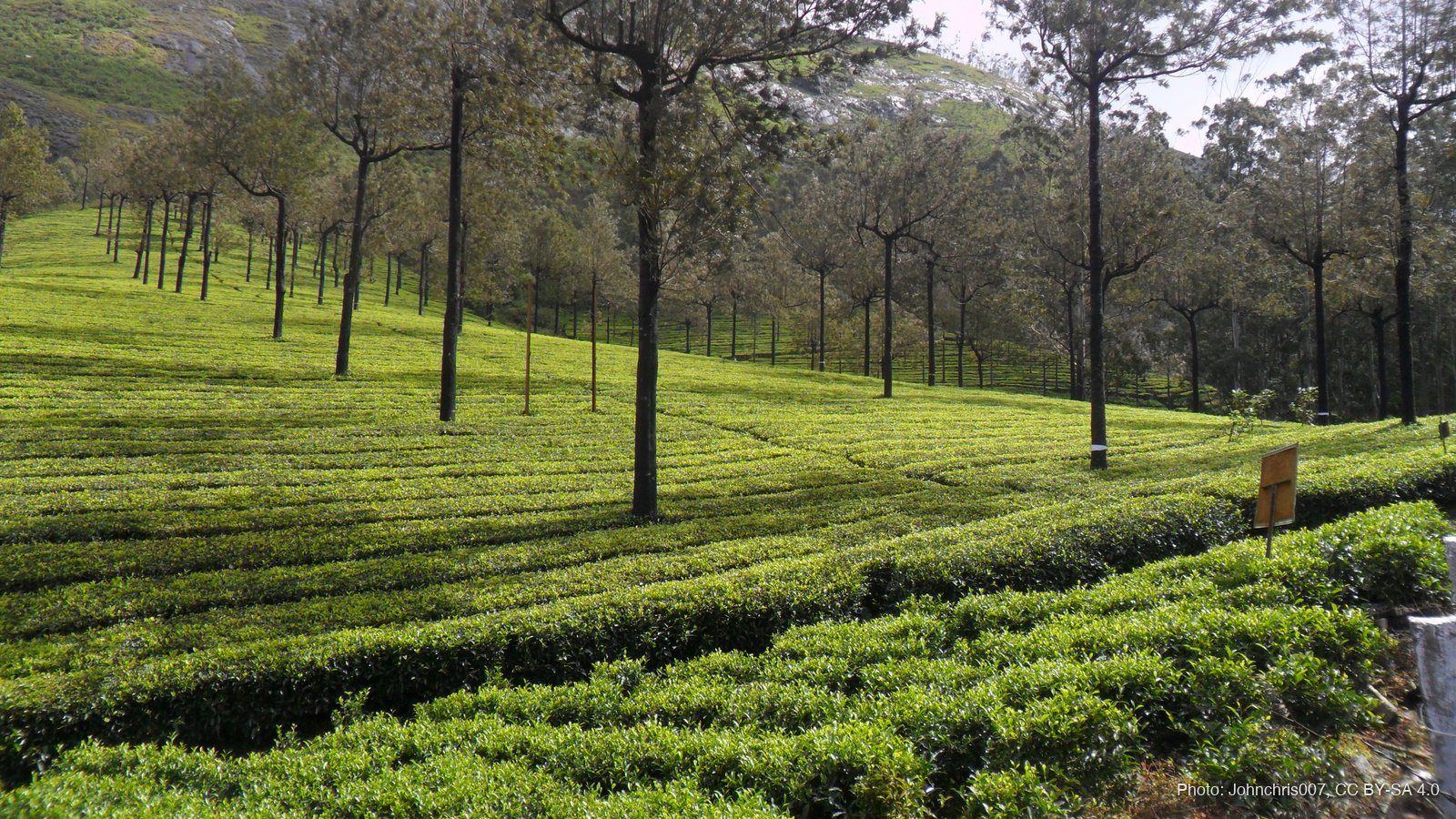
- Cover photo: Munnar Tea Estate, by Johnchris007, CC BY-SA 4.0

You may republish this story under CC BY 4.0: credit Arshdeep Singh and link to this page.