Kingfisher maker United Breweries nearly triples quarterly profit on premium beer
Version 1 of 1 saved 28 Oct 2026, 7:49 am IST · Chain line 289
As it was first published
Kingfisher maker United Breweries nearly triples quarterly profit on premium beer
Beer volumes rose 16% from July to September 2026, premium labels grew 38%, and state taxes still make up most of a bottle's price.
Picture two bottles of beer on a shop shelf. One is the regular kind. The other is a fancier, premium label that costs more. For the company that brews both, the second bottle earns more money on every sip. That simple idea helped the maker of Kingfisher beer nearly triple its profit in just three months.
On Tuesday, 27 October 2026, United Breweries Ltd (UBL) said its consolidated net profit for July to September 2026 was Rs 134.81 crore. A year earlier, for the same three months, the figure was Rs 46.34 crore. Consolidated means the numbers of the whole group, the main company plus the smaller companies it owns, added together.
This post is about the business of beer: how a brewer earns, why premium bottles matter, and how state taxes shape the price. Beer is only for adults of legal drinking age.
Who is United Breweries?
UBL is India's largest producer of beer, based in Bengaluru. Its best known brand is Kingfisher. The Dutch beer giant Heineken controls the company, which is why Heineken beers are also on its list.
Think of UBL like a very big samosa stall with many counters across India. Some counters sell the plain samosa. Others sell the paneer special at a higher price. The stall makes money on both, but more on the special one.
What were the big numbers?
Revenue is all the money that comes in from selling things, before any costs are taken out. UBL's revenue from operations rose 23.7% to Rs 4,623 crore, up from Rs 3,737.31 crore a year earlier, according to the exchange filing reported by PTI. Profit is what is left after all costs are paid.
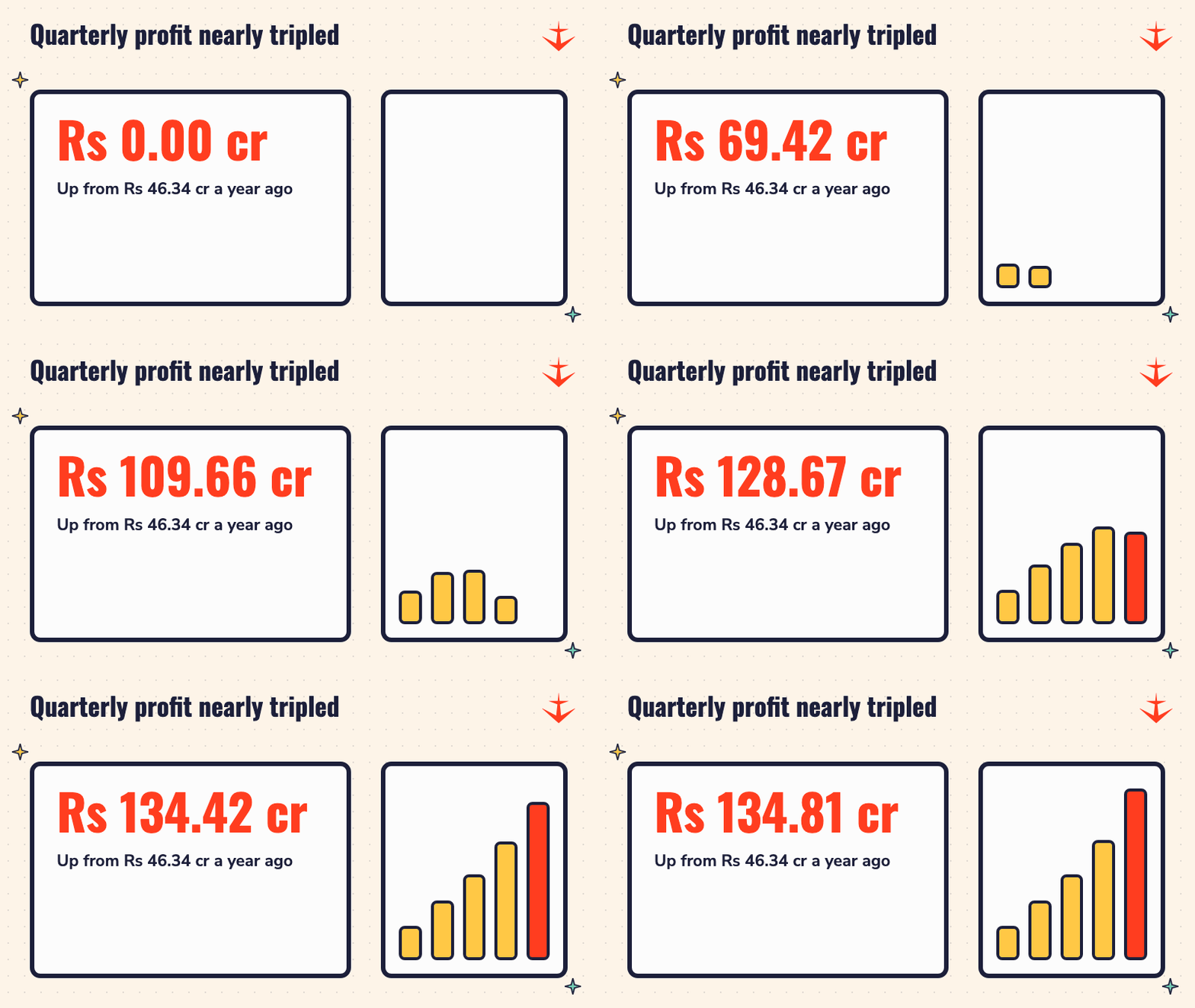
The company said its net sales grew 24%. It gave the reasons in one list: strong volume growth, price increases, premiumisation, a better mix of states and better running of its own operations.
The managing director and CEO, Vivek Gupta, put the premium part plainly in the company's results statement: "Premiumisation continues to be a powerful driver of value creation for UBL."
Why does a premium bottle earn more?
Premiumisation is a big word for a simple habit. The word means buyers moving up from a cheaper product to a costlier one, like a friend who used to order cutting chai and now orders a masala chai with extra elaichi.
UBL said the total number of bottles and cans it sold to distributors and shops rose 16% in the quarter. Its premium beers grew much faster, by 38%. Heineken Silver grew 67% and Kingfisher Ultra grew 44%, the company said.
Making a premium beer does not cost double the regular one. The bottle, the truck and the shop shelf cost about the same. But the price is higher. So more of each extra rupee stays with the company. During its Capital Markets Day in September 2026, UBL said its premium range had started adding to its margins, and that nearly 70% of premium beer buyers had moved up from regular beer.
What is a margin, in plain words?
A margin tells how much of every Rs 100 of sales a company keeps. UBL looks at EBITDA, which is the profit from running the business before interest, tax and the slow wearing out of machines are taken off.
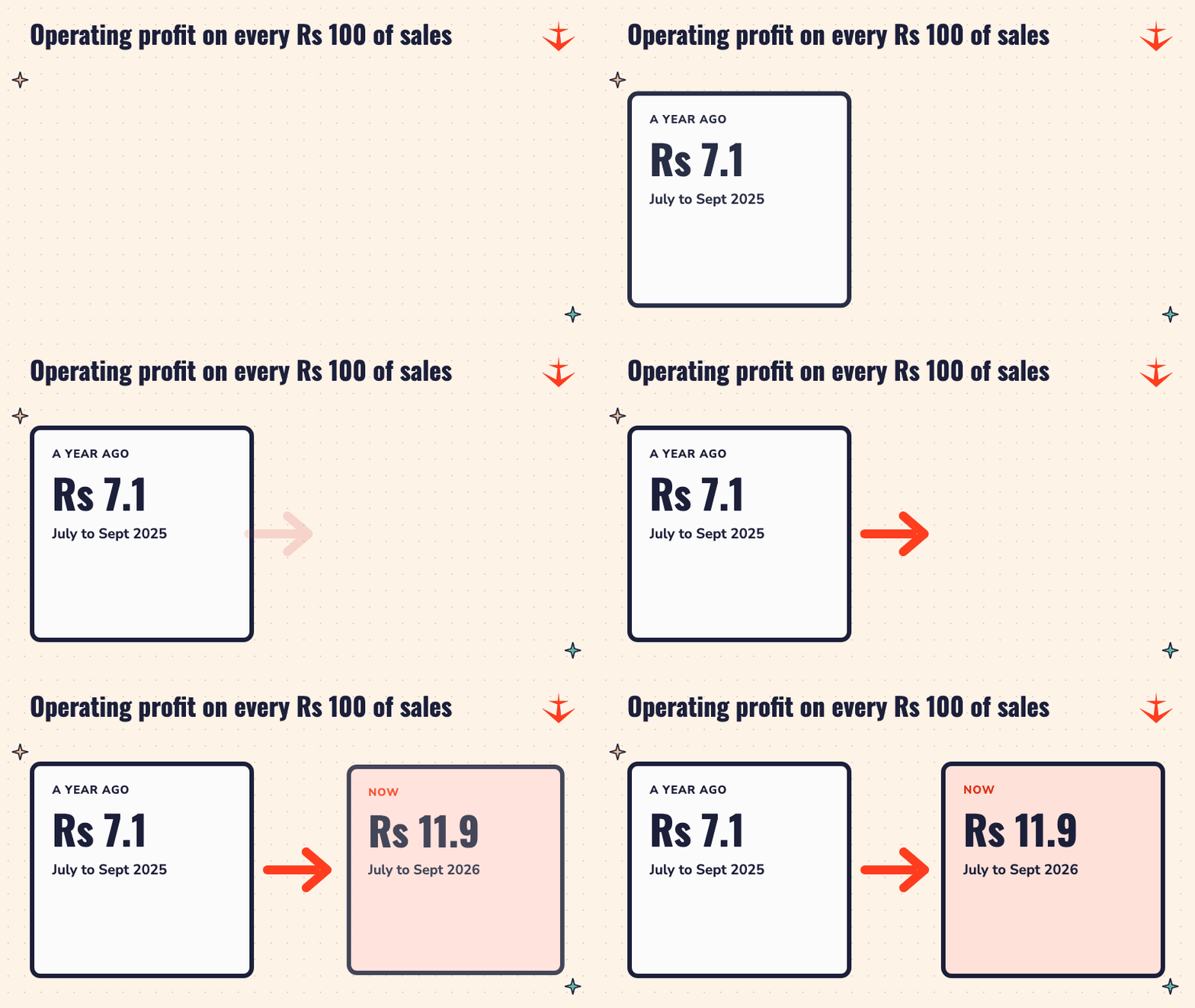
The company's EBITDA grew 108% in the quarter. Its EBITDA margin improved by 480 basis points, to 11.9%. One basis point is one hundredth of one percent, so 480 basis points is 4.8 percentage points. In simple words, on every Rs 100 of sales, the brewer now keeps about Rs 11.9 as operating profit, against about Rs 7.1 a year ago.
Costs still rose. Total expenses were Rs 4,481.66 crore, up 21.57%. But sales grew a little faster than costs, and that small gap is where the bigger profit came from.
Why does the state decide a beer's price?
Here is the twist for anyone who wonders why the same beer costs different amounts in Goa, Delhi and Bengaluru. Alcohol is regulated by each state, and each state sets its own taxes and rules for shops. The main tax is excise duty, a tax that the state collects on alcohol made or sold within its borders.
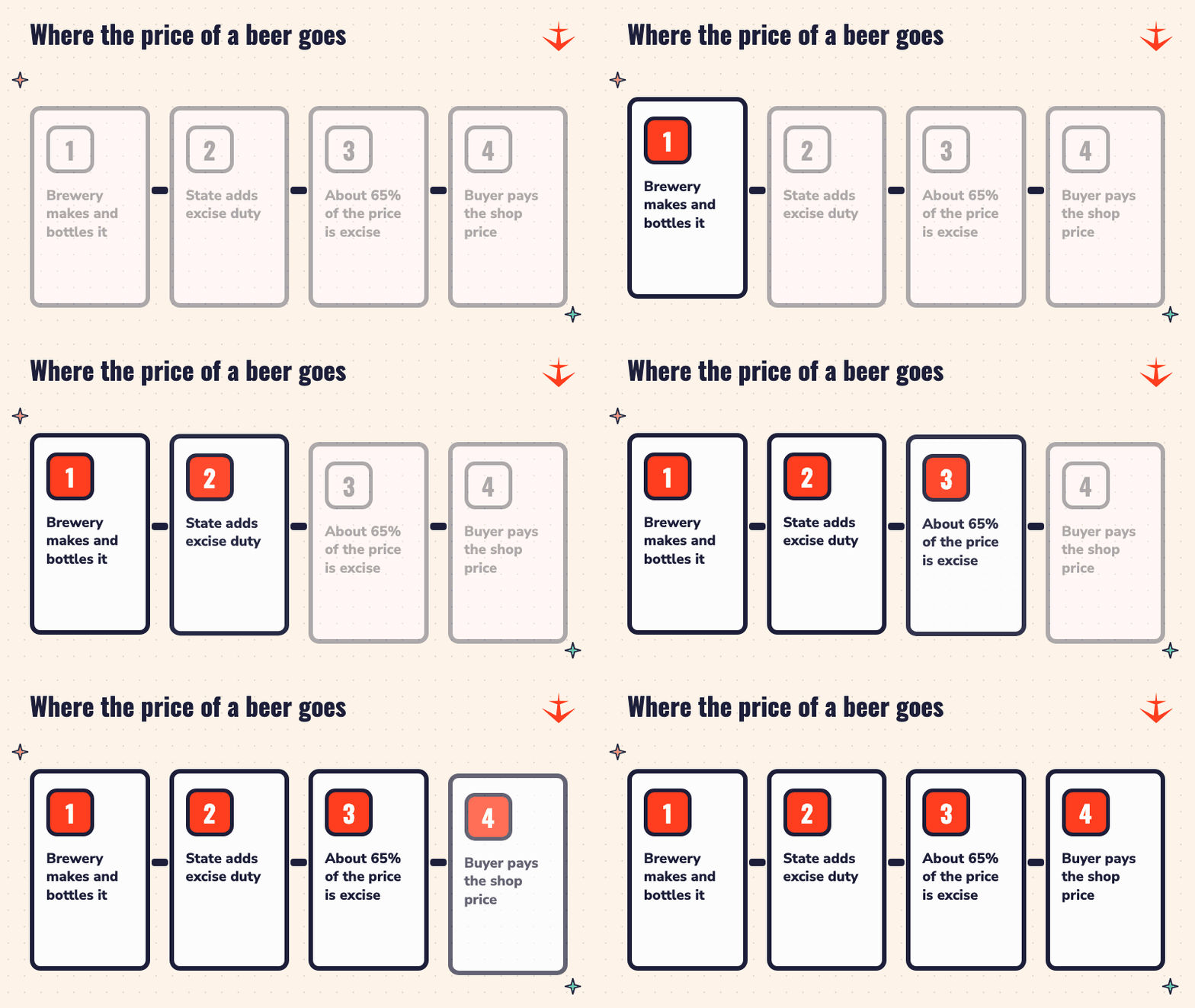
UBL said that about 65% of the retail price of beer is excise duty. So if a bottle sells for Rs 100, about Rs 65 of that is tax. The brewer, the distributor and the shop share what is left. The company also said beer pays 1.3 times the tax of Indian-made foreign liquor, the whisky and rum kind, when both are counted per unit of alcohol.
How one state's tax change moved sales
Karnataka gave a real example this year. From 11 May 2026, the state started taxing drinks by the amount of alcohol in them, the first such system in India, the state excise department said. It also stopped fixing prices itself and said the goal was cheaper drinks, in line with neighbouring states such as Tamil Nadu, Kerala and Maharashtra.
Since beer has less alcohol than spirits, this change made beer relatively cheaper. UBL later said its beer sales in Karnataka jumped about 55% in the first month after the change. These are the company's own figures, not government data. An industry report also named Karnataka as a key reason for UBL's bigger share of the market this quarter.
So a brewer's profit depends a lot on decisions made in state capitals. One tax change in one state can move sales more than a big advertising push.
What else did the company say?
UBL said its inventory, the stock of beer waiting to be sold, was lower than a year ago. That matters because it suggests the 16% jump came from real buying by customers, not from simply filling up warehouses. For the full six months from April to September 2026, its total consolidated income rose 16.3% to Rs 10,634.48 crore.
Looking ahead, the company said it still sees strong long term growth in the Indian beer market. UBL plans to keep working on new products, making its beers available in more places, and cutting costs across its supply chain. The company's share price closed slightly higher on the day.
The company spoke about growth and focusing on high-margin states in this TV interview from about a month before the results.
What this means in everyday life
- Prices: UBL listed price increases among the reasons for higher sales, and state taxes make up most of a bottle's price. A tax change in a state can move shop prices quickly.
- Work: breweries, bottling, trucks, distributors and shops all depend on these volumes. A 16% rise in volume means more cases moving through that whole chain.
- The business lesson: selling more is good, but selling a better-priced product is often better. A chai stall that sells more masala chai than cutting chai earns more on the same number of cups.
Sources
- Business Standard (PTI): United Breweries Q2 profit jumps nearly 3x on volume growth
- Investywise: United Breweries Q2 FY27 results statement summary
- Vinetur: Karnataka's tax overhaul lifted beer sales 55% in one month, brewer says
- Business Standard (PTI): Karnataka introduces AIB-based excise system
- Whalesbook: Premium liquor demand lifts profits for Indian alcohol majors
- Wikipedia: United Breweries
- Cover photo: Restaurant Rajasthan (Paris), bière Kingfisher, by Benoît Prieur, CC0
