KFC is dropping Pepsi for Coca-Cola in the US after nearly 40 years
From January 2027, about 3,700 KFC stores in the US will pour Coke. Here is why chains sign with just one soda company.

Picture this: for about 40 years, the fizzy drinks poured at KFC restaurants in the United States came from one company, PepsiCo. Now that is ending. On Thursday, 15 October 2026, KFC said its US restaurants will switch to Coca-Cola drinks next year. It is the first time in decades that the chain has changed its drink supplier.
It sounds like a small thing. Just a different cola in your cup, right? But behind that cup sits one of the oldest fights in business, and a type of deal that most people never think about.
What exactly is changing?
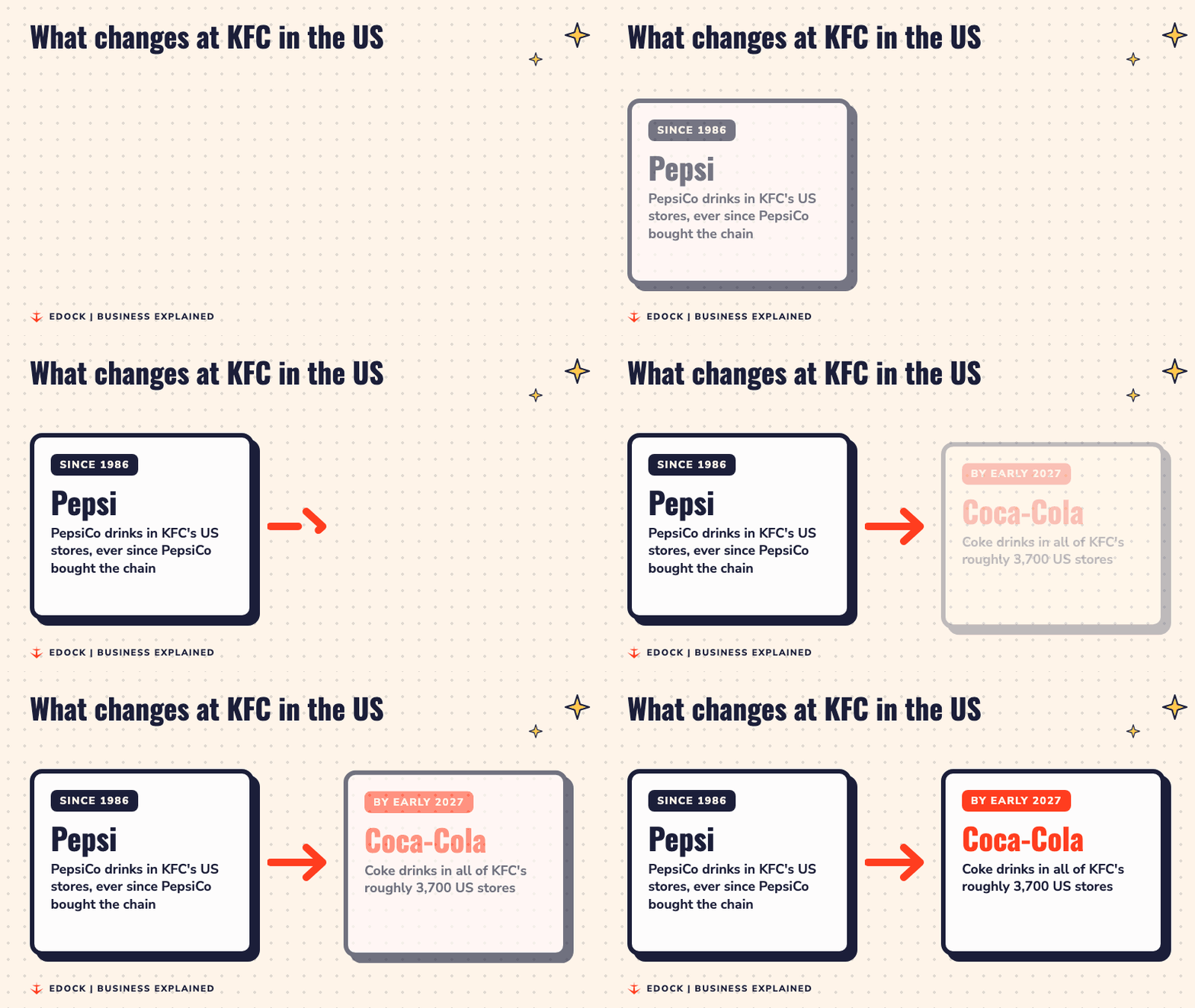
KFC will start moving to Coca-Cola products in January 2027, and the new drinks should be in all its US stores by spring. That covers roughly 3,700 restaurants. Mint, quoting Reuters, puts the exact number at 3,718 US locations.
KFC's US president, Catherine Tan-Gillespie, told franchisees and staff in a memo seen by CNBC that the goal is to pour Coke in every US store by the end of March 2027. She called the move "a critical step in the Kentucky Fried Comeback".
A franchisee, by the way, is a person or company that owns and runs a KFC store using the KFC name and recipes, and pays the brand for that right. Think of it like a samosa stall that buys the right to use a famous shop's name and secret recipe.
Wait, why was it Pepsi in the first place?
Here is the twist. PepsiCo once owned KFC. It bought the chicken chain in 1986. Back then, KFC was Coca-Cola's second biggest fountain customer, behind only McDonald's, CNBC reports. So when Pepsi bought it, Coke lost a giant customer overnight.
A fountain drink is the soda that comes out of the machine at the restaurant counter, not from a sealed bottle or can. A fountain customer, or account, is a business that buys those drinks for its machines.
In 1997, PepsiCo spun off KFC, along with Pizza Hut and Taco Bell, into a separate company that became Yum Brands. Even after that split, KFC in the US kept serving Pepsi drinks. That loyalty lasted until now.
Why do restaurants pick only one soda company?
Have you ever noticed that a burger place has Coke or Pepsi, but almost never both? That is not an accident.
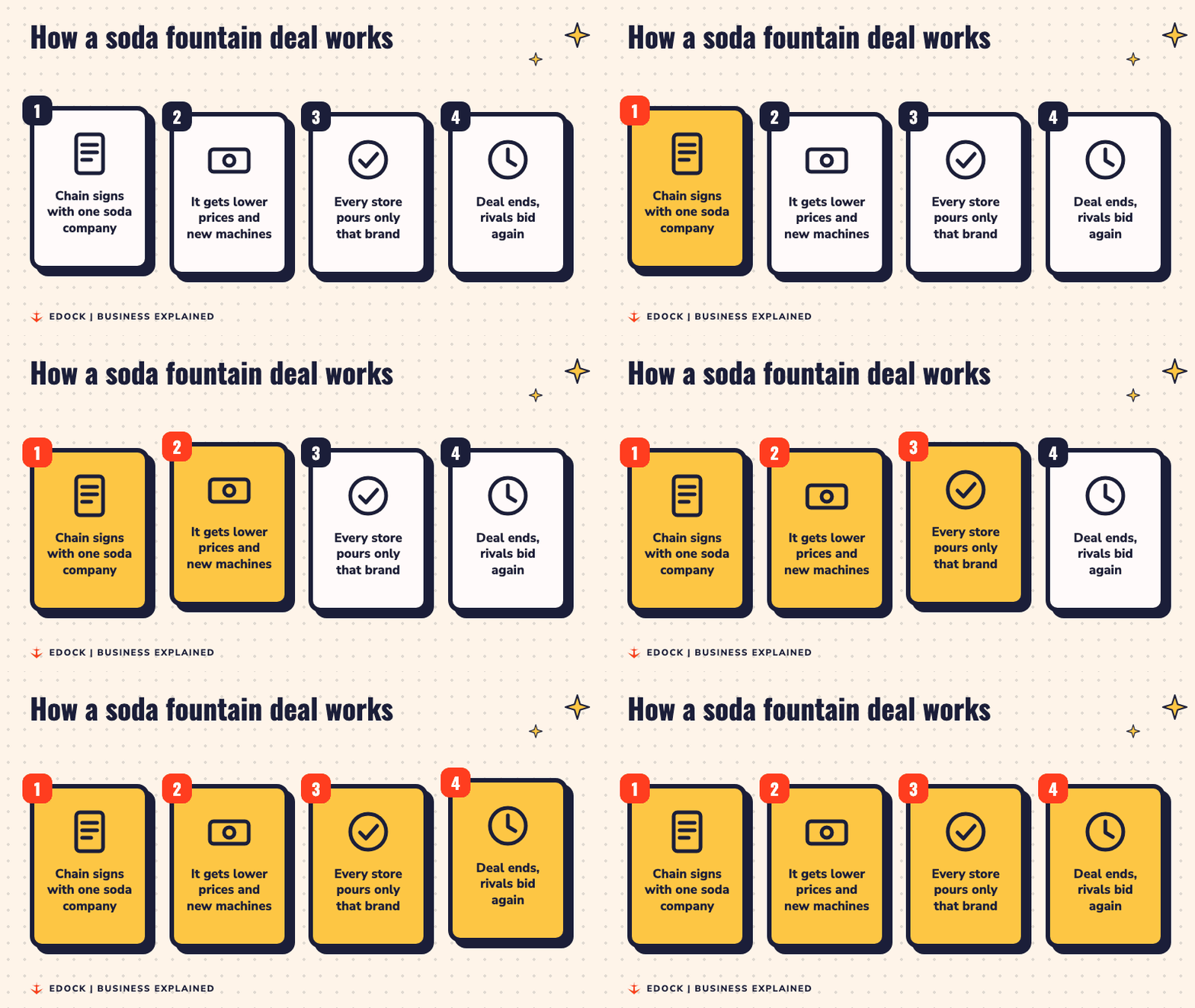
Both Coca-Cola and Pepsi offer chains an exclusive contract, which means "sell only our drinks". In return, the chain gets a discount on the fountain drinks. Food Republic notes that serving both is allowed, but it rarely makes sense because of that deal.
Imagine a college canteen. One chai supplier says, "Buy only from us and you get cheaper milk." Most canteens will say yes. Two suppliers would mean two sets of bills and no special discount.
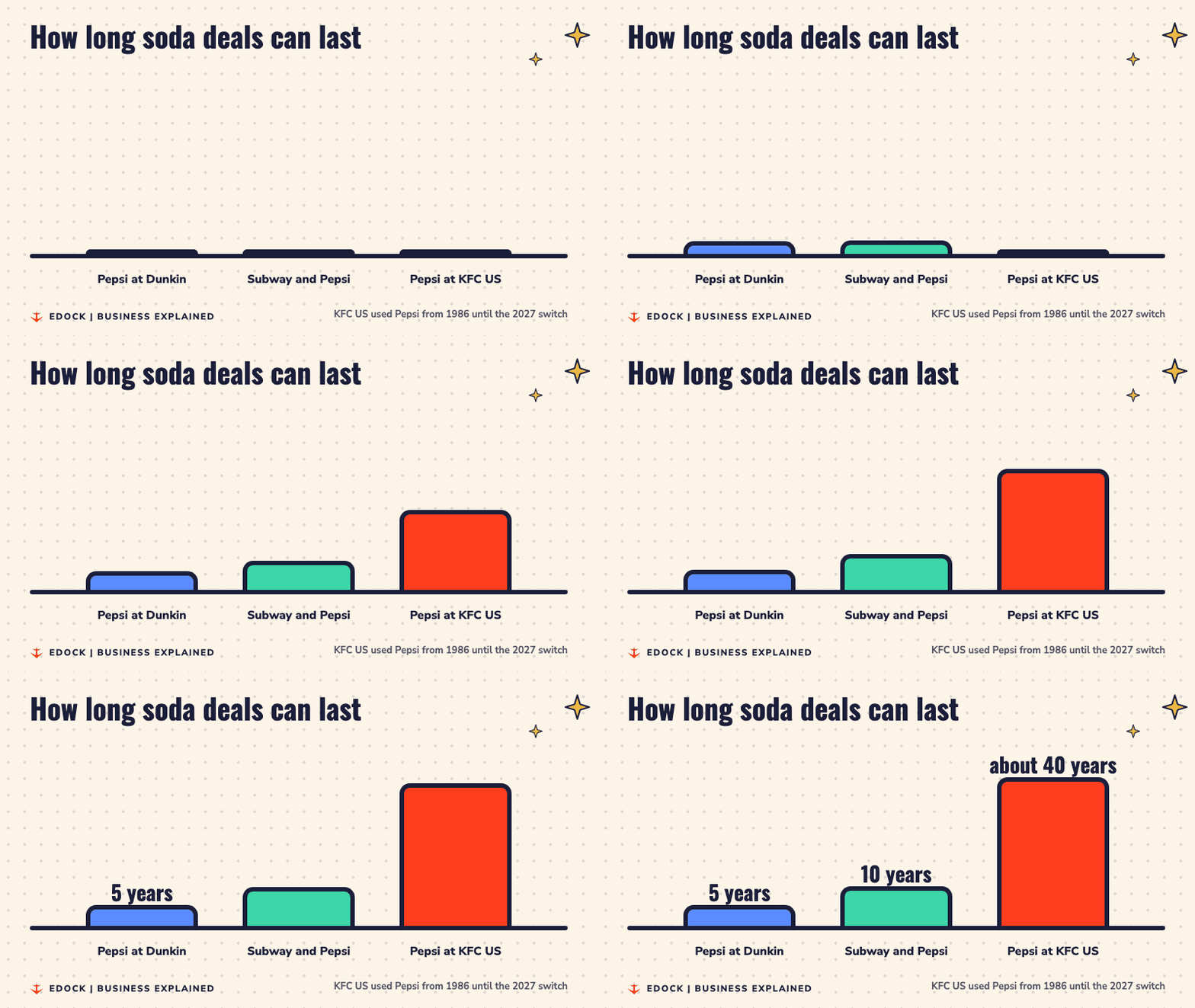
The deals often include more than a lower price. When Subway picked PepsiCo in 2024, its own announcement said the change would give franchisees all new drink machines, plus joint marketing and media partnerships. That Subway deal runs for 10 years, starting 1 January 2025.
So why would KFC switch now?
KFC wants its US customers back. Many diners have gone to rival chicken chains such as Chick-fil-A and Popeyes, according to CNBC.
Drinks have become a big way to pull people in. Chains like McDonald's and Taco Bell have added new options such as refreshers and fun soda mixes called "dirty soda". KFC itself recently showed off new iced coffees and shakes at Open House, its test restaurant in McKinney, Texas. Coca-Cola told CNBC earlier this year that it has helped many restaurant partners create new drinks.
Tan-Gillespie said in her memo that a new partner gives KFC "a platform to innovate". In plain words: Coke can help KFC invent new drinks that bring people through the door.
Is this kind of switch common?
Not really. Big chains rarely change their drink supplier, but it has happened before. In 2012, PepsiCo lost Dunkin to Coca-Cola after a five-year run, Mint reports. In 2024, Pepsi won Subway, the largest US restaurant chain by number of locations, away from Coke.
Coke has also taken several Pepsi customers in recent years, including Culver's, Arby's and Panda Express. Food Republic explains why: these contracts usually go to whoever offers the best deal, so when one ends, a chain can move to the other side.
It is like a cricket player's contract with a team. When it ends, other teams can make an offer, and the player goes where the deal is best.
Does Pepsi lose everything at KFC?
No. The change is only for KFC's restaurants in the US. Tan-Gillespie said Pepsi is still an important partner for KFC's parent company and for KFC's stores in other countries. Fox Business, citing Reuters, says PepsiCo recently renewed its deals for Taco Bell and for KFC's international restaurants.
That matters for Taco Bell fans. CNBC points out that without Pepsi, Taco Bell could not serve its famous Mountain Dew Baja Blast, which is a Pepsi drink.
PepsiCo also still runs the drinks at Subway, Jersey Mike's and Pizza Hut, according to Mint. Pizza Hut moved to PepsiCo from Coca-Cola back in 2011.
Why it still stings for PepsiCo
The timing is tough. Mint, citing Reuters, says losing KFC in the US could be a setback for PepsiCo as it tries to sell more soda there. Its snacks business is also dealing with high prices and people choosing healthier food. Earlier this month, PepsiCo CEO Ramon Laguarta said growth and a recovery in profit margins were taking longer than planned. An activist investor, Elliott Investment Management, has also pushed PepsiCo to sell weak parts of its business and do better in North America.
An activist investor is a big shareholder who buys a stake in a company and then pushes its bosses to make changes.
For Coca-Cola, the win is about more than money from syrup. CNBC notes that restaurant partners give soda makers both sales and a chance to make their brands more visible.
The big lesson in a small cup
A drink at a fast-food counter looks simple. But each cup is part of a long contract, a fight between two giant brands, and a plan to win back customers. KFC is betting that a new drinks partner can help its comeback. Coca-Cola gets back a customer it lost in 1986. And PepsiCo now has one more problem to fix.
Next time you order a meal and the server asks, "Is Pepsi okay?", you will know there is a whole business deal hiding behind that question.
Sources
- CNBC: KFC to switch to Coca-Cola drinks in US restaurants for the first time in decades
- Mint: A new fizz at KFC, why the chicken giant is swapping Pepsi for Coke in US
- Fox Business: KFC replacing Pepsi with Coca-Cola at 3,700 US restaurants
- Subway newsroom: Subway selects PepsiCo as its drinks partner in the US
- Food Republic: Why fast food restaurants choose between Coke or Pepsi
- Cover photo: Soda, by Renee Comet, National Cancer Institute, public domain

You may republish this story under CC BY 4.0: credit Arshdeep Singh and link to this page.