KFC and Pizza Hut's two Indian operators get the nod to become one company
Version 1 of 1 saved 1 Nov 2026, 10:30 am IST · Chain line 341
As it was first published
KFC and Pizza Hut's two Indian operators get the nod to become one company
The CCI cleared the merger of Sapphire Foods into Devyani International, putting over 3,000 KFC, Pizza Hut and other outlets under one owner.
Picture two KFC outlets a few streets apart in your city. Same chicken bucket, same red sign, same smiling Colonel. Yet they could be run by two different Indian companies. That is about to end. On Friday, 30 October 2026, India's merger regulator, the CCI, approved the merger of Sapphire Foods India into Devyani International, the two big companies that run KFC and Pizza Hut outlets in India.
The government's press office put out the official release on 31 October. Once every other approval comes through, one company will run more than 3,000 stores with yearly sales of around Rs 8,000 crore, according to the companies' earlier announcement reported by The Economic Times.
Wait, KFC is not run by KFC?
Not really. Think of the IPL. The league owns the name, the rules and the trophy. But each team is owned and run by someone else, who pays for players, travel and the stadium show.
Fast food works the same way. KFC, Pizza Hut and Taco Bell belong to Yum Brands, a US company. Yum decides the recipes, the menu and the look of the stores. But over 98% of its 62,000+ outlets worldwide are run by local partners, according to Finshots. These partners pay for the shop rent, the staff and the daily running. In return, Yum takes a cut of sales as royalties and fees.
This setup is called a franchise. The brand owner is the franchisor. The local company that runs the shops is the franchisee. It is like a samosa stall owner who buys the right to use a famous sweet shop's name and recipe, and pays the shop a small share of every plate sold.
Why India had two KFC companies
For years, Yum ran India with two big partners. Devyani International is part of Ravi Jaipuria's RJ Corp, and it has been around since 1991. Sapphire Foods came much later. In 2015, private equity investors bought about 270 existing KFC and Pizza Hut stores in India and Sri Lanka and bundled them into Sapphire.
Back then, two partners made sense. Eating out at a fried chicken place felt new, and there was room to grow everywhere. Over time, though, both companies crowded into the same big cities. Finshots notes that in Delhi, Mumbai, Bengaluru, Hyderabad, Chennai and Pune, KFCs and Pizza Huts run by both companies often stood just streets apart, fighting for the same customer.
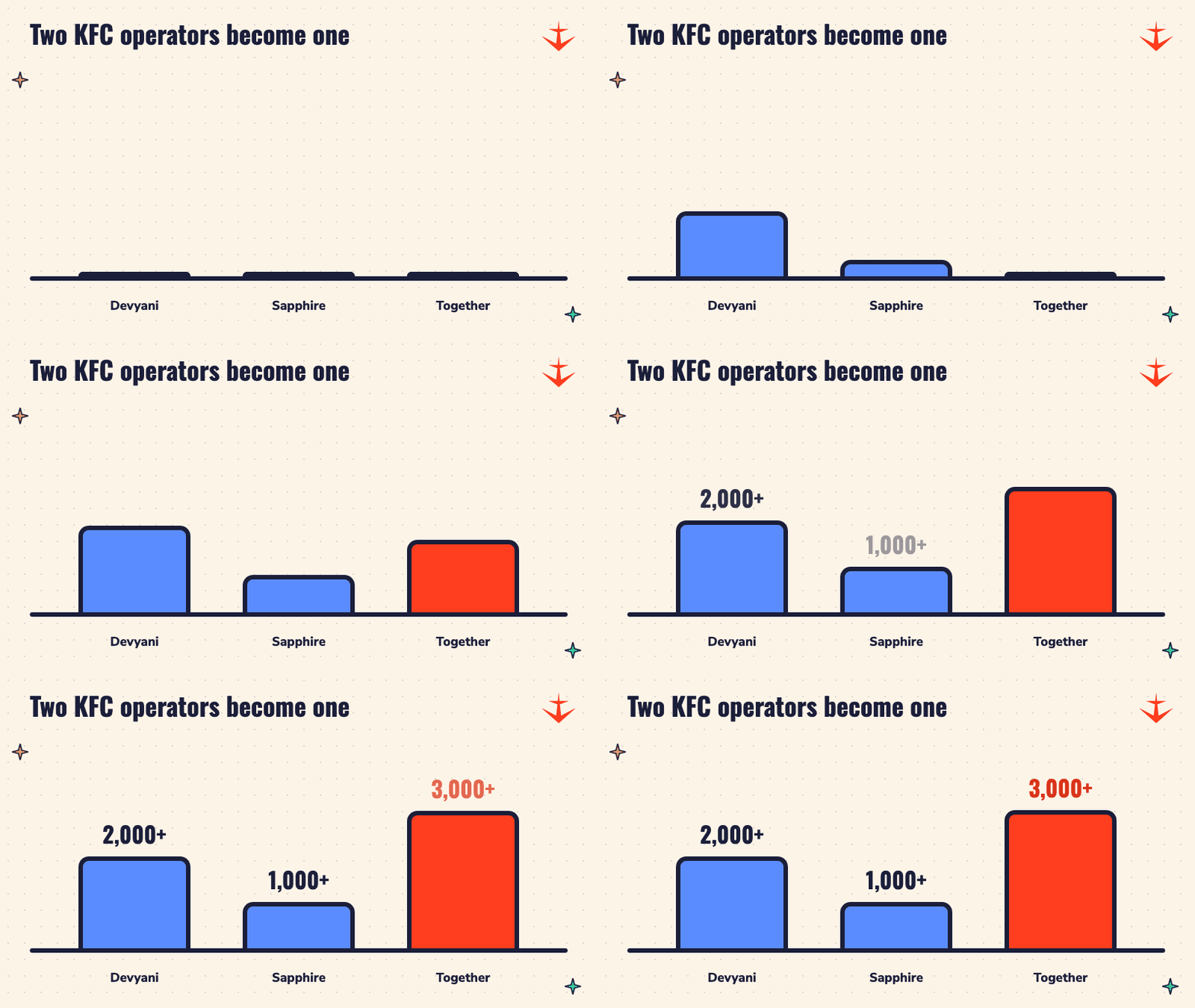
According to The Week, Devyani runs over 2,000 outlets and Sapphire over 1,000. Devyani alone is spread over more than 280 cities, says Finshots, and it also runs Costa Coffee in India plus home brands like Vaango and Biryani By Kilo.
The sales problem behind the deal
Here is a simple way to check if a shop is really doing well. Ignore the new branches. Just ask: are the old shops selling more than last year? Businesses call this same store sales growth. If your favourite chai stall sold 100 cups a day last year and sells 95 now, its same store sales fell, even if the owner opened a second stall.
For both companies, this number has been weak. In the six months from April to September 2025, Devyani's KFC stores slipped 2% and its Pizza Huts 4%. Sapphire's KFC stores were flat, while its Pizza Huts fell 8%. In those same six months, Devyani posted a net loss of Rs 22 crore and Sapphire a net loss of Rs 15 crore.
Pizza Hut had a special headache. Pizza Hut depends heavily on delivery. Delivery costs a restaurant more, because food has to be packed and extra staff are needed to handle online orders. KFC does better with people eating inside the store: about 54% of Devyani's revenue comes from dine-in customers, Finshots notes.
What one company can do that two could not
Under the deal, Sapphire will fold into Devyani. The merged company will hold the KFC and Pizza Hut rights for the whole of India, replacing the current split, and will run stores in India, Nepal, Nigeria, Thailand and Sri Lanka. Devyani will also take over 19 KFC restaurants in Hyderabad that Yum India was running when the deal was announced.
The two firms aim for savings, which businesses call synergies, of Rs 210 to 225 crore a year from the second full year after joining, The Week reports. Think of two friends, each ordering separately from the same wholesaler. If they place one big order together, they get a better rate and pay one delivery charge, not two.
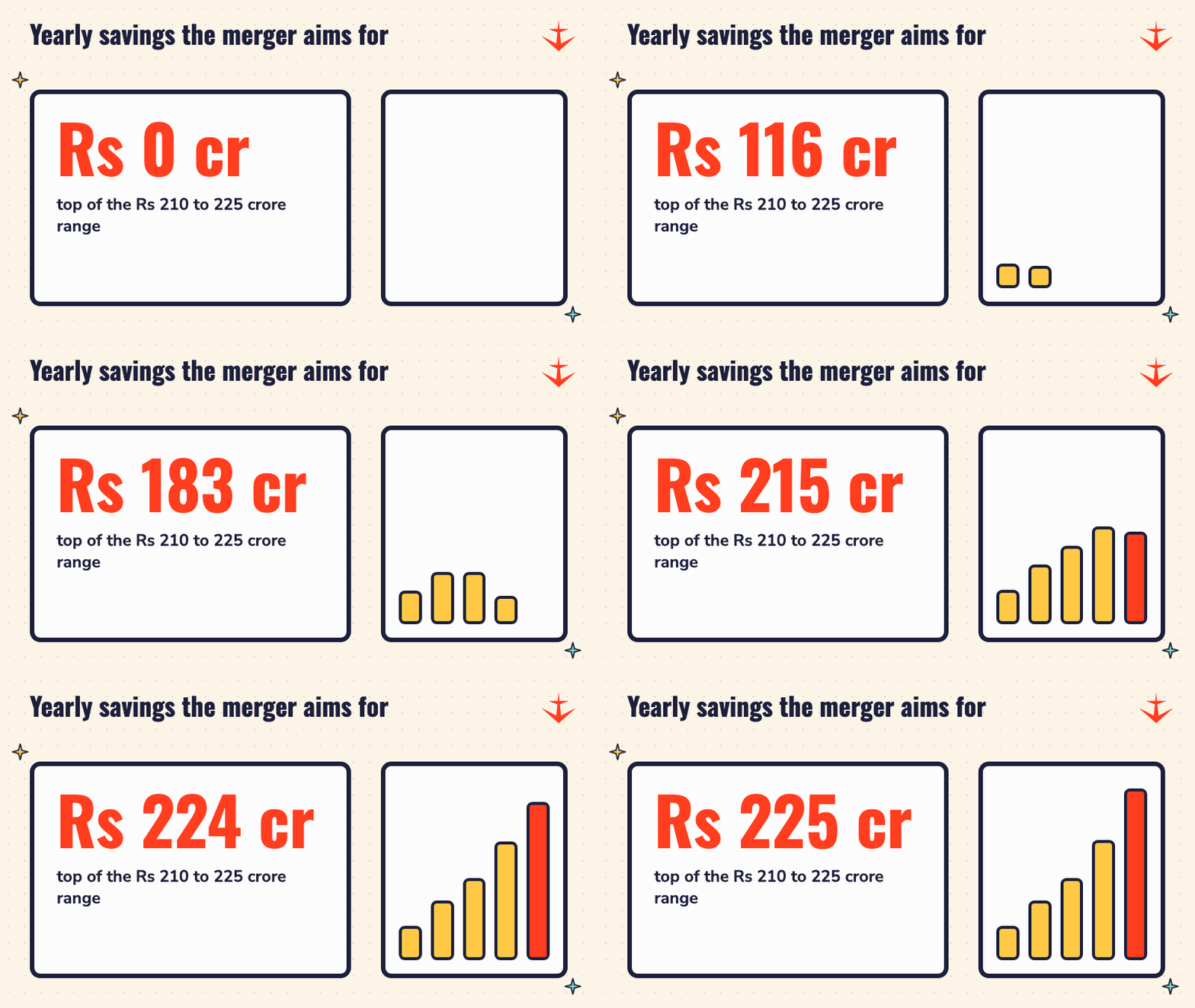
Where would the savings come from? The Week points to a unified brand plan, stronger buying power, shared technology and leaner overheads. The ET report adds that the bigger company can use its size across buying raw material, supply chains, technology and marketing, and that the deal should help KFC grow and support efforts to revive Pizza Hut.
Devyani's non executive chairman Ravi Jaipuria called the deal "a significant milestone and a decisive leap forward", The Week reported in January.
This Mint video explains how the deal creates one big operator for KFC, Pizza Hut and Taco Bell.
What changes for you at the counter
For diners, the brand stays the same. As Finshots puts it, there is no visible difference for customers between a KFC run by one company and a KFC run by the other. The menu and the recipes are still set by Yum. What changes is the company behind the counter: one owner instead of two.
Remember those two stores of the same brand on one street, fighting for the same wallet? Finshots says a single strong operator would mean less overlap and fewer inefficiencies. Once the deal is done, one company will decide on its own where the next KFC or Pizza Hut should open, without a second partner running the same brand nearby.
What still has to happen
The CCI nod is one step, not the finish line. The ET report says the merger still needs other statutory and regulatory approvals before it is complete. The full list, according to The Week, covers the stock exchanges, the CCI, the National Company Law Tribunal (a special court for company matters), shareholders and creditors, and the whole process would take around 12 to 15 months, as estimated in January.
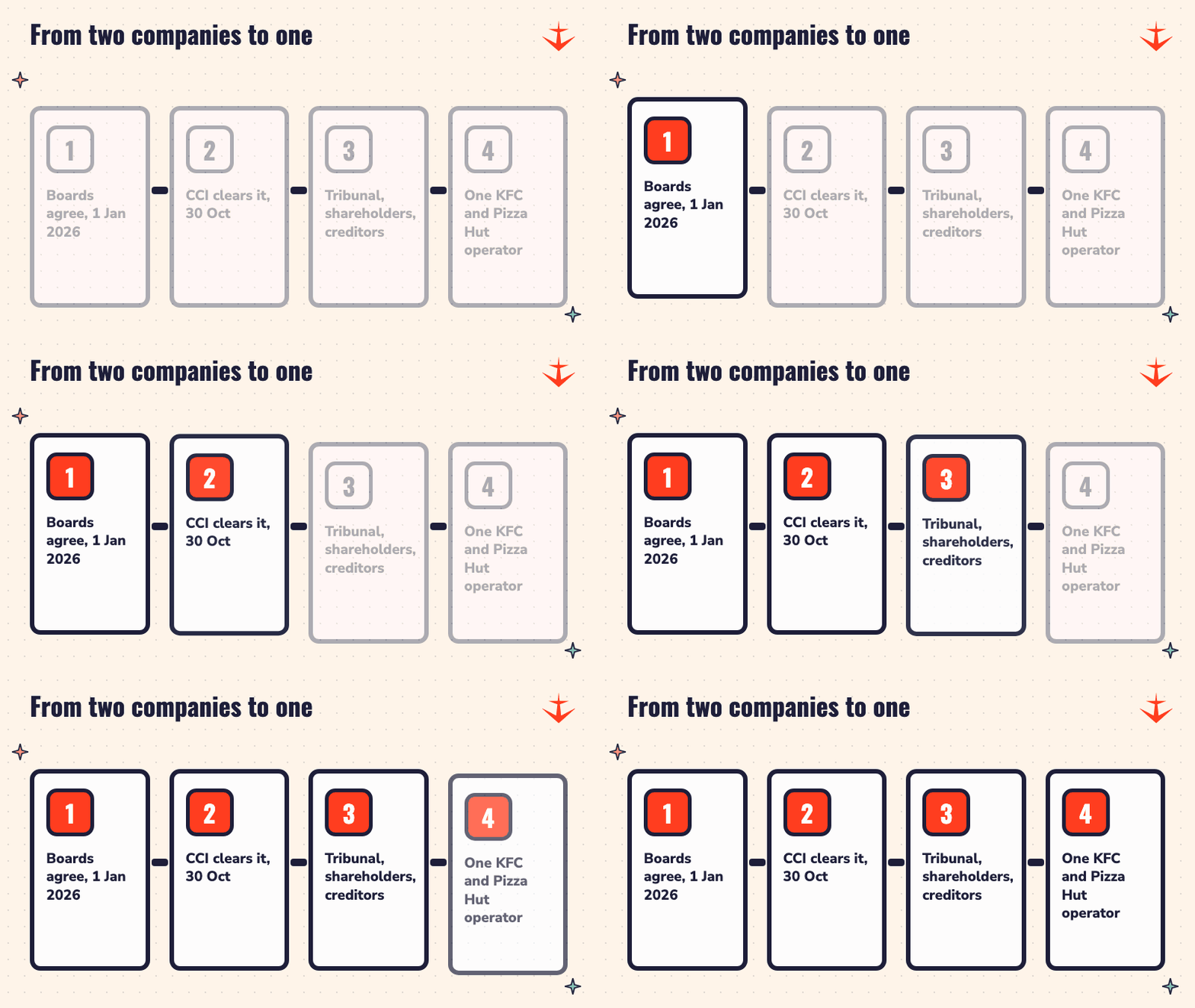
For shareholders, the swap works like this: Devyani will give 177 of its own shares for every 100 Sapphire shares, as announced on 1 January 2026.
In short, two rival teams playing for the same league are becoming one team. The diners eating the chicken may not notice, but how these 3,000 plus stores buy, supply, use technology and market themselves across India is about to change.
Sources
- The Economic Times: Devyani Sapphire merger gets CCI approval
- PIB release: CCI approves merger of Sapphire Foods India with and into Devyani International
- The Week: KFC and Pizza Hut India ops get bigger as operators merge
- Finshots: The Devyani Sapphire Foods merger explained
- Mint on YouTube: Devyani Sapphire merger set to create India's biggest KFC, Pizza Hut and Taco Bell operator
- Cover photo: KFC, Mumbai, India, by Cory Doctorow, CC BY-SA 2.0
