Kerala's Vizhinjam port gets its first import container, a box of building boards
The deep-water port near Thiruvananthapuram has gone from a box-swapping stop to a door for goods coming straight into Kerala.

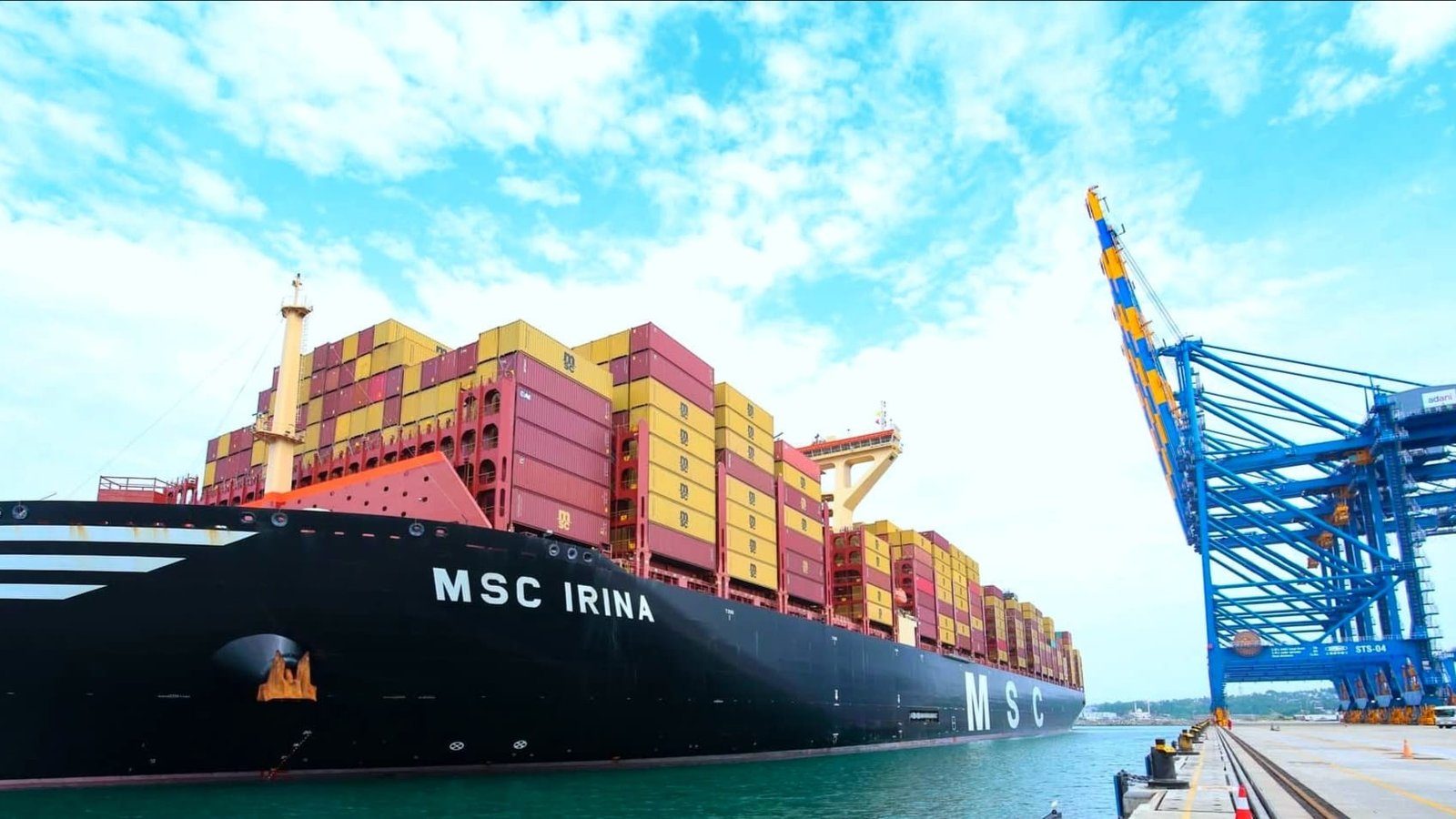
Picture one steel box, about as long as a small room, swinging off a giant ship on the Kerala coast. Inside are building boards. On Saturday, 31 October 2026, that box became the first import container ever received at Vizhinjam International Seaport in Thiruvananthapuram. Until now, this huge port mostly worked as a changing station for boxes going to other places. Now Kerala can order goods straight to its own doorstep.
What arrived, and on which ship?
The container was booked in Ningbo, a big port city in China. It came on a ship called MSC Sabrina III, according to the news agency UNI. The managing director of Vizhinjam International Seaport Ltd, Jeromic George, flagged it off on 31 October.
A Thiruvananthapuram logistics startup booked the box for Altair Group, a company in the same city. The box carried engineered building boards. Builders use these boards in place of regular plywood, as The Economic Times reported.
It sounds like a small thing. One box. Still, this is the first time a business in Kerala has had goods come in through this port and be cleared right there.
Bus interchange or your home stop?
To see why this matters, think of two kinds of bus stands.
The first kind is an interchange. You get off one bus and hop on another. You never leave the station. A transshipment port works like this. Huge ships drop boxes there, and smaller ships pick them up and carry them to other ports. The boxes never enter the city.
The second kind is your home stop. You get off and walk home. An import gateway works like this. The box is unloaded, checked and then driven to the shop or factory that ordered it.
Vizhinjam started life as the first kind. Wikipedia describes it as India's first deep-water transshipment port. The port sits only 10 nautical miles from the busy sea route that links Europe, the Gulf and the Far East, and its water is naturally 24 metres deep. That depth lets the biggest container ships in the world park there.
The port was developed by the Kerala government and Adani Ports and Special Economic Zone, and Wikipedia puts the cost of its first phase at Rs 8,867 crore. Prime Minister Narendra Modi inaugurated it on 2 May 2025.
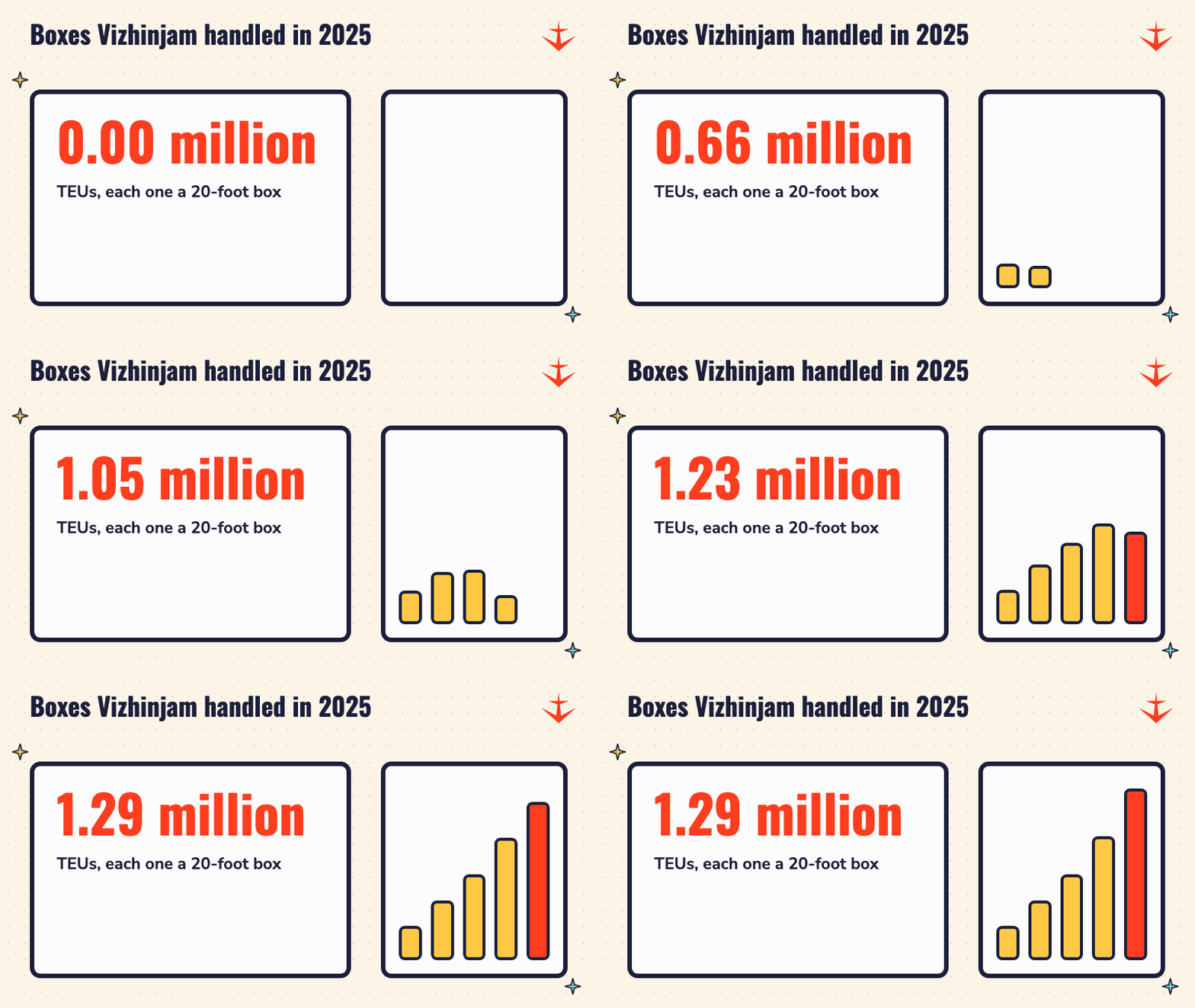
It already moves a lot of boxes. The port handled 1.29 million TEUs during 2025, Container News reported. A TEU is a "twenty-foot equivalent unit", which simply means one standard 20-foot box. The same report says the shipping line MSC has agreed to buy a 49% stake in the terminal.
How did the port get the green light?
A port cannot just start taking imports. The tax department has to say yes first.
In July, the Central Board of Indirect Taxes and Customs (CBIC), the body that runs customs in India, gave its final approval for export and import cargo from 18 August 2026, PTI reported through ETV Bharat. The CBIC order was dated 24 July.
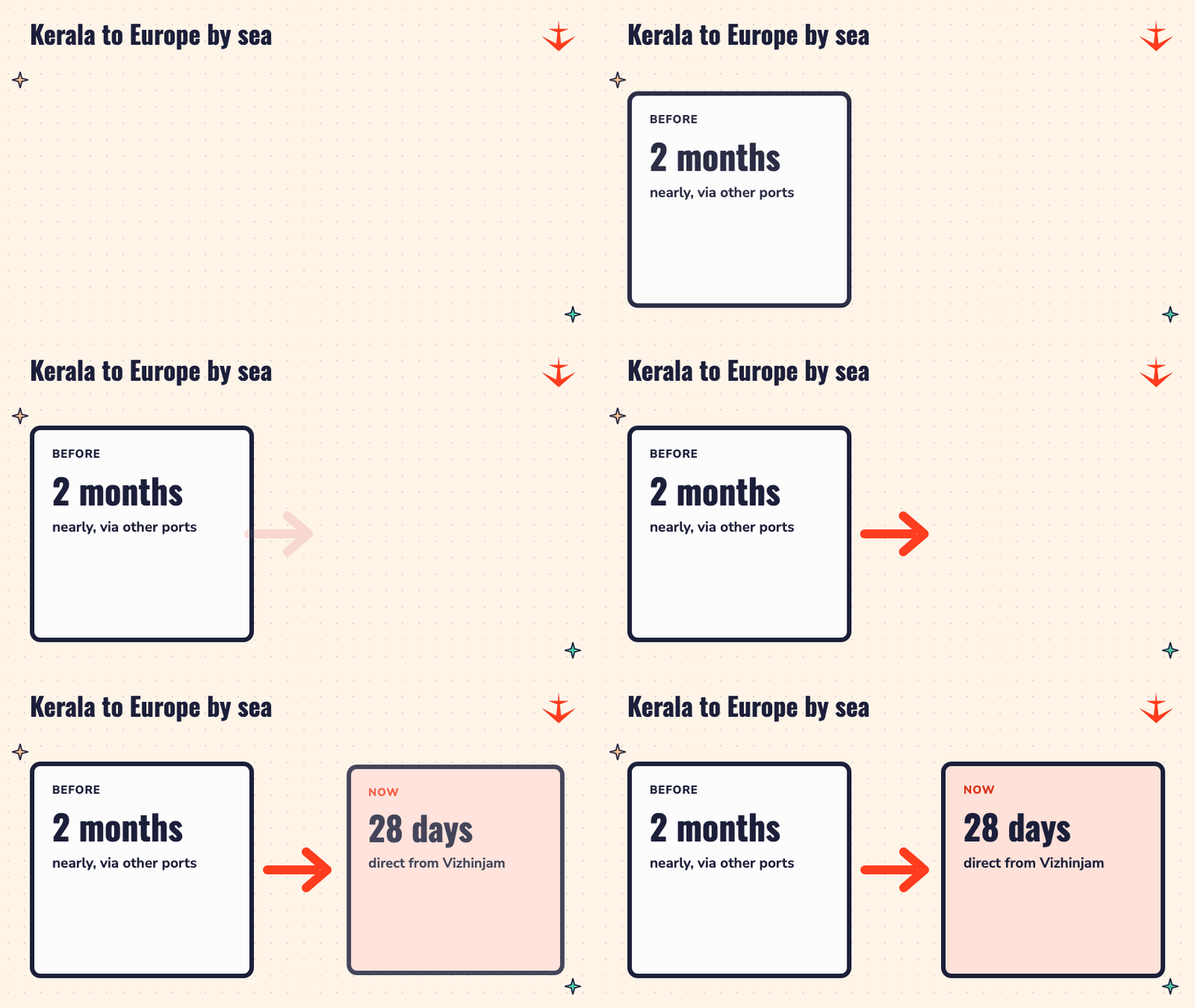
On 18 August, Chief Minister V D Satheesan flagged off two containers bound for Europe. All India Radio reported that shipments from Vizhinjam to Europe used to take nearly two months and are now expected to reach in just 28 days.
Shipments going out came first. Saturday's box was the first one going the other way, into Kerala.
How does a box clear customs?
Customs clearance is like the security check at an airport, but for goods. Officers look at the papers, check what is inside if needed, and collect any import tax. Only then can the goods leave.
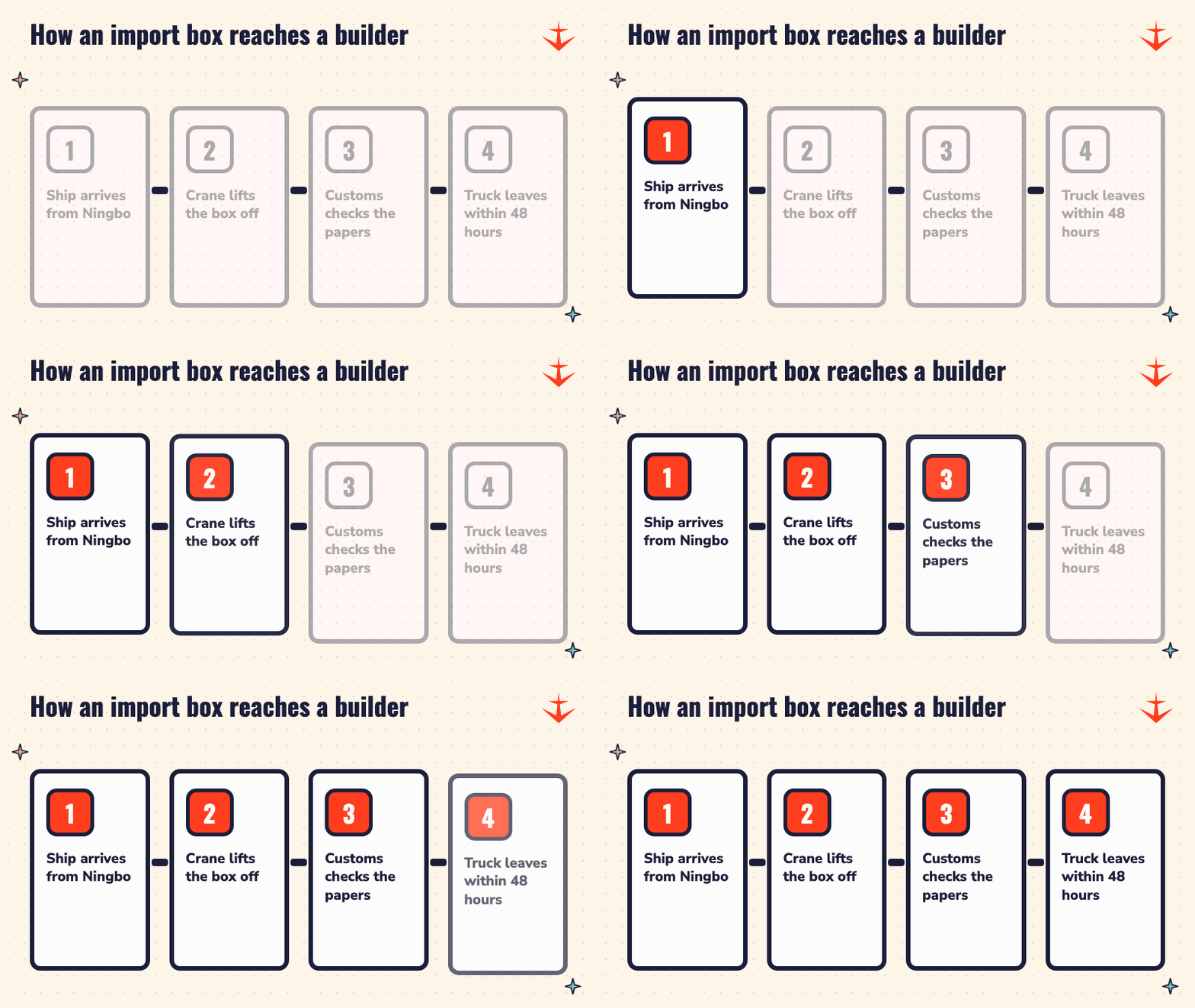
At Vizhinjam, there are some special rules for now. The CBIC said imports will be limited to Full Container Load boxes, which means one box holds goods for just one buyer, like booking a whole autorickshaw instead of sharing it. These boxes must go on Direct Port Delivery, so they move straight from the port to the importer's premises within 48 hours of landing.
The reason is simple. The port does not yet have a Container Freight Station, a yard where shared boxes are opened and sorted. So boxes carrying goods for many small buyers cannot come in here yet.
What changes for Kerala's builders and shops?
Before this, a Kerala business that ordered goods from abroad had them landed at some other port in India. Then the goods travelled by road or rail to Kerala. Each extra leg adds days and money, like taking two buses when one would do.
Port officials told The Economic Times that direct imports are expected to reduce dependence on other ports and cut the time and cost of moving cargo. Goods can now be unloaded at Vizhinjam and then cleared by customs and sent to markets across Kerala.
The money from handling cargo also stays in the state. Officials said the new facility will help keep logistics revenue within Kerala instead of having it flow to other ports.
Where will the new work come from?
A port that only swaps boxes between ships needs cranes and crane drivers. A port that sends boxes into the city needs a lot more people around it.
The authorities point to new work in Thiruvananthapuram and other southern districts in customs brokerage, freight forwarding, transport, warehousing and port operations. A customs broker is the person who fills in and files the import papers for a company. A freight forwarder is like a travel agent for goods: it books the ship space and the trucks.
Watch: inside the port
This video from The Hindu covers what to know about Vizhinjam, India's first transshipment hub.
What comes next?
The current rules allow only full boxes for single buyers. Small traders who share boxes will have to wait until a Container Freight Station opens at the port. The PTI report on the CBIC order says loose cargo and shared boxes stay out until then.
For now, one box of building boards now leads the way. Each new import order that lands here, instead of at a faraway port, is one less long road trip for Kerala's goods.
Sources
- The Economic Times: Vizhinjam port receives first import container
- UNI: Vizhinjam port receives first import container
- ETV Bharat (PTI): Vizhinjam seaport gets final customs clearance for EXIM operations
- All India Radio: Direct export and import operations begin at the Vizhinjam port
- Container News: Vizhinjam terminal begins handling import and export cargo
- Wikipedia: Vizhinjam International Seaport page
- Cover photo: MSC Irina at Vizhinjam International Seaport, Trivandrum, by Giridharseeman, CC0

You may republish this story under CC BY 4.0: credit Arshdeep Singh and link to this page.