KENT RO, the water purifier company, puts ₹250 crore into home batteries and inverters
Its new Noida plant makes lithium batteries and solar inverters for power cuts. Here is what they do and why a water brand wants in.

Picture this. It is a hot summer evening, the fan is spinning, and suddenly the power goes. In many Indian homes, a box in the corner clicks on and the fan keeps going. That box is an inverter. Now the company that makes the water purifier in your kitchen wants to make that box too.
On Wednesday, 21 October 2026, KENT RO Systems said it has put ₹250 crore into a lithium battery and inverter plant in Noida. Its new division is called KENT New Energy. It will sell home batteries, solar inverters and power backup products.
First, what does an inverter do?
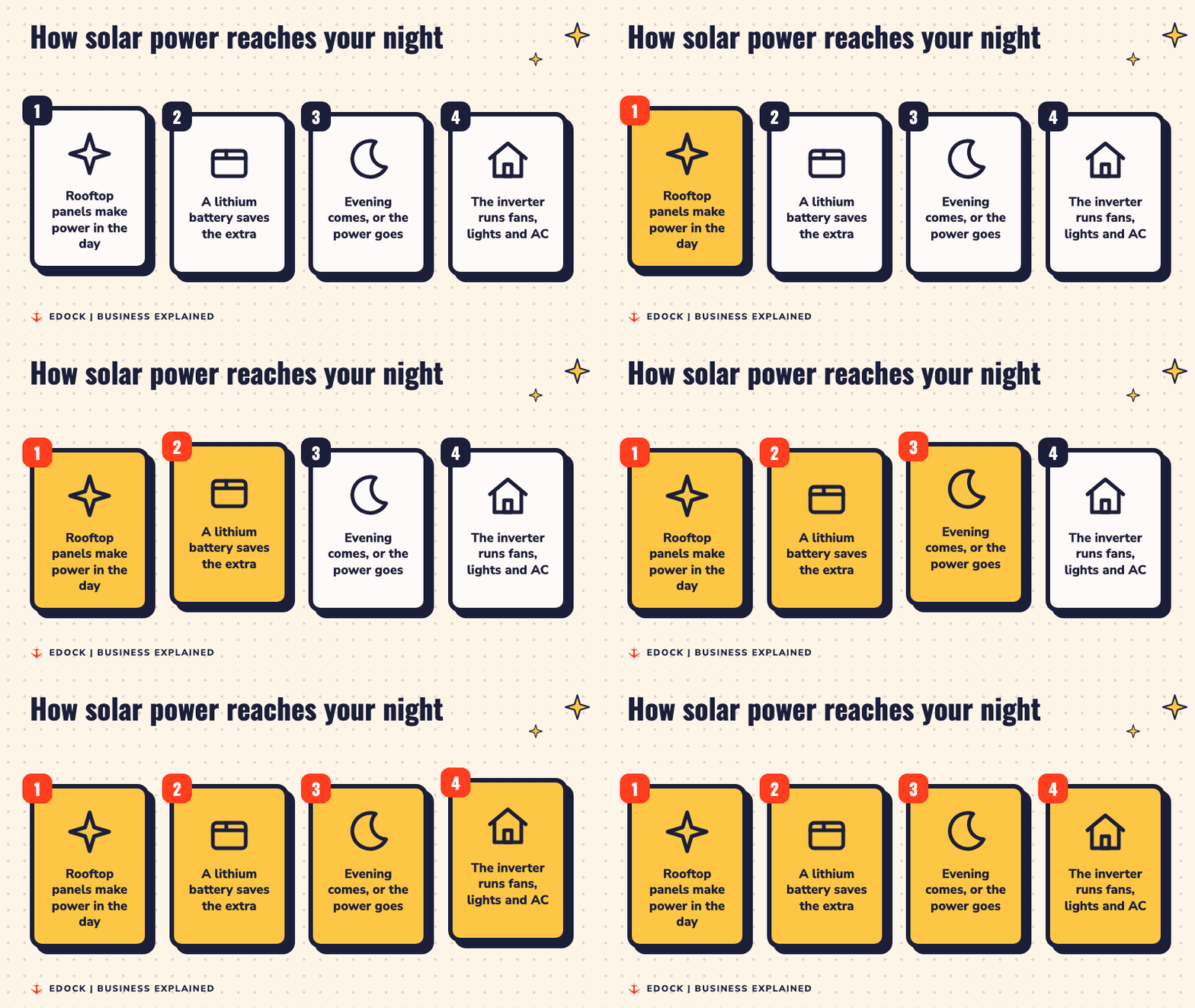
The electricity in your wall sockets is one kind of power, called AC. A battery stores a different kind, called DC. An inverter is the translator between the two. When the grid power is on, it fills up the battery. When the power goes, it turns the stored battery power back into the kind your fan and lights can use.
Think of a water tank on your roof. When the tap water comes, the tank fills up. When the supply stops, you still have water for a while. The battery is the tank. The inverter is the pipe and the pump that moves things in and out at the right time.
Why lithium, and not the old battery?
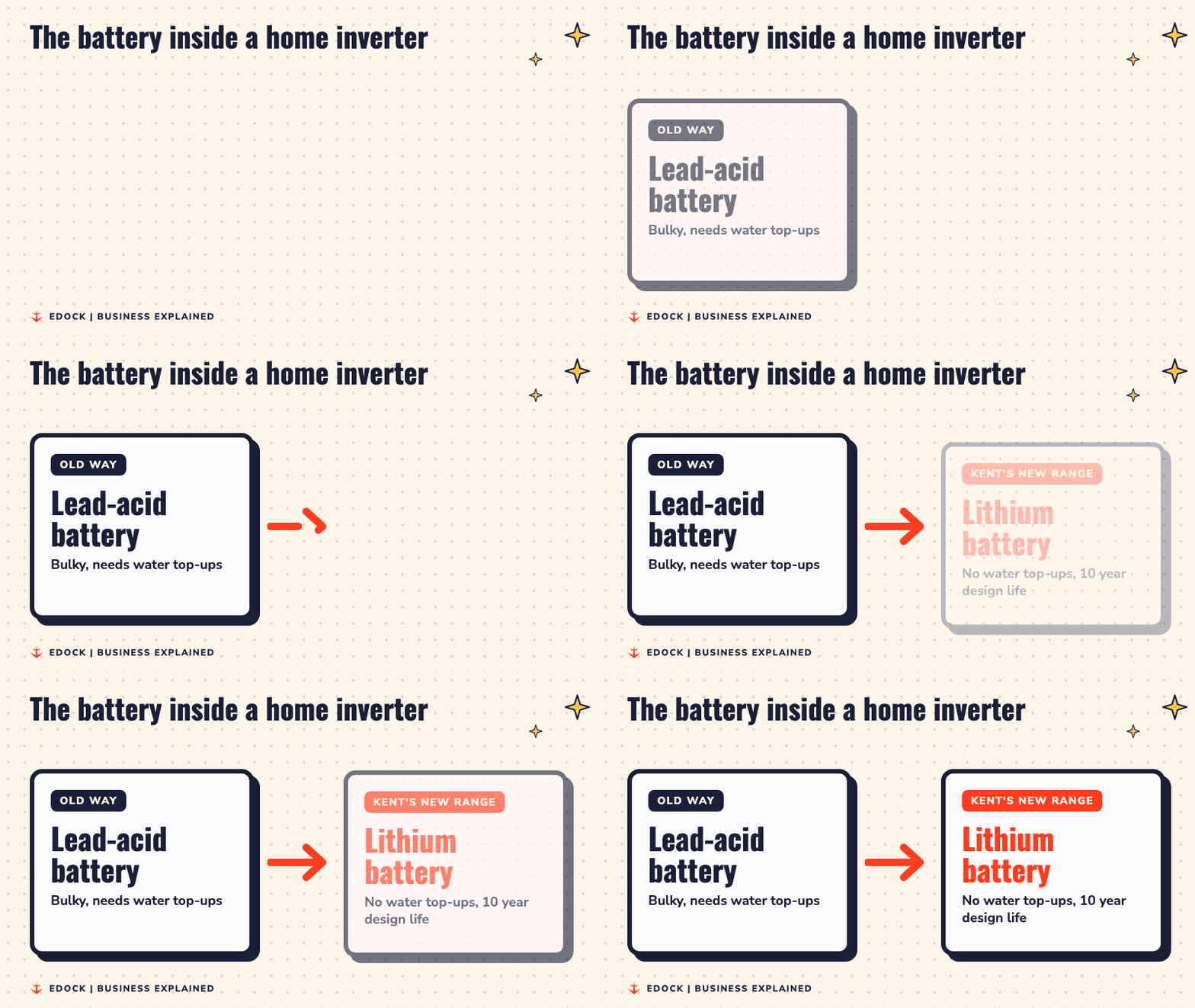
Most home inverters today use a big lead-acid battery. KENT's new 12 volt and 24 volt lithium batteries are made to replace lead-acid batteries in existing home inverters. The company says they need no water top-ups, have a design life of 10 years, and let you use 90% of the stored power before recharging.
The cheapest 12 volt lithium battery starts at ₹22,000, according to the same report. KENT estimates a home could save ₹30,000 to ₹1 lakh over 10 years compared with old lead-acid batteries. That is the company's own estimate, not a promise for every home.
There is also an all-in-one inverter. It puts the inverter and a lithium battery inside one small unit. It replaces the separate inverter and the bulky battery that sit in most homes.
The solar side of the business
The second product line is for homes with solar panels on the roof. Panels make power only when the sun shines. But families use a lot of power after sunset. KENT's chairman Mahesh Gupta said battery storage lets homes store extra electricity made in the day and use it at night.
Its solar batteries come in 5.1 kWh, 11.8 kWh and 16 kWh sizes. A kWh is simply one "unit" on your electricity bill. The hybrid inverters come in 3 kW, 5 kW and 6 kW models for single homes. KENT says the 5 kW model can run two inverter ACs, a water pump and the lights during a power cut.
Every hybrid inverter also comes with a 4G data logger. Think of it as a tiny SIM card inside the box. It lets the installer check the inverter on a phone app and change settings without visiting the house.
How big is the Noida plant?
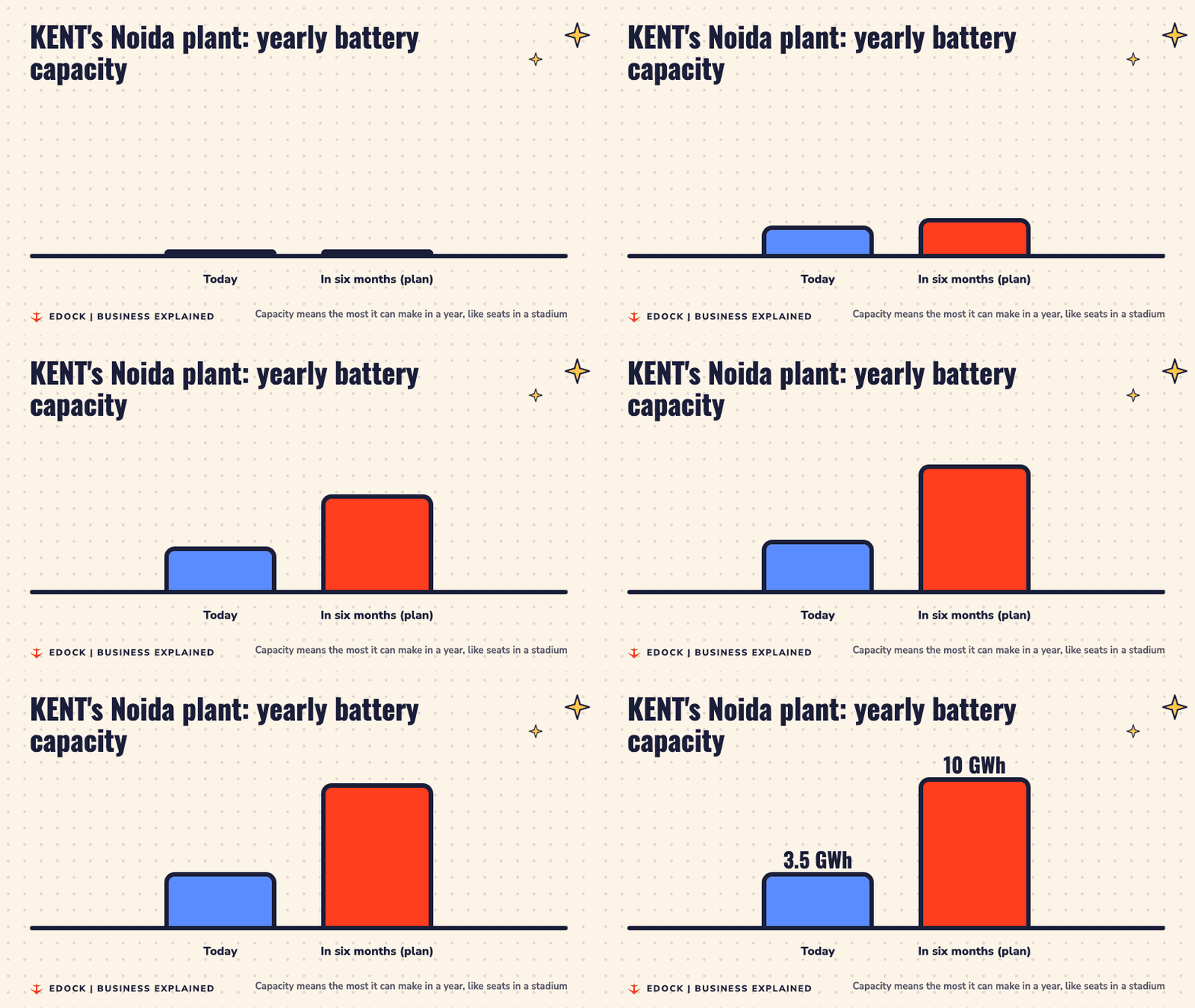
The plant is in Sector 159, Noida. It covers 3 lakh square feet on a six acre site. Today it can make batteries worth 3.5 GWh a year. A GWh is ten lakh of those electricity "units". KENT plans to raise this to 10 GWh over the next six months. That is almost three times the size.
Gupta also said KENT will put in another ₹50 crore over the next six months. Add that to the ₹250 crore already spent, and the plant gets ₹300 crore in total.
Why would a water purifier company do this?
KENT is best known for RO water purifiers. It later started making fans too. Gupta said the company wants to cover "three essentials of everyday life: water, air and power".
Water purifiers still bring in most of the money. KENT earned about ₹1,000 crore from purifiers out of ₹1,350 crore in total revenue in FY26, according to a PTI report. Revenue means all the money that comes in from sales, before any bills are paid. Gupta expects about ₹1,750 crore this year, nearly 30% more. He said the new energy business alone could reach ₹1,000 crore in two to three years.
Think of a samosa stall owner who already has a busy counter and loyal customers. Adding chai is easy, because the same people walk past every day. KENT plans to sell batteries through the same dealers, shops and online channels that already sell its purifiers.
There is also a bigger trend. Homes made up 82% of the 2.7 GW of rooftop solar added in India in the first three months of 2026, according to Mercom India Research. India's inverter battery market is about $1.31 billion in 2026, according to Mordor Intelligence.
What could slow it down?
Price is the big worry. Gupta said batteries and inverters are still very costly. The cells, the small power-holding parts inside each battery, are still imported. KENT buys its cells from makers such as EVE and REPT.
He also pointed to rising chip prices and swings in global markets. He said India could make its own cells one day, but only once demand is big enough to pay for such factories.
One more plan on the way
KENT has also been given a 25 acre plot near the upcoming Noida International Airport. It plans to spend about ₹500 crore over three years on a new factory there: ₹300 crore on the building and ₹200 crore on machines. Gupta said the money will come from the company's own earnings. He also said there is no plan right now to list on the stock market or bring in private investors.
So the next time the lights go out at home, the box that keeps the fan running might carry the same name as the purifier in your kitchen.
Sources
- Business Standard: KENT RO invests ₹250 crore in new lithium battery and inverter business
- Energetica India: KENT RO Systems launches KENT New Energy division
- CNBC TV18: KENT RO flags high battery costs as it enters home energy market
- ETCFO (PTI): Kent Group eyes ₹1,750 crore revenue in FY27
- Digit: KENT's Mahesh Gupta on battery costs and India's energy opportunity
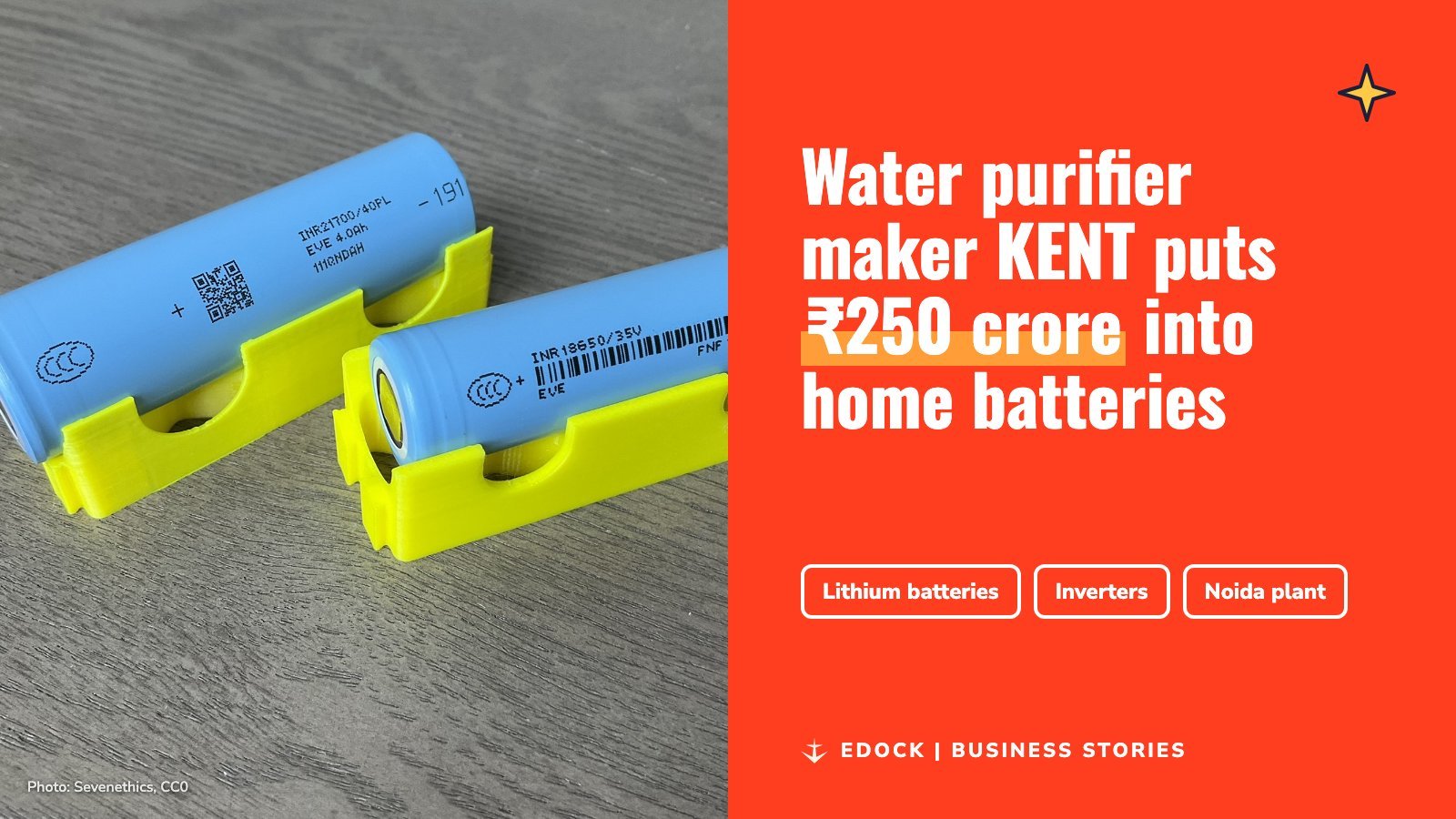
- Cover photo: 18650 and 21700 lithium ion battery cell, by Sevenethics, CC0

You may republish this story under CC BY 4.0: credit Arshdeep Singh and link to this page.