JustWatch, the app that tells you where to watch films, now streams them itself
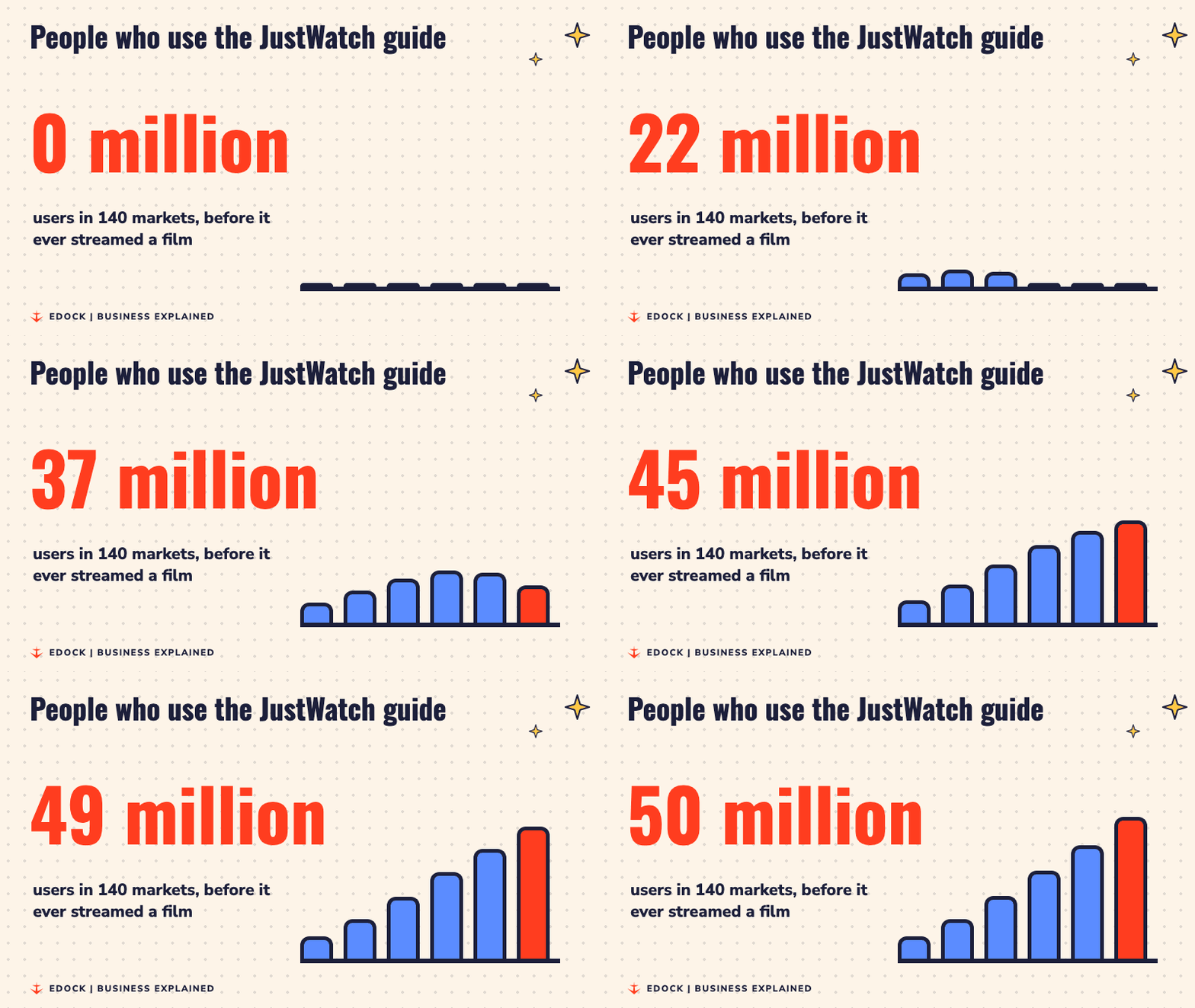
The streaming guide used by about 50 million people launched JustWatch TV on 20 October, with free titles, a $3.99 plan and rentals.

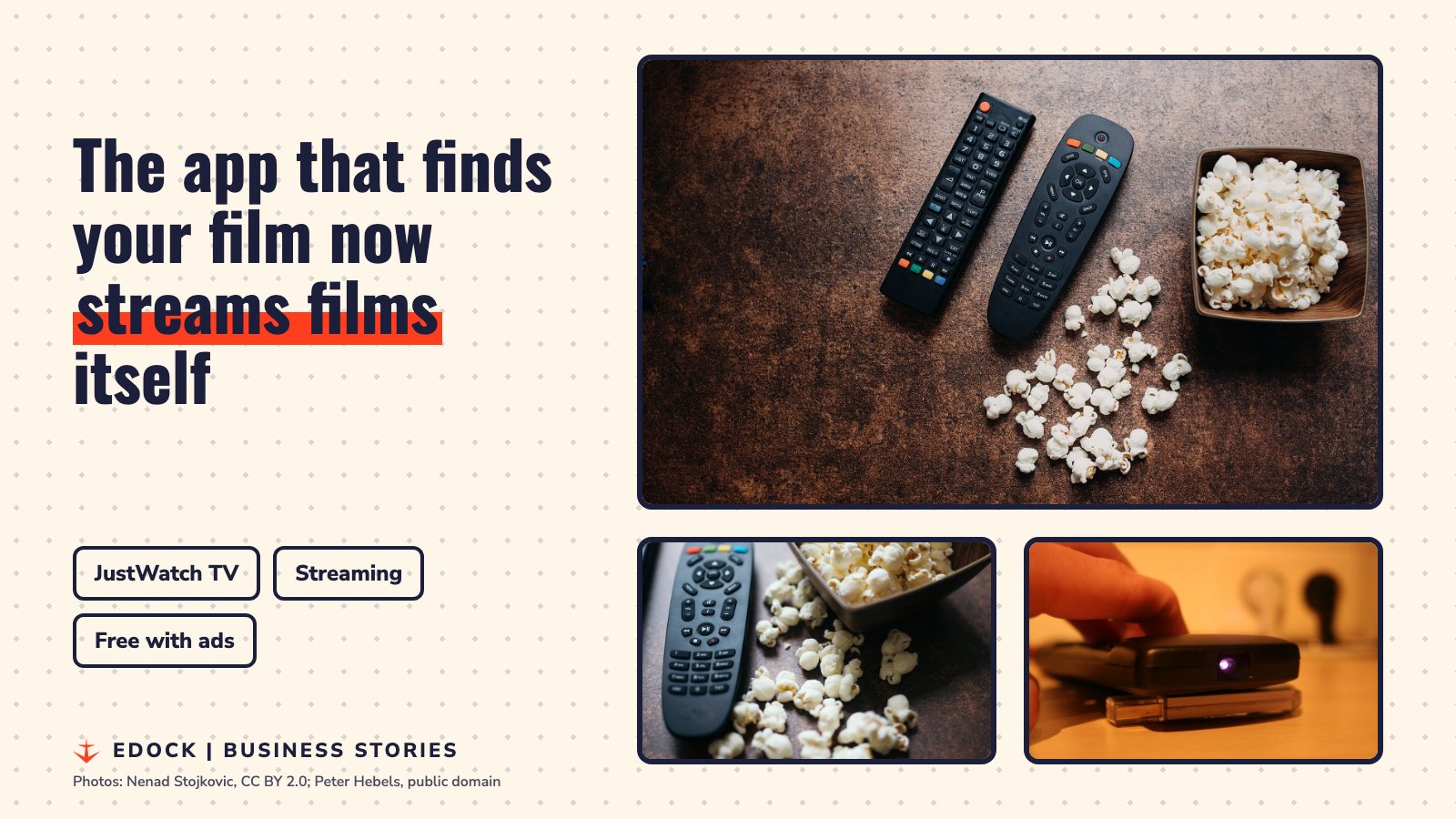
Picture a friend who always knows which app has the film you want. You ask, they answer, and you go off to Netflix or Prime Video to watch it. Now picture that same friend opening a small cinema of their own. That is roughly what an app called JustWatch did this week.
On Tuesday, 20 October 2026, JustWatch launched JustWatch TV, its own streaming service. The guide that about 50 million people use to find films is now also a place to watch them.
First, what is JustWatch?
Films and shows keep moving from one app to another. A movie may be on one app this month and on a different one next month. Keeping track is a headache.
JustWatch fixes that. You type a film's name and it tells you which app has it, and whether it is free, part of a plan or for rent. Its own page says it shows where you can legally watch films and shows, and can alert you when a title lands on an app you use.
TechCrunch calls it a "TV Guide" for the streaming era. The company is 12 years old. The guide works in 140 markets and covers more than 500,000 movies and shows across more than 1,500 streaming services.
It is also used in India. JustWatch India lists what is on Netflix, Amazon Prime Video India, Hotstar and more.
Who runs it?
The company behind the app is the JustWatch Group. The Hollywood Reporter says it is based in Berlin, Germany, and has more than 200 staff. It has offices in Los Angeles, London, Paris, Rome, Madrid, Munich, Dubai and Sydney. Its founder and CEO is David Croyé.
Here is a part most users never see. JustWatch also has a media arm. It plans ad campaigns for film studios on YouTube, Meta and TikTok. Its "where to watch" data also powers about 1,400 partner apps and sites.
So what is JustWatch TV?
JustWatch TV sits inside the same JustWatch app and site. There are three ways to use it.
- Free, with ads. Some titles can be watched for free, with ad breaks, like free TV channels.
- JustWatch TV Plus. A paid plan with no ads. In the US it has more than 300 ad free titles. It also brings extra tools, like better filters and an option to hide titles you have seen or disliked.
- A rental store. Pay once and watch a film for a short time, like renting a cycle for an hour. Plus members get 10% off on hundreds of rentals.
The service started in 12 markets: the US, Canada, the UK, Ireland, Germany, Austria, France, Italy, Spain, Switzerland, Australia and New Zealand. India is not on that list yet. The rental store first opens in five of them: the US, the UK, Ireland, Australia and New Zealand.

What will be on it?
Most titles will not be brand new. TechCrunch says that, like most low cost services, the lineup leans on older movies and shows, plus indie films. Indie means films made by smaller, independent studios.
The content comes from about 30 partners. When JustWatch first shared its plan in September, at the Toronto International Film Festival, it named Paramount, New Regency, Fremantle, Bleecker Street and Vortex Media. At launch, Variety reported more partners: Cineverse in the US, Leonine Studios in Germany, SND in France and Altitude in the UK and Ireland.
Users get a small say too. JustWatch says people can request the titles they want, which helps shape what comes next.
Croyé told Variety that the launch is "the most important new development" in the company's 12 year history.
How will it make money?
Think of a samosa stall. The owner can earn in three ways: sell samosas, sell a monthly card for daily samosas, or let a soft drink brand put its poster on the stall. JustWatch TV is trying all three.
- Ads on the free titles. Brands pay to show ads to viewers.
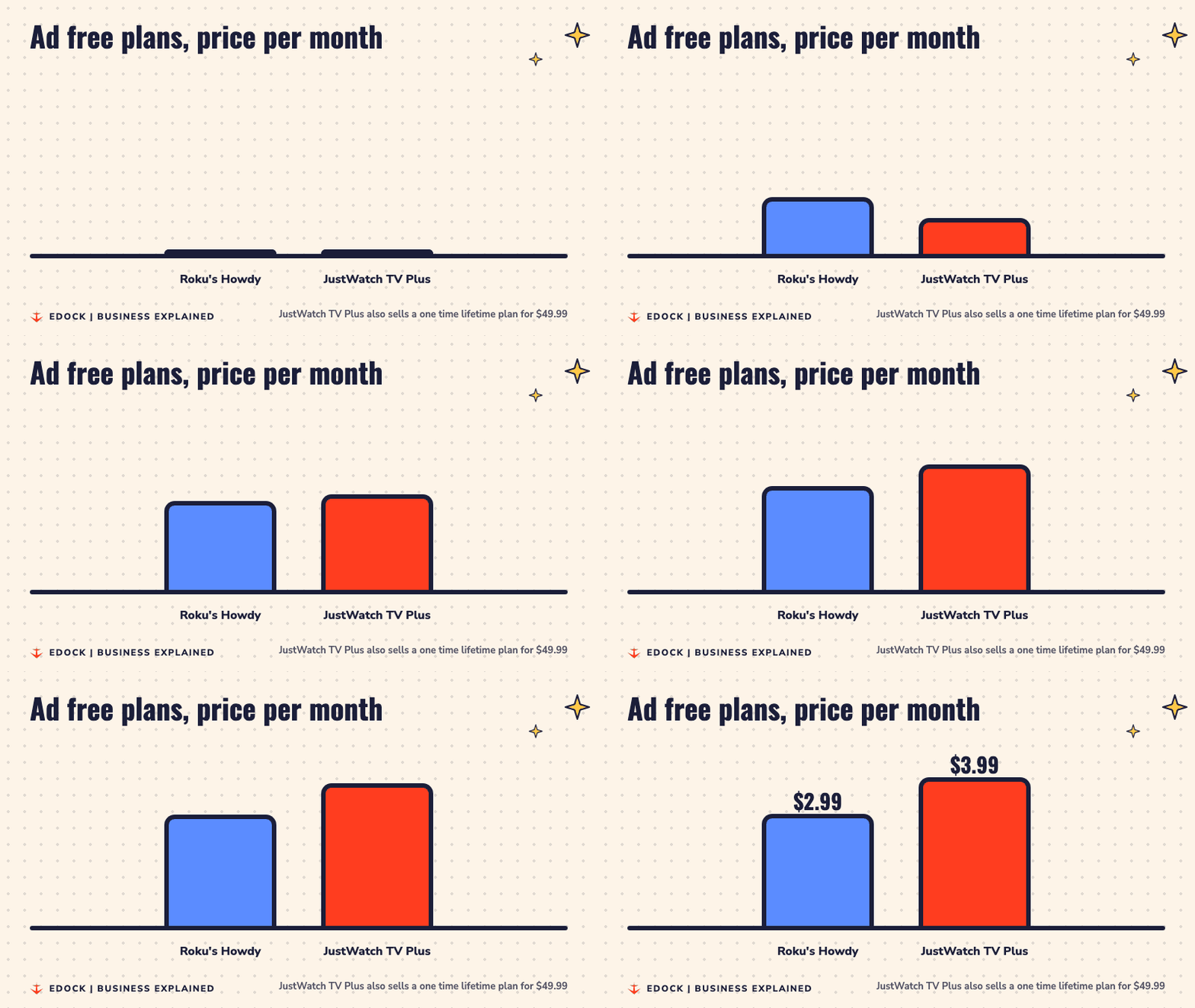
- The Plus plan, at $3.99 a month or $49.99 for a lifetime plan. A lifetime plan means pay once and keep it.
- Rentals, where people pay per film.
A quick sum: $49.99 divided by $3.99 is about 12.5. So the lifetime plan costs about the same as 12 and a half months of the monthly plan. TechCrunch calls this an interesting way to price streaming, since the cost of buying films can change. JustWatch believes the data it gathers adds extra value.
Who is it up against?
The free tier competes with free streaming apps like Tubi and Plex. The Plus plan competes with low cost apps, like Roku's $2.99 a month ad free service, Howdy.
JustWatch has one unusual advantage. Millions of people already open its app when they are deciding what to watch. That is like owning the signboard at the busiest crossing in town and then opening a shop right under it.
Quentin Carbonell, the JustWatch executive in charge of buying content, told TechCrunch that having its own service can grow its audience while it keeps sending people to its streaming partners. So the guide still points to other apps too.
Why should you care?
This is a good lesson in how a business grows. JustWatch began by helping people find things. That gave it a huge crowd and lots of data about what people want to watch. Now it is using that crowd to sell something of its own.
The company says this plainly. In its announcement, Croyé said that for over a decade its mission has been to connect fans with the films and shows they love, especially hard to find ones. JustWatch TV is meant to make finding and watching them easier, in one place.
For now, Indian users can still use the JustWatch guide to find films on Indian apps, but JustWatch TV itself is not in India. No date for an India launch has been given.
Sources
- TechCrunch: Streaming guide JustWatch becomes a streamer itself
- The Hollywood Reporter: JustWatch TV, a new streaming service
- Variety: JustWatch TV launches with content partners
- TechCrunch: Roku launches Howdy, a $2.99 ad free streaming service
- JustWatch: About us
- JustWatch India
- Cover photos: Remote control and popcorn from above, by Nenad Stojkovic, CC BY 2.0; Remote control and popcorn on brown table closeup, by Nenad Stojkovic, CC BY 2.0; Remote infrared, by Peter Hebels, public domain


You may republish this story under CC BY 4.0: credit Arshdeep Singh and link to this page.