JK Tyre will raise tyre prices by 4 to 5% again as rubber and oil costs stay high
Version 1 of 1 saved 24 Oct 2026, 8:38 am IST · Chain line 196
As it was first published
JK Tyre will raise tyre prices by 4 to 5% again as rubber and oil costs stay high
Its third price rise in three quarters comes as raw material costs jumped about 30% in six months and profit fell over 70%, even with record sales.
Picture a samosa stall near your college. The owner pays more for cooking oil and potatoes every month. At first he keeps the price the same and earns less. Then, one day, the samosa costs a little more. That is exactly what one of India's biggest tyre makers is doing right now.
On Friday, 23 October 2026, JK Tyre said it will raise its tyre prices by 4 to 5% in the October to December quarter. Its Managing Director, Anshuman Singhania, told reporters after the company's results: "We intend to increase prices in the third quarter in the range of 4-5 per cent." The reason is simple. The things a tyre is made from still cost a lot more than before.
This is the third price rise in a row
JK Tyre has already raised prices twice this financial year. In India, a company's financial year runs from April to March, and it is split into four quarters of three months each. Q1 is April to June, Q2 is July to September and Q3 is October to December.
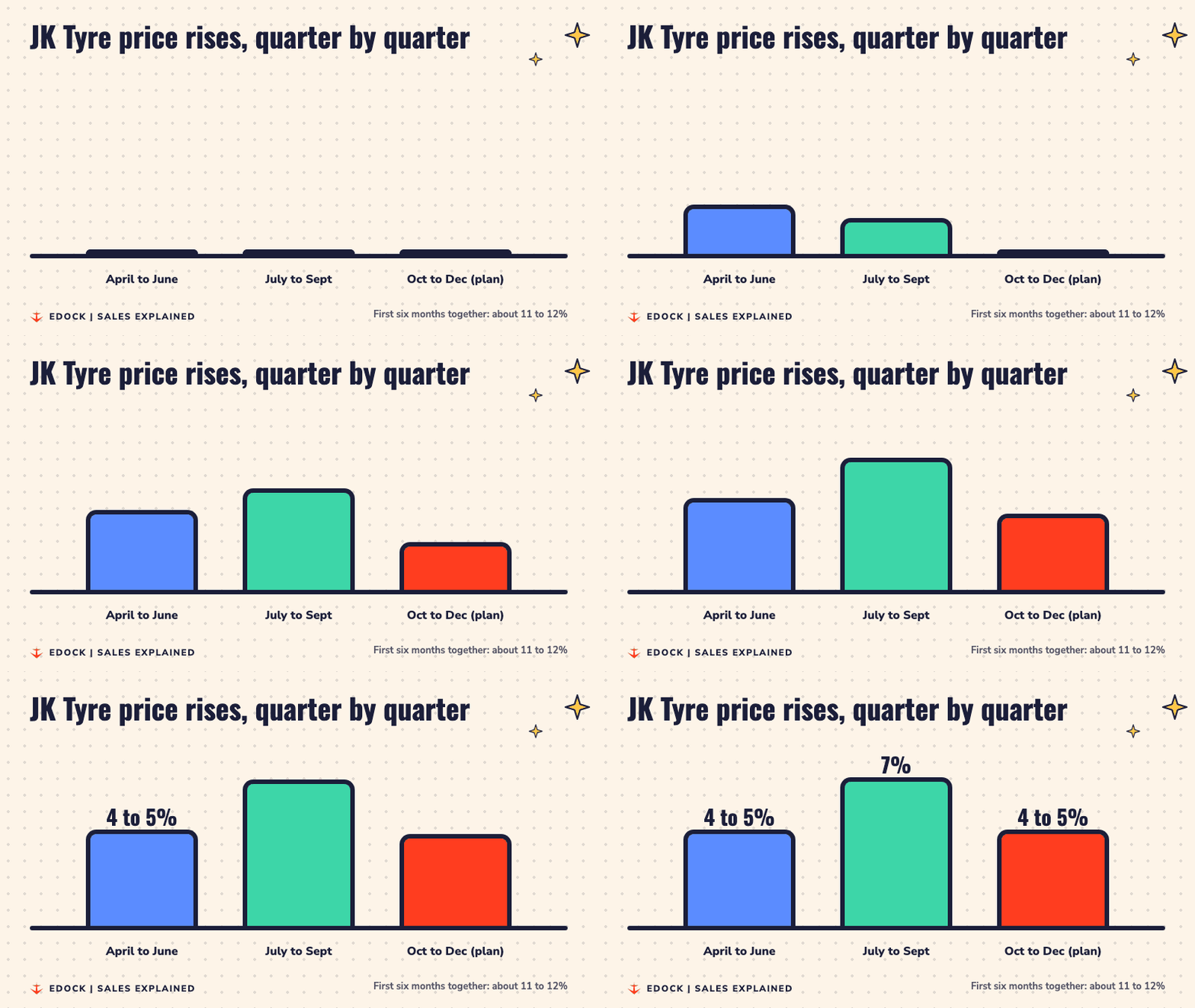
Speaking to reporters on Friday, Singhania said, as Autocar Pro reported, that prices went up by about 4 to 5% in Q1 and by 7% in Q2. Together, that is about 11 to 12% in six months. Now another 4 to 5% is planned for Q3.
What is a tyre made of, and why does it cost more?
A tyre looks like one black ring of rubber, but it is a mix of many things. Autocar Pro lists the main ones: natural rubber, synthetic rubber (rubber made in a factory from oil), carbon black (a fine black powder that makes the tyre strong) and other inputs made from petroleum. These are called raw materials: the basic things you need before you can make anything, like flour, oil and potatoes for the samosa.
Two big things pushed these costs up. First, natural rubber got pricier. Rating agency Crisil said in August that natural rubber rose to around Rs 275 a kg in June 2026, up from about Rs 220 a kg in the last financial year. Unseasonal rain and uneven monsoons in Kerala and Southeast Asia cut supply. Natural rubber makes up nearly half of what tyre makers spend on raw materials, Crisil said.
Second, tension in West Asia pushed up oil prices. Many tyre inputs come from oil, so they got costlier too. The same trouble also made shipping costlier. JK Tyre said container freight rates, which is the fee for moving goods in big steel boxes on ships, are far above their usual levels.
How big is the cost jump?
Singhania said JK Tyre's raw material costs rose about 9% in Q2 compared with Q1. Over the first six months of the year, the total rise was around 30%. For Q3, he said the company sees another 4 to 5% rise in its "full raw material basket".
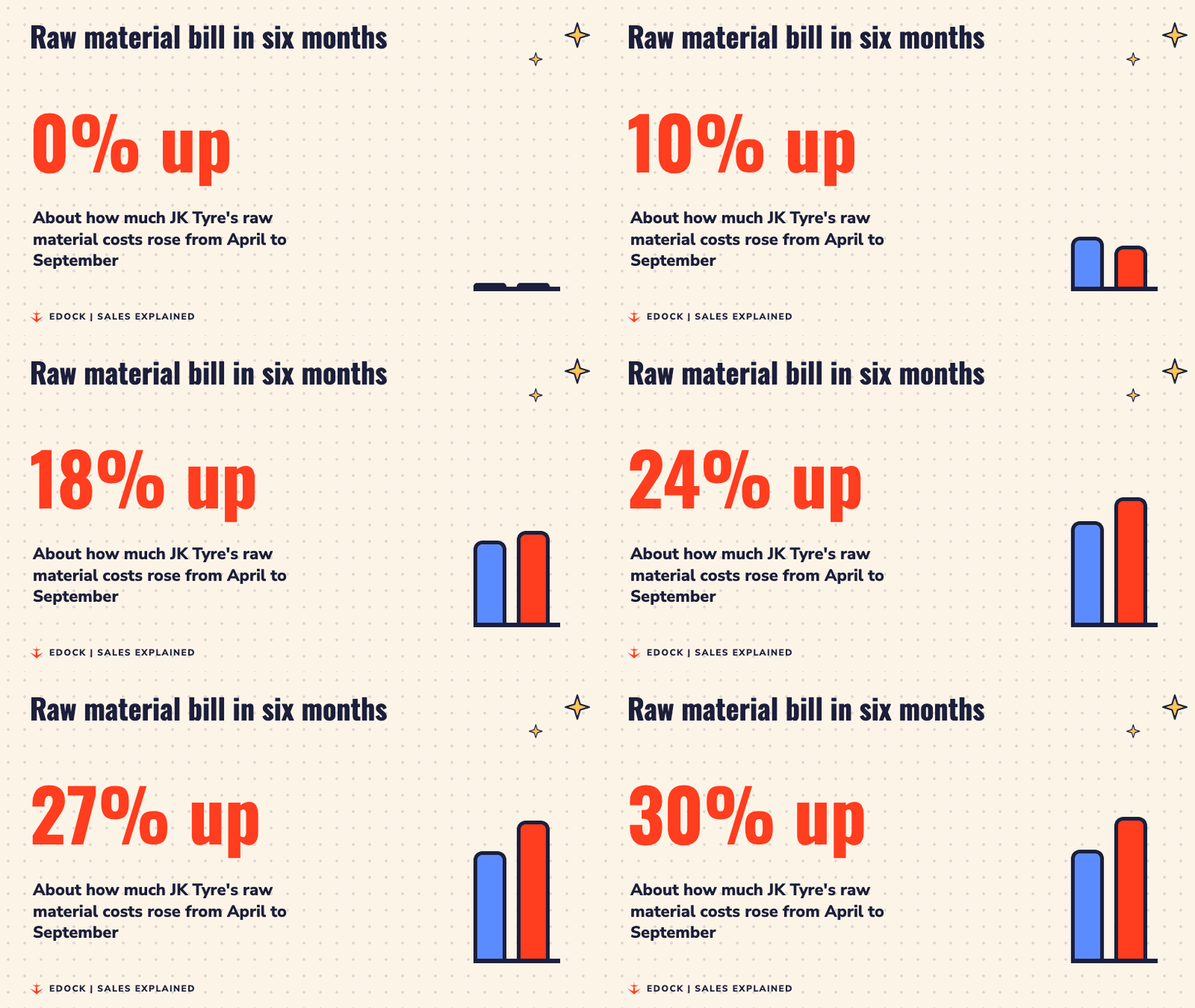
Compare the two numbers. Raw material costs went up about 30% in six months. Prices went up about 11 to 12% in the same time. So the price rises have not caught up with the cost rises yet.
Record sales, but much less profit
Here is the strange part. JK Tyre is selling more than ever. In Q2, its revenue from operations was Rs 4,840.73 crore, its highest for any quarter, and 20.7% more than the Rs 4,011.31 crore of a year earlier. Revenue is all the money that comes in from selling things, before any costs are taken out.
Its sales inside India grew 32%. Sales to carmakers, who fit JK tyres on brand new vehicles, grew 65%. Sales to people replacing old tyres at shops grew 20%.
But profit fell hard. The Economic Times reports that profit after tax dropped 71.5% from a year earlier to Rs 65.11 crore. The company spent Rs 3,392.71 crore on materials in the quarter, 39% more than a year earlier, according to Autocar Pro.
Another number shows the squeeze well. The operating margin, called EBITDA margin, fell to 7.1% from 13.3% a year ago, ET reports. Think of it this way: out of every Rs 100 of sales, JK Tyre kept about Rs 7.10 after running costs, before paying interest, tax and the wear on its machines. A year ago, it kept about Rs 13.30.
Why not raise prices all at once?
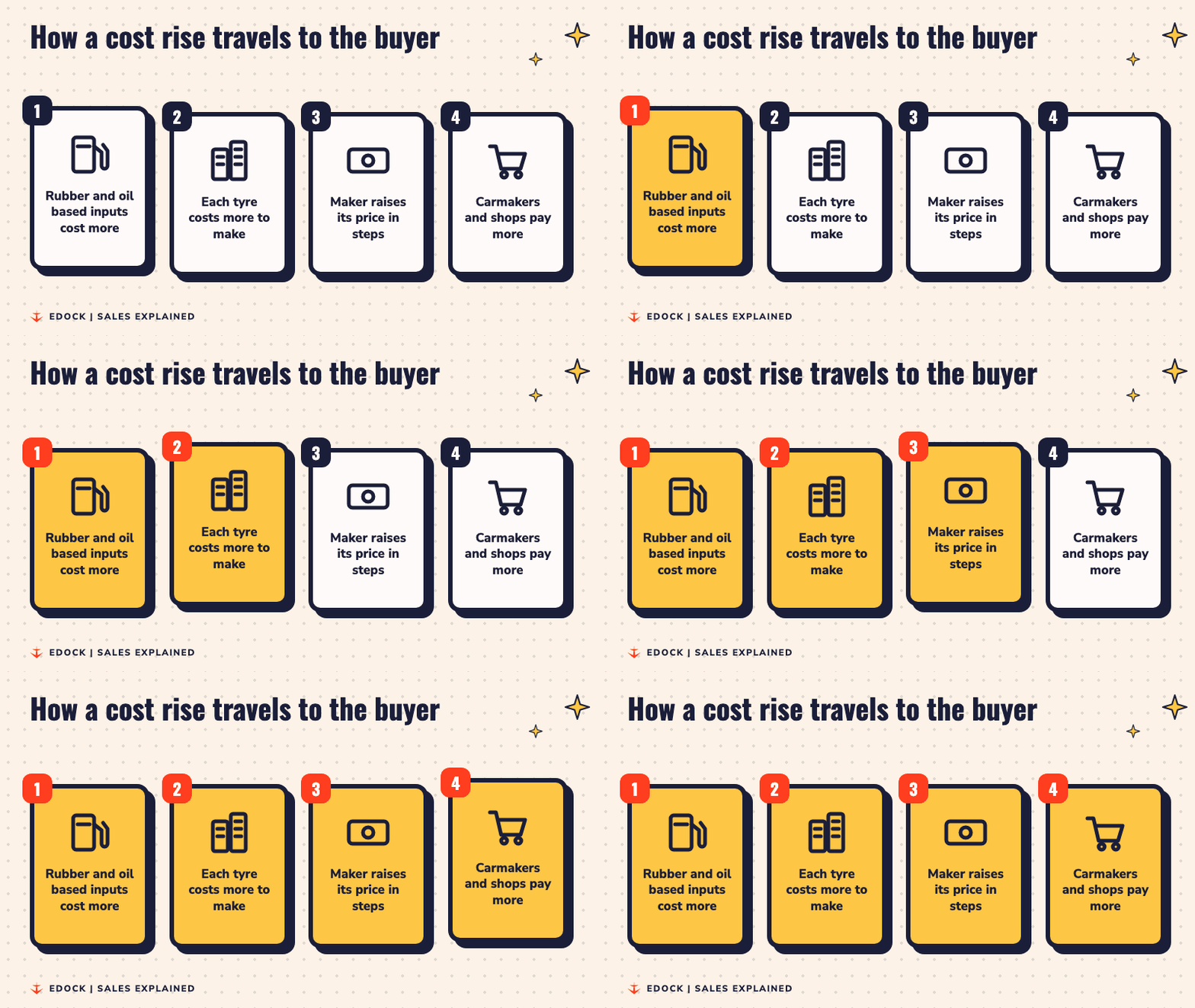
If costs jumped 30%, why not raise prices by 30%? The sources give a few reasons.
First, buyers in India watch prices closely. Singhania said passing the full increase to customers takes time, especially in a market where people are careful about price. Chief Financial Officer Sanjeev Aggarwal said it was hard to predict how much of the margin will come back, because the Indian market is so sensitive to prices.
Second, deals with carmakers have their own rules. Autocar Pro explains that prices for carmakers are often tied to an index, a kind of agreed formula that follows raw material costs. So some of the increase shows up only in later quarters. There is a lag, like the samosa seller who waits a few weeks to see if the oil price stays high before changing his board.
Third, demand is still strong, which gives tyre makers room to move slowly. Crisil said healthy demand lets them spread their price rises out in steps rather than passing on the whole cost at once.
It is not just JK Tyre
The whole tyre industry is feeling this. Crisil expects tyre makers' operating margins to fall to around 12% this financial year from 14.2% last year, as key inputs rise 35 to 40%. It called this a lag in passing on costs, not a lasting fall in how much tyre makers can earn. It expects margins to recover to 13 to 13.5% next year once the price rises fully flow through.
Crisil also said that about half of all tyres sold in India go to the aftermarket, which means people replacing old tyres. So a price rise reaches ordinary car, bike and truck owners when they visit a tyre shop.
The other plan: sell bigger tyres
Raising prices is one way to win back profit. Selling better products is another. JK Tyre is pushing larger tyres for passenger cars, those 16 inches and above, which earn more per piece. Singhania said these bigger tyres made up around 40% of the passenger car tyres it sold to carmakers in the first half of this year, up from 35% last year, helped by demand for SUVs.
It is like the samosa stall adding a paneer samosa at a higher price. Customers who want it pay more, and the stall earns more from each plate.
What it means for you
If your family has a car, a bike or runs a delivery van, the next set of tyres may cost a little more. If you are studying business, this is a clean real-life lesson in pricing: when costs rise, a seller must choose between earning less, raising prices, or selling something better. Right now JK Tyre is earning less, raising prices and pushing bigger tyres, all at the same time.
JK Tyre has not given a date for when its profit will return to earlier levels. The next results, for October to December, will show whether the new price rise was enough.
Sources
- The Economic Times: JK Tyre to hike prices by 4 to 5% in Q3 as raw material costs stay elevated
- Autocar Pro: JK Tyre plans further 4 to 5% price hike in Q3
- Upstox News: Tyre makers' margins to fall to 12% as raw material costs outpace price hikes, says Crisil
- Markets by Zerodha Hindi: Falling margins, rising capex, India's tyre industry explained (YouTube)
- Cover photo: JK Tyre stall at EXCON 2025, Bangalore International Exhibition Centre, by Gpkp, CC BY-SA 4.0
