JioStar earned more but kept less as TV ads slowed
The company behind JioHotstar and Star channels grew revenue to Rs 6,806 crore, yet profit slid as costs rose 17% and the ad market stayed weak.
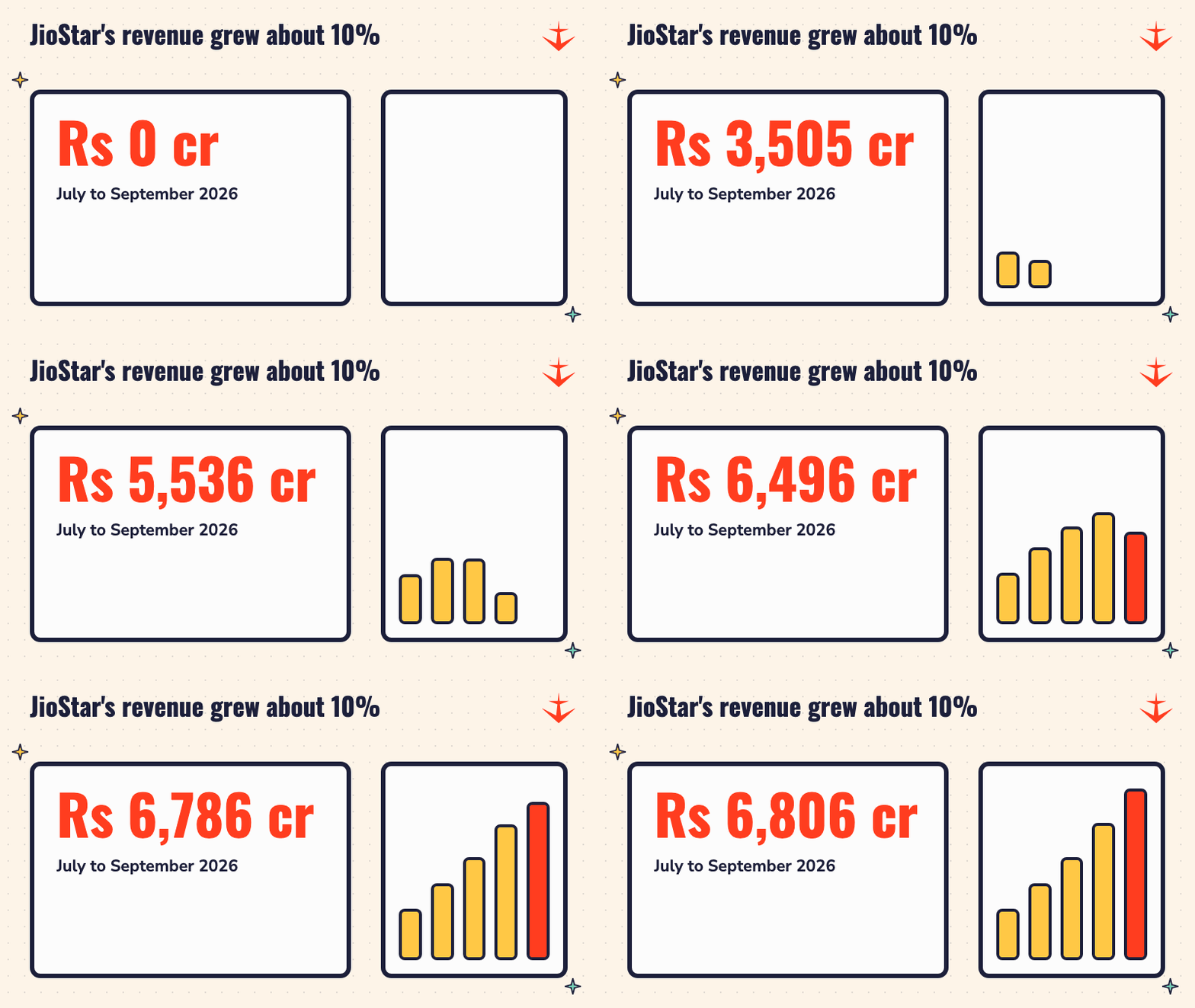
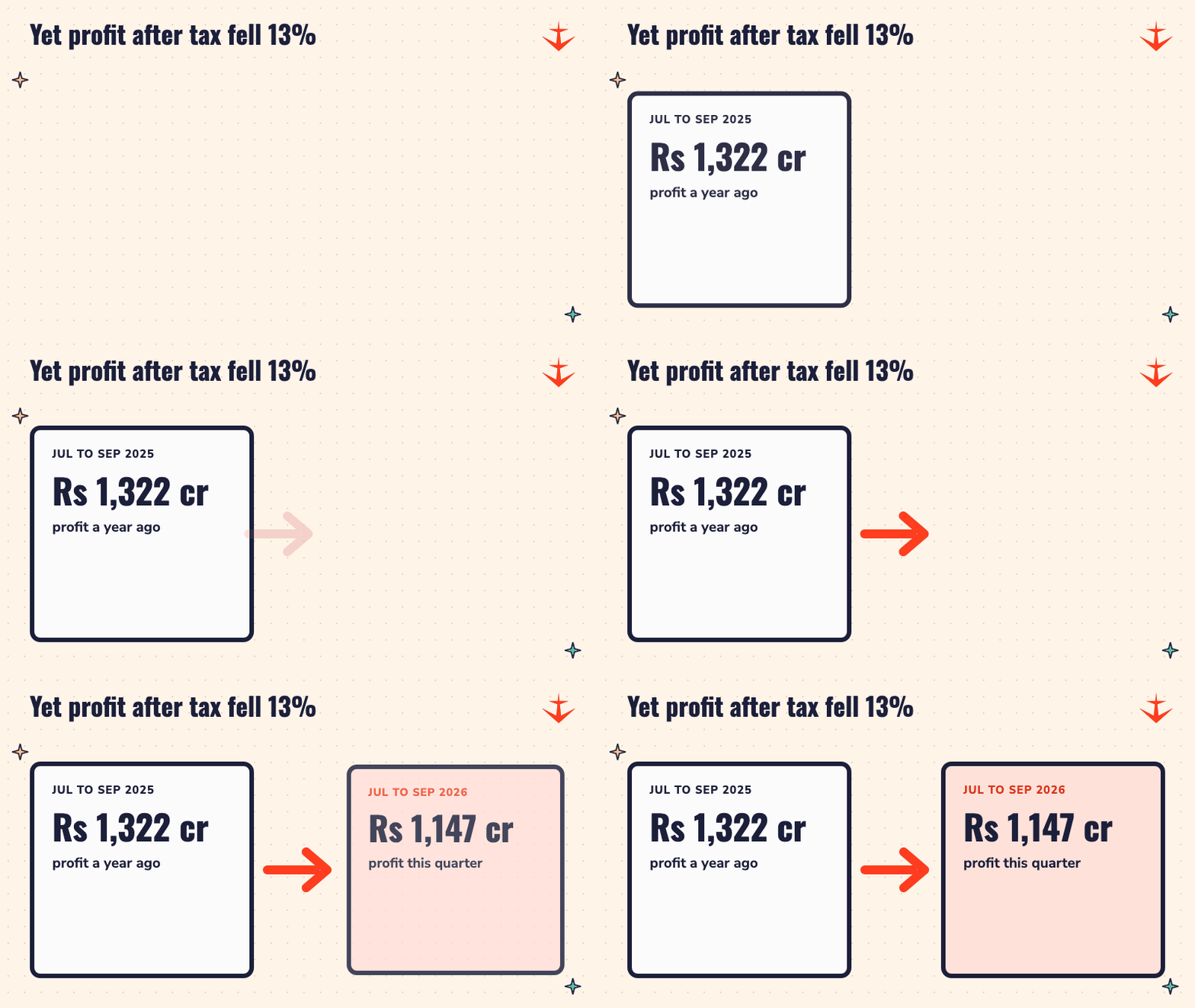
Here is a puzzle. JioStar, the company behind the JioHotstar app and the Star TV channels, brought in more money between July and September 2026 than a year earlier. Yet the company kept less of that money as profit. On 30 October 2026, the company reported a 10.1% rise in revenue from operations to Rs 6,806 crore, while profit after tax fell 13.2% to Rs 1,147 crore.
Revenue is all the money that comes in from selling things. Profit after tax is what stays with the company after every bill and every tax is paid, a bit like the pocket money still left in your wallet at the end of the month. The company itself pointed to a "weak ad environment". In plain words, the market for selling ads stayed slow.
First, who is JioStar?
JioStar is a joint venture. That means two big owners share one company, like two friends who run a samosa stall together and split the earnings. It was formed when Reliance Industries joined its media businesses with the India business of Walt Disney. Today it runs JioHotstar, the streaming app on your phone or TV, plus TV channels in Hindi and many regional languages.
How does a TV and streaming company make money?
There are two big ways. Think of a newspaper and a magazine.
- Ads: a free newspaper is paid for by the ads printed in it. In the same way, brands pay JioStar to show their ads during a cricket match or a daily serial.
- Paid plans: a magazine is paid for by its readers every month. In the same way, viewers pay for JioHotstar plans, and homes pay to get TV channels.
This quarter, the company said its growth came from more money from paid plans on both the app and TV, strong growth in ads shown with digital entertainment shows, and more sports ads. It also said ad money from "linear TV" remained "under transition". Linear TV simply means normal TV channels, where a show plays at a fixed time and you watch it then or miss it.
This short video explains how JioHotstar mixes paid plans with ads.
So why did profit fall?
Costs grew faster than sales. JioStar's operating costs, the money spent to run the business every day, rose 17% to Rs 5,434 crore, up from Rs 4,646 crore a year earlier, according to Indian Television. Revenue grew only about 10%.
Imagine a chai stall that sells 10% more chai in a month, while its bill for milk, sugar and gas goes up 17%. The stall is busier, yet the owner keeps less from each cup. That is roughly the JioStar story this quarter.
One more number shows the squeeze. Out of every Rs 100 of sales, about Rs 20 was left over from day to day work before loans, tax and wear on equipment. A year ago it was nearly Rs 25. This share is called the operating margin, and it narrowed to 20.2% from 24.8%.
Why were ads weak?
Ishan Chatterjee, who heads sports at JioStar, told reporters that the situation in West Asia, which began during the IPL, held back how much money the company could earn from ads. He added that the India and West Indies cricket series helped the quarter end on a strong note, and that the festive season lifted sports ads.
There is a second worry around TV ads. Brands decide where to spend by looking at TV ratings, a scorecard of how many people watched a show. An industry wide ratings blackout has disrupted that scorecard, though JioStar did not blame its TV ad numbers on it.
JioStar is not alone. Zee Entertainment also reported a 40% fall in profit after tax, with flat ad revenue. Mint reports that big spending on sports rights and a hard ad market have hurt margins across major entertainment networks.
Where did 90 million users go?
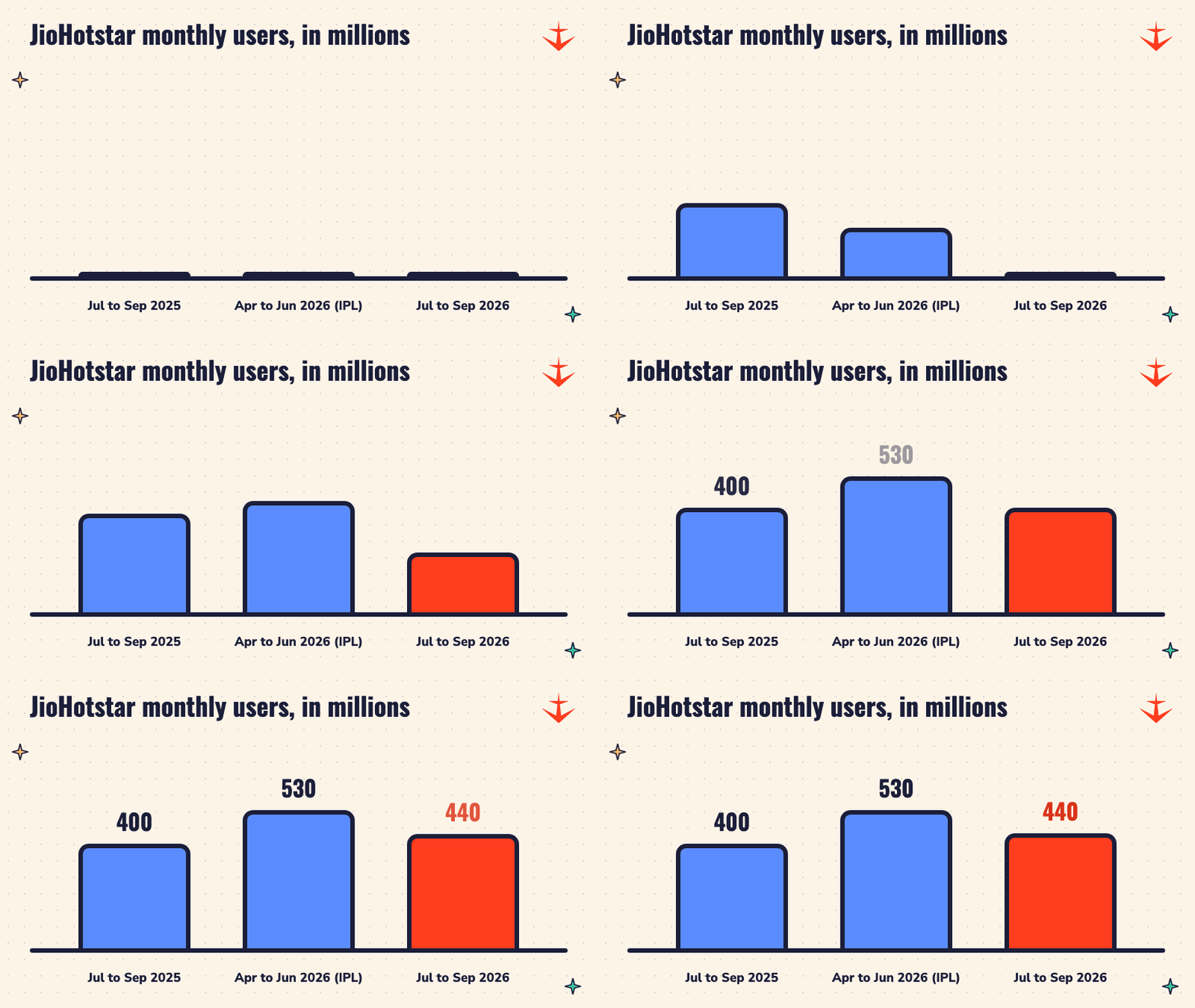
JioHotstar had 530 million monthly active users in April to June, driven by the IPL. In July to September, that fell to 440 million. Monthly active users are the people who open the app during a month, like counting every student who visits the school canteen at least once.
Why the drop? The IPL is like a giant mela. Everyone turns up while it is on, and many go home once it ends. Still, 440 million is 10% more than the 400 million of a year earlier. Chatterjee said the app had crossed 400 million monthly users in several quarters even without big cricket.
Viewers did keep watching other things. Entertainment watch time on JioHotstar grew more than 15%, and the six language editions of Bigg Boss reached over 90 million viewers on the app in their first three weeks. The app also launched in the UK, Canada and Singapore during the quarter.
What does this mean for viewers?
Best Media Info notes that the growing digital and paid plan businesses are what pushed revenue up this quarter. A few changes for viewers stand out, as Indian Broadcasting World reports:
- People on mobile only plans can now watch on a big TV screen for up to two hours every month. An average viewer on a connected TV watches three times more than a mobile viewer, so this is a way to get more people onto the TV screen.
- A feature called "Pay Kisi Aur Se" lets a user ask a friend or family member to pay for a plan on their behalf.
- Food ordering now sits inside entertainment shows, and shopping links have spread beyond cricket to Wimbledon, the US Open and the Premier League.
What comes next?
For the first half of the year, April to September, JioStar's revenue from operations rose 12.5% to Rs 17,752 crore, while profit after tax slipped 4.8% to Rs 1,812 crore. The company said strong sports ad demand was carrying into the second half, with early signs of more ad money from big sporting events. Chatterjee also said the company remained optimistic about the rest of the year.
Sources
- Business Standard (PTI): JioStar Q2 results, PAT falls 13.2% to Rs 1,147 crore
- Mint: JioStar profits decline 13% amid weak ad environment
- Indian Television: JioStar revenue rises 10 per cent to Rs 6,806 crore
- Best Media Info: JioStar Q2 revenue grows 10% as linear TV advertising stays under pressure
- Indian Broadcasting World: JioStar Q2 revenue up 10.1% to Rs 6,806 crore
- YouTube: The JioHotstar model explained
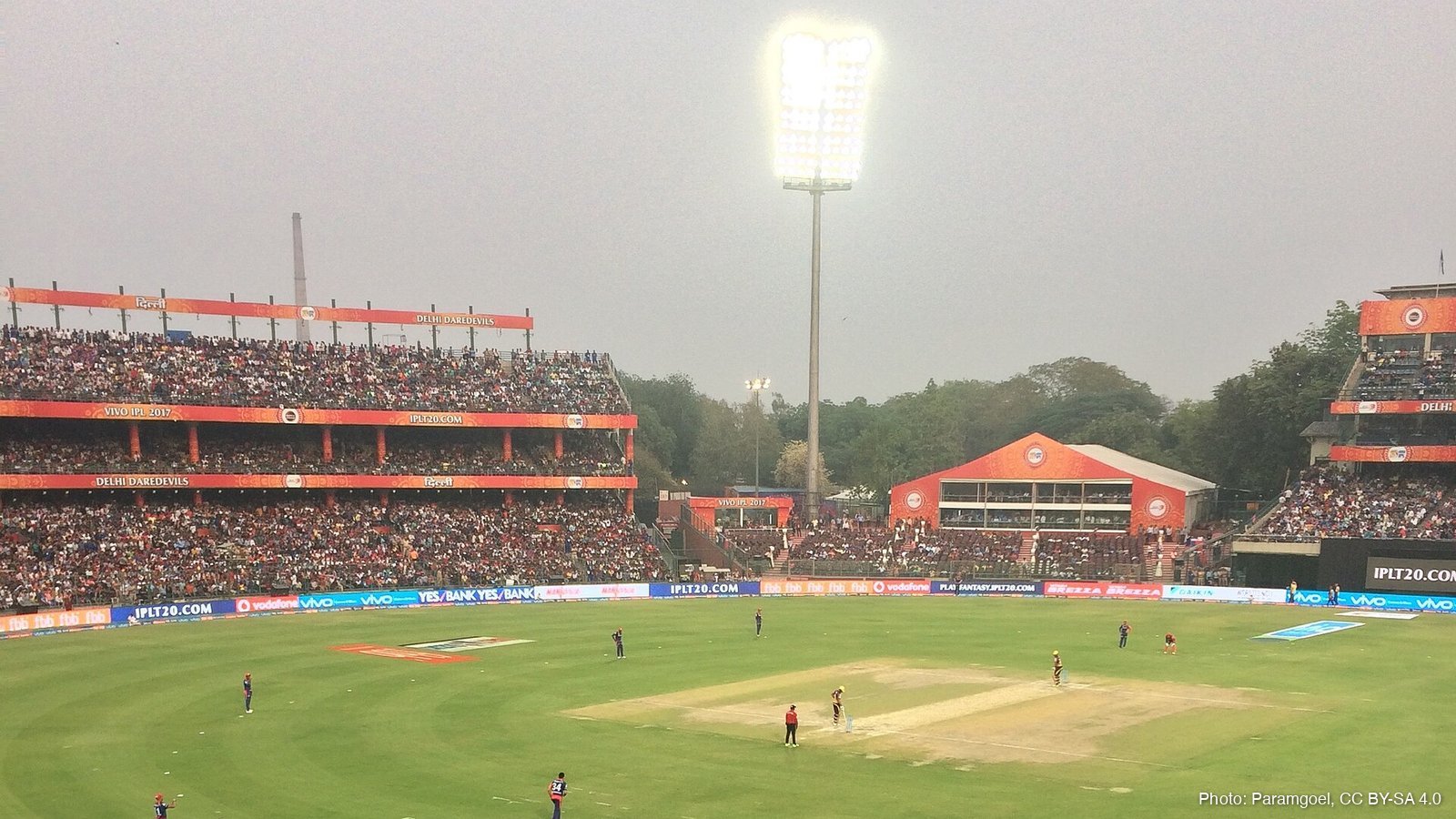
- Cover photo: IPL 2017 evening, an IPL match at Feroz Shah Kotla in Delhi, by Paramgoel, CC BY-SA 4.0

You may republish this story under CC BY 4.0: credit Manpreet Kaur and link to this page.