Jio's ₹30,213 crore IPO gets bids for 5.57 times its shares by day 2
India's largest IPO saw big institutions ask for 13.29 times their share. Here is what an IPO, a price band and a QIB mean, in plain words.

Picture a shop that puts 100 samosas on the counter, and a crowd that asks for 557 of them. That is roughly what happened with Jio Platforms on Thursday, 22 October 2026. By the end of the second day of bidding, people had asked for 5.57 times the shares on offer in its IPO.
Jio Platforms is the digital arm of Reliance Industries. It runs the Jio mobile network that sits inside millions of Indian phones. Its IPO aims to raise ₹30,213 crore, which makes it India's largest public offering so far, bigger than Hyundai Motor India's issue in 2024.
Here is what all of this means, in plain words.
First, what is an IPO?
IPO stands for initial public offering. It is the first time a company sells small pieces of itself to the public.
Think of a lemonade stall run by one family. The stall grows and needs money for a bigger cart. So the family says: anyone can buy a small share of the stall. If the stall does well, the share becomes worth more. If it does badly, it can be worth less. Each small piece is called a share.
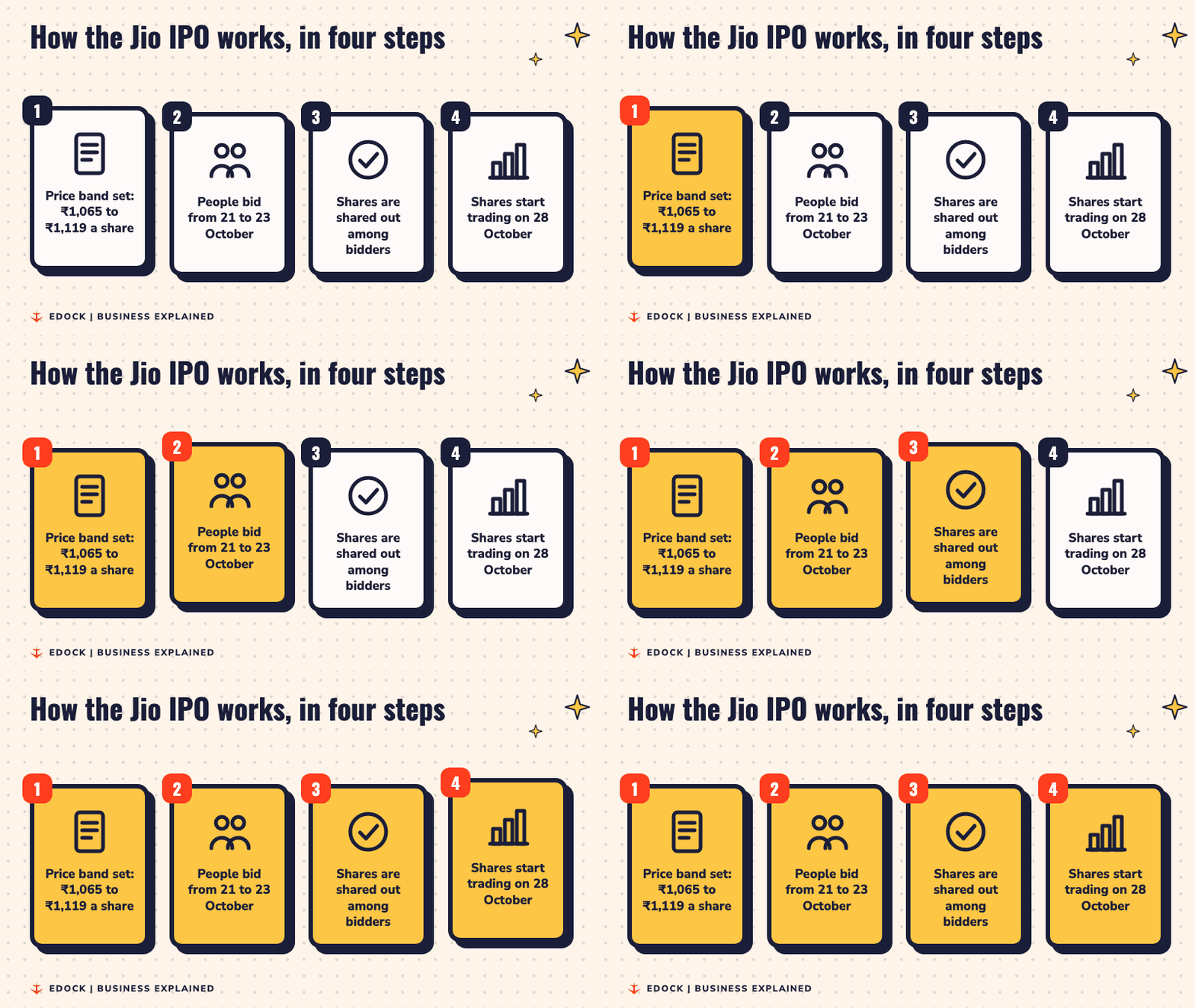
After the IPO, these shares trade on the stock exchange, like a big market where people buy and sell shares every day. For Jio, that trading is set to start on 28 October. This step is called listing.
The price band, and the money line
A company does not fix one exact price at the start. It gives a range, called a price band. For Jio, the band is ₹1,065 to ₹1,119 per share. It is like a cricket ticket that costs between two prices, with the final price set later.
Jio is selling up to 27 crore new shares, with bidding from 21 to 23 October. Here is the money line: 27 crore shares at the top price of ₹1,119 each comes to ₹30,213 crore. That is the full size of the IPO.
At the top of the band, the whole company would be valued at around ₹10.3 lakh crore. Valuation is simply the price tag on the whole company, not just the pieces on sale.
What does "5.57 times" really mean?
When an IPO opens, people place bids. A bid is a request that says: I want this many shares at this price.
If the company has 100 shares on offer and people ask for 557, the issue is booked 5.57 times. More people want the shares than there are shares to give. It is like a school trip bus with 50 seats and 278 children wanting to go.
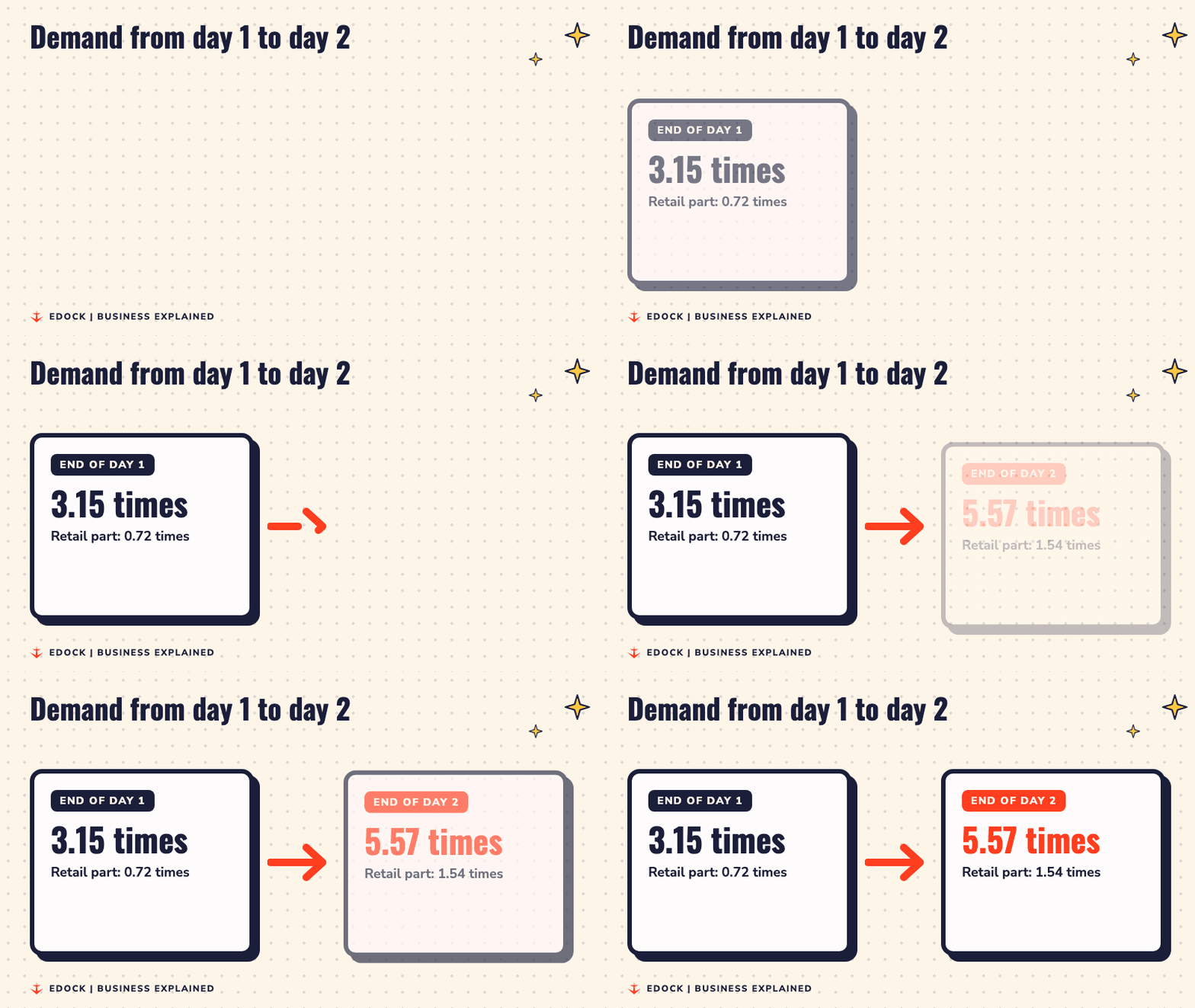
On day one, 21 October, the IPO drew bids for 3.15 times the shares on offer, with bids for 62.3 crore shares against 19.75 crore shares. The retail part was at 0.72 times that day. By the end of day two, that rose to 5.57 times.
Business Standard reported that the issue was fully booked within 100 minutes of opening at 9 am on day one. It also said, quoting data from Prime Database and analysts, that this was more day two demand than any of India's five largest IPOs had seen. NSE's own IPO last month was at 1.63 times at the same stage, and Hyundai Motor India at 0.59 times.
Who are the different buyers?
An IPO keeps separate parts for separate kinds of buyers, like a cinema with different rows for different tickets.
- QIB means qualified institutional buyer. These are big players such as mutual funds, banks and insurance companies. They handle huge piles of money for many people.
- NII means non-institutional investor. These are wealthy individuals and firms who bid more than ₹2 lakh.
- Retail investors are everyday people. Each retail bid is capped at ₹2 lakh.
- There are also parts for Jio's employees and for people who already own Reliance Industries shares. Reliance shareholders got a special ₹2,500 crore quota.
The big players led the way
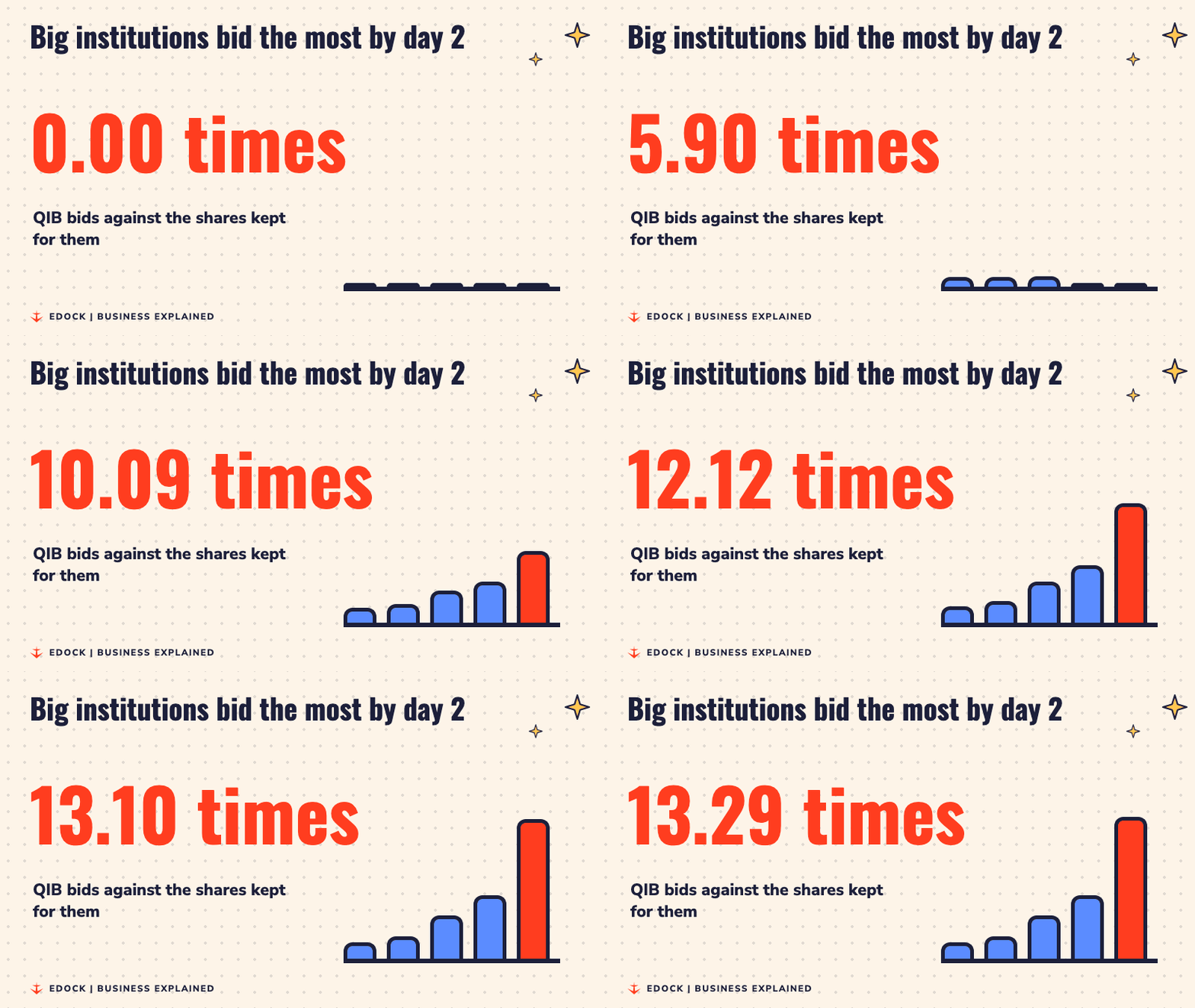
By the end of day two, the QIB part had bids for 13.29 times the shares kept for it, up from 9.42 times on day one. In numbers, these big institutions asked for 651.5 million shares when only 49 million were set aside for them.
The other parts, as per the same report:
- NII part: 5.97 times
- Reliance shareholders' part: 4.04 times
- Employees' part: 2.10 times
- Retail part: 1.54 times
Inside the NII part, bids above ₹10 lakh were at 6.76 times, while the ₹2 lakh to ₹10 lakh bracket was at 4.38 times.
So everyday buyers were the slowest group, though they still crossed full booking. One analyst told Business Standard that some retail buyers already own Reliance shares and probably bid in the shareholder part instead.
Where does the money go?
Some IPOs let old owners sell their shares and take the cash home. Jio's IPO is different. It is made only of fresh, new shares. So the money goes into the company itself.
About ₹27,500 crore of it will be used to pay back loans, Mint reported. Think of it like a family using a big bonus to clear a home loan early. Less loan means less interest to pay every year, which can leave more money as profit.
How big is Jio, anyway?
Jio started its commercial mobile service in 2016. It now has about 533 million users, as per a Reuters report cited by Bajaj Broking. For the year that ended in March 2026, Jio Platforms made a profit of about ₹30,049 crore, as per its offer document.
That is a very large business. It is also why so many big institutions wanted a piece of it.
What happens next?
Friday, 23 October, is the last day to bid. After that, the shares are shared out. When people ask for many more shares than exist, not everyone gets what they asked for. This sharing out is called allotment. Then the stock is set to start trading on 28 October.
Final numbers for day three were not out at the time of writing. The figures in this post are the end of day two numbers.
One thing to keep in mind: high demand on bidding days does not tell anyone what the share price will do later. Prices on the stock market can go up or down.
Why this matters to you
Many young Indians use Jio every day for calls, videos and reels. Now the same company is asking the public to own a piece of it. Learning words like price band, bids, QIB and allotment helps anyone read money news with more confidence, whether or not they ever buy a share.
Sources

You may republish this story under CC BY 4.0: credit Pranav Sharma and link to this page.