Jakson plans Rs 6,863 crore solar plant in Kurnool to make wafers in India
Version 1 of 1 saved 27 Oct 2026, 7:22 am IST · Chain line 260
As it was first published
Jakson plans Rs 6,863 crore solar plant in Kurnool to make wafers in India
The Noida group wants to make silicon ingots, wafers and cells in Andhra Pradesh, the early steps of a solar panel that India mostly buys from abroad.
Picture a kitchen that has always bought ready rotis and only packed them into tiffins. Now it wants to knead the dough and roll the rotis itself. That is roughly what an Indian solar company is planning right now, and at a giant size.
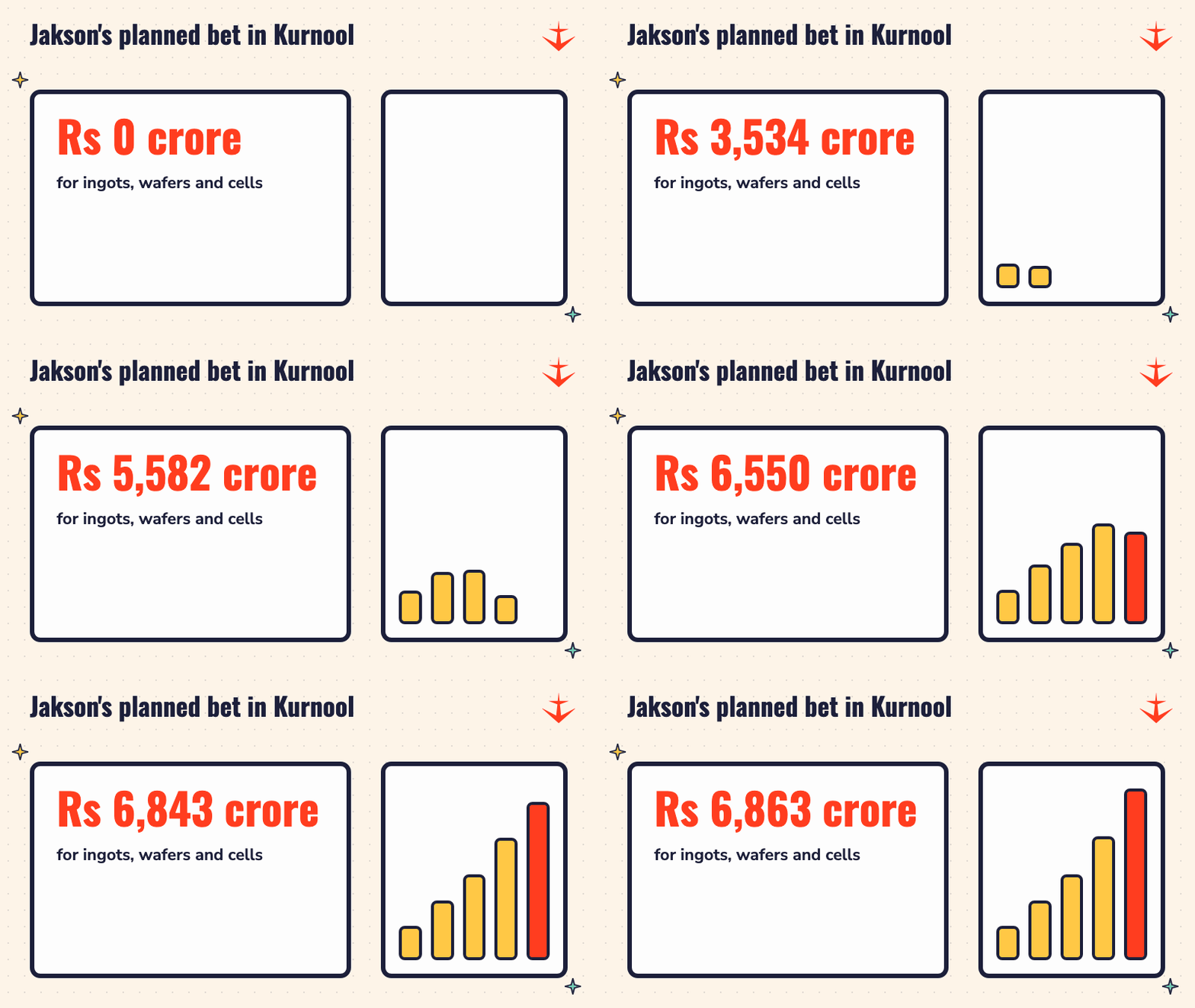
On 27 October 2026, The Economic Times reported that Jakson Group plans to invest Rs 6,863 crore in a solar factory in Kurnool district, Andhra Pradesh. The plant would make 10 GW of silicon ingots and wafers and 5 GW of solar cells a year. Those are the early, hard steps of making a solar panel, the steps India mostly buys from abroad today.
What exactly is planned?
According to the ET report, here are the key facts:
- Where: Meedivemula village in Kurnool district.
- Land: the State Investment Promotion Board, a state panel that clears big projects, has recommended giving 290 acres for it.
- People: about 2,000 workers.
- Phase 1: 3 GW of ingots and wafers plus 3 GW of cells, with production targeted to start in May 2028.
- The rest: the remaining capacity, which works out to 7 GW of ingots and wafers and 2 GW of cells, is planned by 2030.
A quick word on GW. A gigawatt is a unit of power. When a factory says "10 GW a year", it means all the wafers it makes in a year could, once turned into panels, produce that much power together.
The plant will be "integrated". That simply means one campus does several steps of the job, like a dhaba that grinds its own masala, cooks the dal and serves it too.
Ingot, wafer, cell, module: the roti way
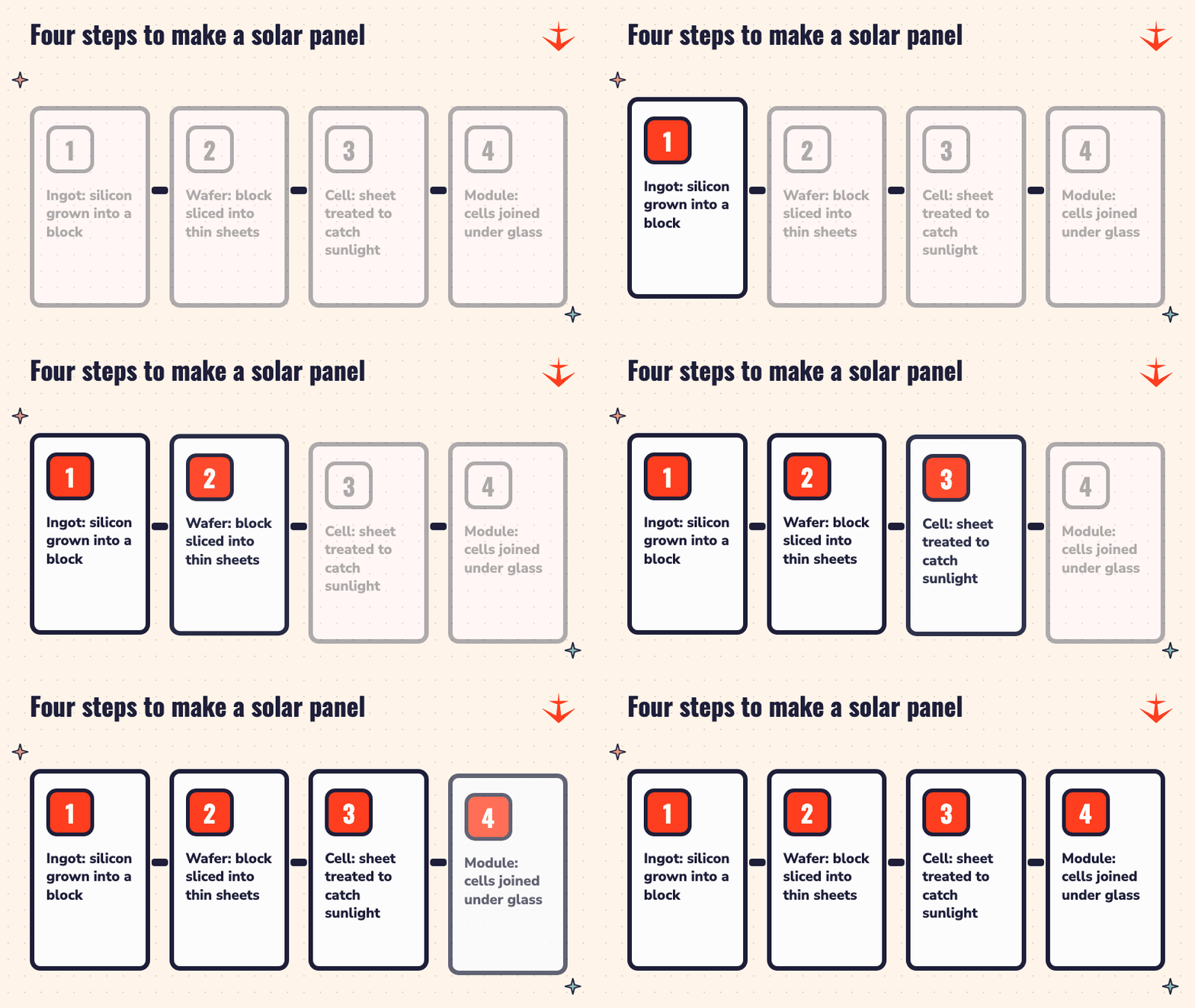
A solar panel is made in steps, one after another. Think of making rotis:
- Ingot = the dough ball. Very pure silicon is melted. A tiny seed crystal is dipped in and slowly pulled up while it turns, and the silicon hardens into one big solid block called an ingot. Wikipedia explains such ingots can be up to 2 metres long and weigh several hundred kilograms.
- Wafer = the rolled roti. The ingot is sliced into very thin sheets called wafers. A wafer is a thin slice of silicon used to make solar cells (and computer chips too).
- Cell = the cooked roti. Each wafer is treated so that it turns sunlight into electricity. Now it can actually do a job.
- Module = rotis packed in a tiffin. Many cells are joined together under glass. This is the solar panel you see on a rooftop.
Jakson today works mostly at the last step. It runs a 1.2 GW module factory in Greater Noida, which pv magazine India describes as fully automated and making TOPCon modules, a popular newer kind of panel. With Kurnool, Jakson would go back to the dough itself.
What does "moving up the value chain" mean?
The value chain is the full line of steps from raw stuff to finished product. Each step adds value, and each step earns money. Think of a samosa stall. One stall buys ready frozen samosas and just fries them. Another makes its own filling and its own dough. The second stall earns more from each samosa and does not panic when the frozen samosa supplier runs short.
That is the idea here. ET notes that with this project Jakson "will move further up the value chain". The planned 5 GW of cells alone is about four times the 1.2 GW of modules its Greater Noida plant can make.
Why wafers are India's weak spot
India is very good at the tiffin step, but weak at the dough step. A 2026 report by The Energy and Resources Institute, quoted by Business Standard, estimated that in 2025 India could make nearly 120 GW of modules a year and about 30 GW of cells, but only about 2 GW of ingots and wafers. The same article says a NITI Aayog report put China's share of world wafer capacity at 95 per cent in 2024.
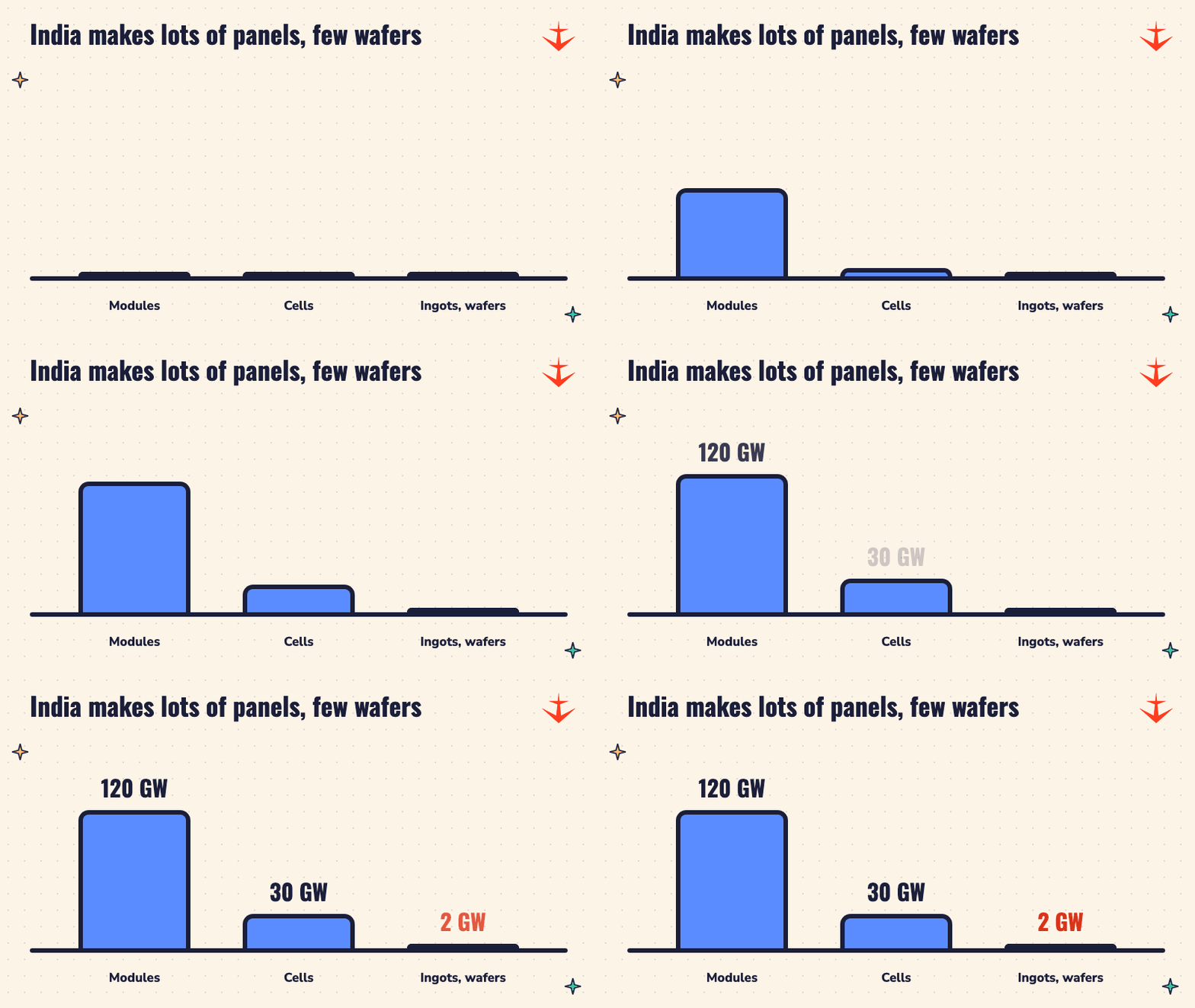
Put simply, Jakson's planned 10 GW of ingots and wafers would be five times what the whole country could make in 2025.
Edock wrote recently about how China moves to guard 12 solar technologies, which could make India's plan to build wafers slower, since many of the machines and experts come from China. Jakson is one of the companies trying to close that gap anyway.
Is there a deadline pushing this?
Yes. India keeps an Approved List of Models and Manufacturers, or ALMM. Think of it like a school's list of approved uniform shops: only items from shops on the list count. BusinessLine reports that the renewable energy ministry this year extended this list to include ingots and wafers, with a February 2028 deadline for solar projects. So made in India wafers will soon be in high demand, and Jakson's first phase is aimed at May 2028.
Why Andhra Pradesh?
The state is trying hard to become a solar factory base. ET reports that its Integrated Clean Energy Policy, 2024 aimed for 20 GW of solar manufacturing across the steps, and the state has already gone past that. Approved projects, not counting Jakson's, add up to 58.74 GW of cell and module capacity and 48 GW of ingot and wafer capacity, according to state papers seen by ET.
Who is Jakson, anyway?
Jakson is an old Indian name. Wikipedia says it began in 1947 as an electrical goods trading company in Delhi and became one of India's oldest diesel generator makers. It later added solar panels, solar power projects and more, and is based in Noida.
Kurnool is not its only big solar plan. In November 2025, SolarQuarter reported that Jakson laid the foundation stone of a 6 GW integrated solar plant at Maksi in Madhya Pradesh, worth over Rs 8,000 crore, on 113.5 acres. Its first phase covers 3 GW of cells and 4 GW of modules, with ingots and wafers to follow later.
This video from Jakson shows its Greater Noida module factory, the "tiffin" step the company already runs:
And this video from JinkoSolar, a Chinese solar maker, shows what an ingot and wafer factory looks like inside, the kind of step Jakson now wants to build in India:
What to keep in mind
This is a plan, not a finished factory. The land has been recommended, not yet handed over, and the first wafers are targeted for May 2028. Building ingot and wafer lines is tricky work, and many of the needed machines usually come from China. Still, if it works, more of every Indian solar panel would be made in India, from the dough to the tiffin, and about 2,000 people in Kurnool would get work.
Sources
- The Economic Times: Jakson Group plans to invest Rs 6.8k crore in Andhra Pradesh solar wafer, cell plant
- Business Standard: China proposes ban on export of 12 solar manufacturing technologies
- The Hindu BusinessLine: China's export controls could slow India's upstream solar push
- pv magazine India: visit to Jakson's solar module facility in Greater Noida
- SolarQuarter: Jakson Group's new 6 GW integrated solar facility
- Wikipedia: Jakson Group
- Wikipedia: Monocrystalline silicon
- Wikipedia: Wafer (electronics)
- Wikipedia: Solar panel
- Edock: China moves to guard 12 solar technologies
- Cover photo: Multicrystalline silicon wafer with thin film iridescence, by Radiotrefoil, CC BY-SA 4.0
