Infosys earns Rs 7,823 crore in a quarter but cuts its growth forecast for the year
Version 1 of 1 saved 24 Oct 2026, 12:18 am IST · Chain line 185
As it was first published
Infosys earns Rs 7,823 crore in a quarter but cuts its growth forecast for the year
Profit rose 6.2% and big deals hit $5.2 billion, yet Infosys now expects only 1% to 2% growth in FY27. Here is what guidance means.
Picture this. A company earns more than Rs 7,800 crore of profit in just three months. Its clients sign fresh deals worth $5.2 billion. And on the same day, it tells the world: this year will be slower than we said.
That is what Infosys, India's second largest IT firm, did on Friday, 23 October 2026. It shared its results for July to September and trimmed its growth forecast for the full year. Here is the story in simple words.
First, the big numbers
Infosys made a net profit of Rs 7,823 crore in the quarter. A year ago, in the same three months, it made Rs 7,364 crore. So profit grew about 6.2%.
Net profit is what is left after paying for everything: salaries, offices, electricity, tax. Think of a samosa stall. If you sell samosas worth Rs 1,000 in a day and spend Rs 800 on potatoes, oil, gas and a helper, your profit is Rs 200.
Revenue is the full Rs 1,000 before costs. For Infosys, revenue was Rs 49,244 crore, up 10.7% from a year ago.
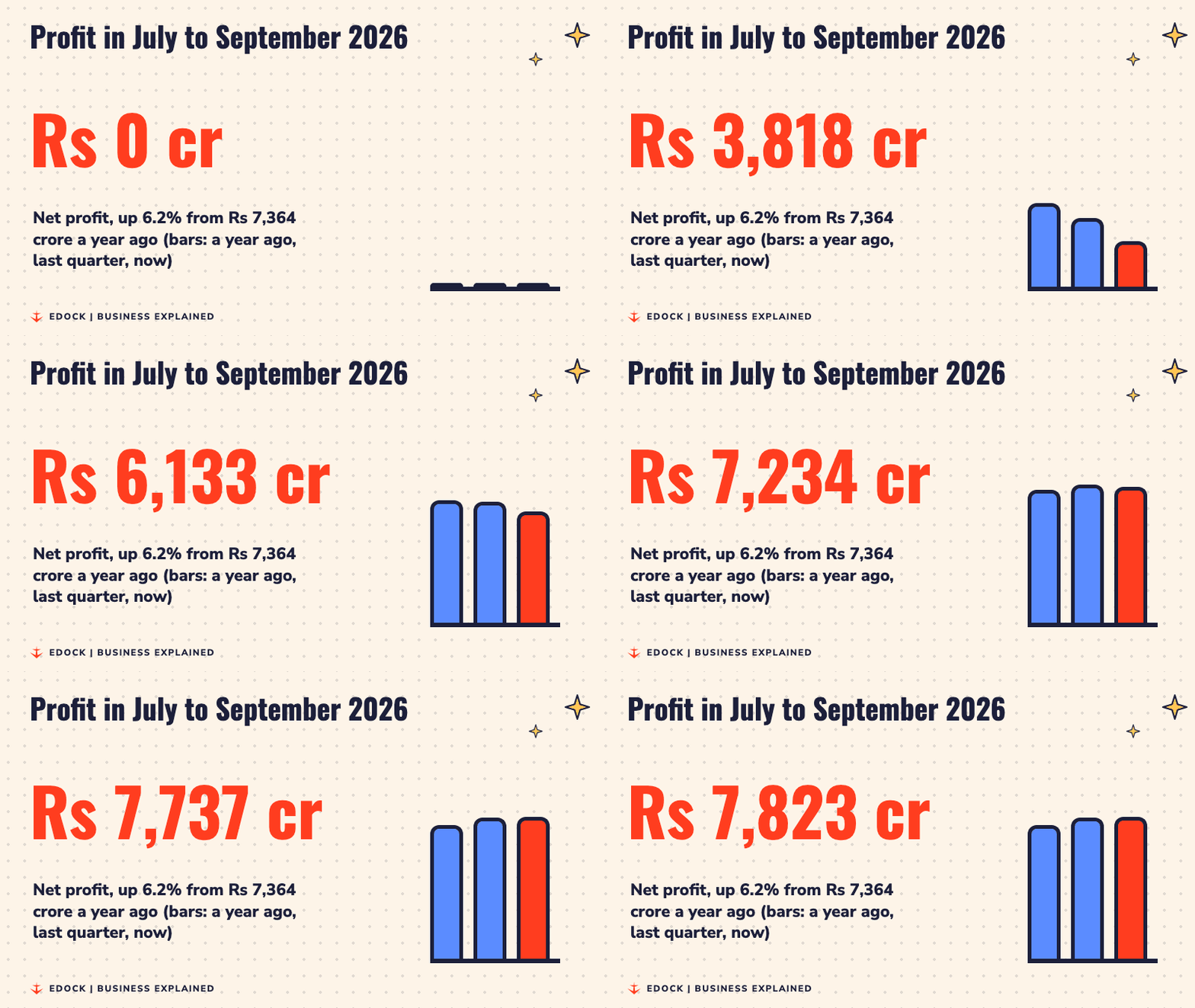
Compared with the three months just before, April to June, profit grew only 0.7%, from Rs 7,769 crore.
Market experts had made their own guesses. Analysts polled by Bloomberg expected profit of Rs 7,904 crore. So profit came in a bit below that guess, while revenue came in a little above theirs.
What is "guidance", and why did it go down?
Guidance is a company's own forecast for the year. It is like telling your parents in July, "I expect 90 to 95 in maths." Then in October, after a tough mid term, you say, "Maybe 80 to 90."
Infosys had said its revenue would grow 1.5% to 3% in the year ending March 2027 (called FY27). Now it says 1% to 2%.
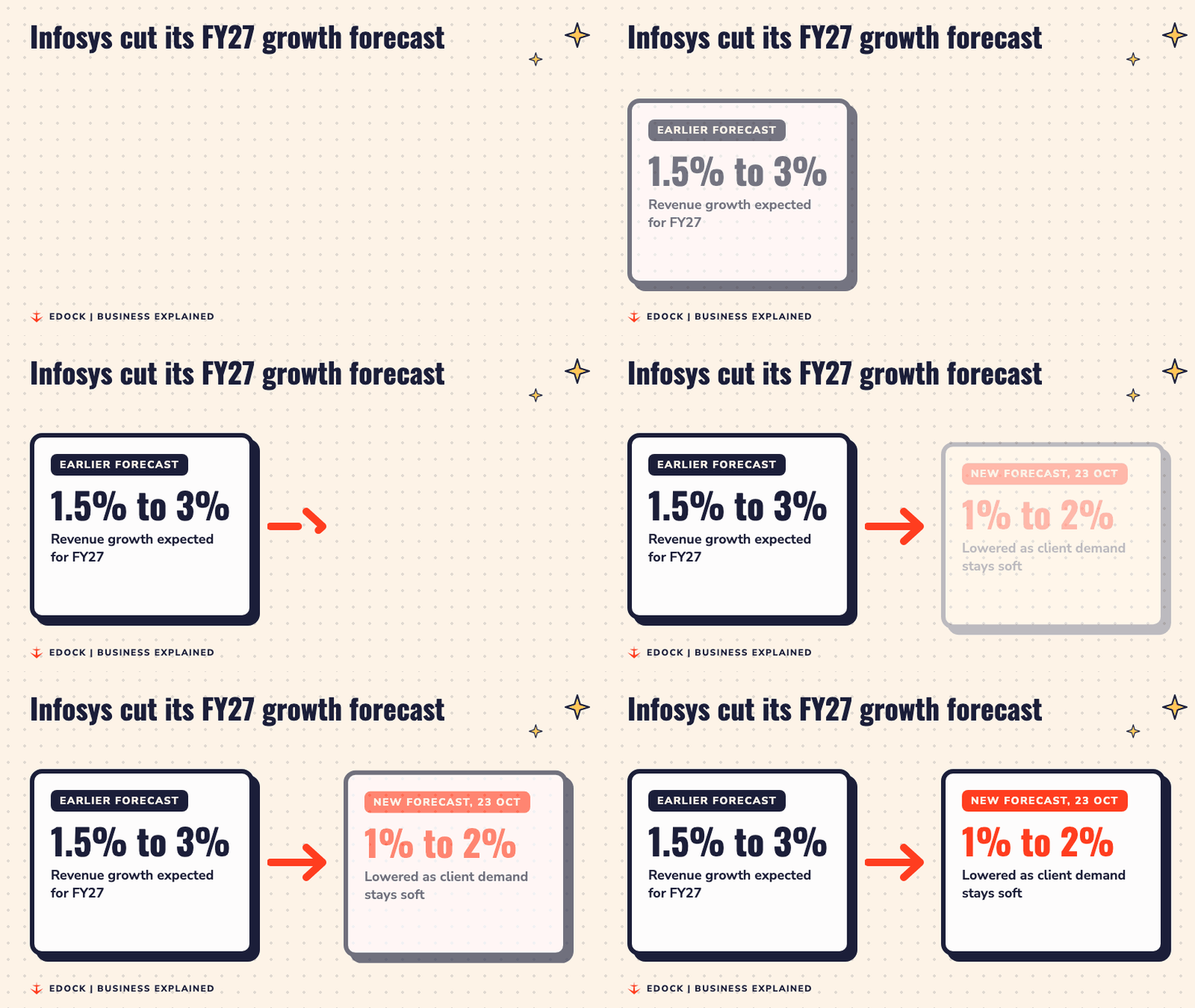
Why? Infosys pointed to a challenging demand environment. Business Standard noted global uncertainty and that clients are still careful with spending they can delay. In plain words, many big companies abroad are thinking twice before paying for new tech projects.
The company kept its target for operating margin at 20% to 22%. Operating margin is how many rupees out of every Rs 100 earned are left after running the business, before things like tax. This quarter it was 21%, so about Rs 21 from every Rs 100.
Wait, revenue grew 10.7% but growth is only 1% to 2%?
Good catch. Infosys earns mostly in dollars and euros, from clients abroad. Its forecast is in "constant currency". That means growth as if exchange rates had not moved at all.
In dollars, revenue was $5.15 billion, up just 1.3% from a year ago. In constant currency, growth was 1.5%. So most of the 10.7% jump in rupees came because each dollar earned turned into more rupees. Imagine your cousin in the US sends you the same $100 every month. If the dollar gets stronger, you get more rupees, even though your cousin did not send more.
The bright spots: big deals and AI
Not everything was slow. Infosys signed large deals worth $5.2 billion in total contract value, up from $3.6 billion in the April to June quarter. That includes one mega deal of over $2 billion. About 62% of it was new business.
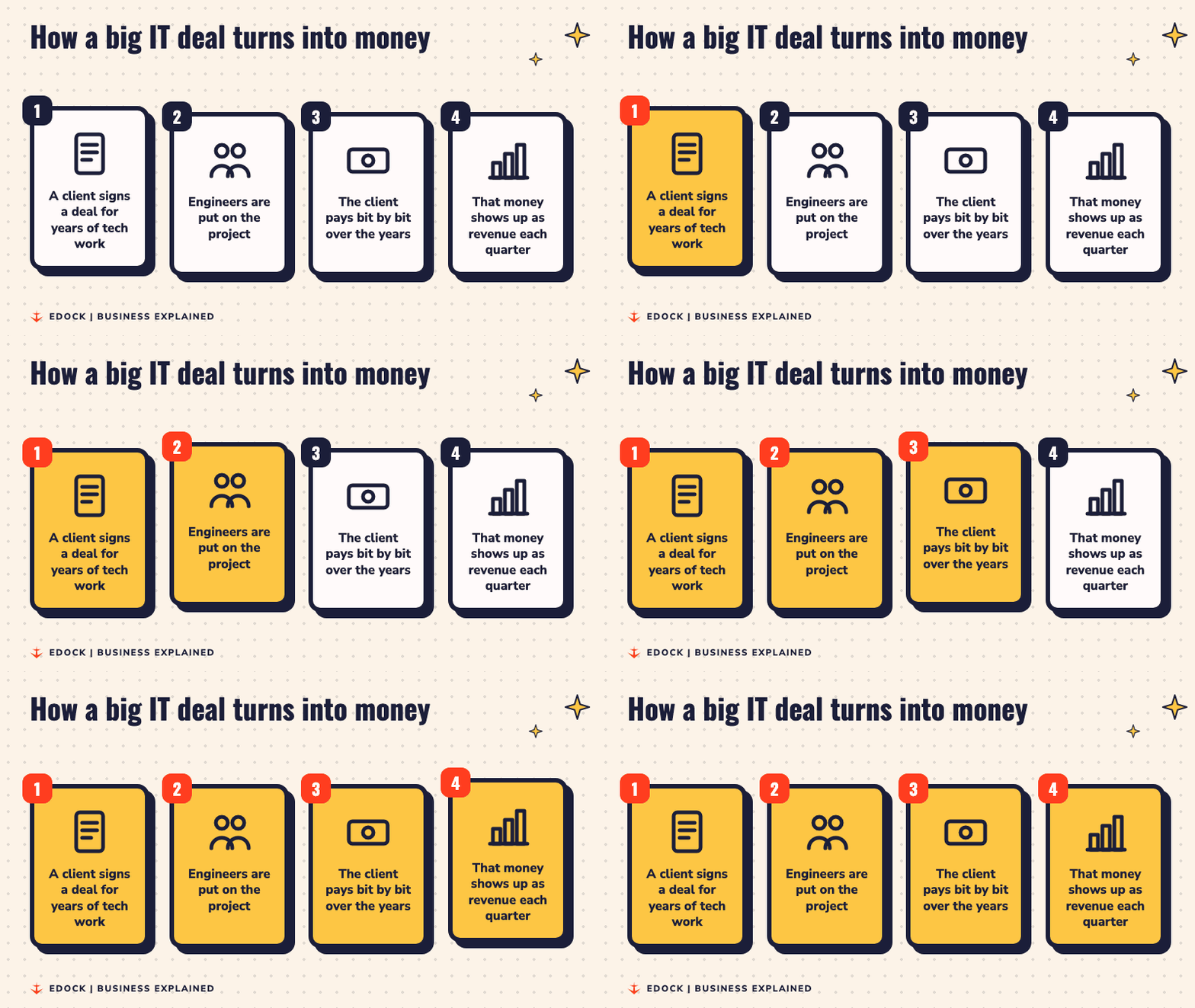
Total contract value is the full amount a client agrees to pay over the whole deal, often many years. It is like a gym membership for three years: the gym counts the full fee on day one, but the money comes in month by month.
Some named deals: a 10-year agreement with Crocs, the shoe brand, for its IT work, and AI work on supply chains with the food company Mondelez International.
AI made up 10.5% of revenue, and that AI revenue grew 29% compared with the quarter before. CEO Salil Parekh said the strong growth in AI revenue reflects "client confidence".
Which parts grew and which shrank
Infosys works for many kinds of companies. In constant currency, its life sciences business (medicine and research firms) grew 32.5%. Energy and utilities grew 7.3%.
But hi-tech clients fell 17.3% and retail clients fell 7.7%. North America, which brings in 54.6% of all revenue, shrank 1.5%. When your biggest customer buys less, it hurts, just like a chai stall losing its regular office crowd.
What it means for freshers and first jobbers
At the end of September, Infosys had 3,32,542 employees, a net addition of 4,480 people in three months.
Attrition fell to 12.7% from 13%. Attrition is the share of people who leave in a year. Out of every 100 employees, about 13 walk out for another place. Lower attrition usually means people are staying put.
The bigger lesson is about skills. The fastest growing slice of Infosys was AI work, while older kinds of work slowed. For a student, that is a hint about where demand is moving.
And the dividend
Infosys will pay an interim dividend of Rs 26 per share, up 13% from Rs 23 last year. A dividend is a share of profit paid to people who own the company's shares, like a stall owner giving partners a cut of a good month. The record date is 3 November and payment is due on 11 November.
This post explains the results only. It is not advice to buy or sell any share.
The short version
Infosys is still making big profits and winning big deals, and its AI work is growing fast. But clients abroad are spending carefully, so the company now expects slower growth this year than it said a few months ago. Profit up, forecast down: both are true at once.
Sources
- The Economic Times: Infosys Q2 results, profit rises 6% to Rs 7,823 crore, lowers revenue guidance
- Business Standard: Infosys Q2 results, net profit rises 6.2%, revenue up 10.7%
- Financial Express: Infosys Q2 results, 5 key takeaways
- Cover photo: Infosys campus at Mangalore, by Amrith Anandan, CC BY-SA 2.0
