IndiGo to shift 12 daily foreign flights from Mumbai to Navi Mumbai airport from February 2027
Version 1 of 1 saved 25 Oct 2026, 10:47 pm IST · Chain line 236
As it was first published
IndiGo to shift 12 daily foreign flights from Mumbai to Navi Mumbai airport from February 2027
Air India Group will move some West Asia flights too, so the old airport's Terminal 1 can be rebuilt. Here is what changes for travellers.
Picture this. It is early 2027 and you are flying IndiGo from Mumbai to Jeddah, Muscat or Dhaka. You head to the old Mumbai airport as usual. But your flight is not there. It now leaves from a brand new airport in Navi Mumbai.
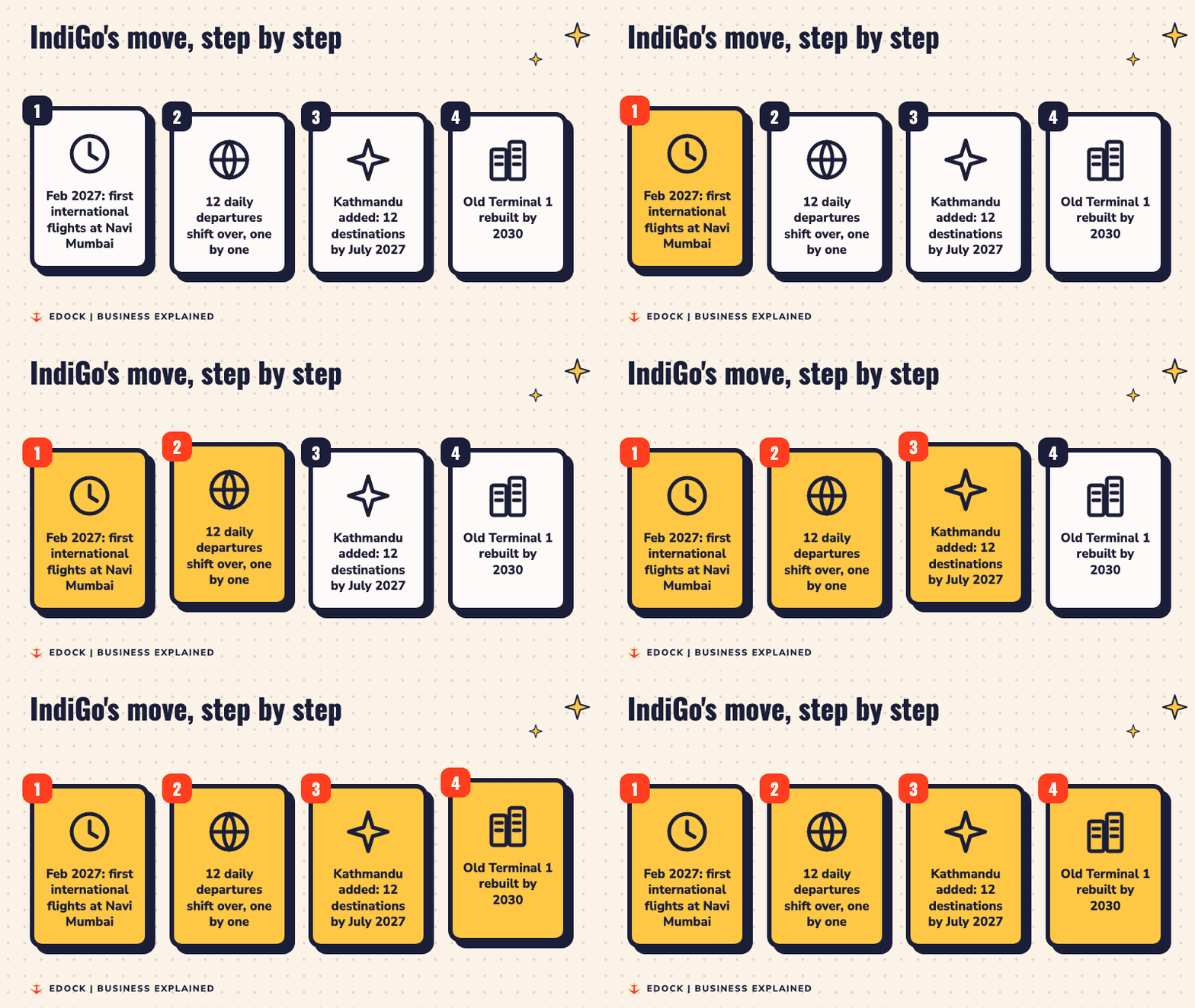
That is the plan IndiGo and Adani Airports announced on Sunday, 25 October 2026. IndiGo will move all 12 of its daily international departures from Mumbai's Chhatrapati Shivaji Maharaj International Airport (CSMIA) to Navi Mumbai International Airport (NMIA), starting in February 2027. On the same day, the Air India Group also said it will shift some of its flights to the new airport.
What exactly is moving?
According to the joint statement from IndiGo and Adani Airport Holdings, the 12 daily departures are all of IndiGo's present international flights from CSMIA to these places:
- Bahrain, Riyadh, Dammam, Jeddah and Madinah
- Kuwait, Ras Al Khaimah, Fujairah and Muscat
- Dhaka and Jakarta
IndiGo will also add a brand new daily flight to Kathmandu. With that, its international network at Navi Mumbai will reach 12 destinations between February and July 2027, as India Today reported.
The move will happen step by step, not on one single day. IndiGo will share the final dates only after the remaining planning is finished and the needed operating approvals come in.

Why does one city need two airports?
Think of a big city with only one railway station. Every train, every passenger and every taxi squeezes into the same place. Soon there is no room for one more train. So the city builds a second station, and some trains start leaving from there.
Mumbai's old airport is in exactly that spot. The airline and the airport operator call CSMIA a "capacity constrained airport" in their statement, which simply means it is full. Navi Mumbai is the second station.
Navi Mumbai airport is not new news. Its first phase was built at a cost of around Rs 19,650 crore and inaugurated in October 2025. Regular flights began on 25 December 2025, with IndiGo flying the very first arrival from Bengaluru. Its first international flight was an Air India Express service to Abu Dhabi on 15 July 2026.
Both airports are run by the Adani Group. Adani Airport Holdings owns 74% of the company that runs the old Mumbai airport, and that company in turn owns 74% of the Navi Mumbai airport company, India Today noted.
The real reason: an old terminal needs a rebuild
The old airport's Terminal 1 is ageing and is due to be rebuilt by 2030. To rebuild a terminal, you first need to empty part of it, just like a family moves to a relative's house while their flat is being repaired.
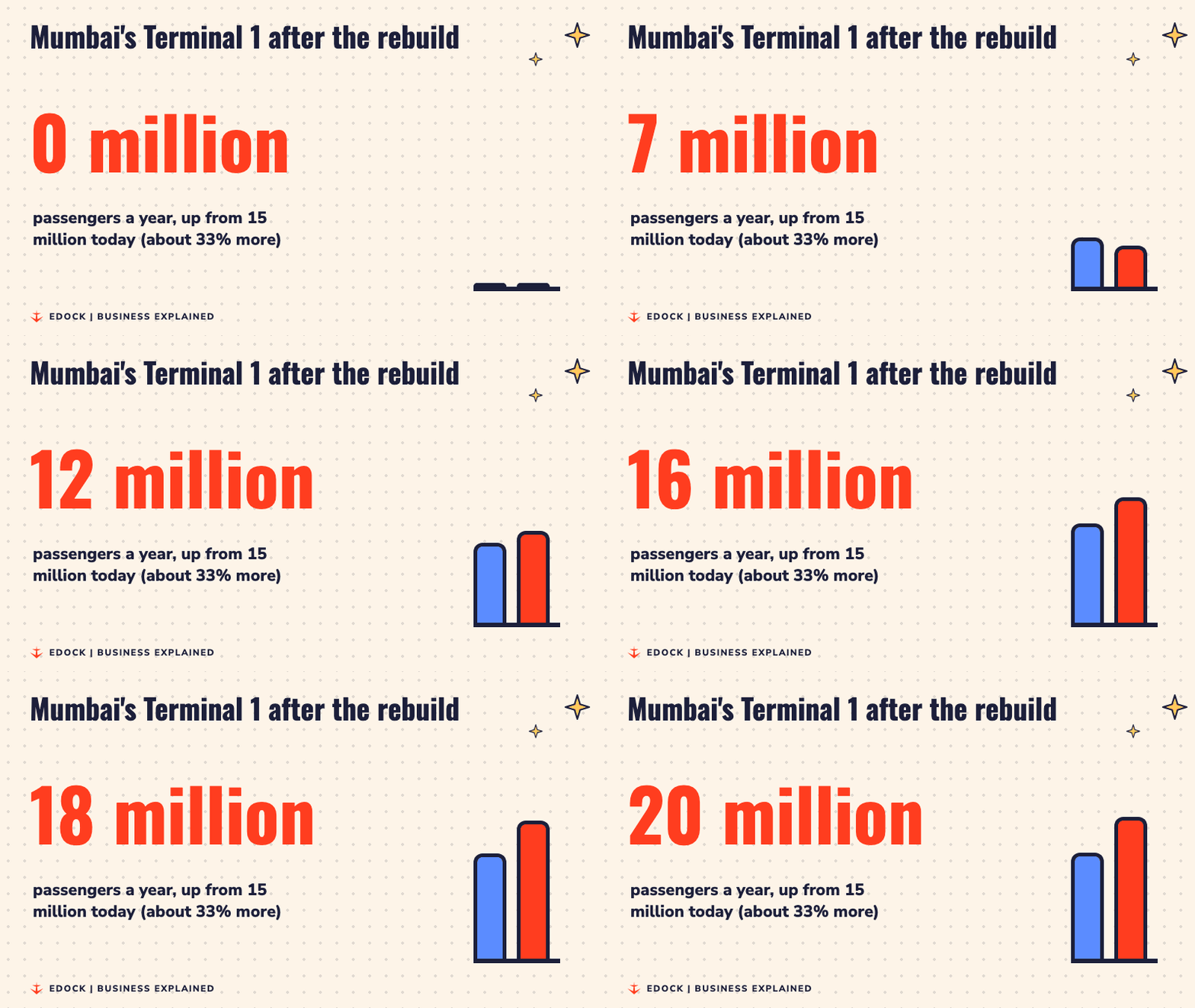
Adani Airports said in a media briefing note quoted by The Economic Times that the new Terminal 1 will handle about 20 million passengers a year, up from 15 million now. That is roughly 33% more room.
The first phase of the shift aims to move about 5 million passengers to Navi Mumbai. The transfers planned so far cover around 3.6 million passengers, which the note says is about 70% of that first phase target.
The note also stresses that only 9% of the old airport's 55 million passengers a year will move for now. Around 91% will keep using the old airport.
What is Air India doing?
The Air India Group, which includes Air India Express, made its own announcement with Adani Airports on the same day, Hindustan Times reported:
- Air India Express will start four domestic flights a day from Navi Mumbai in December.
- From January 2027, it plans to add flights to Kuwait and move its existing Oman flights to Navi Mumbai.
- The group will slowly move its flights to six West Asian cities: Jeddah, Riyadh, Dammam, Doha, Muscat and Sharjah.
- The move should be complete by the airline industry's Northern Summer 2027 season.
Air India Group said that working from both airports lets it keep serving Mumbai while holding on to its existing slots at the old airport. A "slot" is a booked time to land or take off, a bit like a fixed booking at a busy turf for your weekly cricket game. Adani Airports has said airlines that move keep their old Mumbai slots, and these will be given back once the rebuild is done, The Economic Times reported.
A bigger plan was pushed back first
This calmer, step by step plan came after a fight. The old airport's operator, Mumbai International Airport Limited (MIAL), had first proposed moving 265 of its 770 weekly international departures to Navi Mumbai from 25 October, which would have hit around 46 airlines, according to India Today.
Airlines raised worries about passenger convenience, schedules, capacity and consultation. The Civil Aviation Ministry asked MIAL to hold off and work out an agreed plan. On 13 October, MIAL said international flights would stay where they are through the winter schedule, which ends on 27 March 2027.
The new IndiGo statement says the shift aims to be "transparent, equitable and proportionate", taking into account how big each airline is at the old airport. In simple words: every airline gives up a fair share of space, not just a few.
What is a hub, and why does IndiGo want one here?
A hub is an airport where an airline brings many flights together so passengers can switch planes easily. Think of a big bus depot where you get off one bus and walk a few steps to the next one, instead of crossing the city.
IndiGo said it will also move the domestic flights needed to feed these international routes, so a traveller from, say, another Indian city can land in Navi Mumbai and catch a flight abroad in the same building. The statement says the aim is to build NMIA "as a long-term international hub".
There is a second win for IndiGo. Moving these flights out frees space at the old airport. IndiGo says it will use that space in 2027 to start new flights to Asia, Africa and Europe, using its growing fleet of Airbus A320, A321 and the long-range A321XLR planes.
What should travellers keep in mind?
- Check your ticket's airport code. Navi Mumbai's airport code is NMI.
- Nothing changes today. IndiGo's shift starts only from February 2027, and final dates are still to come.
- Getting there is improving. Three new bridges built by CIDCO across Panvel Creek and the Gadhi River are set to improve road links to the new airport, The Economic Times reported.
The bigger picture
Navi Mumbai's Terminal 1 is designed for 20 million passengers a year, and future expansion is planned to take the airport to 90 million. Adani Airports says two airports together could turn Mumbai into a "dual-airport gateway" that pulls in more transit passengers, people who only change planes in India on the way to somewhere else.
For now, the story is simpler. Mumbai's old airport is full and needs a rebuild. The new one has room. And IndiGo and the Air India Group have now agreed, on record, to start filling it.
Sources
- Adani Group: IndiGo and Adani Airports announce phased expansion of international flight operations
- India Today: IndiGo to move 12 international flights to Navi Mumbai
- Hindustan Times: Adani Airports, Air India Group announce plan
- The Economic Times: Mumbai airport T1 capacity to rise 33% to 20 million passengers
- Cover photo: Navi Mumbai Airport (96252), by Suraj Digrase, CC0
