Indians shopped ₹24,000 crore online in two days. Here is the breakdown
Version 1 of 1 saved 11 Oct 2026, 7:06 pm IST · Chain line 24
As it was first published
Indians shopped ₹24,000 crore online in two days. Here is the breakdown
Phones led, small towns showed up big, and Gen Z made up a third of opening-day shoppers. The festive sale numbers, explained simply.
Picture this. In just two days, Indians placed somewhere between 8 and 9 crore orders online. Every one of them had to be packed and sent out.
On October 11, 2026, the research firm Redseer Strategy Consultants shared its estimate: shoppers bought goods worth about ₹24,000 crore in the first two days of this year's festive sales. That covers Amazon, Flipkart, Meesho, Ajio and many other shopping sites. Let us unpack it.
First, what is a festive sale?
Every year before Diwali, shopping apps run giant sales with big discounts. Families wait all year for them to buy a new phone, a TV or new clothes. It is like the season when your local market fills up with lights and every shop puts up a "sale" board, but online.
This year, the Amazon Great Indian Festival began on October 8. Flipkart ran its own big sale, the Big Billion Days, around the same time.
What does ₹24,000 crore really mean?
The number is called GMV, short for Gross Merchandise Value. It is the total price tag of everything sold on the shopping sites. It is not the money the apps keep. Think of a mela: GMV is all the money that changed hands at every stall, not what the mela organiser earned.
Redseer put it at more than $2.5 billion, which is close to ₹24,200 crore. Keep in mind these are the firm's estimates, not numbers shared by Amazon or Flipkart.
About 6 crore to 6.5 crore shoppers bought something in those two days. If you split ₹24,000 crore across them, that is roughly ₹3,700 to ₹4,000 per shopper, on average.
How big is that compared to a normal day?
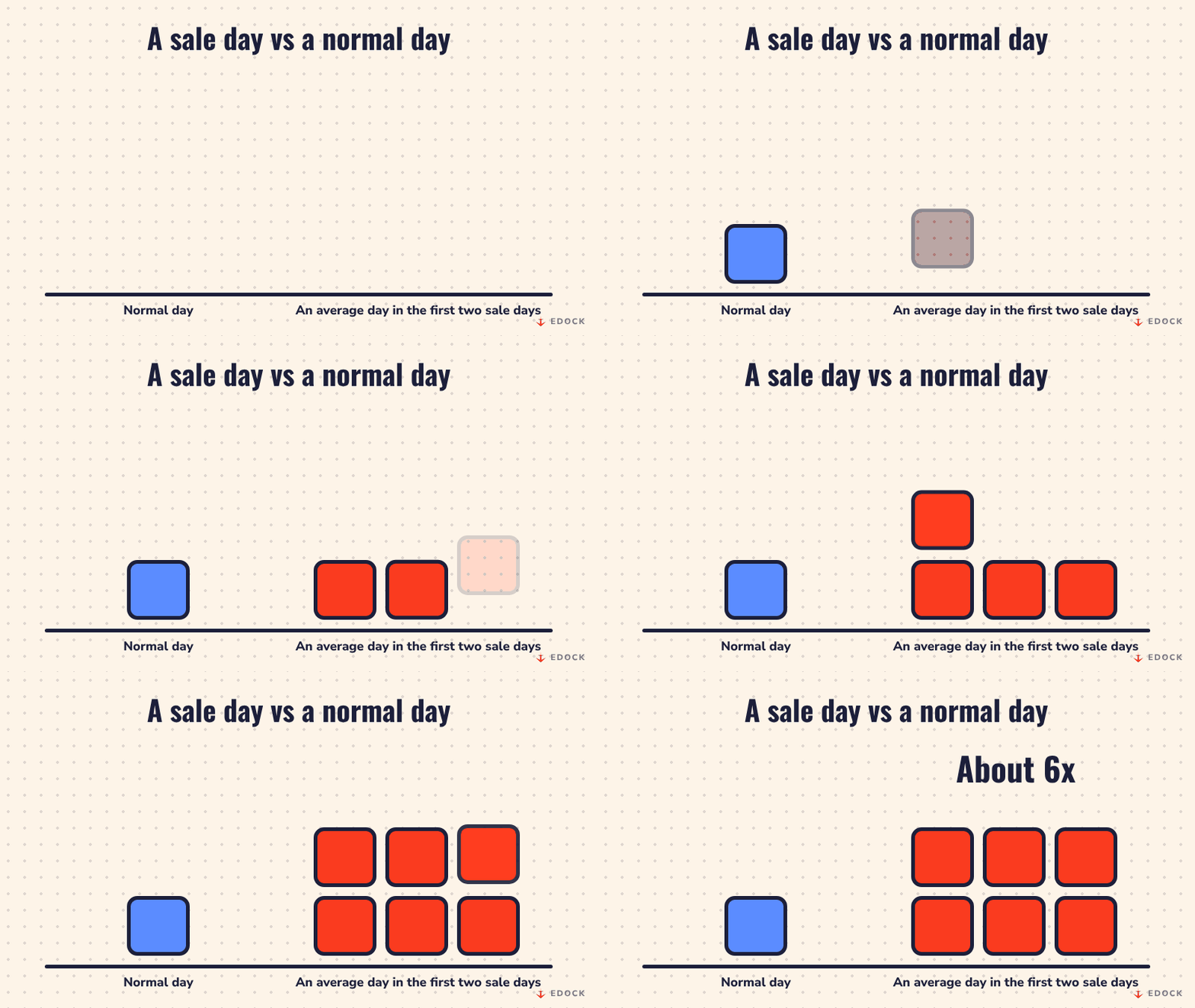
Very big. Redseer said sales were about 6 times the usual daily level. Imagine your school canteen. On a normal day it sells 100 samosas. On sale day, it sells 600.
Quick delivery got a boost too. Amazon and Flipkart both have fast delivery services that bring things in minutes. Those services saw sales 4 to 5 times higher than on a normal day.
What did people buy the most?
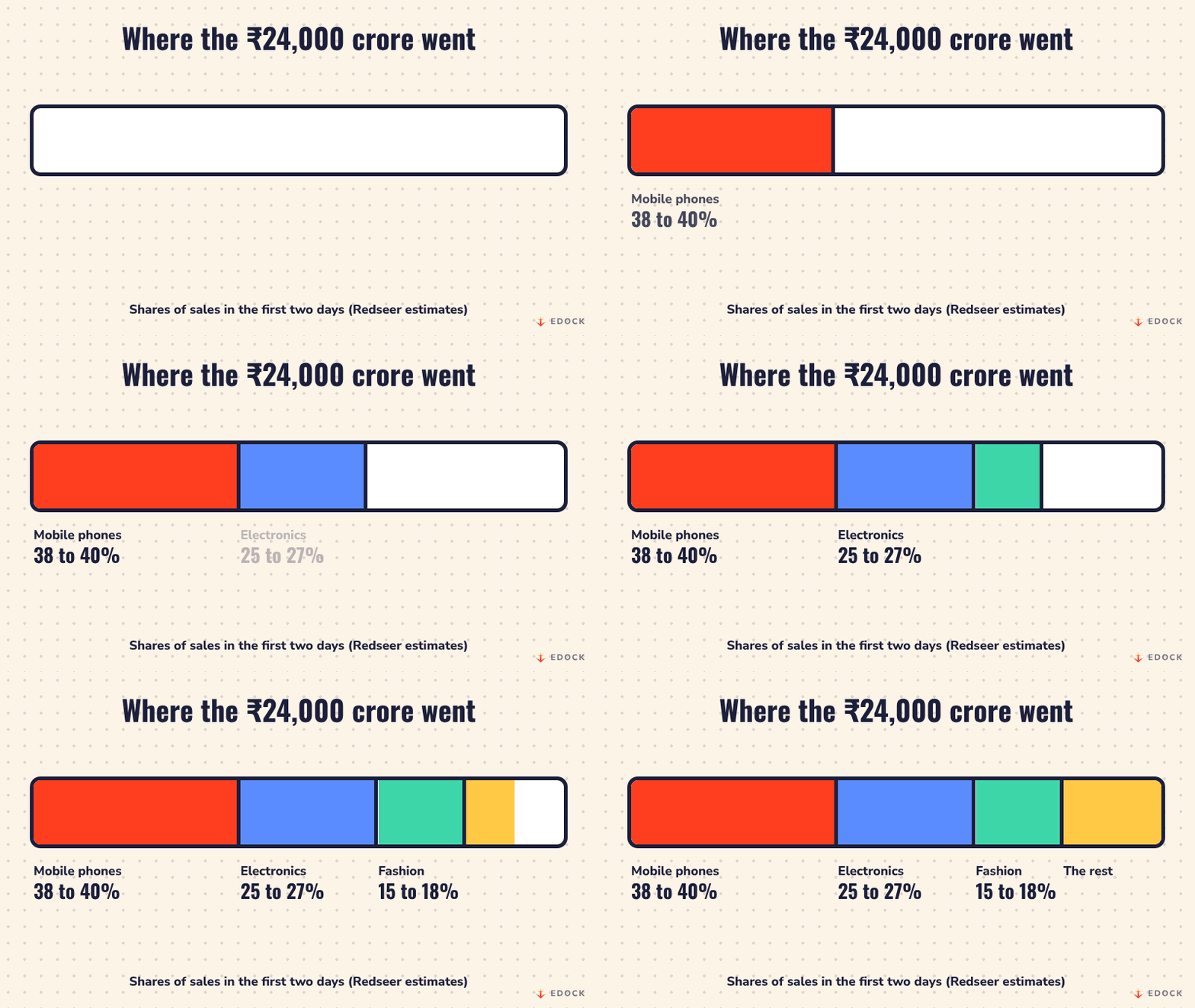
Phones, by far. Mobile phones made up about 38% to 40% of all sales. That is around ₹9,100 crore to ₹9,600 crore spent on phones alone.
- Consumer electronics (like laptops, TVs and gadgets): about 25% to 27%, or ₹6,000 crore to ₹6,500 crore.
- Fashion (clothes, shoes and more): about 15% to 18%, or ₹3,630 crore to ₹4,350 crore.
Big screens were popular. TVs, fridges and ACs made up more than two-thirds of large appliance sales. Among the best-selling TVs, more than 75% were 55-inch models from TCL, LG, Samsung and Xiaomi.
Fashion sales grew 22% to 25% compared to the same two days last year. Many shoppers from smaller towns bought festive clothes at prices that suit their pocket.
Why did some people buy early?
Here is an interesting twist. Redseer said electronics sales had already grown by more than 20% in the first half of 2026. One reason: many people expected prices to go up later in the year, so they bought sooner.
It is like buying your cricket bat before the season starts, because you think the shop will raise the price once everyone wants one.
Who was shopping?
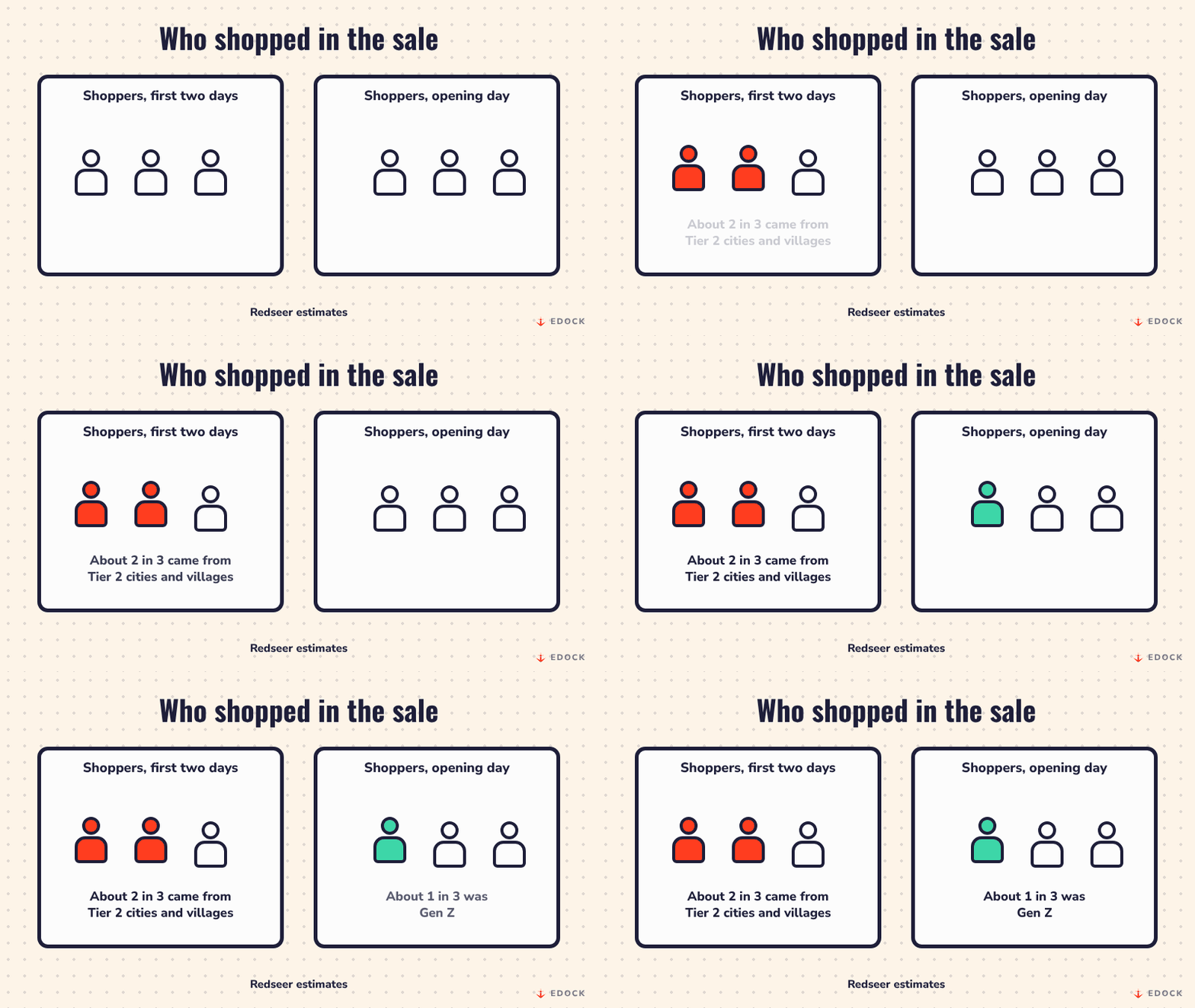
This is the part that surprises many people. It was not mostly big cities. About two-thirds of shoppers came from Tier 2 cities and rural areas. Tier 2 cities are medium-sized cities, like Indore, Coimbatore or Lucknow, that are smaller than Delhi or Mumbai.
Young people showed up in a big way too. Gen Z, which means people born roughly between 1997 and 2012, made up about one-third of the shoppers on the opening day.
And many were brand new to online shopping. The number of first-time shoppers in those two days was double that of last year.
How many people shop online in India?
In a normal month, about 15 crore to 16 crore different people buy something online. In just the first two days of the sale, more than one-third of that whole crowd had already shopped.
Redseer expects about 10 crore shoppers (100 million) to buy something during the full 11-day first round of the sale.
Behind the scenes
All these orders need people to pack and deliver them. Before the season, Amazon India said it had created more than 1,60,000 seasonal work opportunities across 400 cities. Amazon also added AI features that help shoppers compare products and check how a price has changed over time.
The big picture
The festive sale is no longer just a big-city thing. Redseer's numbers show that small towns, first-time shoppers and young people are a big part of it. And while phones still lead, shoppers are also spending on clothes, electronics and home appliances.
The next time a parcel arrives at your door during Diwali season, remember: it is one of crores of boxes moving across India at the same time.
Sources
- The Economic Times: Ecommerce firms sell goods worth Rs 24,000 crore in first two days of festive sales, Redseer
- Business Standard: Ecomm sell goods worth ₹24,000 crore in first two days of festive sales, Redseer
- Storyboard18: Festive e-commerce sales hit Rs 24,000 crore in 2 days, Gen Z accounts for a third of shoppers
- Outlook Business: Amazon Great Indian Festival 2026 to begin October 8
- Cover photo: Sticking a label onto a parcel for shipping, by Meanwell Packaging, CC BY 2.0
