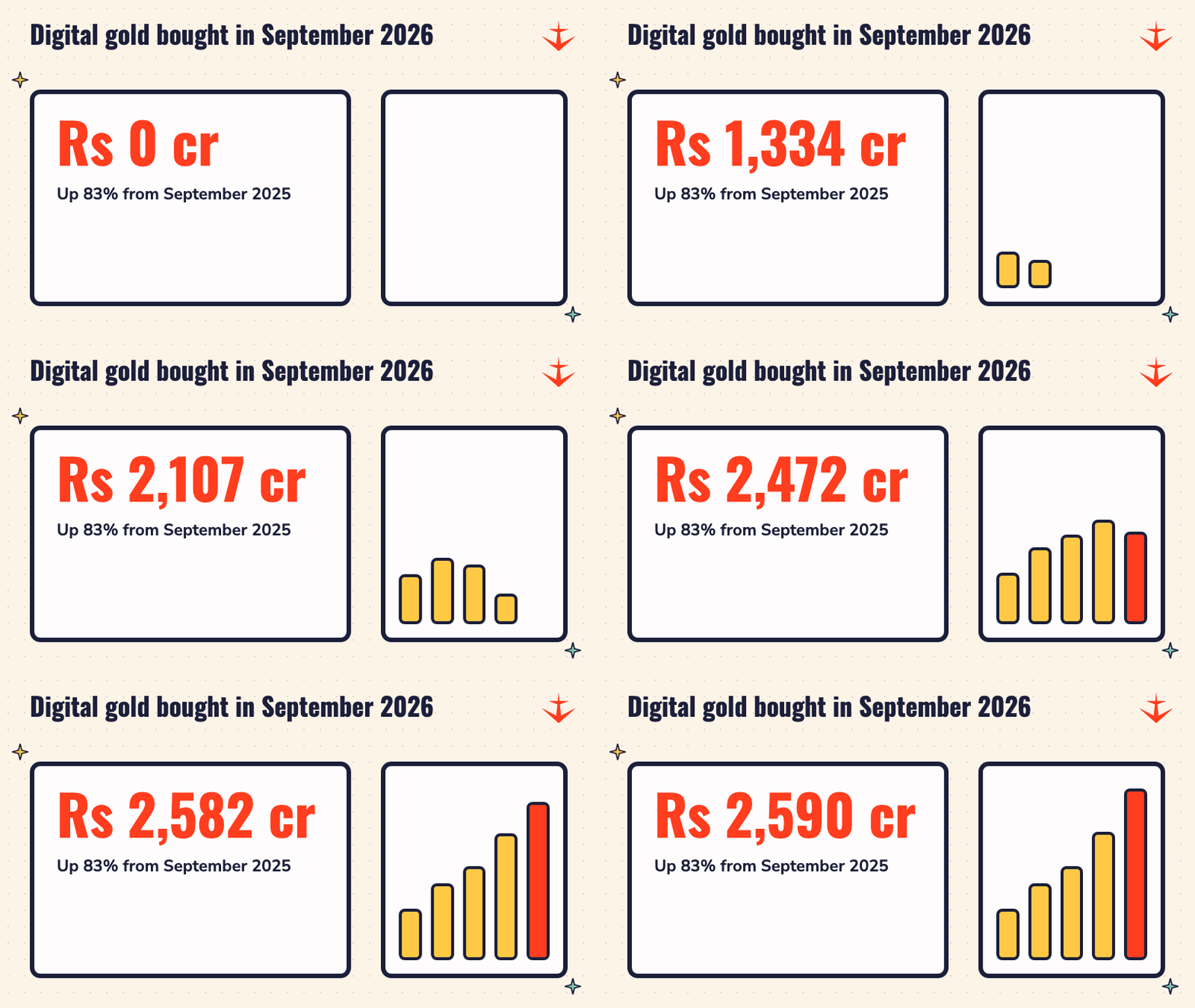
Indians bought Rs 2,590 crore of digital gold in September, up 83%
Tiny app purchases are pulling first time buyers into gold, but SEBI says digital gold sits outside its rules and protections.

Picture buying gold for the price of a cutting chai. No jeweller, no locker, no heavy box. Just a few taps on a phone. That is digital gold, and Indians are buying a lot more of it. In September 2026, Indians bought digital gold worth Rs 2,590 crore, up 83% from a year earlier, The Economic Times reported on 27 October 2026, using data from the World Gold Council.
So September 2026 is being compared with September 2025. In one year, the money going into digital gold in that month nearly doubled. And it happened even though gold prices were high, the report said.
First, what is digital gold?
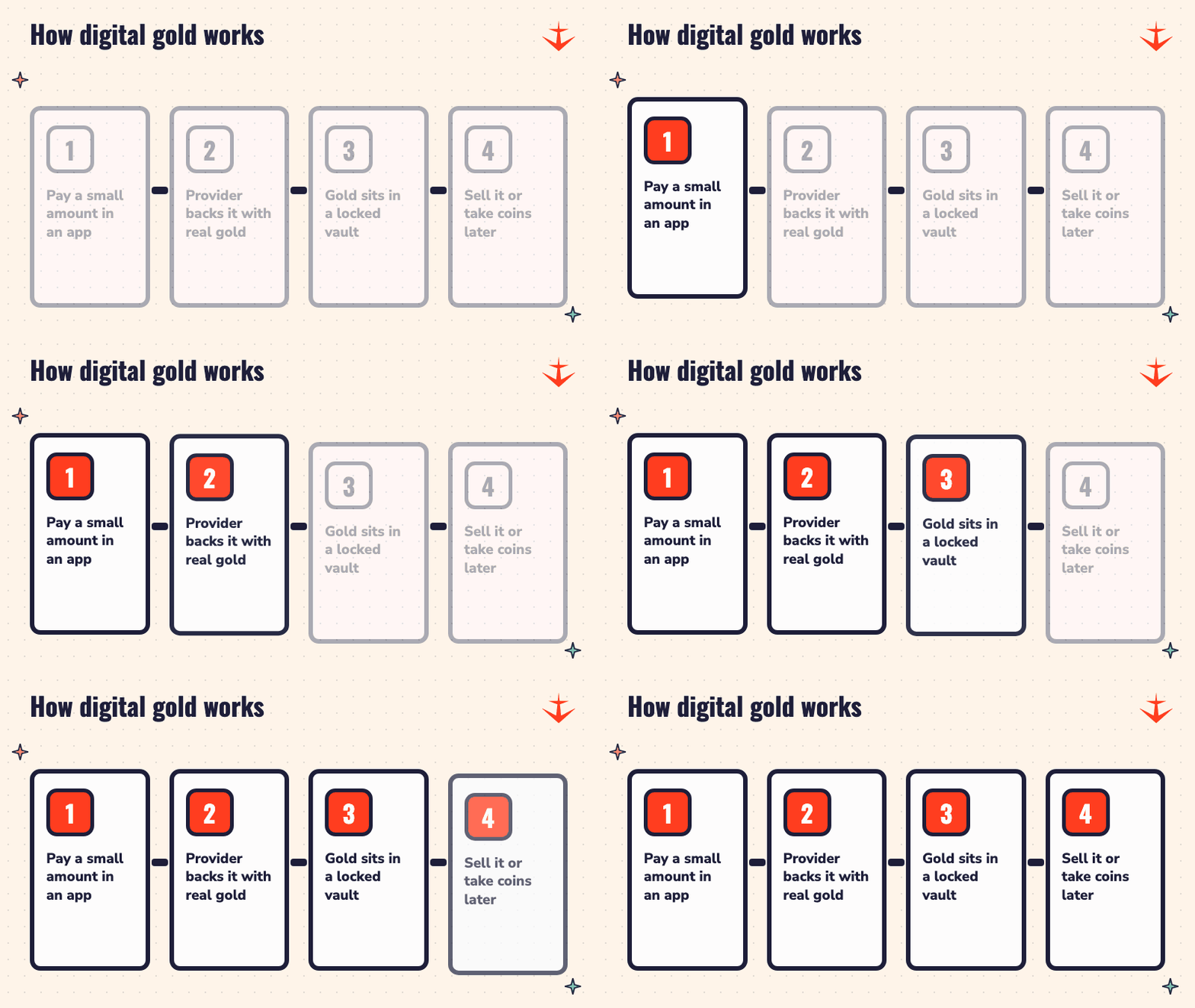
Think of it like a pocket money diary for gold. You pay a small amount in an app. The app writes down how much gold is now yours. You never touch it, but it is recorded against your account.
According to The Economic Times, depending on the provider, this gold is backed by real metal kept in secure vaults. Later, you can sell it online, or ask for it as gold coins or bars.
A vault is a very strong, guarded room, like a giant bank locker. The provider is the company that sells you the gold and looks after it. So the whole idea rests on one promise: that the real gold is sitting in that vault for you.
How big is this, in tonnes?
Rupees are one way to count. Weight is another. In September 2026, digital gold buying touched 1.7 tonnes, 18% above the long-term monthly average. One tonne is 1,000 kilos, so that is about 1,700 kilos of gold in a single month.
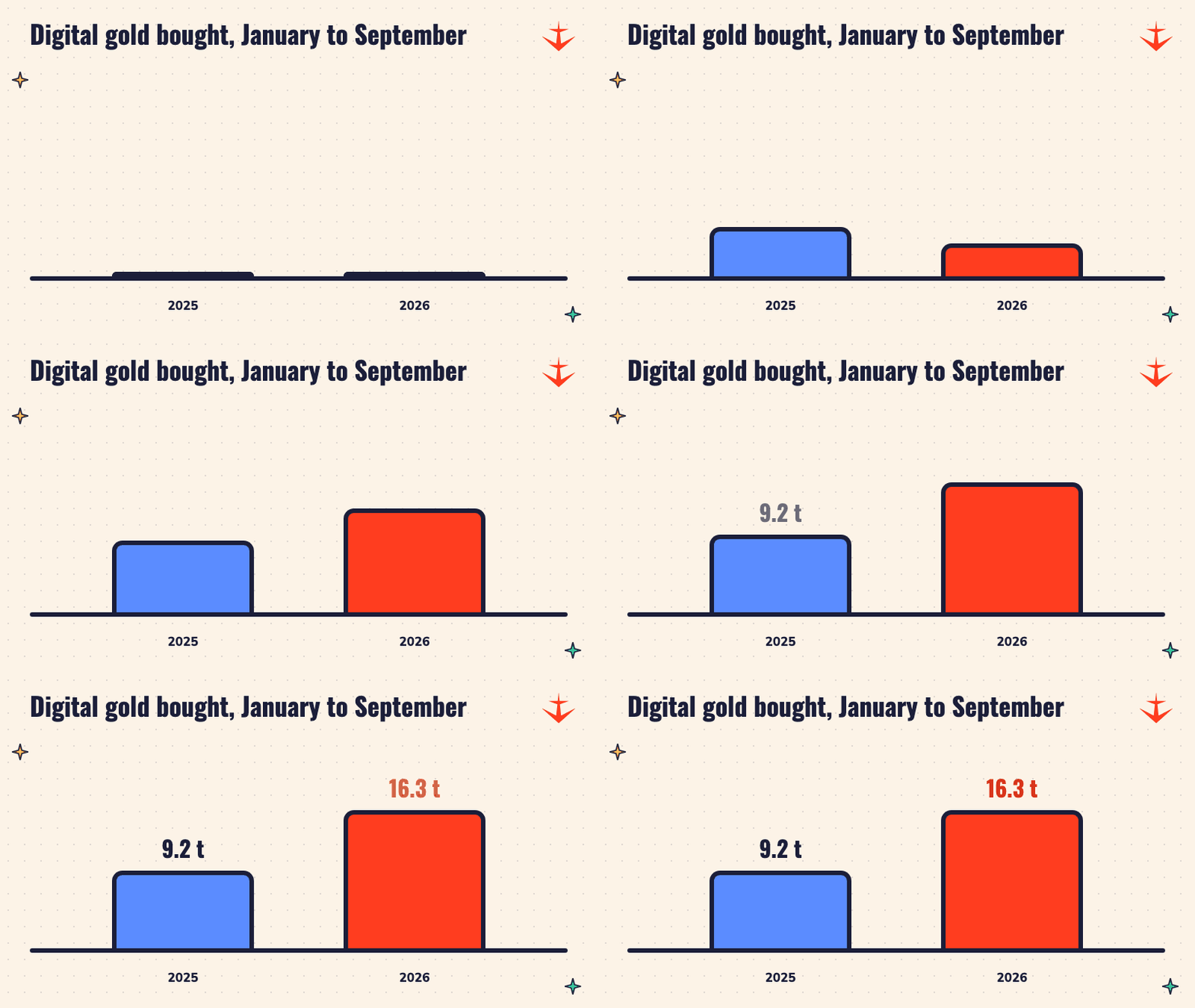
Now look at the whole year so far. From January to September 2026, Indians bought 16.3 tonnes of digital gold. In the same months of 2025, it was 9.2 tonnes. That is a rise of 76%, as per the same report.
Who is buying?
Many buyers are new to gold. The World Gold Council found that 52% of digital gold investors held no gold before their first digital purchase. Of that group, 92% later bought other forms of gold too. Younger people know more about it: awareness is 50% among people aged 25 to 34, and 23% among those aged 55 and above.
Small amounts make it easy to start. One seller, MMTC-PAMP, is running festive campaigns with systematic investment plans starting at Rs 10. A systematic investment plan, or SIP, means paying a fixed small amount again and again, like putting Rs 10 in a gullak every week.
India is a big part of this story. More than 120 million customers in India have engaged in digital gold transactions, according to the World Gold Council report covered by Outlook Money. Payment apps and banking apps make it easy to find.
So why did SEBI raise a red flag?
SEBI is the Securities and Exchange Board of India. It is like the umpire of the share market. It makes the rules and steps in when someone breaks them.
On 8 November 2025, SEBI put out a caution to the public about digital gold. It said these products are neither notified as securities nor regulated as commodity derivatives. In SEBI's own words, they "operate entirely outside the purview of SEBI".
What does that mean in plain words? There is no umpire on this pitch. SEBI said such products may expose buyers to counterparty risk and operational risk. Counterparty risk is the chance that the company on the other side cannot keep its promise, for example, if it shuts down. Operational risk is the chance that something goes wrong in how it runs, like bad records or a system failure.
SEBI also said that none of the investor protection mechanisms of the securities market will be available for digital gold. So if something goes wrong, the usual SEBI route to complain or get help does not apply.
Which gold products does SEBI watch over?
In the same notice, SEBI listed the gold products it does regulate: gold exchange traded funds (ETFs) run by mutual funds, Electronic Gold Receipts (EGRs) traded on stock exchanges, and commodity derivative contracts on exchanges. These are bought through SEBI registered brokers and follow SEBI's rules.
For gold ETFs, Outlook Money notes that a person needs a demat and trading account. A demat account is like a digital locker for shares and fund units. Digital gold in an app does not need one, which is part of why it is so easy to start.
What else is worth knowing?
Costs matter too. Outlook Money explains that buyers need to account for the gap between the buying and selling price, storage charges and delivery costs if they want physical gold. It adds that a 3% GST generally applies when digital gold is bought.
The industry knows trust is the big question. The Economic Times reported that the industry is working towards a self-regulatory framework. Self-regulation means the companies agree on their own rules, for custody (how the gold is kept), transparency, disclosures and consumer protection. It is like shopkeepers in a market agreeing on fair rules among themselves, without an outside umpire.
The World Gold Council says the same. Its report names trust, access, utility and cost as the four key barriers, with trust as the biggest swing factor. Investors in its survey pointed to stronger consumer protections, proof of backing, easy redemption and clearer regulation as what would raise their confidence.
Watch: the SEBI warning, explained
This Business Today video covers SEBI's caution on digital gold.
This WION video explains what digital gold is and why SEBI is concerned.
The big picture
Digital gold has made gold feel as easy as paying for chai with a phone. Rs 2,590 crore in one month shows how many people like that. But easy to buy is not the same as protected. Today, digital gold sits outside SEBI's rules, and its safety depends on the company holding the gold. Whether the industry's own rules, or new official rules, close that gap is the next part of this story.
Sources
- Digital gold purchases surge 83% to Rs 2,590 crore in September, The Economic Times, 27 October 2026
- Caution to public regarding dealing in Digital Gold, SEBI, 8 November 2025
- Unlocking Digital Gold's US$700bn Opportunity, World Gold Council, 19 October 2026
- Digital gold market growth report, Outlook Money
- Cover photo: 400 oz gold bars, by Andrzej Barabasz (Chepry), CC BY-SA 4.0

You may republish this story under CC BY 4.0: credit Manpreet Kaur and link to this page.