Indian retail sales grew 8% in September as quick-service restaurants led the way
Version 1 of 1 saved 23 Oct 2026, 11:54 am IST · Chain line 169
As it was first published
Indian retail sales grew 8% in September as quick-service restaurants led the way
A new RAI survey shows every shop category and every region grew over last September, though growth eased from August's 10%.
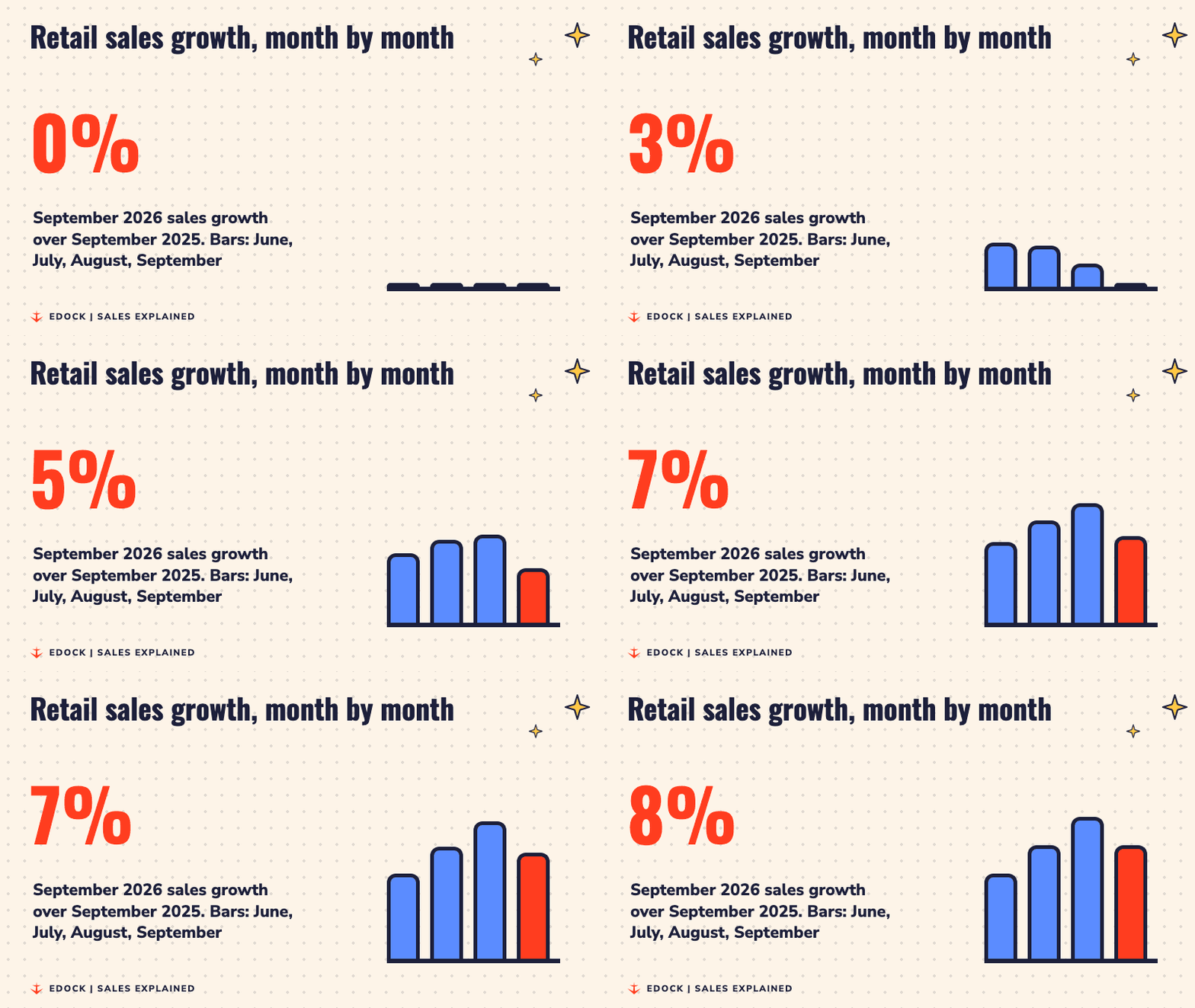
Picture your favourite burger counter in September 2026. A few more people in the queue than last year, a few more trays going out. Across India, that small change added up. Shops of all kinds sold 8% more in September than they did a year earlier, says the Retailers Association of India. The numbers came out on 22 October 2026.
Quick-service restaurants, the fast food places where you order at a counter and eat within minutes, grew the most. Footwear grew the least. And the west of India grew faster than the east. Here is what the numbers mean, in plain words.
Who counts these numbers?
The Retailers Association of India, or RAI, is a not-for-profit trade association started in 2004 and based in Mumbai. A trade association is like a club for people in the same line of work. Here the members are shops: big chains, small independent stores, online sellers and companies that provide services to retailers.
Every month, RAI asks its members how their sales went and turns the answers into a survey. Its August report was the Business Survey Round 74. So this is a regular check-up, a bit like a monthly class test for India's shops.
One thing to keep in mind: the 8% figure is an estimate. It is an average of what the members report, not a count of every single shop in the country.
What does "8% year on year" mean?
Year on year means comparing a month with the same month one year before. So this September is compared with last September, not with August.
Think of a samosa stall. Say it earned Rs 1,000 in September last year. If its sales grew 8%, it earned Rs 1,080 this September. That extra Rs 80 is the growth.
Why not just compare with last month? Because some months are always busier. Wedding months, exam months and festival months all change how people spend. Comparing the same month across two years is fairer, like comparing your marks in this year's half-yearly exam with last year's half-yearly, not with a surprise quiz.
Which shops grew the fastest?
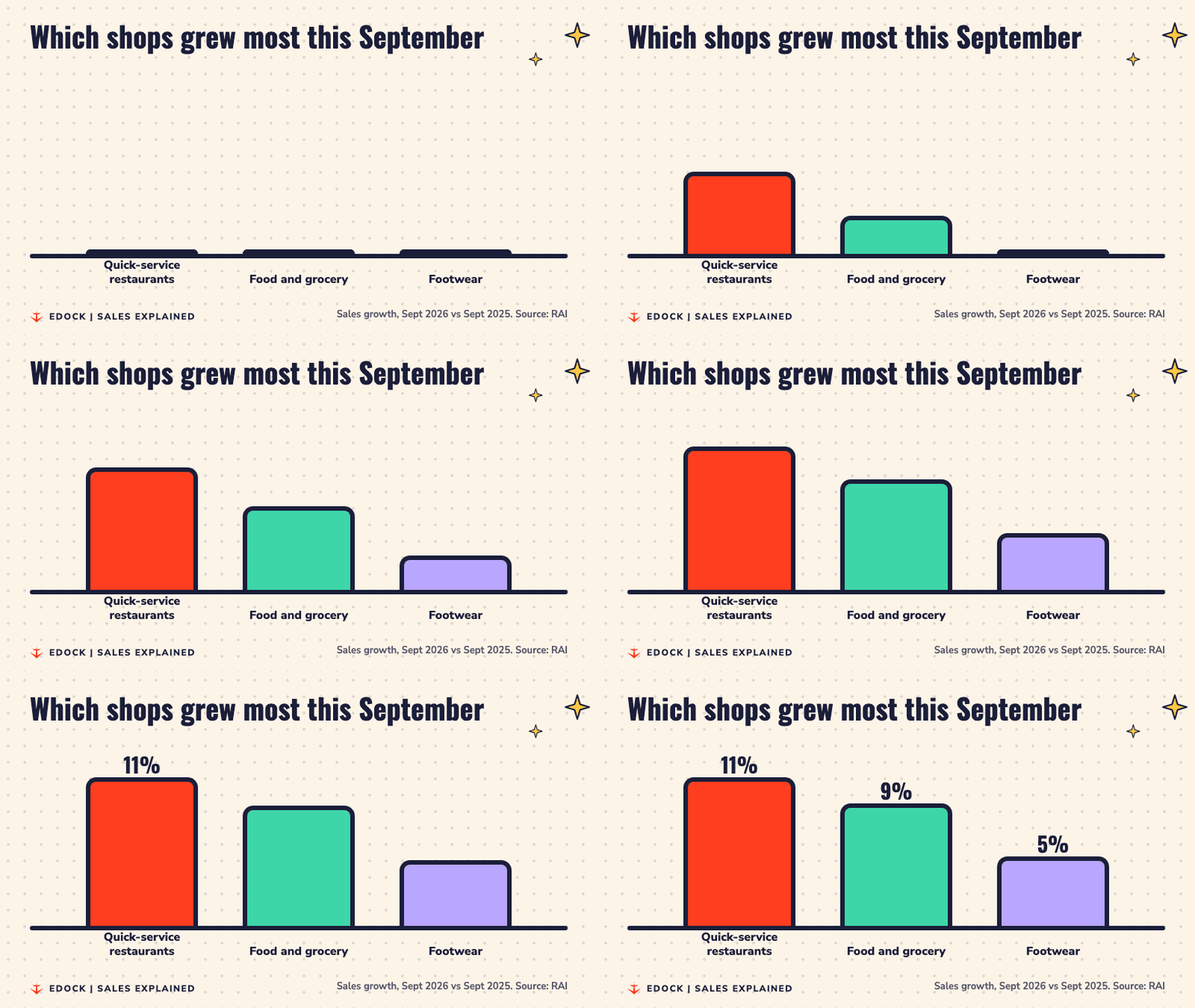
RAI split the results by category, which simply means the type of shop. Here is how each did against last September:
- Quick-service restaurants: up 11%, the highest
- Food and grocery: up 9%
- Apparel and clothing: up 9%
- Beauty, wellness and personal care: up 7%
- Consumer durables and electronics: up 7%
- Sports goods: up 6%
- Jewellery: up 6%
- Footwear: up 5%, the lowest
Consumer durables are things you buy once and use for years, like a fridge, a fan or a washing machine. Groceries are the opposite: you buy them again every week.
The good news in the list: every category grew. None of them sold less than last year.
Which part of India spent more?
RAI also split India into four regions:
- West India: up 10%
- South India: up 9%
- North India: up 7%
- East India: up 5%
All four regions grew compared with last year. The gap between the top and the bottom is 5 percentage points. A percentage point is just the simple difference between two percentages: 10 minus 5 is 5.
Wait, was August better?
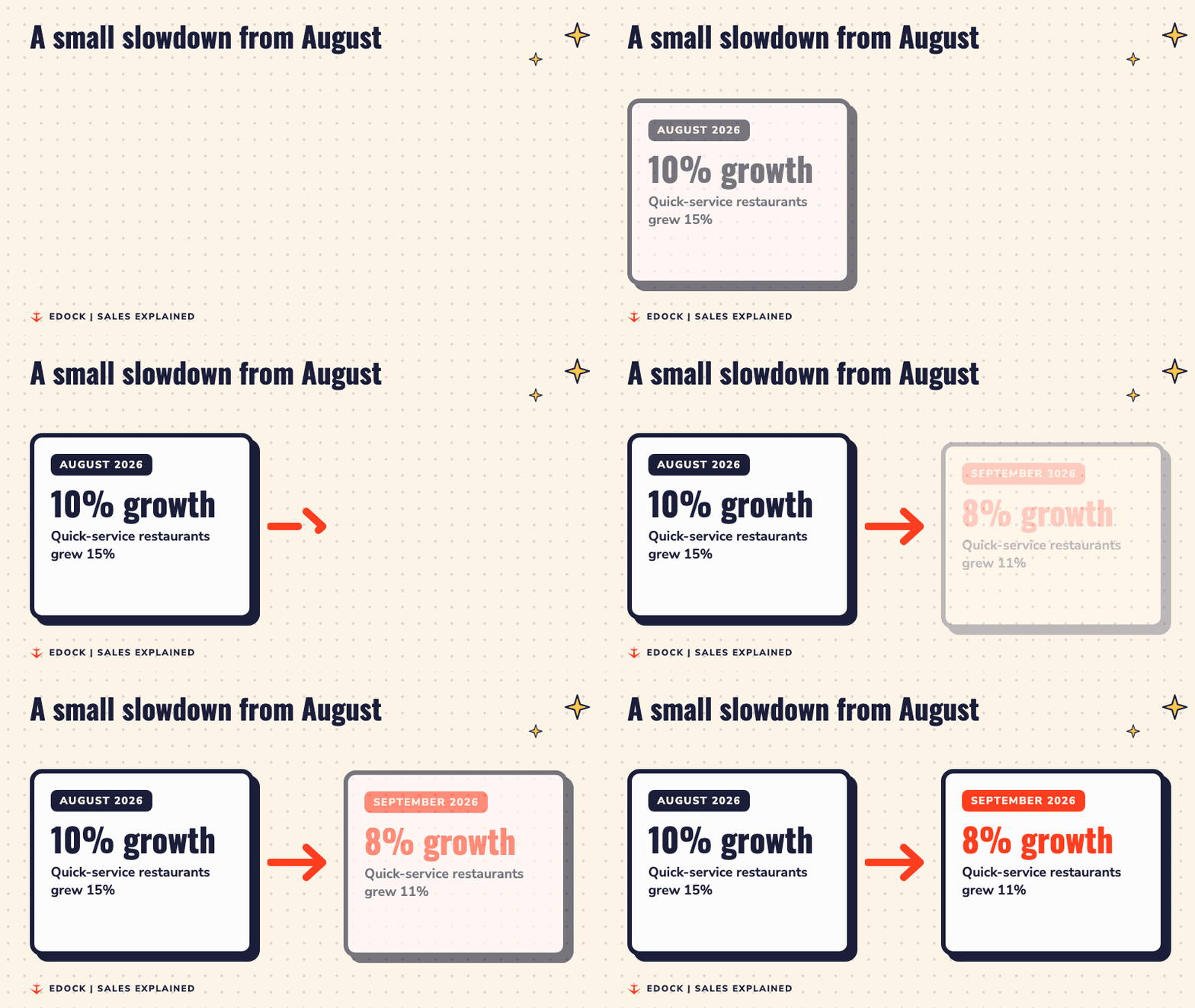
Yes. In August 2026, overall retail sales grew 10%. That was up from 8% in July. So September's 8% is a small step down.
RAI said growth eased across several categories after August:
- Quick-service restaurants: from 15% to 11%
- Food and grocery: from 12% to 9%
- Apparel and clothing: from 10% to 9%
"Eased" here does not mean sales fell. Sales still grew. They just grew a little more slowly, like a cricket team that scored 10 runs an over and then 8. Still scoring, just not as fast.
Why did the festival calendar matter so much?
This is the most interesting part of the story. Big festivals do not fall on the same dates every year.
Kumar Rajagopalan, the chief executive of RAI, explained it this way. In 2025, Navratri started in September. In 2026, it started in October, and Diwali falls in November. In his words, September this year "largely reflects pre-festive consumption".
Put simply: last September already had festival shopping in it. This September mostly did not. So this year's September was up against a tougher number from last year, and it still grew 8%.
Imagine your school sports day was in September last year and in October this year. If the canteen sold more snacks this September even without sports day, that is a decent sign for the canteen.
What happens next?
RAI says it remains optimistic about the festive season, but that October and November will give a fuller picture of how much people are spending. With festival shopping stretching into November this year, retailers will watch both everyday items and the "want" items people buy when they feel good about money.
So the September number is a starting point, not the final score. The real test is the October and November report cards.
Why should a student care?
Retail sales are one of the simplest ways to feel the mood of a country. When people buy more groceries, clothes and fast food, shops usually need more stock and more hands at the counter. When sales slow, shops get more careful.
It also helps with everyday choices. If you are thinking about a part-time role at a store or a food outlet, or planning a small stall of your own, a monthly number like this one tells you which kinds of shops are busy right now.
Here is a short video on an earlier report in the same RAI survey series, for April 2026:
The short version
- Indian retailers grew sales 8% in September 2026 over September 2025, says RAI.
- Quick-service restaurants grew the most at 11%. Footwear grew the least at 5%.
- West India led at 10%. East India grew the least at 5%.
- Growth slowed from 10% in August, partly because Navratri moved from September last year to October this year.
