Indian Railways brings Rs 10 lakh cover for 45 paise to ticket counters, but no cash
From October 27, people who book reserved tickets at station counters can buy the same optional travel insurance as online users, if they pay digitally.
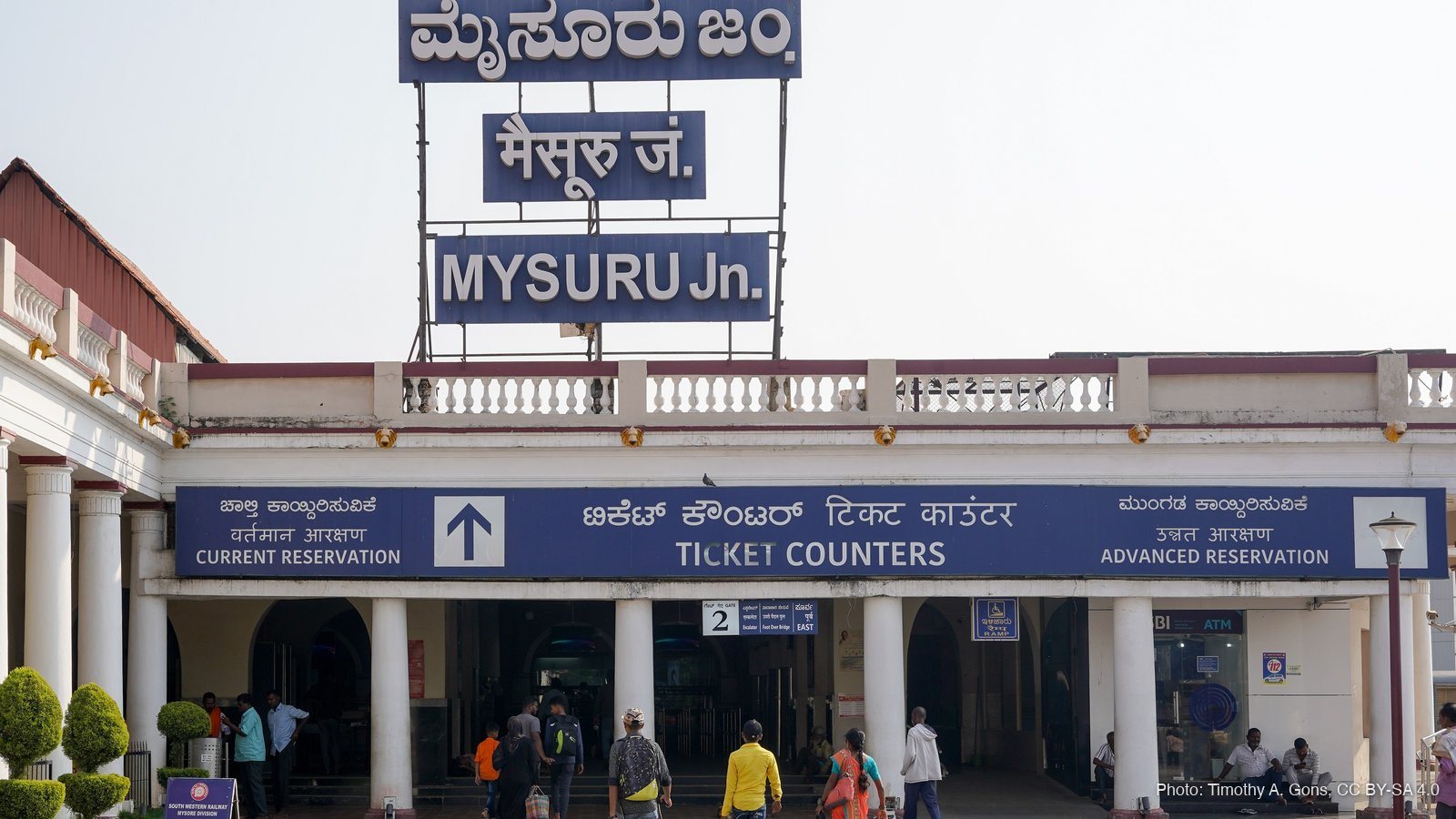
Picture this. You stand in a long queue at a railway station to buy a ticket for a trip home. From today, the clerk can offer you something new: a cover of up to Rs 10 lakh for just 45 paise. That is less than one rupee. There is one catch. You cannot pay those 45 paise in cash.
From October 27, 2026, Indian Railways is offering its optional travel insurance to people who book reserved tickets at station counters. Until now, only people who booked online through IRCTC could buy it. The Railway Board told all zonal railways about the change in a letter dated October 24.
First, what is insurance?
Think of a group of friends who each put Rs 10 in a box every month. If one friend's phone breaks, the box pays for the repair. Each person pays a tiny amount, so nobody has to face a big loss alone. That is insurance. The small amount you pay is called the premium. The money you can get back if something bad happens is called the cover.
Here, the premium is 45 paise per passenger, including taxes. The same rate has applied to online bookings since February 17, 2024.
What does 45 paise buy?
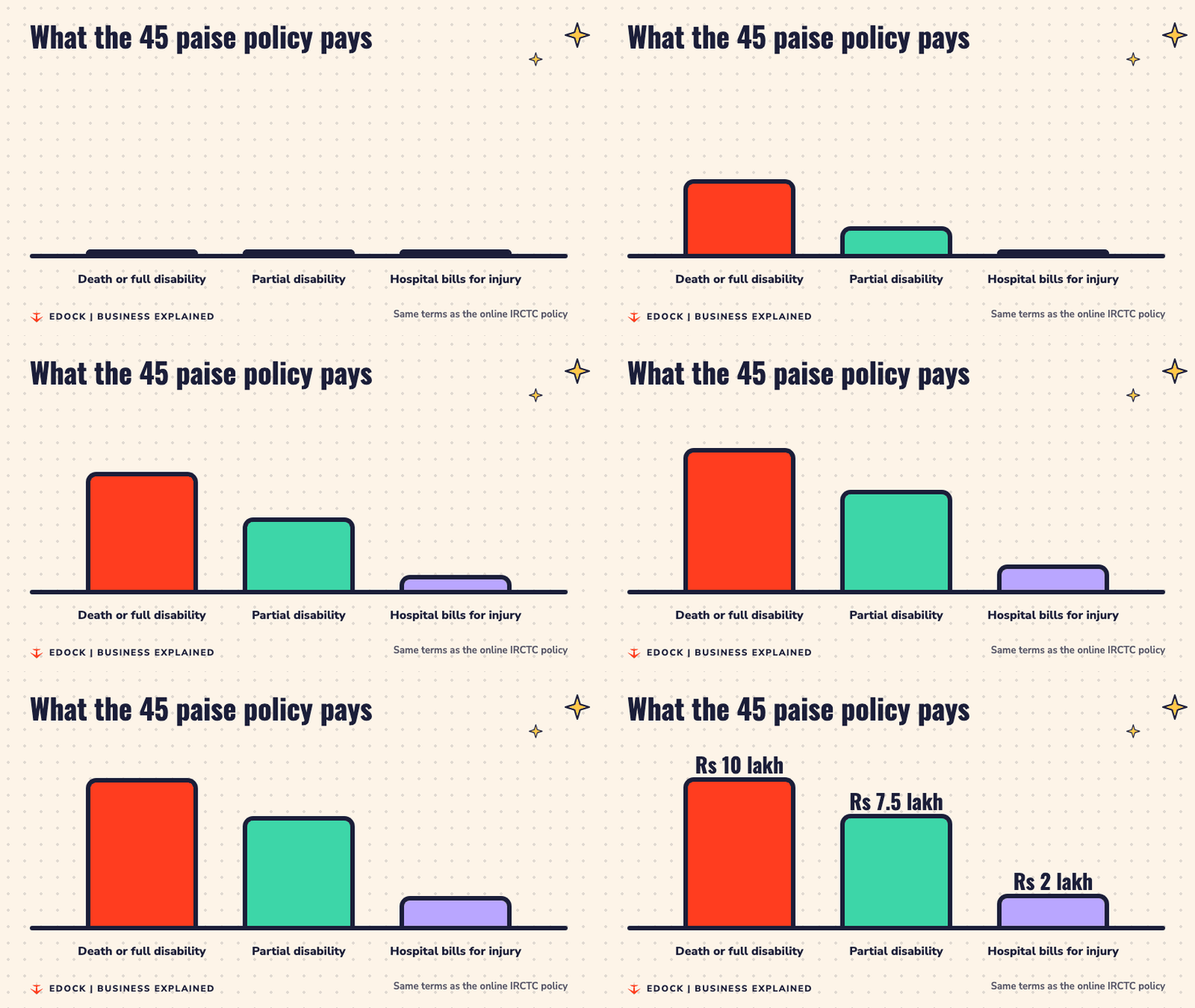
The cover is the same as the online policy. According to BusinessLine, it pays:
- Rs 10 lakh if a passenger dies or is fully and permanently disabled
- Rs 7.5 lakh for permanent partial disability
- Up to Rs 2 lakh for hospital bills for injuries
- Rs 10,000 to carry the body of a passenger home
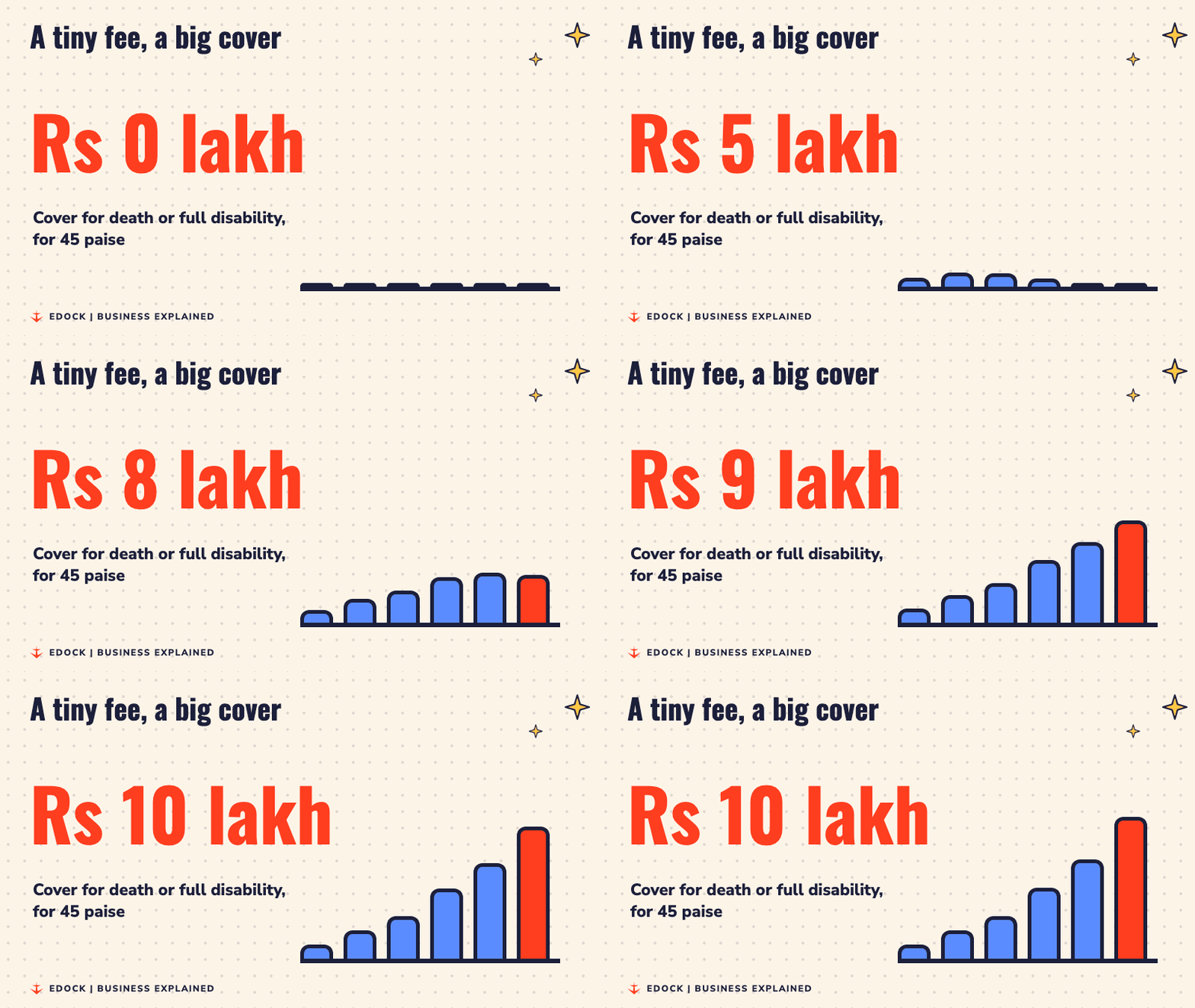
Do the maths. Rs 10 lakh is more than 22 lakh times the 45 paise premium. A family of four would pay Rs 1.80 in total. That is why the price sounds almost unreal.
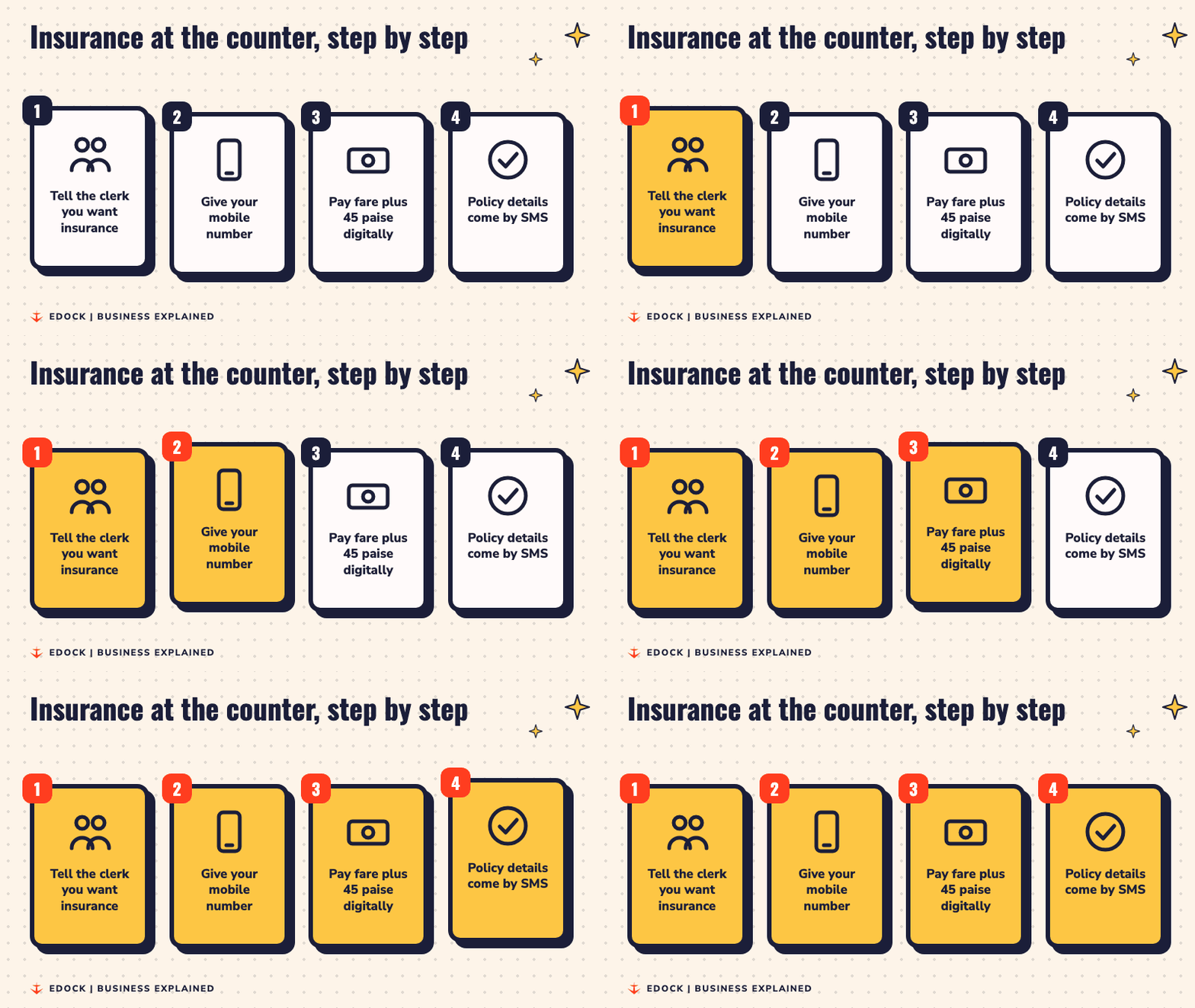
The insurance is optional. Nobody gets it by default. A passenger has to give consent to take it. Policy details then arrive on the passenger's mobile phone.
Why the cash ban?
The reason is simple coins. Officials told BusinessLine that 5, 10, 20 and 25 paise coins are no longer legal tender. Legal tender means money that a shop or office must accept. So 45 paise cannot easily be paid in coins.
The fix: if you want the insurance, the whole amount, ticket fare plus premium, must be paid digitally, for example through UPI. The Railway Board letter says staff "shall ensure" that payment is digital when a person opts in. People who pay their fare in cash will not be eligible for the cover.
A mobile number is a must too. Staff have to enter it correctly so the details can reach the insurance company, which then issues the policy, the Railway Board said.
Why did counter buyers miss out for so long?
The scheme started on September 1, 2016, but only for e-tickets. Bringing it to counters needed changes to the booking software, instructions for counter staff, and a way to send each passenger's details to the insurer.
Most people now book online. More than 87% of railway tickets are booked online, but many passengers from remote areas still rely on counters. In Tamil Nadu alone, about 14,500 tickets are booked at counters every day, out of 1.32 lakh tickets available. About 30,000 to 35,000 passengers a day in the state are expected to benefit.
The court that pushed it
This did not happen on its own. On October 6, a Supreme Court bench of Justice Ahsanuddin Amanullah and Justice R. Mahadevan ordered the Railways to cover tickets sold at counters in the same way as online tickets, from October 27. The court said people from the lowest strata of society mostly buy their tickets at counters.
The case was filed after the Odisha train accident of June 2023. The court also told the chairman and members of the Railway Board to appear in person on November 16.
To get ready, the Centre for Railway Information Systems (CRIS) made the software changes needed. A CRIS official told BusinessLine that testing was under way before the launch. Divisional managers must watch the rollout, and zonal railways must send compliance reports that say they are ready.
Who can and cannot get it
- Only confirmed, RAC (Reservation Against Cancellation) and partly confirmed tickets at the time of booking qualify.
- If four people are on one booking and one has a confirmed berth, all four get cover at 45 paise each if they travel, a railway official explained.
- Children under five who travel without a seat or berth are not covered.
- General or second class passengers, who are the majority of train travellers, are still not covered, because the scheme is only for reserved tickets.
If you cancel the ticket, 9 paise is kept from the 45 paise premium, along with other cancellation charges. So you get 36 paise of it back.
Who pays if something goes wrong?
The Railways do not pay this insurance claim themselves. They only link passengers with insurance companies. Any claim is between the passenger and the insurer. By law, the Railways already have to pay some compensation after accidents. This policy is an extra layer on top.
Why this matters beyond trains
It is a bit like a samosa stall that takes only UPI for one item on its menu. Railway sources expect reservation counters in Tamil Nadu to become completely cashless within a month or two.
For counter buyers, the change brings the same cheap safety net that app users have had for years. For first-time travellers, the lesson is short: at the counter, ask for the insurance, give your mobile number and keep your phone ready to pay.
Sources
- BusinessLine: Indian Railways extends optional travel insurance to counter ticket buyers
- The Hindu: Railways extends optional travel insurance to PRS counters
- The Indian Express: Railways extends travel insurance scheme for counter tickets
- The New Indian Express: Rs 10 lakh insurance for counter tickets in Tamil Nadu
- LiveLaw: Supreme Court directs Railways on counter ticket insurance
- Mint: Train ticket insurance from October 27
- The Times of India: 45 paise for Rs 10 lakh cover
- Cover photo: Ticket counters at Mysuru Junction railway station, by Timothy A. Gons, CC BY-SA 4.0

You may republish this story under CC BY 4.0: credit Manpreet Kaur and link to this page.