Indian Oil says India's petrol demand will peak by 2035
Version 1 of 1 saved 28 Oct 2026, 11:33 pm IST · Chain line 313
As it was first published
Indian Oil says India's petrol demand will peak by 2035
Ethanol in every litre, electric scooters and cars on gas are slowing petrol, while diesel and jet fuel keep growing, says the refiner's chairman.
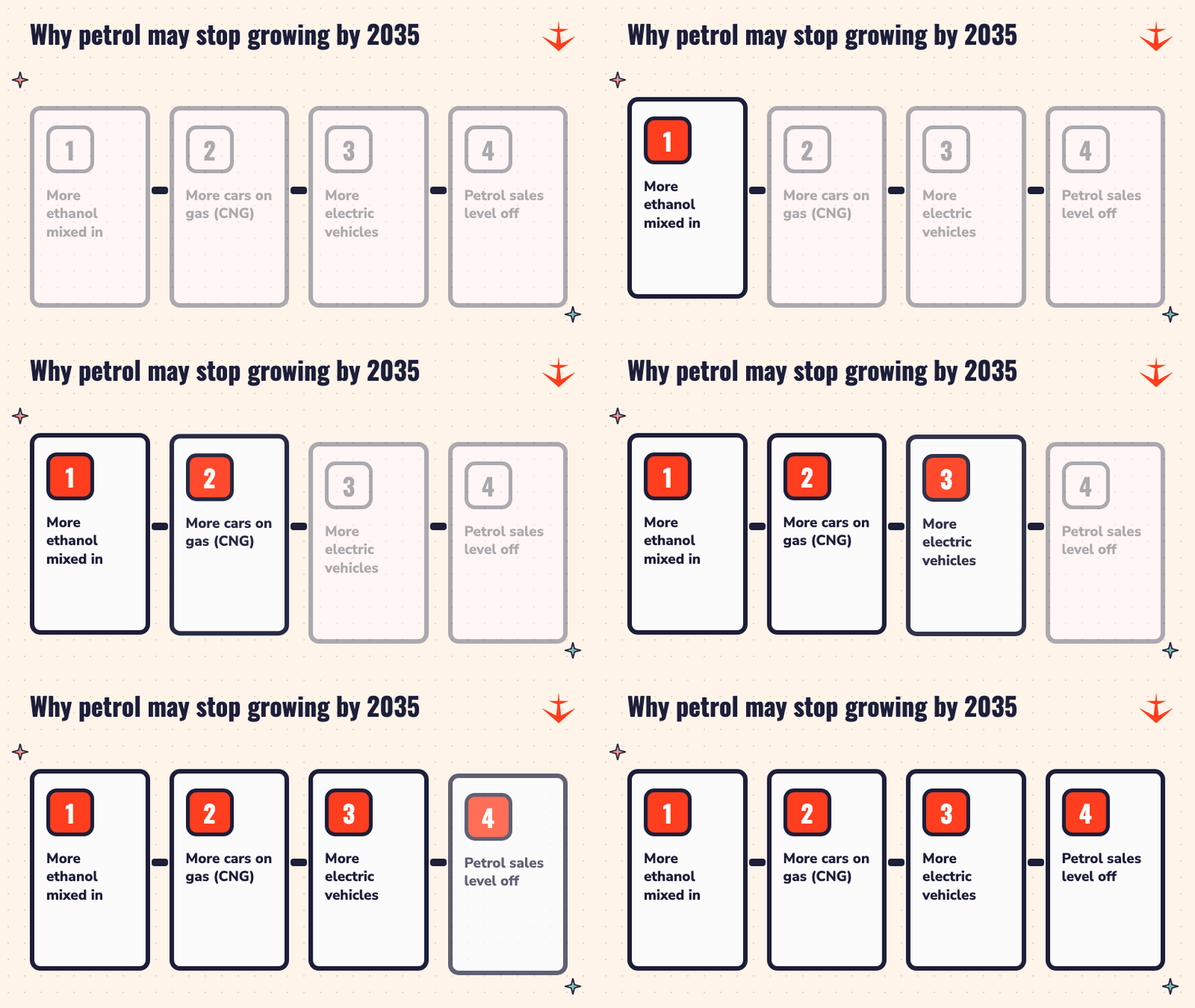
One of India's top refiners now says petrol will stop growing in about nine years. On Wednesday, 28 October 2026, the chairman of state-run Indian Oil said at an industry event that India's petrol demand is set to peak by 2035. His reasons: electric vehicles are spreading, more ethanol is being mixed into petrol, and more cars are running on gas.
This is a big statement from a company that makes and sells petrol. So what does "peak" mean, and why would a fuel company plan for the day its best known product stops growing?
What does "demand will peak" mean?
Picture a school canteen. Every year, more kids buy samosas. Then the canteen adds sandwiches, fruit cups and idli. Kids still buy samosas, but the number stops going up. One year it is the highest ever. After that, sales stay flat or slowly slip. That highest year is the peak.
"Demand" simply means how much of something people want to buy. So "petrol demand will peak by 2035" means India will buy the most petrol ever around that year. After that, sales are expected to stop growing. It does not mean petrol pumps will shut down in 2035.
Indian Oil's chairman put the worry in one line, as reported by Moneycontrol: "Motor spirit is feeling pressure from all sides, that's one area of concern." Motor spirit is the trade name for petrol.
Right now, petrol sales are still climbing
Here is the surprising part. Today, Indians are buying more petrol than ever. In September 2026, petrol sales rose 7.21% from a year earlier to 3.64 million tonnes, according to preliminary data from the Petroleum Planning and Analysis Cell (PPAC), the government body that tracks fuel use. From April to September 2026, petrol use rose 7% to 22.67 million tonnes.
Why the jump? Angel One's report on the same data said higher vehicle sales helped push up petrol demand. More scooters and cars on the road means more trips to the pump.
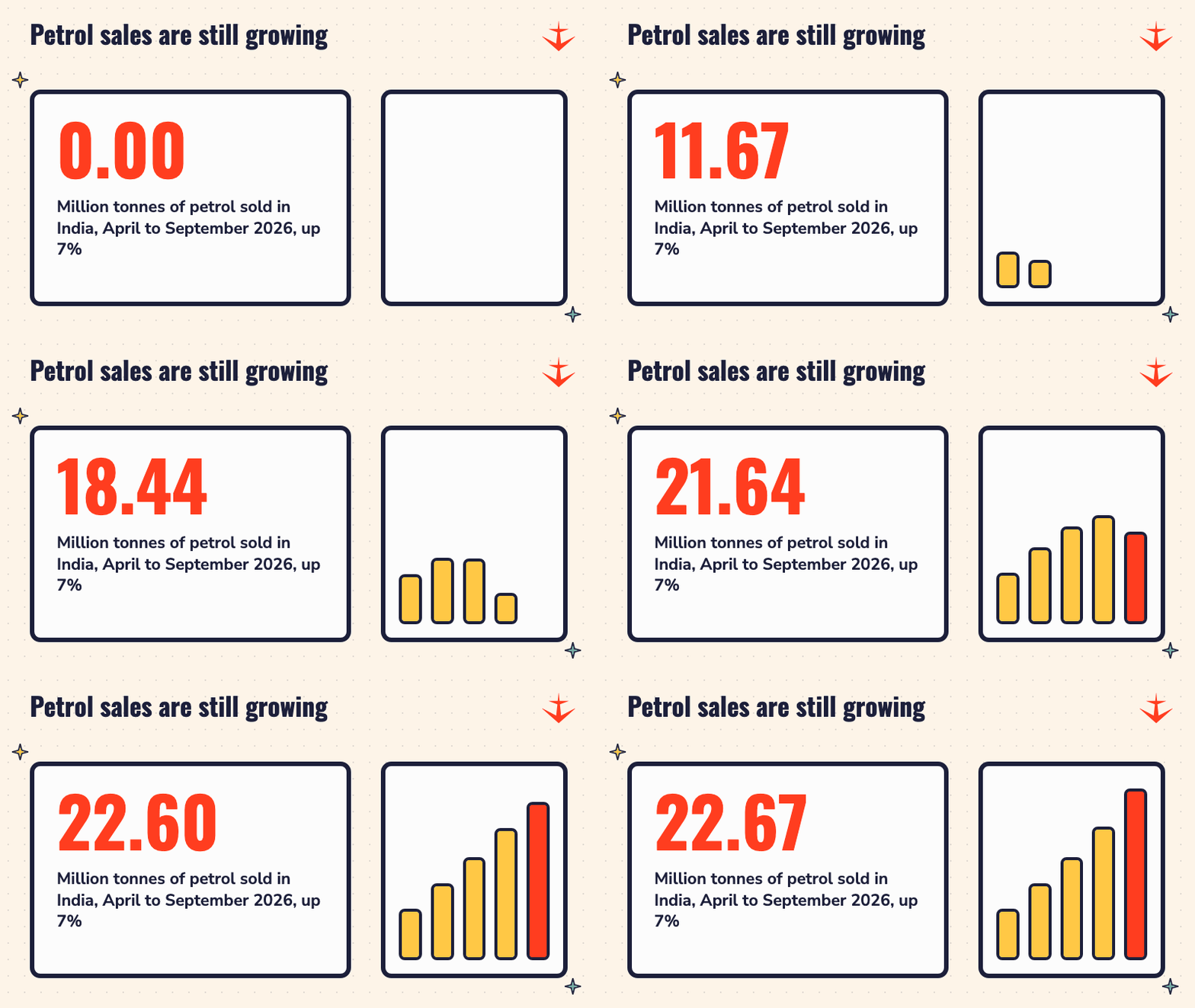
So the forecast is not about today. The point is that the growth may slow down and stop within about nine years, even while sales keep rising for now.
Three things eating into petrol
1. Ethanol in every litre
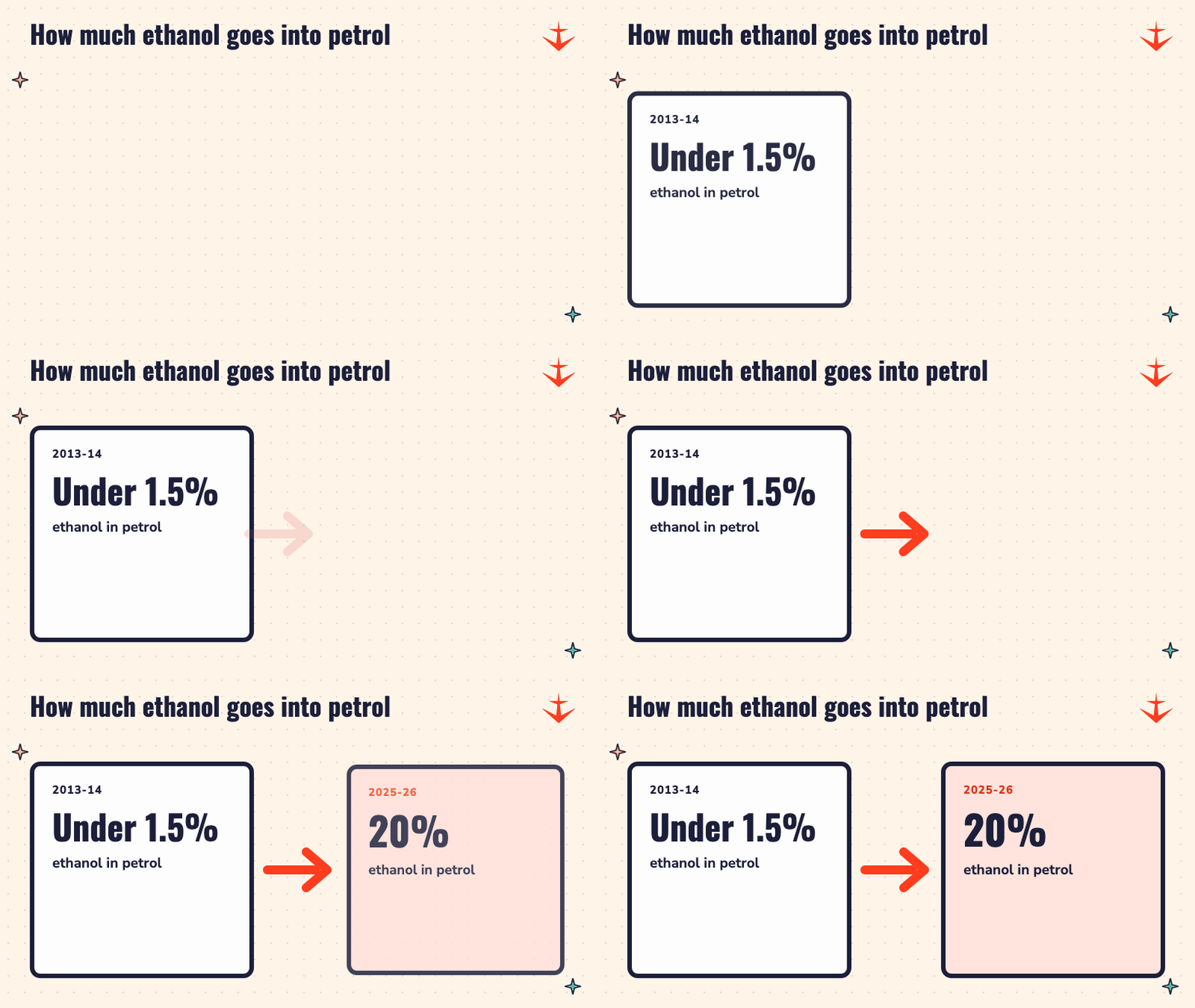
Ethanol is a fuel made from sugarcane, maize and rice. It is mixed into petrol, so each litre has less petrol inside. According to a government note from July 2026, ethanol blending rose from less than 1.5% in 2013-14 to 20% in 2025-26. This is called E20, meaning 20 parts ethanol and 80 parts petrol. India hit this target five years ahead of schedule, the same note says.
Think of it like adding water to a strong glass of nimbu pani to make it stretch. One fifth of every litre is now ethanol, so the country needs less petrol for the same number of rides. The note says ethanol buying grew from about 38 crore litres in 2013-14 to over 1,200 crore litres (projected) in 2025-26.
2. Electric scooters and cars
An electric vehicle, or EV, runs on a battery instead of a fuel tank. India sold more than 25 lakh EVs in FY2026 (April 2025 to March 2026), according to JMK Research. Electric two-wheelers made up 57.8% of those sales. Every electric scooter on the road is one less regular customer at the petrol pump.
3. Cars running on gas
Some cars and autos in Indian cities run on CNG, or compressed natural gas, instead of petrol. Indian Oil's chairman named more cars running on gas as the third reason petrol demand will level off, Business Today reported.
Not every fuel is slowing down
Petrol is only one product from a refinery. A refinery is like a giant kitchen. Crude oil goes in, and many dishes come out: petrol, diesel, jet fuel for planes, and heavy leftovers.
The chairman said diesel and jet fuel use would keep growing, backed by industry and air travel. Trucks, tractors and factories run on diesel. Airlines need jet fuel. He also said demand for heavy products like fuel oil and petcoke, which make up 30% of what a refinery produces, would rise too.
Diesel is already India's biggest-selling fuel. In September 2026, diesel sales rose 4.86% to 7.12 million tonnes, close to double the petrol figure, according to the same PPAC data.
Why would a fuel company say this out loud?
Building a refinery takes years and costs a huge amount of money. If a company builds a big new unit to make petrol, and petrol sales stop growing, the money is stuck in a machine nobody needs. So refiners must guess what people will buy ten or twenty years from now.
It is like a samosa stall owner deciding whether to buy a second big kadhai. If customers are slowly moving to sandwiches, a sandwich toaster might be the smarter buy.
Indian Oil is not the only one with this view. In April 2025, an executive at Reliance Industries also said India's petrol demand would peak by 2035, with diesel peaking around 2041 or later.
Indian Oil is also looking at very different kinds of energy. The chairman said the company was studying technologies such as small modular reactors, which are small nuclear power plants. A final decision, he said, would depend on whether the numbers make business sense.
Here is a short explainer on E20 petrol
This video from Brut India explains what the ethanol blending programme means for people who fill up their bikes and cars.
What could this change for you?
Your fuel. The petrol you put in your scooter is already one fifth ethanol. That share came from a government programme, and the government says the programme has cut crude oil imports.
Farmers' income. Ethanol is made from crops. The government note says the programme added more than Rs 1.60 lakh crore to farmer earnings and saved over Rs 1.90 lakh crore in foreign exchange since 2014-15. Foreign exchange is the dollars India spends to buy oil from other countries.
The air. The same note says the programme cut carbon dioxide emissions by about 930 lakh tonnes. Carbon dioxide is the gas that heats up the planet.
Work and careers. If petrol stops growing while diesel, jet fuel and gas keep growing, fuel companies will plan new units around those fuels. That is why a refiner talks about peaks years in advance.
For now, petrol is still growing, and the pump down the road is busier than ever. But the country's biggest fuel company has drawn a line on the calendar: around 2035, the samosa may stop being the canteen's top seller.
Sources
- The Economic Times: Indian gasoline demand to peak by 2035, says top refiner Indian Oil
- Moneycontrol: India's petrol demand to peak by 2035 as EVs, ethanol gain ground
- Business Today: Indian gasoline demand to peak by 2035 as EVs, ethanol blending gain ground
- Free Press Journal: India petrol, diesel demand rises in September (PPAC data)
- Angel One: Petrol and diesel sales rise in September
- PIB: Ethanol Blending in India, July 2026
- JMK Research: Annual India EV Report Card FY2026
- Hydrocarbon Processing: Reliance says India's gasoline demand to peak by 2035
- Cover photo: Indian Oil fuel station on Nagpur Road, Chhindwara district, by Kaushlendrapathe, CC0
