Indian banks added 1.26 million credit cards in September as festive shopping nears
Version 1 of 1 saved 28 Oct 2026, 8:04 am IST · Chain line 292
As it was first published
Indian banks added 1.26 million credit cards in September as festive shopping nears
HDFC Bank and Axis Bank gave out nearly 43% of the new cards, taking India's total to 125.32 million.
Picture a cricket stadium packed with 42,000 fans. Now picture 30 such stadiums. That is roughly how many new credit cards Indian banks handed out in just one month. In September 2026, lenders added 1.26 million net credit cards, The Economic Times reported on 28 October 2026, using fresh Reserve Bank of India (RBI) data. Only July was higher this year, and by a whisker: 1.27 million.
"Net" means new cards minus cards that were closed. So this is the real growth in the number of cards people carry.
Who handed out the most cards?
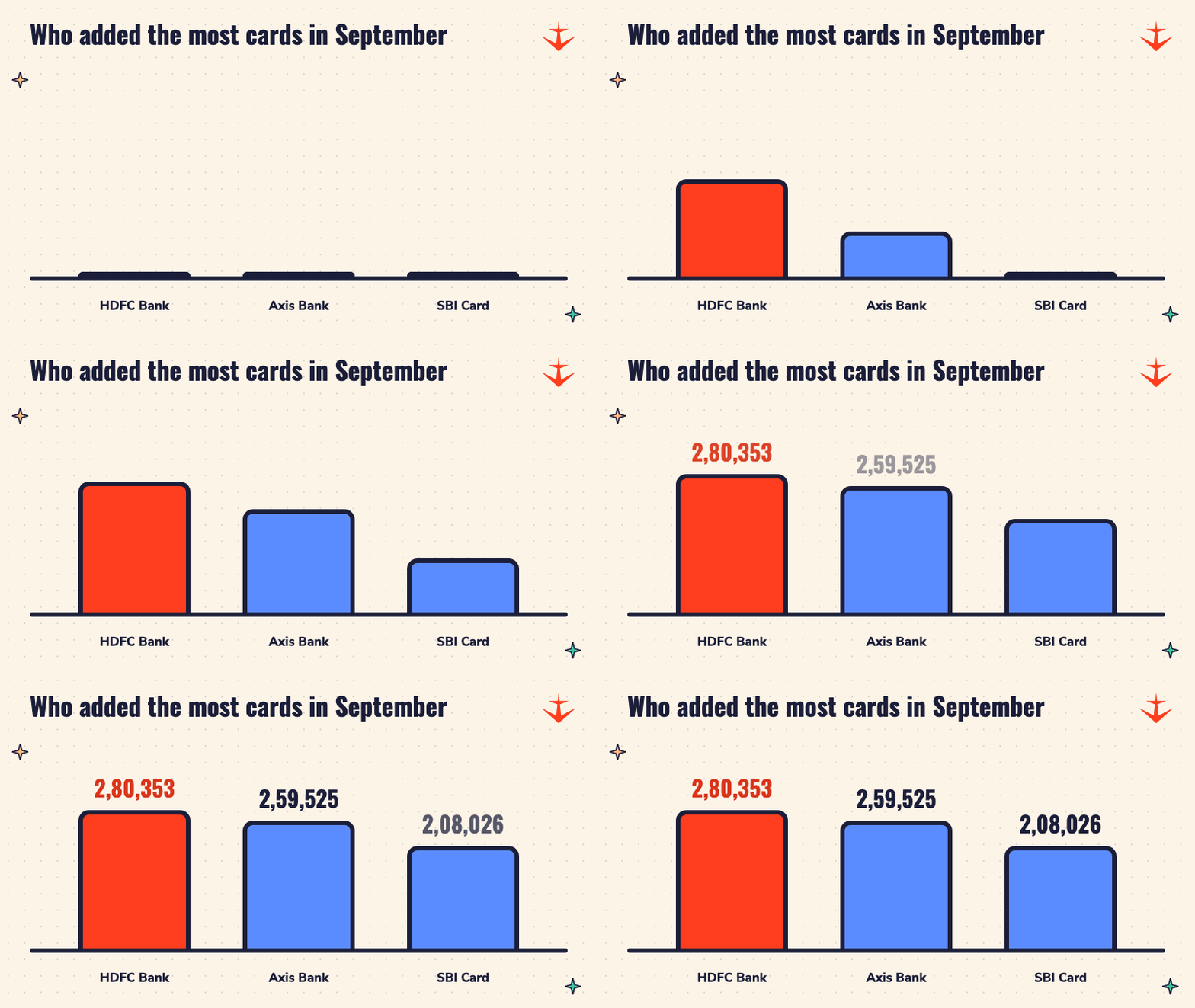
Two private banks led the way. HDFC Bank and Axis Bank together added 539,878 cards, nearly 43% of all the new cards in September, according to the ET report.
- HDFC Bank: 280,353 cards, more than double the 122,669 it added in August.
- Axis Bank: 259,525 cards, nearly eight times its August number of 32,789.
- SBI Card: 208,026 cards, up from 193,294 in August.
Bank of Baroda (114,083), Slice Small Finance Bank (89,794) and Federal Bank (81,753) also added big numbers. ICICI Bank and Kotak Mahindra Bank added cards more slowly in September, ET said.
How many cards does India have now?
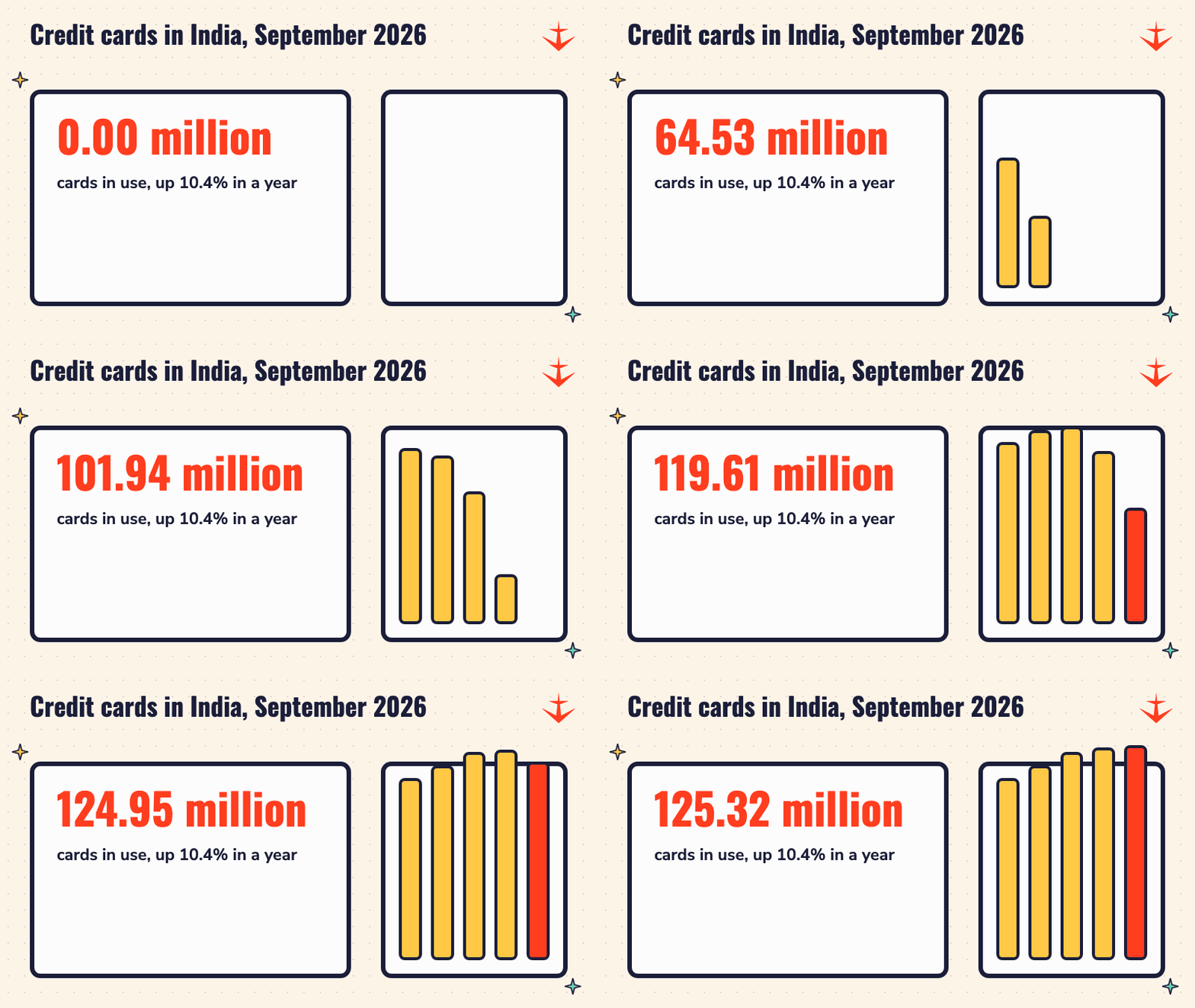
At the end of September, Indians held 125.32 million credit cards, according to the RBI's own bank-wise table for the month. A year earlier the count was 113.51 million, so the base grew 10.4% in twelve months, ET noted.
The same RBI table shows HDFC Bank as the biggest card issuer, with about 27.38 million cards in use. Axis Bank had about 16.55 million.
The September addition was 5.5% higher than August's 1.20 million and nearly 25% more than the 1.01 million added in September 2025.
Why did banks hurry in September?
ET linked the rush to the festive season ahead. Think of a samosa stall owner who puts out extra plates before a big cricket match. Banks want their card in your wallet before the festive shopping begins.
Festive months are when card swipes usually jump. Business Standard reported last year that card use surges in the September to December period, helped by discounts, cashback and bank offers.
There is a second reason. In November 2023, the RBI made banks keep more money aside for unsecured loans, which are loans given without a house or gold kept with the bank as a guarantee. A credit card is one such loan. That rule slowed card growth through much of FY25 and FY26, Kotak Neo explained in a report on June 2026 data. In June 2026, banks added 1.14 million cards, the most in a single month since December 2023.
So how does a credit card actually work?
Imagine a friend who pays for your chai and samosa today and says, "Return the money by the end of the month." If you return all of it on time, the friend charges nothing extra. If you are late, the friend starts charging a fee on top. A credit card works in a very similar way.
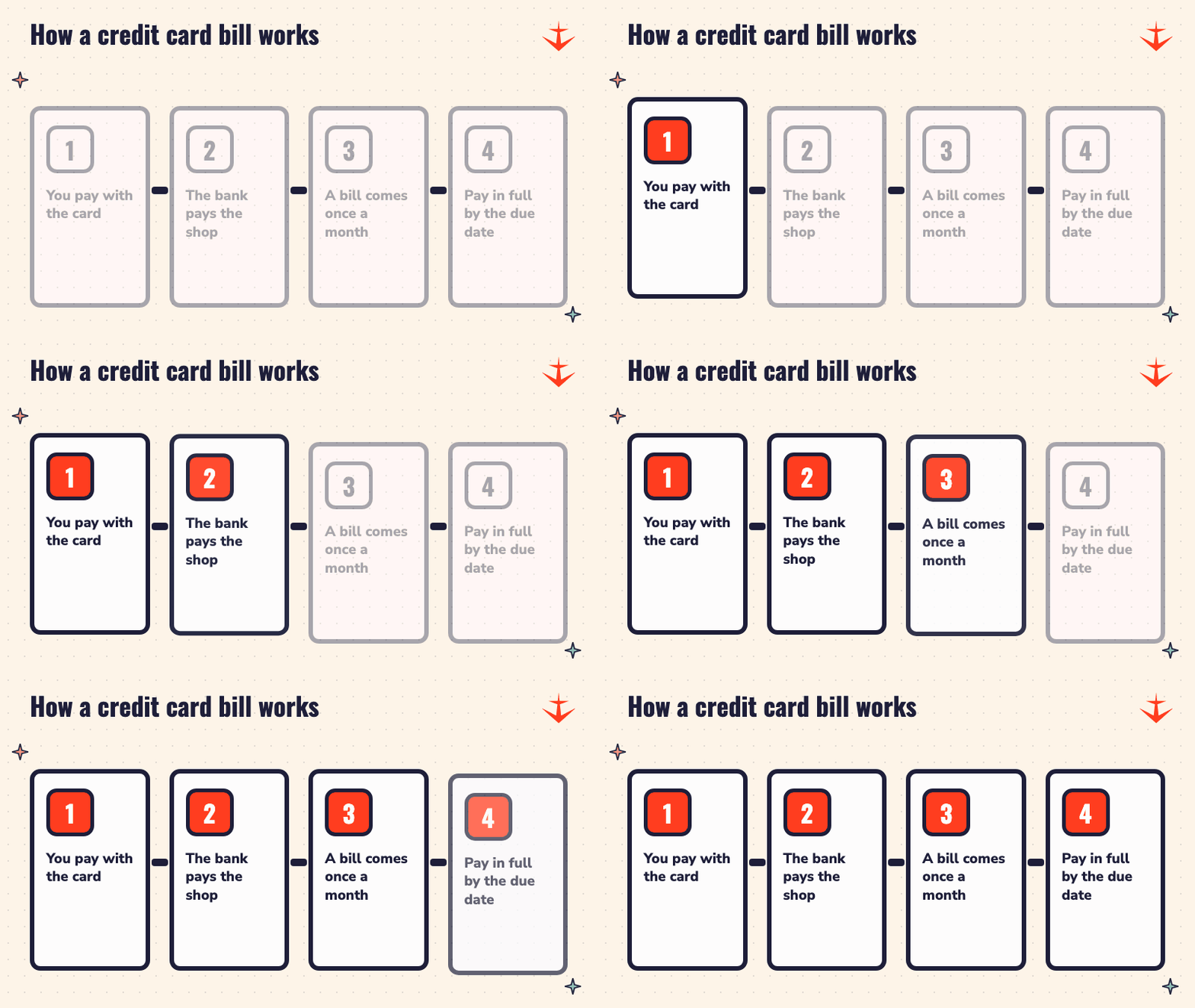
When you pay with a card, the bank pays the shop for you. Once a month you get a bill. Most cards in India give an interest-free period of 30 to 60 days. Interest is the extra money you pay for borrowing. If you pay the full bill by the due date, you pay no interest.
Where does the trouble start?
The trouble starts when the bill is not paid in full. Card interest in India is generally between 36% and 45% a year, or about 3% to 3.75% a month, Outlook Money reported. On a Rs 5,000 purchase, 3% a month means Rs 150 of interest for one month.
There is a catch many people miss. The bill shows a small "minimum due" amount. Paying only that amount saves you from a late fee, but interest is still charged. And if even a small amount stays unpaid, the interest-free period on new purchases is lost too, the same report explained. GST is also added on the interest and charges.
Are people spending more on cards too?
Adding up the card payment columns in the RBI table for September 2026 (shop machines, online shopping and others) gives about Rs 2,03,938 crore, or roughly Rs 2.04 lakh crore. That is a little above about Rs 2.02 lakh crore in the RBI table for August 2026.
The September figure is still below September 2025, when card spends hit a record Rs 2.17 lakh crore, Business Standard reported. Last year that jump came with festive demand and GST rate cuts in the same month. This year, the cards came first. The October data will show how much shopping followed.
What this means for young card users
- Banks are chasing new customers. September's numbers show lenders pushing hard to sign up card users before the festive weeks.
- Know the due date. The free period only works when the full bill is paid on time.
- Read the minimum due line carefully. It stops a late fee, not the interest.
For a simple walk-through, this video by Dhruv Rathee explains how credit cards work and what they cost when bills are not paid in full.
India now has over 125 million credit cards, and September showed banks are racing to add more before the festive bills arrive. For the people holding them, each swipe is a short loan from the bank, free only when the full bill is paid on time.
Sources
- The Economic Times: Credit card additions hit second highest monthly level in 2026
- Reserve Bank of India: Bank-wise ATM, POS and card statistics, September 2026
- Reserve Bank of India: Bank-wise ATM, POS and card statistics, August 2026
- Business Standard: Credit card spends hit record in September 2025
- Kotak Neo: India credit card additions hit 2.5-year high in June
- Outlook Money: Why unpaid credit card bills take away your interest-free days
- Cover photo: Bunch of credit cards, by Yuri Samoilov, CC BY 2.0
