India will pay factories to make shipping containers at home with a Rs 10,000 crore plan
Version 1 of 1 saved 28 Oct 2026, 7:13 pm IST · Chain line 307
As it was first published
India will pay factories to make shipping containers at home with a Rs 10,000 crore plan
Almost all the steel boxes that carry India's trade are made abroad. A new Cabinet plan pays makers for every box sold, to cut that reliance.
Picture a steel box about the size of a small bedroom. Nearly everything India sells abroad, from shirts to engine parts, rides the sea inside one. Yet almost all of these boxes are made abroad. On Wednesday, 28 October 2026, the Union Cabinet approved a Rs 10,000 crore plan to change that.
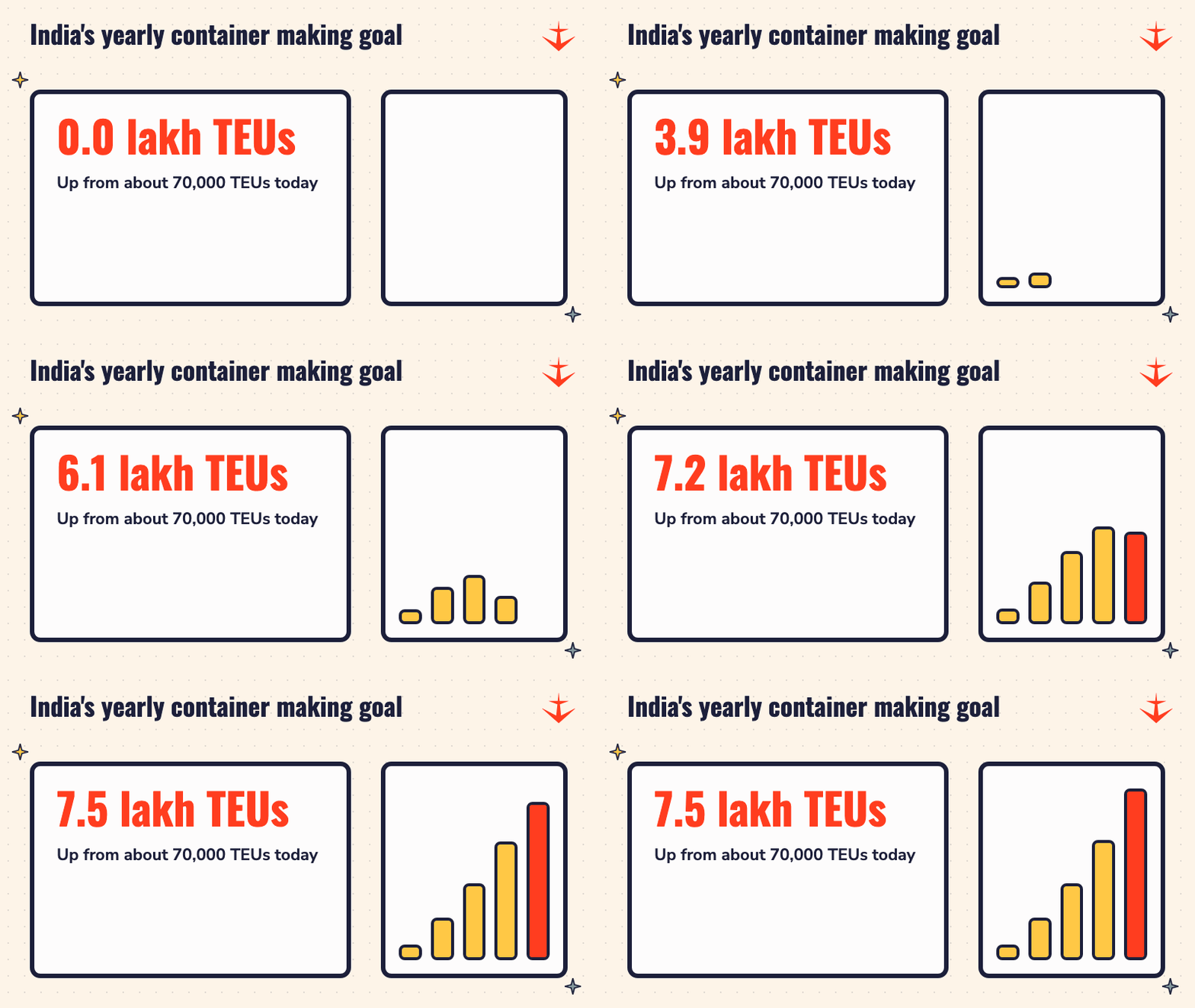
The plan is called the Container Manufacturing Promotion Scheme. Union Minister Ashwini Vaishnaw announced it after the Cabinet meeting, and it will run for 13 years, up to the financial year 2039-40. The big goal: lift the number of boxes India makes in a year about ten times, from about 70,000 TEUs today to 7.5 lakh TEUs.
First, what on earth is a TEU?
TEU means "twenty-foot equivalent unit". The name sounds hard, but the idea is simple. One standard 20-foot box counts as 1 TEU. Such a box is about 6.1 metres long and 2.44 metres wide, so it is roughly the size of a small room. The bigger 40-foot box counts as 2 TEUs.
Think of it like runs in cricket. Batters score in ones, fours and sixes, but the scoreboard only shows runs. In the same way, ports and factories count every kind of box in TEUs.
These boxes are made of steel and follow world standards, so the same box can move from a ship to a train to a truck without the goods being unpacked. They matter a lot for India. The government says the sea route carried 95% of India's trade by volume and 70% by value as of February 2026.
Why does India want to make its own boxes?
Today, one country makes most of the world's containers. Wikipedia's page on the industry says China's factories built up over 96% of the world's capacity to make them. So when the world runs short of boxes, Indian exporters have to wait in line.
That wait costs money. Freight is the fare a business pays to move its goods, like the auto fare you pay for a ride. When it rains and only a few autos are at the station, the fare jumps. Boxes work the same way.
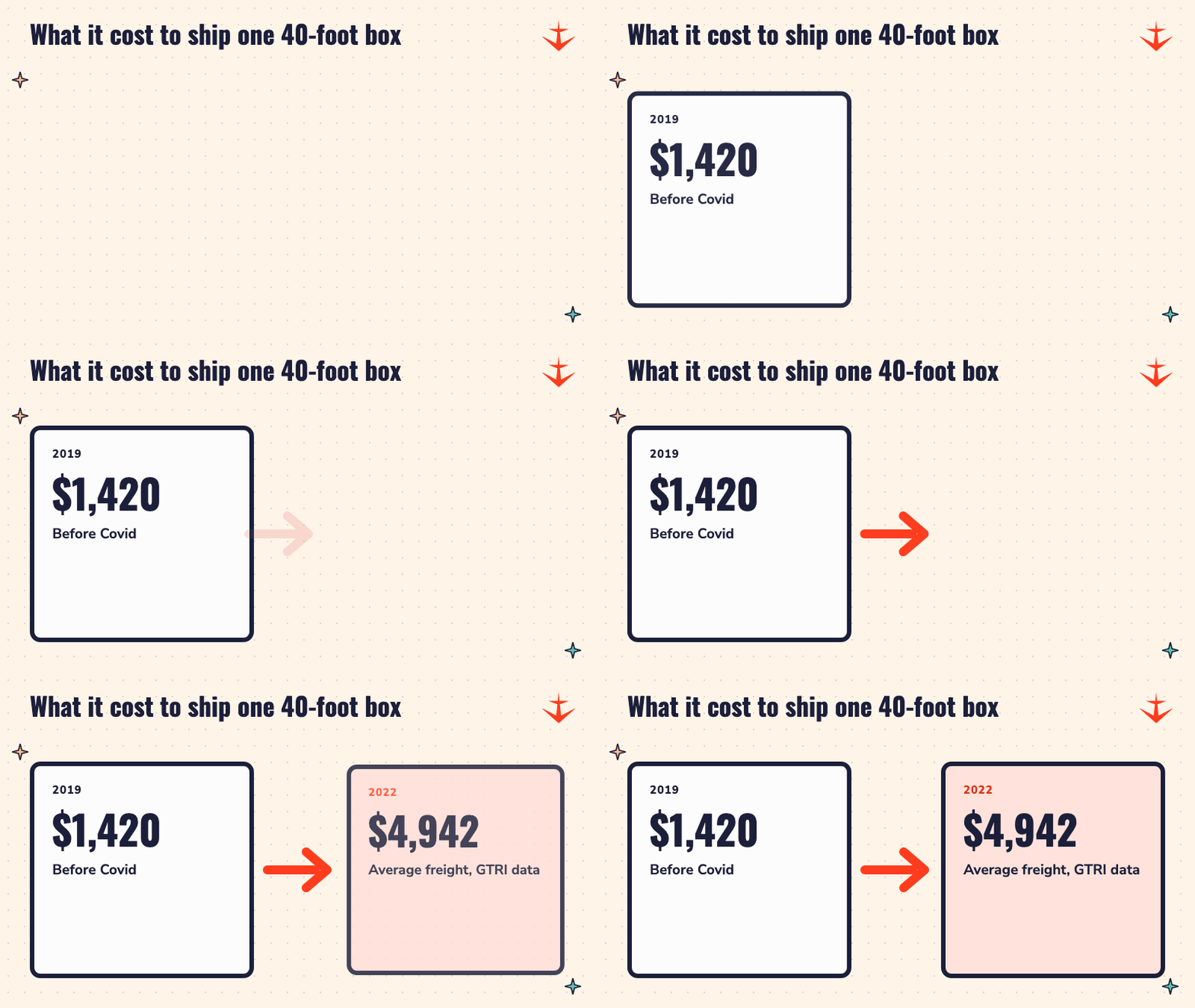
The think tank GTRI shared real numbers in 2024. Shipping one 40-foot box cost about $1,420 in 2019, before Covid. In 2022, the average was $4,942. By 2024, it stood at around $4,775. GTRI also said freight costs for Indian exporters shipping to Europe and the US had more than doubled in a year, after trouble in the Red Sea. Its advice back then was to make more containers at home.
Business Standard notes the new plan comes at a time when global conflicts have made containers scarce. More boxes made at home could make it easier for Indian exporters, importers and shipping firms to find them.
How is the Rs 10,000 crore split?
The money is not handed out in one go. Think of a school that wants a new canteen. It may pay part of the canteen's rent at the start, until the canteen has enough customers to stand on its own. This plan works a bit like that, in four main parts.
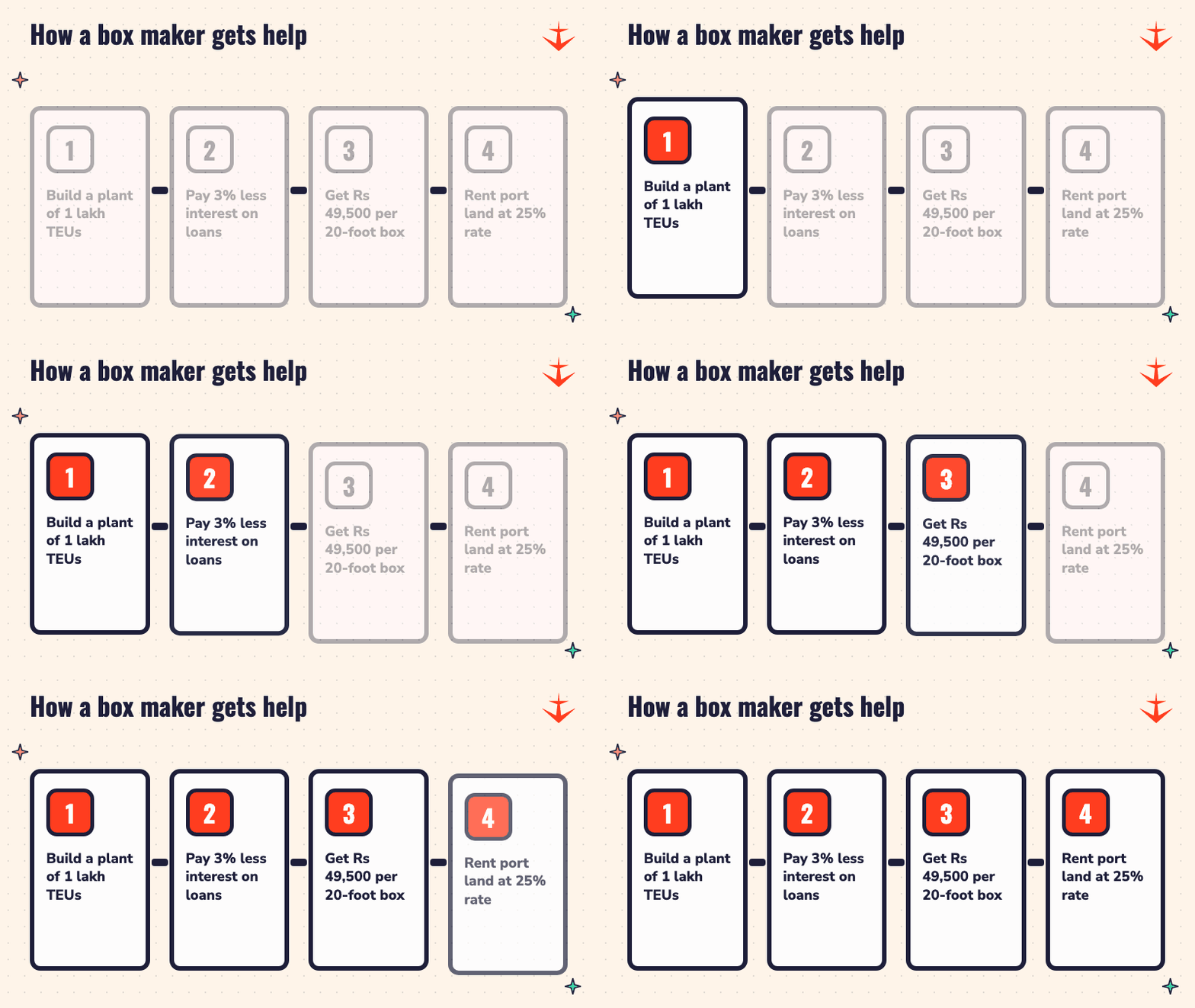
- Help with running costs. This is the biggest part, at Rs 8,891 crore. A maker gets Rs 49,500 for every 20-foot box and Rs 86,625 for every 40-foot box it makes to world standards and sells. Special 20-foot boxes get Rs 37,125 to Rs 74,250. The aim is to close the price gap with imported boxes.
- Cheaper loans. Factories need big loans to build plants. Under "interest subvention", the government pays 3% a year of the interest on these term loans, so the maker pays less. A term loan is simply a loan repaid over several years, like a home loan.
- Testing centres. Rs 150 crore will set up shared test centres for checks such as the dynamic longitudinal impact test, which shows how safe a box stays under the rough jolts of a journey.
- Land at big ports. Major ports can rent land to box makers at 25% of the notified rate.
Another Rs 100 crore goes to running and checking the scheme itself.
Who can get the money?
Not every small workshop can apply. A brand new plant must be able to make at least 1,00,000 TEUs a year. An old plant that grows must add at least 25,000 TEUs a year. Both must start work within three years of first approval, and the boxes must meet world rules.
There is a "local content" rule too. That means most of what goes into a box must come from India. Think of a dhaba that promises most of its vegetables come from nearby farms. Makers must use at least 70% local content until FY 2031-32, and 90% from FY 2032-33.
The scheme runs from FY 2027-28 to FY 2039-40. The first three years are for building factories, and the next ten are for help on each box made.
What does this mean for work and money?
The government expects about 3,000 direct roles and over 50,000 indirect ones. Direct roles are inside the box plants, like welders and painters. Indirect ones come from the firms that feed those plants. A box needs corner castings (the strong metal blocks at each corner), special steel, wooden floors and paint.
The ports ministry also estimates the plan will create about Rs 75,000 crore of economic output by FY 2039-40, more than seven times the support. Demand should come from old boxes around the world being replaced, the new Bharat Container Shipping Line, and new big ports such as Vadhavan and Galathea Bay.
India's own need is growing fast. The ministry says India's container traffic could grow from about 24 million TEUs in 2024 to 175 million TEUs by 2047. Vaishnaw said the government wants 15 to 20% of the world's container making to happen in India. The plan also aims to make India a possible global export base for shipping containers.
Watch: the Cabinet decision
This short ET video sums up the decision announced on Wednesday.
This Business Today video looks at the local content rule for steel and other parts.
The simple takeaway
A shipping box looks boring. But when boxes run short, freight bills jump, and that hurts everyone who sells goods abroad, from a big car part maker to a small textile unit. India is now trying to build these boxes at home, with cash for every box sold, cheaper loans and land at ports. Whether factories come up in time will decide how much exporters really save.
Sources
- PIB release on the Cabinet approval of the Container Manufacturing Promotion Scheme
- PIB Backgrounder: Container Manufacturing Promotion Scheme
- PIB, Ministry of Ports, Shipping and Waterways: Rs 10,000 crore scheme to make India a global container manufacturing hub
- Business Standard: Cabinet clears Rs 10,000 crore scheme to boost domestic container manufacturing
- UNI: Cabinet clears Rs 10,000 crore scheme to boost domestic container manufacturing
- MarineLink: India approves plan to boost shipping container production
- Business Standard: Increasing freight costs, container shortages threaten exports, says GTRI
- Wikipedia: Twenty-foot equivalent unit
- Wikipedia: Container industry in China
- Cover photo: The port of Mundra in Gujarat, by Felix Dance, CC BY 2.0
