India will lease 11 airports for 50 years. Here is how the bidding works
Version 1 of 1 saved 21 Oct 2026, 8:28 am IST · Chain line 105
As it was first published
India will lease 11 airports for 50 years. Here is how the bidding works
AAI is grouping 11 airports into five bundles and will pitch them to global investors before bidding opens by December.
Picture this. The government owns an airport. It does not sell it. Instead, it hands the keys to a private company for 50 years. That company runs the terminal, earns money from flyers and shops, and pays for new buildings. At the end, the airport goes back to the government. India now wants to do this with 11 airports at once.
On 20 October 2026, The Economic Times reported that the government will pitch 11 airports to global investors, with bidding set to begin by December. The goal is to sign the deals by the end of FY27, the money year that ends in March 2027.
What does it mean to "lease" an airport?
Think of a samosa stall in a college canteen. The college owns the space. A cook pays to run the stall for a few years. The cook buys the oil, hires helpers and keeps the earnings. The college still owns the canteen.
An airport lease works the same way, just much bigger. This kind of deal is called a PPP, or public private partnership. "Public" means the government. "Private" means a company. The company that wins is called the concessionaire, which simply means the one holding the right to run the place.
All 11 airports belong to the Airports Authority of India, or AAI. Under the plan, each winner gets the right to run, manage and develop its airports for 50 years. Air traffic control stays with AAI. So the private company runs the ground, while AAI still guides the planes in the sky.
Which airports are on the list?
Here is the twist. The airports are not sold one by one. For the first time, AAI will bundle them into five groups, pairing smaller airports with bigger ones. The five bundles are:
- Varanasi, Gaya and Kushinagar
- Amritsar and Kangra
- Bhubaneswar and Hubballi
- Raipur and Aurangabad
- Tiruchirappalli and Tirupati
Why pair them? A big airport with lots of flyers earns well. A small airport may struggle alone. The plan lets the operator use cash from the larger airports to support the smaller ones. It is like a cricket team. The star batter scores the runs, but the whole team wins together.
The list did not come out of nowhere. AAI first assessed 12 major airports and then 136 smaller ones, checking passenger traffic, land, money and how close they are to each other. After many rounds of filtering, five major airports were matched with six smaller ones.
How does the bidding work?
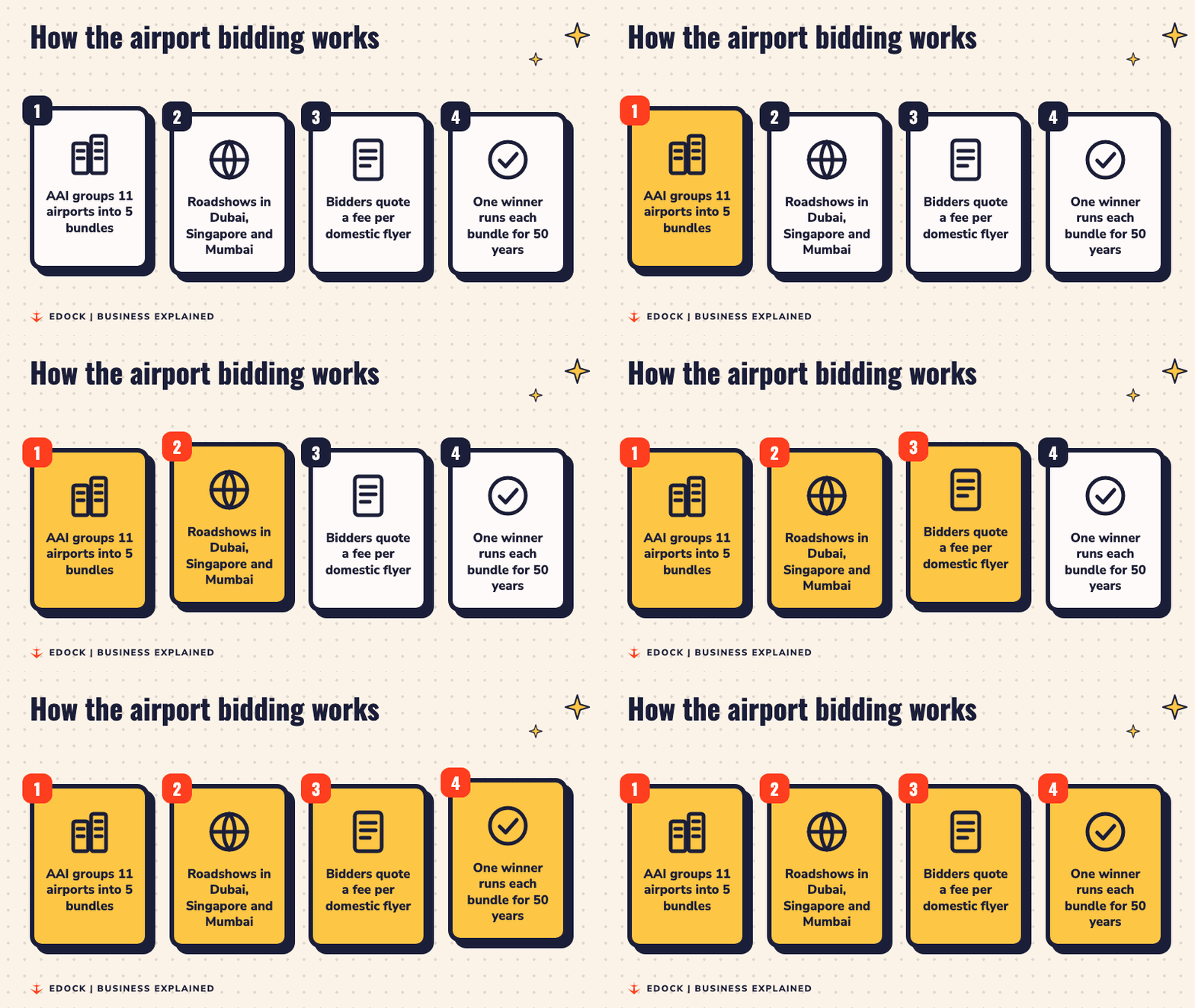
Since bundles are new, the government plans to explain them first. Roadshows are planned in Dubai, Singapore and Mumbai. A roadshow is a set of meetings where sellers pitch to possible buyers and hear their feedback.
Then comes the bid itself. Each company will quote a fee per domestic passenger. The fee for each international passenger is set at twice the domestic one. In simple words, bidders compete on how much they will pay AAI for every person who flies through the airports.
There is also a rule about staff. The plan includes a one-year joint management period with existing AAI employees, and winners must keep 60% of AAI employees for up to three years.
How much money will go in?
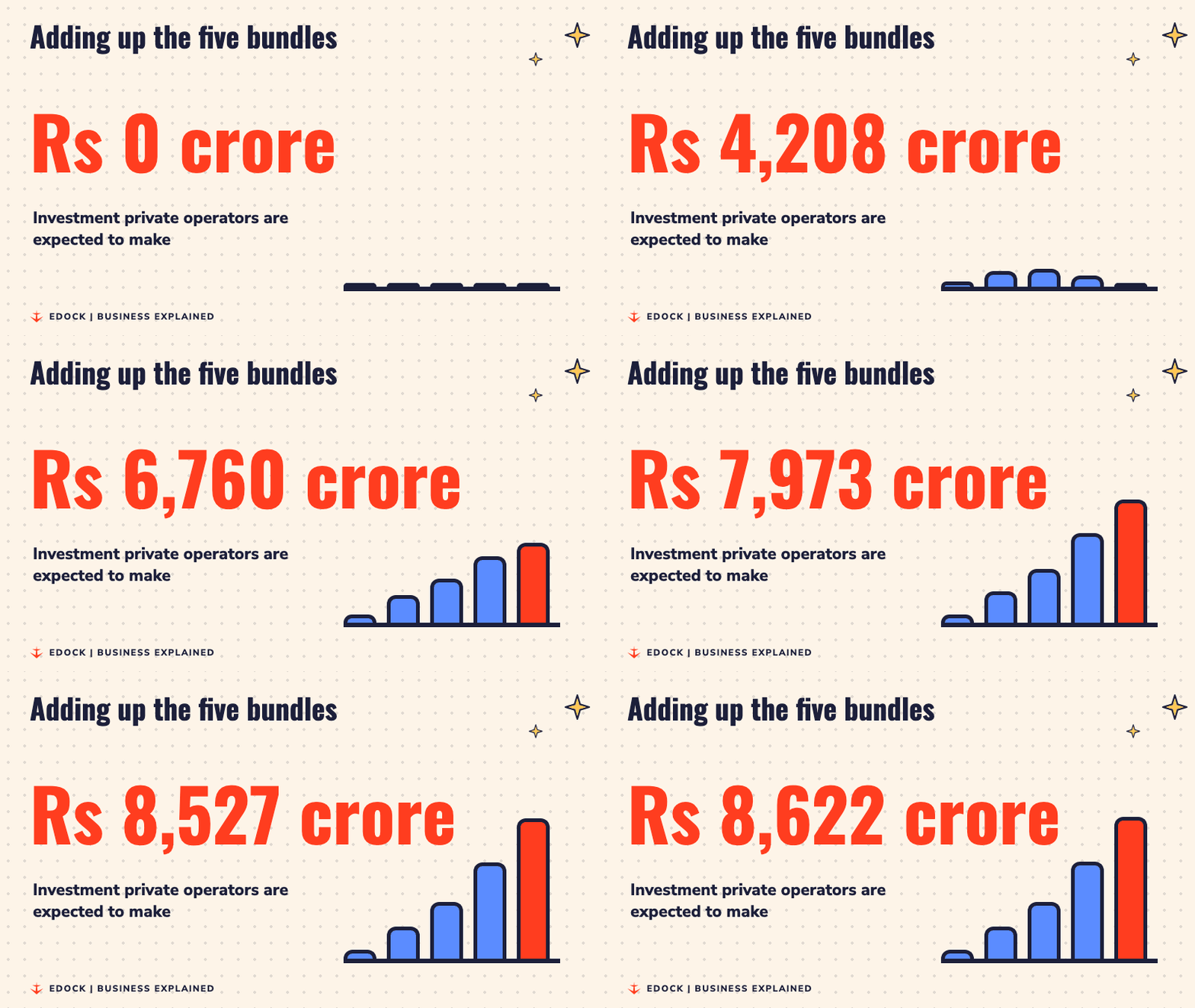
Running an airport is not just about selling coffee at the gate. The winners must also build. Private operators are expected to invest around Rs 8,622 crore across the 11 airports. Here is how it splits:
- Bhubaneswar and Hubballi: Rs 2,725 crore
- Varanasi, Gaya and Kushinagar: Rs 2,467 crore
- Raipur and Aurangabad: Rs 1,496 crore
- Tiruchirappalli and Tirupati: Rs 1,411 crore
- Amritsar and Kangra: Rs 523 crore
Add them up and you get exactly Rs 8,622 crore. The money covers capex, short for capital expenditure. That is money spent on things that last, like new terminals, rather than daily bills. Work already approved by AAI must be finished within three years of the operator starting commercial operations.
How does an airport operator earn?
An airport has three money pots, according to documents reviewed by BusinessLine:
- Flying money (aeronautical): landing and parking charges for planes, cargo, ground handling, fuel and the User Development Fee paid by flyers.
- Shopping money (non-aeronautical): duty-free shops, food stalls, retail, car parking, car rental and ads.
- City-side money: land near the airport that can be built on, like real estate.
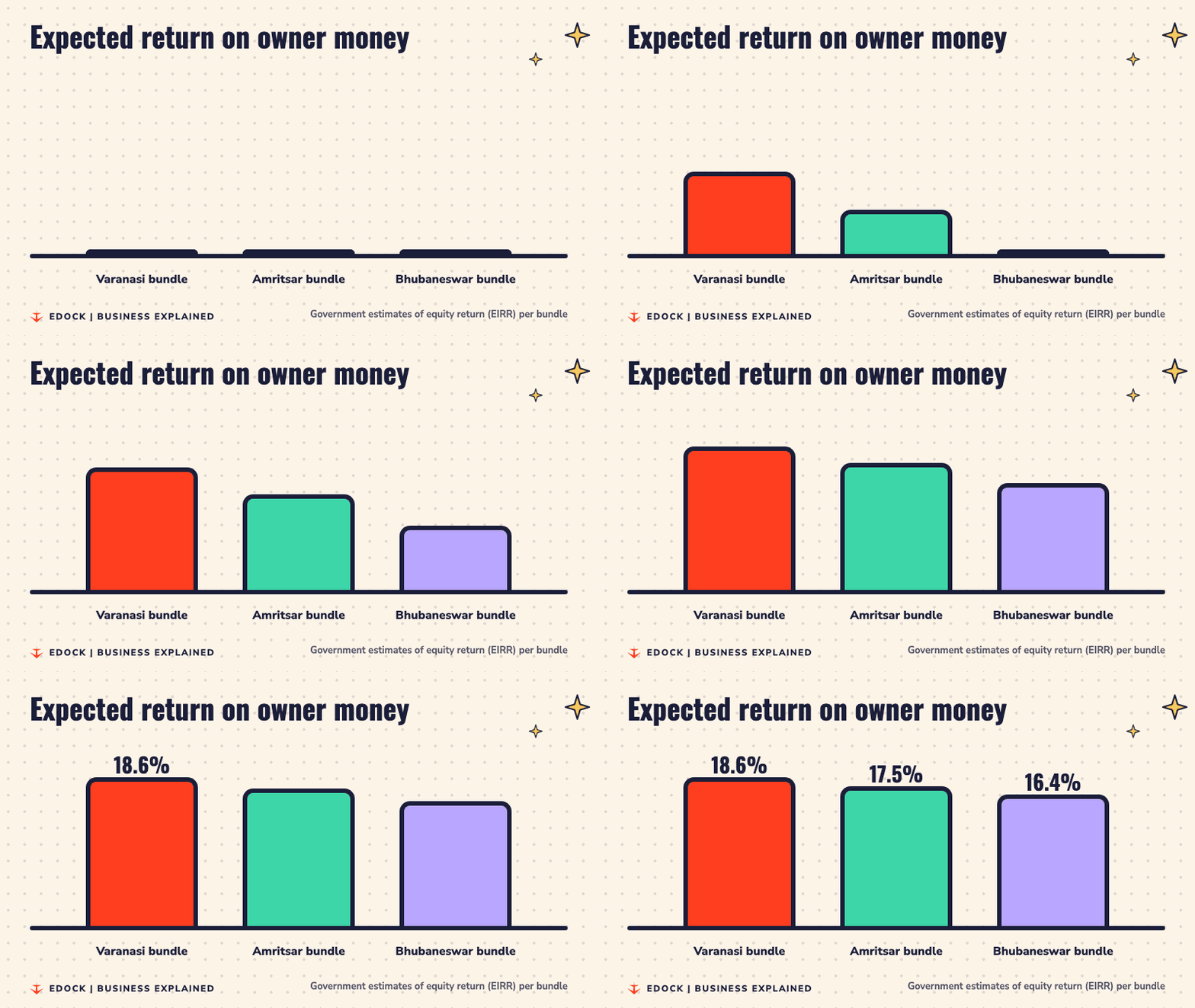
The government has also estimated the equity return. Equity is the owner's own money put into a project. If you put Rs 100 of your pocket money into a stall and earn Rs 18 a year from it, your return is 18%. The highest estimate is for the Varanasi, Gaya and Kushinagar bundle, at 18.6%. Amritsar and Kangra is estimated at 17.5%, and Bhubaneswar and Hubballi at 16.4%. These are projections, not promises.
Why is there a limit on how many one company can win?
In the last big round, in 2019, the Adani Group won all six airports on offer. This time, the government will cap the number of bundles a single bidder can win. The stated reasons are market concentration and over-leveraging. Over-leveraging means borrowing too much. If one company runs too many airports on borrowed money, trouble at one airport could spill into the others. The exact cap is still being worked out.
Who might bid? Current operators like the GMR Group and the Adani Group are expected, along with sovereign wealth funds in West Asia and Indian groups like JSW, according to people familiar with the matter. A sovereign wealth fund is a giant savings pot run by a country's government.
Why should a young flyer care?
Every flyer at these airports is part of the deal. The winner of a bundle will spend crores on the buildings, and earn from the landing fees, shops, food and parking that come with each trip. Bidding is set to begin by December, and the government hopes to finish the deals by March 2027. So the next few months will show which companies want to run airports in Varanasi, Amritsar, Bhubaneswar, Raipur and Tiruchirappalli for the next half century.
Sources
- The Economic Times: Govt to pitch 11 airports to global investors ahead of December bidding
- The Economic Times: 11 airports to see Rs 8,622 crore private investment under 50-year concessions
- The Economic Times: India caps airport bundles per bidder
- BusinessLine: Private operators expected to invest Rs 8,622 crore in 11 AAI airports
- Financial Express: Centre readies 11 airports for privatisation, with limit on bidder wins
- Moneycontrol: Government to cap airport bundles per bidder
- Cover photo: Amritsar Airport 2024, by ほっきー, CC0
