India wants 30 million tonnes of fish a year and Rs 1.25 lakh crore in seafood exports
A new plan for small river and pond fishers aims to lift fish output by half in five years. Here is where Indian seafood goes today.

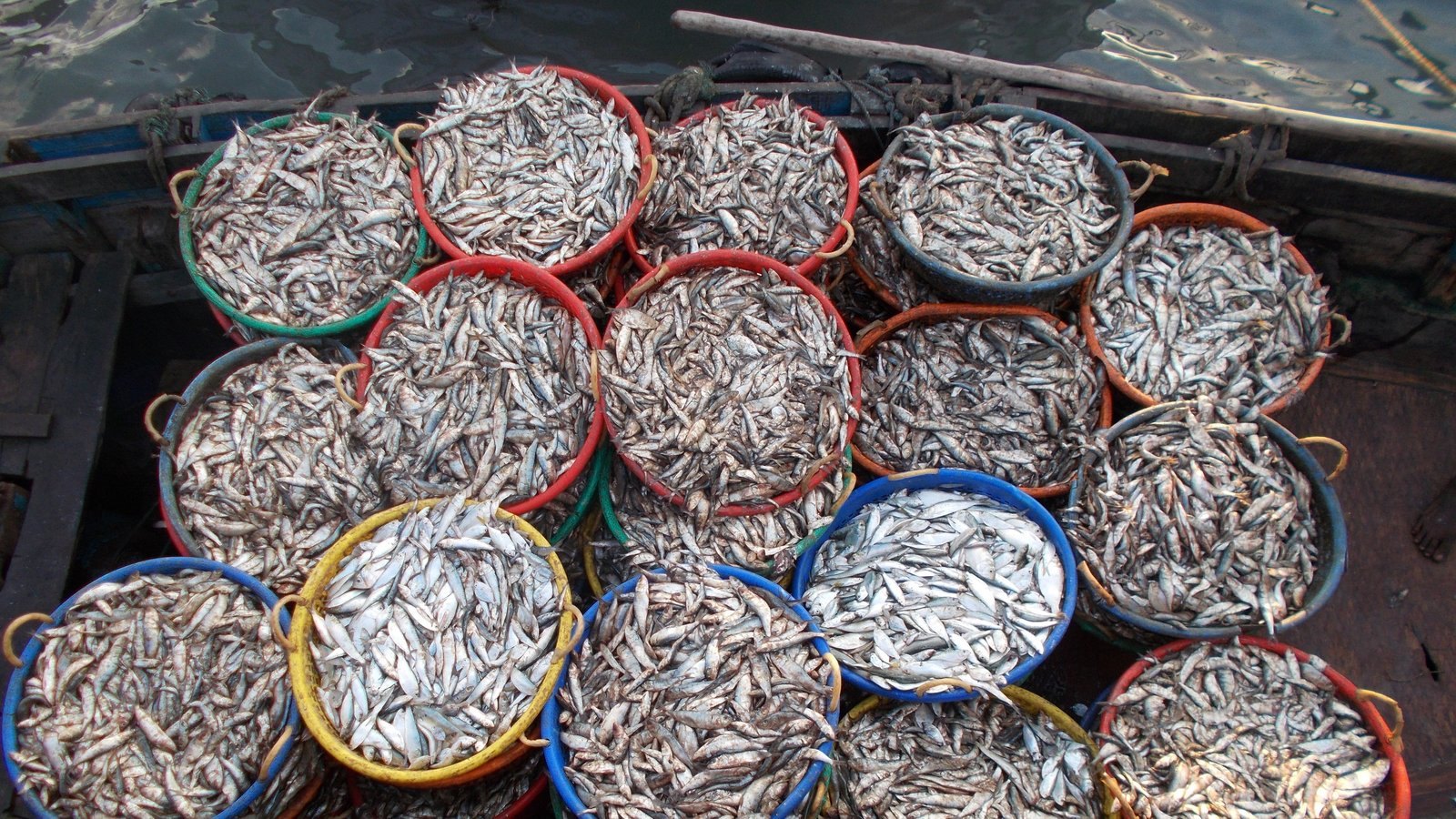
Picture every plate of fish curry, every packet of frozen prawns and every basket of sardines that India produces in a year. Now imagine making that pile about half as big again in just five years. That is the goal India's top fisheries official put on the table on Friday, 23 October 2026, in Bhopal.
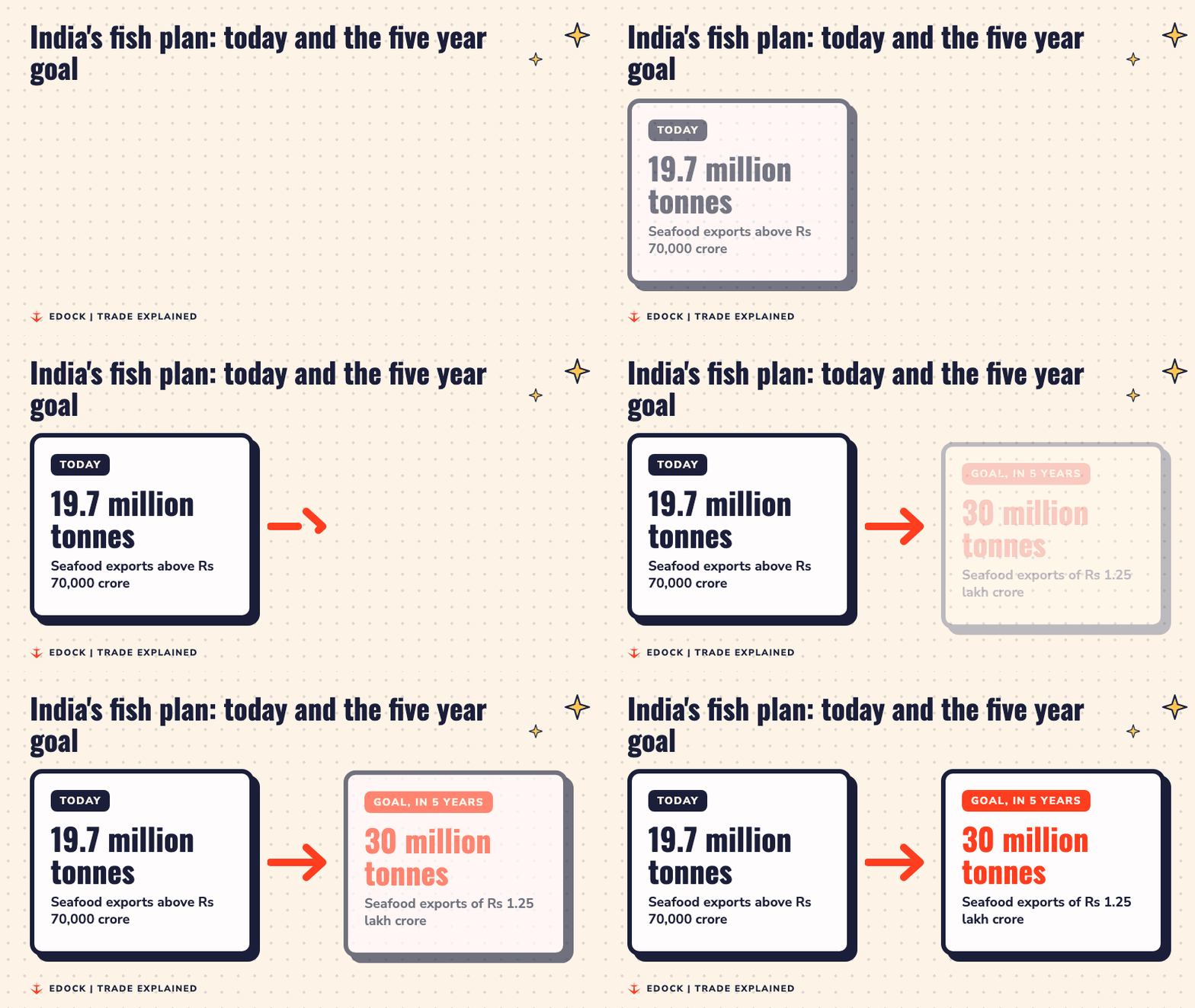
Union Fisheries Secretary Dr Abhilaksh Likhi said India has set a target of 30 million tonnes of fish production over the next five years, while seafood exports are expected to rise to Rs 1.25 lakh crore. Here is what those numbers mean, where India's fish goes today, and why a plan for small ponds and rivers matters for trade.
First, what is a tonne and an export
A tonne is 1,000 kilograms. So one tonne of fish is roughly what a small tempo can carry. A million tonnes is a million of those tempo loads.
An export is something made in India and sold to a buyer in another country. Think of a samosa stall in your colony. If the stall owner starts selling samosas to people in the next city too, those extra sales are like exports. The money comes back home, but the samosas travel far.
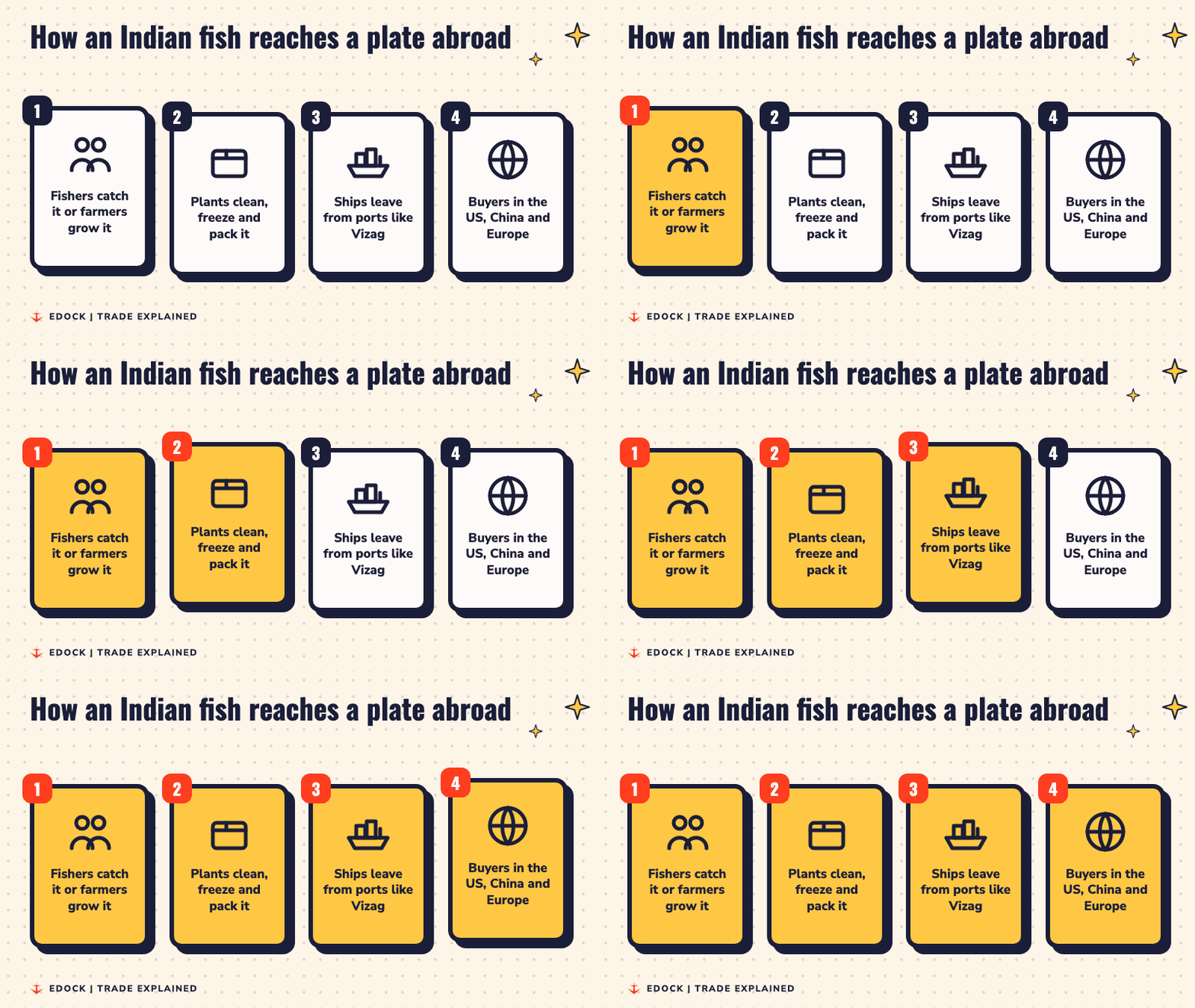
Seafood exports work the same way. Indian fishers and fish farmers catch or grow fish and prawns, factories clean, freeze and pack them, and ships carry them to buyers abroad.
Where India stands right now
According to the secretary, India now produces 19.7 million tonnes of fish a year. About three fourths of that comes from inland fisheries. Inland means fish from fresh water away from the sea: rivers, canals, lakes, reservoirs and village ponds. So nearly 15 million tonnes come from water bodies far from any beach.
He also said seafood exports have crossed Rs 70,000 crore. That is the money foreign buyers pay for Indian fish and prawns in a year.
How big is the jump
Going from 19.7 million tonnes to 30 million tonnes means adding about 10.3 million tonnes. That is a rise of a little over 50%. If a cricket team scored 197 runs last season and now wants 300, it needs about half as many runs again.
The export goal is even steeper. Rs 1.25 lakh crore is the same as Rs 1,25,000 crore. Going from Rs 70,000 crore to that figure means adding Rs 55,000 crore, a rise of nearly 80%. Imagine your pocket money going from Rs 700 to Rs 1,250 a month.
What exactly was launched in Bhopal
The target came at a two-day national workshop in the Madhya Pradesh capital. There, the secretary formally launched the development phase of a National Plan of Action for small-scale inland fisheries.
A plan of action is like a team's game plan before a big match: who does what, which problems to fix first, and how to check progress. Small-scale fisheries means the many families who fish with small boats, nets and ponds, not giant fishing companies.
The plan is being built under a framework from the UN Food and Agriculture Organisation (FAO), a United Nations body that works on food and farming. India's Department of Fisheries is leading it together with the Bay of Bengal Programme Inter-Governmental Organisation (BOBP-IGO), a group of countries around the Bay of Bengal that work on fishing.
The plan covers fish in rivers, canals, reservoirs, lakes, floodplain wetlands, tanks and cold-water systems. According to PTI, it will be finalised after talks with the people involved, before a public launch next month.
What the plan wants to fix
The official also listed what this phase will work on. These include fishing rights, work and fair pay, equal roles for women, value chains and trade after the catch, and the risks from disasters and climate change.
A value chain is every step a product passes through, from the start to your plate. For a fish, that could be the pond, the ice box, the market, the processing plant, the truck and the ship. Each step adds value, like how plain dough becomes a samosa and then a samosa with chutney. If one step is weak, for example fish spoiling for lack of ice, money is lost along the way.
The secretary said growth in production and exports must go hand in hand with protecting the livelihoods of small fishers. He also pointed to climate change and worse water quality, including falling oxygen levels in water bodies, as big worries. He asked for a mission-mode outreach so the plan reaches fishing communities, saying the document must not "remain confined to government offices".
Where Indian seafood goes today
For the full picture, look at the last complete yearly report from the Marine Products Export Development Authority (MPEDA), the government body that helps sell Indian seafood abroad. In 2024-25, India exported 1,698,170 tonnes of seafood worth Rs 62,408 crore, or US$7.45 billion. Those are older yearly figures; the secretary's newer number is above Rs 70,000 crore.
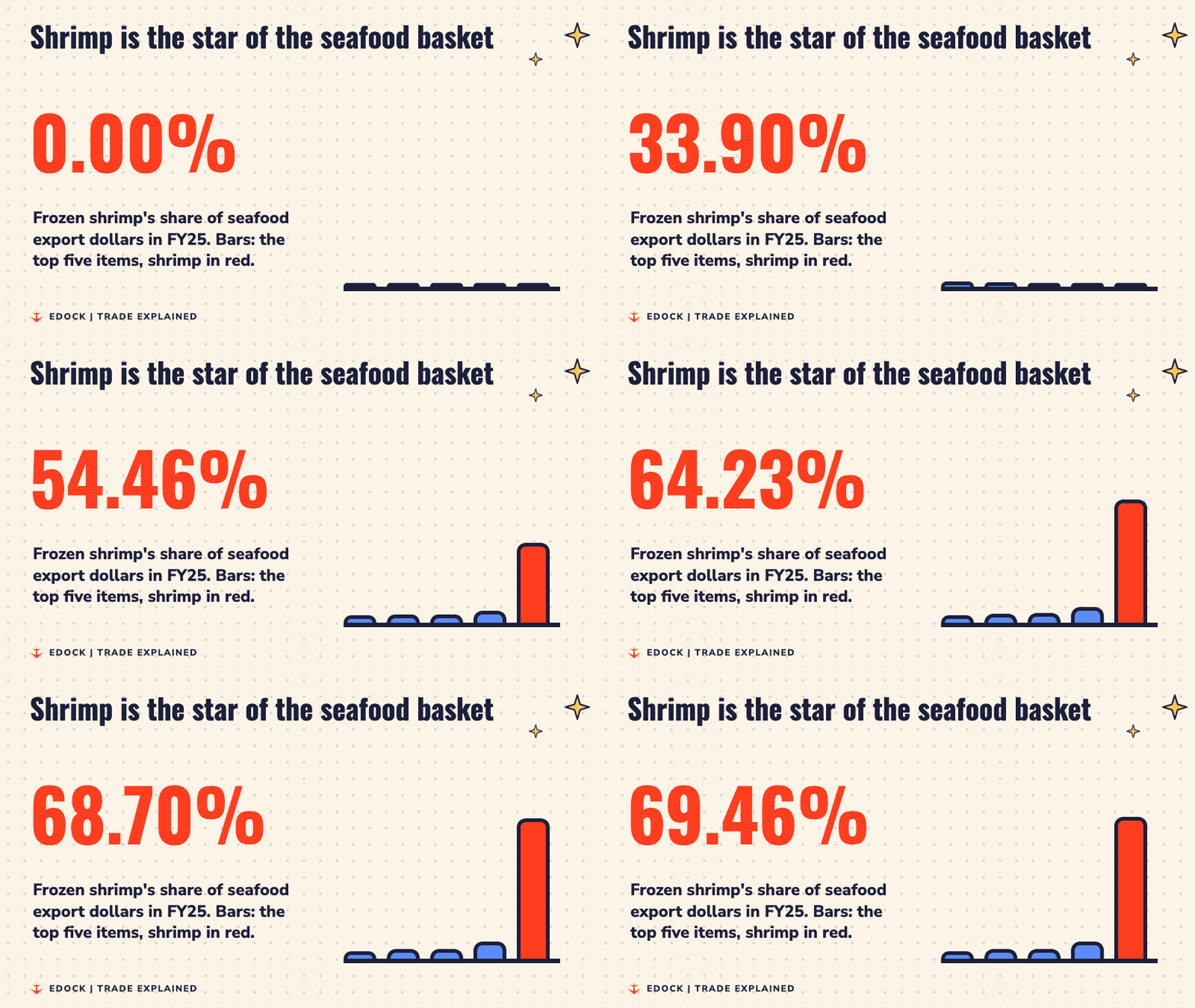
One item rules that list: frozen shrimp, which most of us call prawns. It earned Rs 43,334 crore and made up 69.46% of all the dollars India earned from seafood exports. Out of every Rs 100 that foreign buyers paid for Indian seafood, about Rs 69 was for shrimp.
The United States was the biggest buyer by value, at about US$2.7 billion, and shrimp made up most of what it bought. China bought the most by weight, about 3.96 lakh tonnes. The European Union, Southeast Asia, Japan and the Middle East followed. The two ports that handled the most seafood cargo were Vizag and JNPT in Mumbai.
This short video shows how Indian shrimp became so popular in American shops.
Why ponds and rivers matter for trade
When people think of seafood exports, they picture big boats at sea. But the secretary's numbers show most of India's fish comes from fresh water. So better ponds, cleaner water, more ice, cold storage and fair prices for small fishers all help decide how much India can sell abroad.
Think of it like a chai stall that wants to serve twice as many customers. It cannot just buy more cups. It needs more milk, a bigger stove, a better supplier and helpers who are paid on time. A plan for small inland fishers is about fixing those basic pieces.
What to watch next
The plan will be shaped through talks with fishing communities before its public launch next month. The big test is whether output can climb from 19.7 million tonnes to 30 million tonnes, and exports from above Rs 70,000 crore to Rs 1.25 lakh crore, while the small families who do the actual fishing earn more too. For anyone curious about trade, this is one to follow: a story where a village pond and a ship to another country are part of the same chain.
Sources
- The Economic Times: India eyes 30 million tonnes fish output in 5 years, seafood exports of Rs 1.25 lakh crore
- ThePrint (PTI): India eyes 30 million tonnes fish output in 5 years
- The Hawk: India goes for big push to small inland fisheries, production target set at 30 million tonnes
- MPEDA: India's seafood exports in FY 2024-25, press release
- Business Insider on YouTube: how Indian shrimp took over American markets
- Cover photo: Baskets of sardines stacked in a fishing trawler in Rameswaram port, by Rudolph.A.furtado, CC0

You may republish this story under CC BY 4.0: credit Pranav Sharma and link to this page.