India wants $250 billion of engineering exports by 2030, about double last year
Version 1 of 1 saved 25 Oct 2026, 5:27 am IST · Chain line 224
As it was first published
India wants $250 billion of engineering exports by 2030, about double last year
The Commerce Department and EEPC India held a thinking camp on how Indian machines, car parts and steel goods can sell far more abroad.
Picture every machine, car part, steel pipe and pump that India sells to other countries in one year. Now picture that pile doubling in size in just a few years. That is the goal India has set for itself: engineering goods exports of US$250 billion by 2030.
On Friday, 23 October 2026, the Commerce Ministry said that the Department of Commerce and EEPC India had held a series of brainstorming sessions called a "Chintan Shivir". The aim was simple: work out how to get there.
First, what are engineering exports?
An export is anything made in one country and sold to a buyer in another. If a factory in Pune makes a gearbox and a company in Germany pays for it, that gearbox is an Indian export.
Engineering goods are the "hard" things factories make with metal and machines. The group is very mixed. It includes metal and steel products, machinery, cars, car parts, defence equipment and even aircraft parts. Think of it as everything in a big hardware and machine shop, shipped across the sea.
This group is a big deal for India. Engineering goods make up the largest share of India's exports, about 27 to 28%, and around 40% of all manufactured goods sent abroad, says the same Financial Express report. Because the group is so mixed, it rarely gets the spotlight that a single product, like phones, gets.
Where India stands today
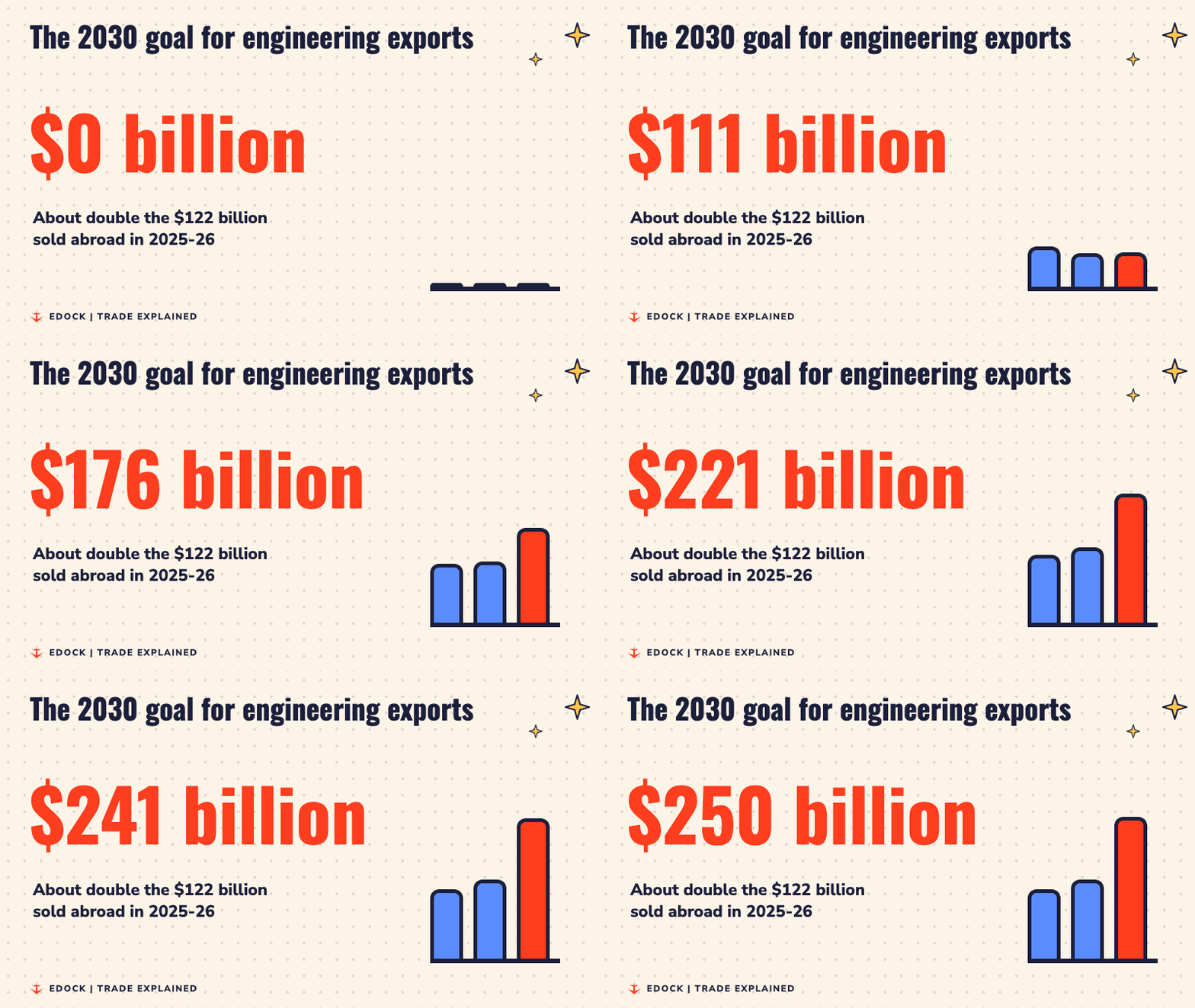
In the year 2025-26, India's engineering exports grew 4.9% to $122.43 billion. So reaching $250 billion a year by 2030 means selling a little more than double that.
This year has started fast. From April to September 2026, engineering goods exports were about $70.87 billion, up from $59.17 billion in the same six months a year earlier. That is a rise of 19.7%. September alone brought in $12.17 billion, up nearly 21% from $10.06 billion a year before.

India's total exports, goods and services together, also grew. They rose 14% to $476.20 billion between April and September 2026.
Who is EEPC India?
EEPC India is the Engineering Export Promotion Council. An export promotion council is like a team manager for a whole sport. It does not play the match itself. Instead, it helps the players (here, the factories that export) find new tournaments, speaks up for them with the government, and shares tips. The Commerce Ministry calls it the country's top body for promoting engineering exports.
Its chairman is Pankaj Chadha. Here is a short film from EEPC India about what the council does.
What is a "Chintan Shivir"?
"Chintan Shivir" roughly means a thinking camp. Picture a cricket team sitting together before a big series to plan who bats where and how to beat each rival. Here, the players were top officials, industry leaders and sector experts. They talked about what slows Indian factories down and what could speed them up.
The big worries on the table
The talks kept coming back to raw materials. These are the basic things a factory needs before it can make anything, like steel, copper or aluminium. The sessions raised concerns about getting good quality raw materials at fair prices.
Think of a samosa stall. If the price of potatoes and oil jumps every week, the stall owner cannot promise a steady price to customers. Factories face the same problem. The officials noted that ups and downs in input costs, broken supply chains, too much factory capacity around the world and trade barriers in other countries can all hurt Indian exporters.
Commerce Secretary Rajesh Agrawal also pointed to newer hurdles. These include Quality Control Orders (QCOs), which are rules that say certain products must meet a set quality standard, plus green and climate-linked rules that some markets now ask for.
The plan, in plain words
The official statement lists a few clear ideas:
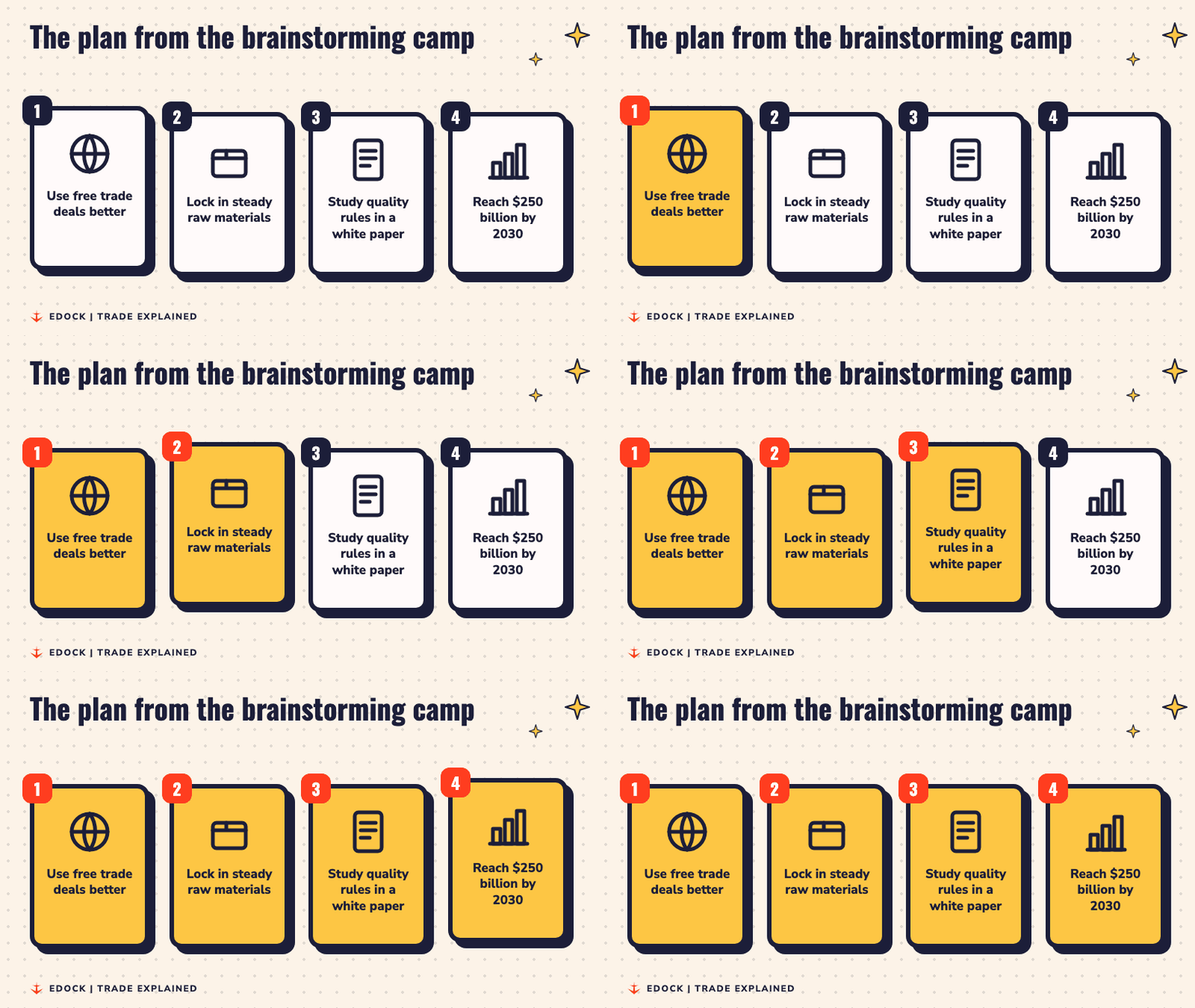
- Use free trade deals better. A free trade agreement (FTA) is a deal between two countries to cut the taxes on each other's goods at the border. It is like two neighbouring shops agreeing to give each other's customers a discount. India wants more of its exporters to actually use these deals.
- Secure raw materials for the long term, so factories are not caught short.
- Study the quality rules. Joint Secretary Vimal Anand asked EEPC India to write a detailed white paper on QCOs for the engineering sector: which products they cover, why they exist, and how they affect industry.
- Listen to every corner of the sector. He also asked EEPC India to collect feedback from members across all its engineering panels.
Could the goal be even bigger?
Here is the surprising part. A government official thinks $250 billion may be too small. Vimal Anand called on EEPC India to revisit its ambition of $300 billion by 2030. He said that with steady effort and teamwork between industry and government, engineering exports could potentially reach $300 billion.
Rajesh Agrawal went further on the big picture. He spoke of the potential to raise India's share of world goods exports from about 2% to 15 to 20%.
What the industry expects this year
Pankaj Chadha sounded confident. "We are very much on track to surpass export numbers of the previous financial year," he said, adding that engineering exports are expected to cross $140 billion this financial year.
A few days earlier, on 19 October, he had told BusinessLine that exports could reach an all-time high of $150 billion this year. He said more sales of iron and steel products and machinery would help. Either way, the industry expects a record year.
In this short interview, Chadha talks about how India's engineering exports can grow.
Why should a young reader care?
Every engineering export starts on a factory floor somewhere in India: a steel goods unit, a machine maker, a car parts plant. When those factories get more orders from abroad, they usually need more hands, from engineers and machine operators to quality checkers and people who handle shipping paperwork.
Exports also bring dollars into the country, which India needs to pay for the things it buys from abroad.
The road to $250 billion is long. It depends on steady raw materials, smart use of trade deals and passing the quality rules of many countries. But the starting point is strong, and the people running the race now have a plan written down.
Sources
- PIB, Ministry of Commerce and Industry: Chintan Shivir for the engineering sector (23 October 2026)
- India Shipping News: Dept of Commerce and EEPC India hold Chintan Shivir
- Swarajya: India eyes $250 billion engineering exports by 2030
- BW Businessworld: India targets $250 billion in engineering exports by 2030
- Financial Express: Engineering exports grow faster
- The Economic Times: Engineering goods exports in September
- BusinessLine: Engineering exports seen at an all-time high this fiscal
- Cover photo: JNPT Port container handling, by Ccmarathe, CC BY-SA 4.0
