India sold less fuel abroad but earned nearly 50% more
Version 1 of 1 saved 27 Oct 2026, 9:07 am IST · Chain line 264
As it was first published
India sold less fuel abroad but earned nearly 50% more
Costlier diesel and a weaker rupee meant each barrel India exported from April to September 2026 brought home far more rupees.
Picture a shop that sold fewer things this year but still took home a lot more money. That is what happened to India's fuel sellers. In the six months from April to September 2026, India earned nearly 50% more in rupees from selling fuel abroad, even though it sent out less fuel. The petroleum ministry data behind this was reported by The Economic Times on 27 October 2026.
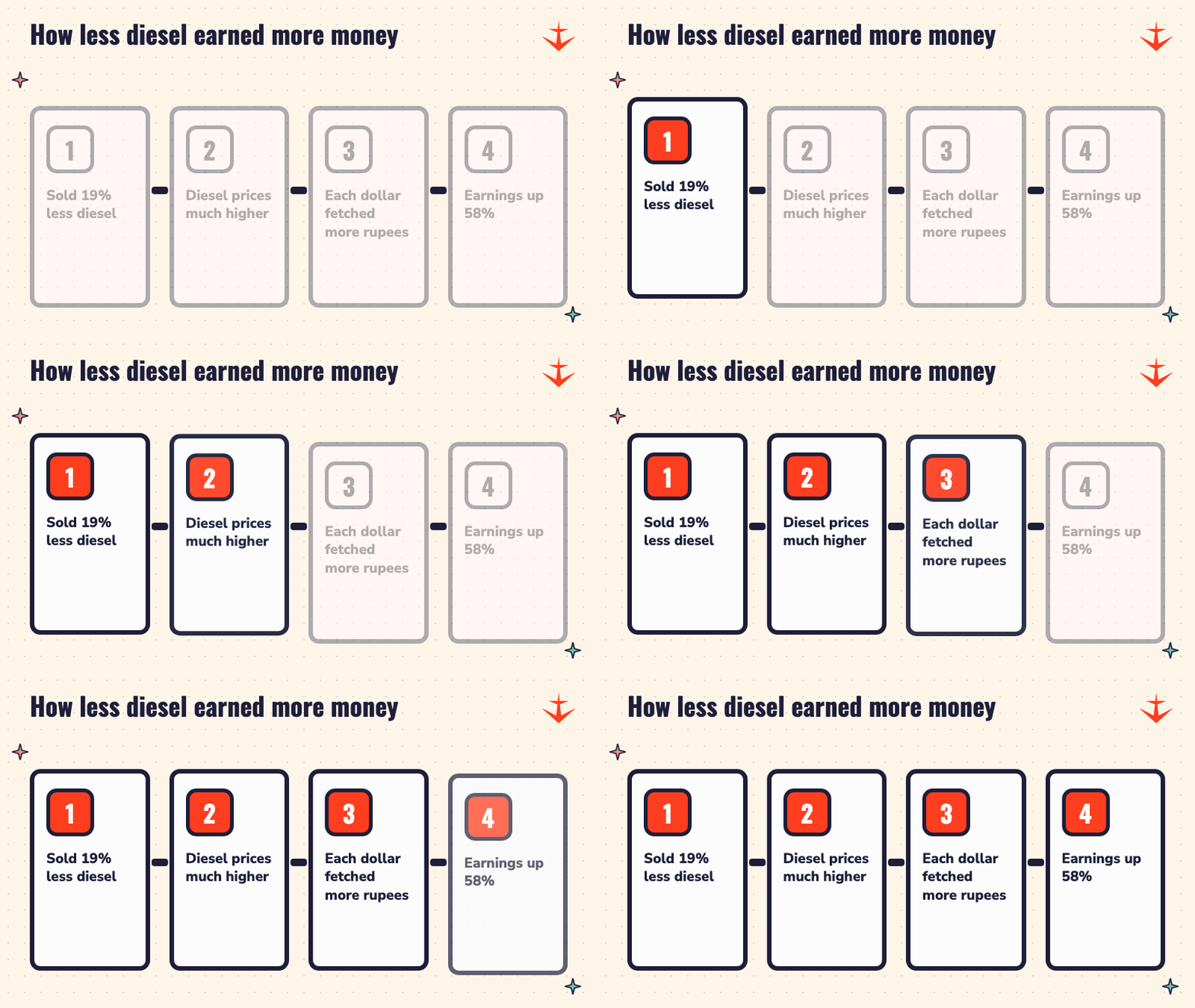
Diesel is the star of the story. India sold 19% less diesel abroad, yet its diesel earnings jumped 58% to about Rs 1.2 lakh crore. One lakh crore is Rs 1,00,000 crore, so this is a giant pile of money.
What does "exporting fuel" mean?
An export is anything a country makes and sells to another country. India buys crude oil, the thick black liquid that comes out of the ground. Big factories called refineries clean and split it into useful fuels like diesel, petrol and jet fuel. Most of this fuel is used inside India. The extra is sold to buyers in other countries.
India mostly sells diesel, petrol, jet fuel, naphtha and fuel oil. Diesel made up 42% of these fuel exports by volume, and petrol made up 23%.
Earnings and volume are not the same thing
Two words matter here. Volume is how much you sell. Earnings are how much money you get for it.
Think of a samosa stall. Last month it sold 100 samosas at Rs 10 each and made Rs 1,000. This month it sold only 80 samosas, but each one sold for Rs 20. It made Rs 1,600. Fewer samosas, more money. The price did the heavy lifting.
India's diesel did the same thing. Fewer barrels left the country, but each barrel brought in much more money. In dollar terms, diesel earnings rose 48%, while the average regional diesel price rose to $151 per barrel. A barrel is a standard unit for measuring oil.
Why did fuel get so costly?
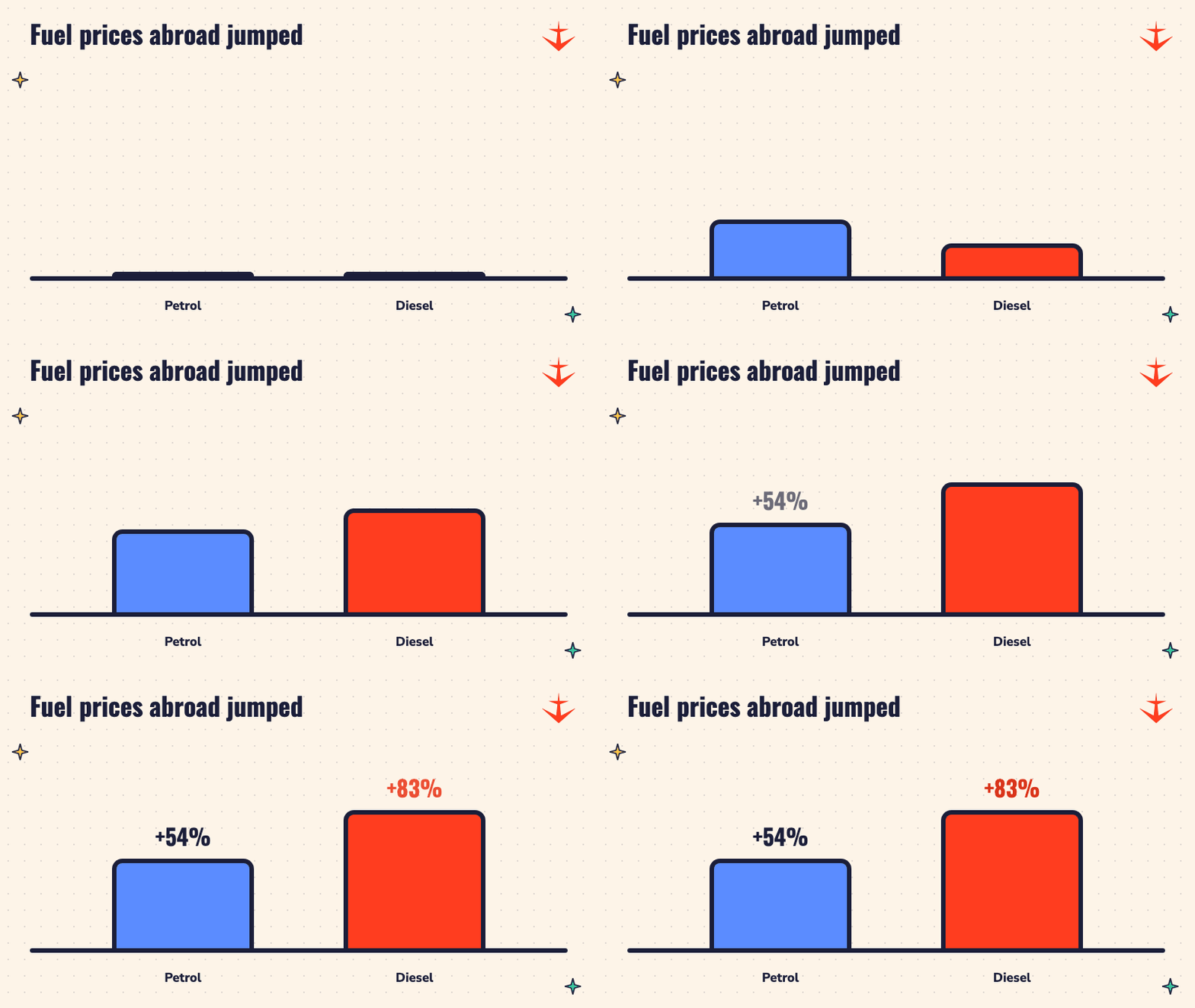
Average regional benchmark prices for diesel and petrol climbed 83% and 54% in the six months to September. A benchmark price is like the "MRP" that traders across a region look at when they set their own prices.
Prices rose because supply got tight. Crude oil stayed costly after the near closure of the Strait of Hormuz, a narrow sea route in West Asia that a lot of the world's oil passes through. Diesel had extra trouble because of attacks on Russian refineries, which pushed diesel prices to record highs in some months, the report said.
When fewer shops are selling something everyone needs, the price goes up. It is like chai at a cricket ground when only one stall is open.
The weak rupee gave a second push
Fuel is sold abroad in US dollars. When the dollars come home, they are changed into rupees. So the rupee's value matters a lot.
From April to September 2026, one dollar was worth Rs 95.17 on average, against Rs 86.44 a year earlier. That is a slide of about nine rupees. A "weak rupee" means you need more rupees to buy one dollar.
Here is a simple example. Say a buyer in Africa pays $100 for some diesel. Last year, that $100 turned into Rs 8,644. This year, the same $100 turned into Rs 9,517. Same dollars, more rupees. For a seller, a weak rupee works like a bonus.
That is why the rupee jump (nearly 50%) is bigger than the dollar jump (nearly 40%) in total fuel earnings.

So why did India sell less?
Because Indians are using more fuel at home, while refineries are not making more. In the six months to September, diesel and petrol use inside India grew 5% and 7%. Production of diesel and petrol fell 0.3% and 0.8%. With more fuel needed at home, less was left over to sell abroad.
Think of pocket money. If your spending goes up and your money stays the same, you have less left to lend your friends.
Data from the Petroleum Planning and Analysis Cell (PPAC), a unit of the petroleum ministry, tells the same story for April to August. Fuel export volumes fell from 25.7 to 21.5 million tonnes, while export value rose to $21.7 billion from $15.9 billion, ThePrint reported. Buyers in East and Southern Africa, such as Tanzania, South Africa, Mozambique and Kenya, became important markets.
Diesel exports picked up again later. In September 2026 they hit a one-year high of about 620,000 barrels per day, with Europe taking about 280,000 barrels per day, Angel One reported, citing Kpler data.
Who actually sells all this fuel?
Mostly one company. Reliance Industries handles about 70% of India's fuel exports. Nayara Energy, which is backed by Russia's Rosneft, and the government-run MRPL supply most of the rest.
Reliance runs the Jamnagar refinery in Gujarat. It started in July 1999 and can now handle 1.24 million barrels of oil a day. It is called the largest oil refinery in the world. A windfall tax, an extra tax the government charges when profits shoot up suddenly, was about $37 per barrel on diesel exports in September. It does not apply to Reliance's export-only Jamnagar refinery, Angel One said.
Nayara runs the Vadinar refinery. ThePrint calls it India's second-largest oil refinery. Rosneft owns 49% of Nayara Energy.
This video gives a look at why the Jamnagar refinery stands out.
Is a weak rupee good or bad?
It cuts both ways. Fuel sellers gain, as the example above shows. But India buys most of its crude oil from abroad. Imported crude covers nearly 90% of the country's needs, and it is paid for in dollars. Costly oil means refiners need more dollars, which puts more pressure on the rupee.
Only about a quarter of the dollars India spends on crude and fuel imports comes back through fuel exports. By volume, India sells abroad about a fifth of the crude and fuel it buys. So the export boost helps, but it does not cover the full oil bill.
This short video explains how a falling rupee can help exporters.
The big picture
India's fuel export story this year is about price, not quantity. Fewer barrels went out. Costlier fuel and a weaker rupee meant each barrel brought home far more rupees. At the same time, people at home are using more petrol and diesel, which leaves less to sell abroad. How long the high prices last will decide whether these bigger earnings stay.
Sources
- The Economic Times: India earns nearly 50% more from fuel exports in April to September
- ThePrint: India's petroleum product exports fall 16% amid Hormuz crisis but earnings rise
- Angel One: India's diesel exports hit 1-year high in September 2026
- Wikipedia: Jamnagar refinery
- Firstpost on YouTube: Why Jamnagar refinery stands out
- Ecoholics on YouTube: Weak rupee and India's exports
- Cover photo: Nayara Refinery 2, by Nayara, CC BY-SA 4.0
