India sold $16.14 billion of medicines abroad in six months as Europe bought more
Version 1 of 1 saved 30 Oct 2026, 8:30 am IST · Chain line 325
As it was first published
India sold $16.14 billion of medicines abroad in six months as Europe bought more
Pharma exports grew 4.9% from April to September 2026, with Europe, Southeast Asia and Latin America making up for slower sales to the US.
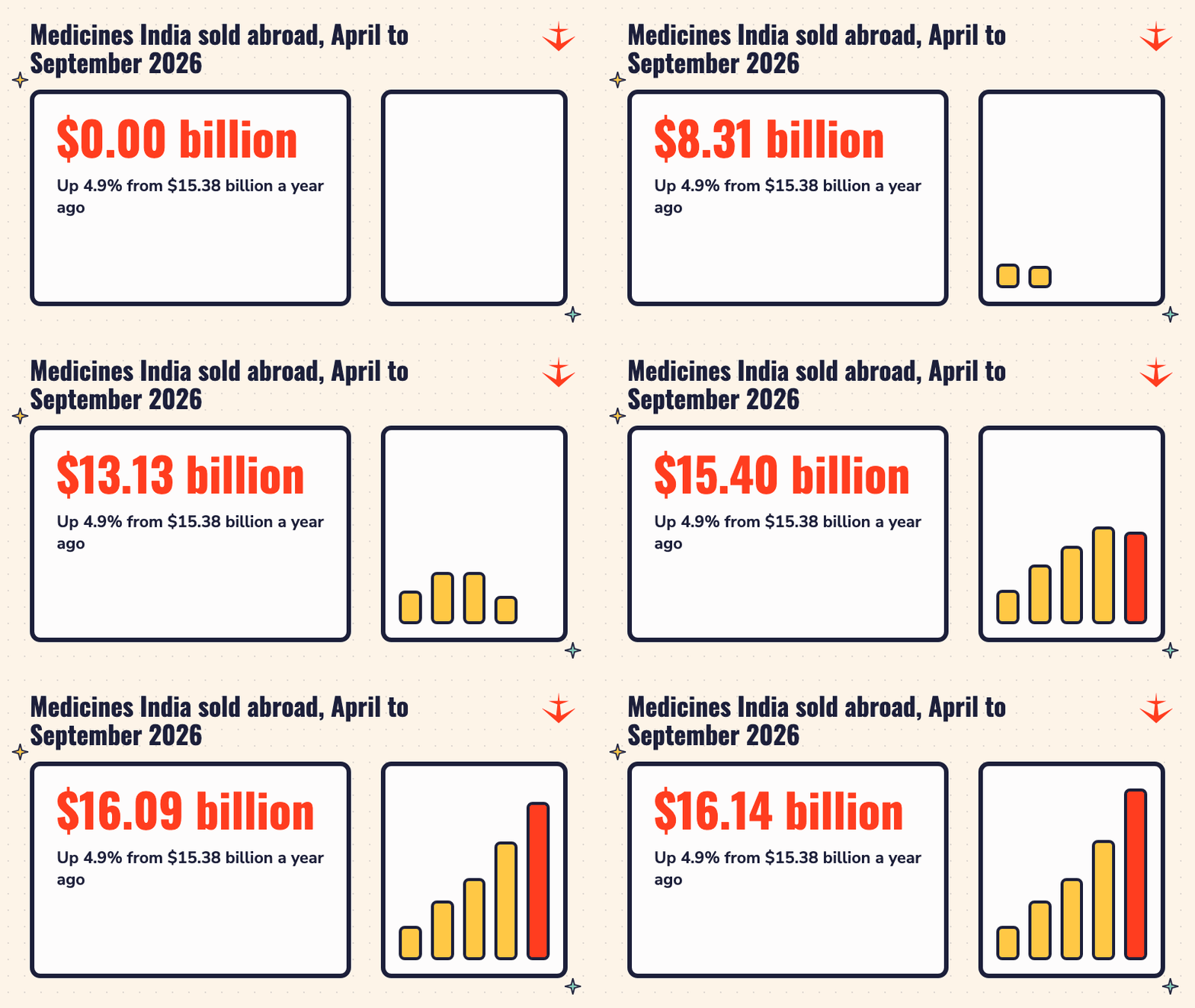
Picture a medicine strip made in a factory in India. Soon, the same strip could be sitting on a chemist's shelf in Germany, Brazil or France. That journey is now worth a lot of money. Between April and September 2026, India sold medicines worth $16.14 billion to other countries, up 4.9% from a year ago.
The numbers came out on Thursday, 29 October 2026, from Pharmexcil, the council that helps Indian medicine makers sell abroad. The surprise is not the total. The surprise is where the growth came from. Sales to Europe, Southeast Asia, Latin America and Africa went up, while sales to the United States, India's biggest buyer, slowed down.
First, what does "export" mean here?
An export is something made in one country and sold to buyers in another. Think of a samosa stall in your street. If people from the next town also start buying from it, the stall is "exporting" to that town. India's medicine makers do the same thing, just on a giant scale, with ships and planes instead of a cycle.
Pharmexcil collects these numbers every month. The period it reported now, April to September, is the first half of India's money year 2026 to 27, often written as H1 FY27.
How big is $16.14 billion?
In the same six months last year, exports were $15.38 billion. So India sold about $0.76 billion more this time. That is steady growth, not a jump. It is like a batter who keeps scoring singles and twos. No sixes, but the score keeps moving.
The second quarter, July to September, grew a little slower. Sales went up 3.05% to $8.04 billion. September alone brought in about $2.74 billion, the best month of the quarter.
Why is India called the pharmacy of the world?
India is often called the "pharmacy of the world". It supplies about one fifth of the world's generic medicines and sends them to over 200 countries. A generic medicine is a copy of a branded medicine whose patent has ended. A patent is a legal lock that lets only the inventor sell a new drug for some years. Once the lock opens, other companies can make the same medicine and sell it much cheaper. Indian companies are very good at this.
For the whole of the last money year, 2025 to 26, India's medicine exports were $31.12 billion, a rise of 2.16%.
Who is buying more Indian medicines?
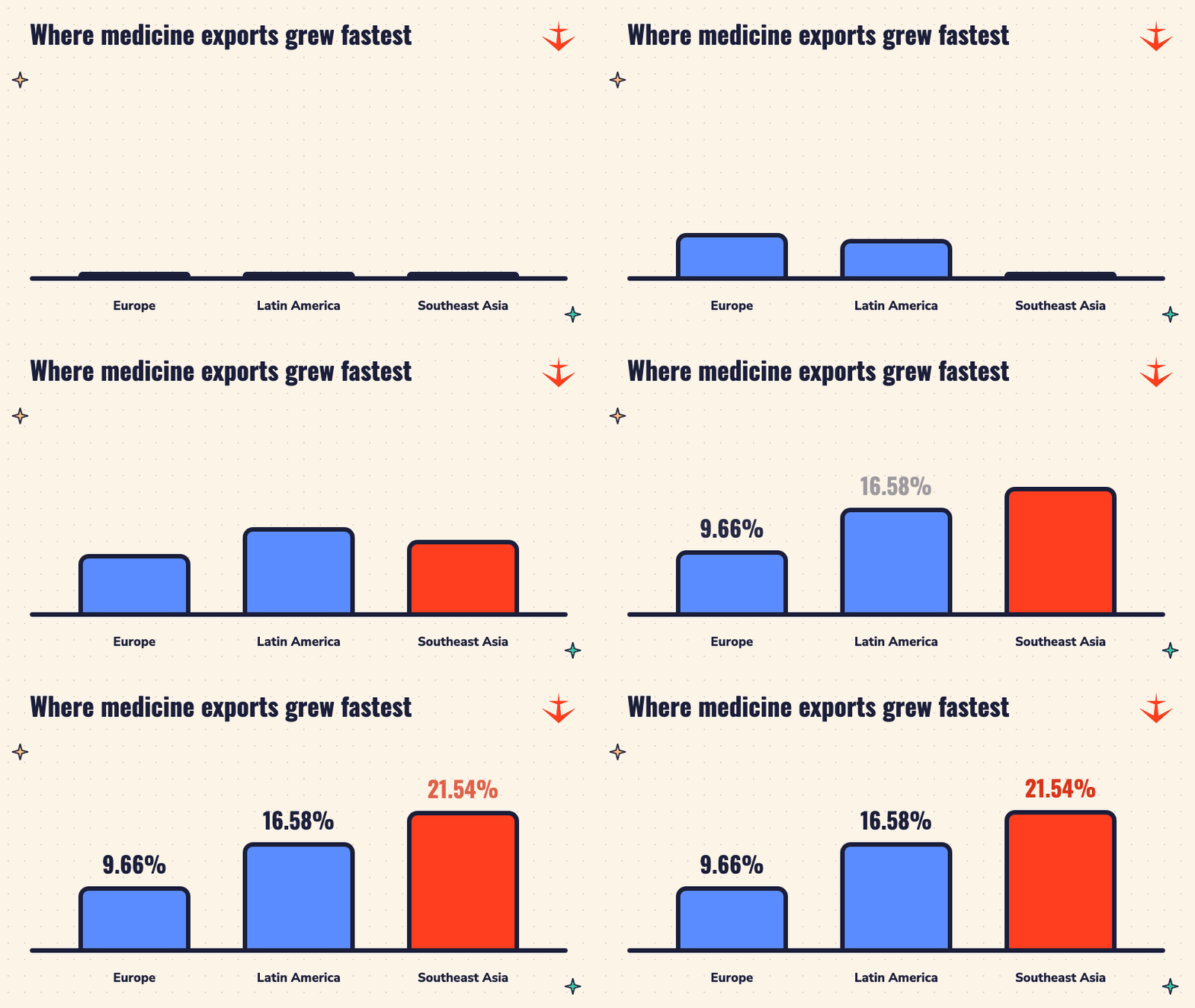
Europe is the star of this report. Sales there rose 9.66% to $3.29 billion. That is more than one fifth of all of India's medicine exports in these six months. Germany, the Netherlands and France grew strongly.
Other regions grew too, and two of them grew even faster:
- Southeast Asia (the ASEAN group): up 21.54%
- Latin America and the Caribbean: up 16.58%
- Africa: up 6.48%
And what is happening with America?
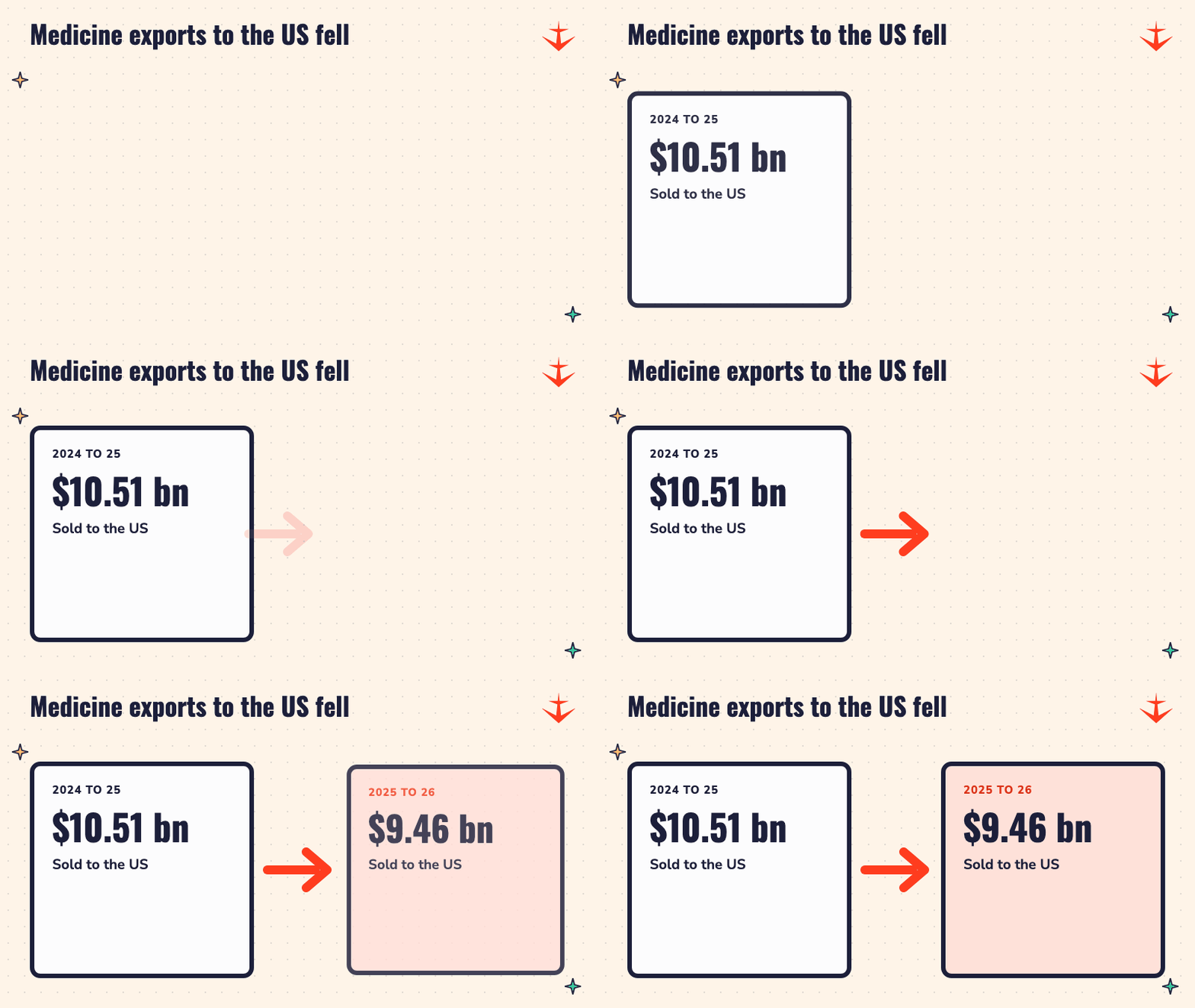
The United States is still India's single biggest buyer of medicines. In 2025 to 26, India sent $9.46 billion of medicines there, about 30% of all such exports. But that was lower than the $10.51 billion of the year before.
From April to June 2026, the US took $2.50 billion, or 30.89% of India's medicine exports. For the full six months, Pharmexcil did not share the US number. It only said shipments to the US "moderated", which means they slowed down.
Why spread out to many countries?
Think of a chai seller who has one huge customer, a big office next door. If that office shuts for a week, the chai seller has a bad week too. But a seller with fifty small customers across the street, the market and the bus stand is much safer.
Indian medicine makers are doing the same. When one big market slows, others can keep the total growing. Pharmexcil itself said the gains in other regions "helped sustain" overall growth and showed the importance of a "geographically diversified" export presence, as reported by Business Standard. Diversified simply means spread out.
What kinds of medicines go abroad?
Ready medicines, like tablets, syrups and injections, are the biggest group. Pharmexcil calls them "drug formulations and biologicals". They made up 73.84% of all exports and grew 3.81%.
Bulk drugs grew faster, by 12.07%. A bulk drug is the main active powder inside a medicine, the part that actually works. Think of it as the masala in a dish. Other companies, in India or abroad, buy this powder and turn it into tablets. Surgical goods, like bandages and other hospital supplies, grew 9.53%.
What happens next?
Pharmexcil's chairman, Namit Joshi, wants Indian companies to do more than make cheap copies. In his words, "The next phase of our growth should focus on moving up the value chain, where Indian companies are not just suppliers but active partners in pharmaceutical innovation."
"Moving up the value chain" means making things that are harder to make and earn more money per strip. He named complex generics, biosimilars and special therapies. A biosimilar is a close copy of a medicine made from living cells, which is much harder than copying a simple tablet. He said this would need more spending on research, technology transfer (sharing know-how with partners) and making new medicines together with partners.
Vice chairman Bhavin Mehta said the double digit growth in bulk drugs shows how wide India's own manufacturing has become. He also said more spending on quality and on meeting rules in other countries would help more exporters, including small companies, sell abroad.
What does this mean for India?
Every dollar of export brings money into India. That money pays for factory work in medicine towns such as Hyderabad, Ahmedabad, Baddi and Visakhapatnam, and for the trucks, ports and packaging that move the strips. When buyers come from many countries, that money keeps flowing even if one big buyer slows down.
This video explains how India became so strong in generic medicines.
And this one, from Pharmexcil, gives a short overview of the Indian medicine industry.
Sources
- The Economic Times: India's pharma exports rise 4.9% to USD 16.14 bn in H1
- Business Standard: India's pharma exports grow 4.9% to $16.14 bn in H1FY27 on Europe gains
- Indian Pharma Post: India's pharma exports rise 6.8% to USD 8.1 billion in Q1 FY27
- IBEF: Market insights, pharma and electronics exports in FY26
- Wikipedia: Pharmaceutical industry in India
- Cover photo: A tablet strip made in India, photographed in Howrah, by Biswarup Ganguly, CC BY 3.0
