India sells only 0.6% of the processed food the UK buys abroad, and the trade pact may change that
Version 1 of 1 saved 22 Oct 2026, 5:43 pm IST · Chain line 143
As it was first published
India sells only 0.6% of the processed food the UK buys abroad, and the trade pact may change that
The UK buys $50.68 billion of snacks, sauces and ready meals from abroad each year. The new pact has removed its tariffs of up to 70% on Indian processed food.
Picture a big supermarket in London. Shoppers there spend money on chips, sauces, biscuits, ready meals and frozen snacks. Now imagine every $100 that the UK spends on such food bought from other countries. Only about 60 cents of it goes to India.
That is the surprising number shared by the Trade Promotion Council of India (TPCI), an industry body that helps Indian firms sell abroad. On Thursday, 22 October 2026, it said India has a lot of room to sell more processed food to the UK, now that the new India-UK trade pact has removed the UK's border taxes on many such foods.
First, what is processed food?
Raw food is food as it comes from the farm, like a potato or a handful of peanuts. Processed food is food that has been cooked, mixed, dried, frozen or packed in a factory. A potato becomes a packet of chips. Peanuts, besan and spices become a pack of namkeen. Tomatoes become ketchup. Think of the snack shelf at your local kirana store: almost everything on it is processed food.
Processed food is easier to ship far away. It lasts longer and comes in neat packs. That makes it a good thing for India to sell to other countries.
The tiny slice India has today
According to TPCI, the UK buys $50.68 billion worth of processed food from other countries every year. India's share is just 0.6%, or about $309.5 million.
Put another way, the UK's total processed food shopping from abroad is more than 160 times bigger than what India sells it. It is like a cricket ground full of fans, and India has sold samosas to only a few of them.
TPCI chairman Mohit Singla called this "significant room for expansion". In simple words: the shop is huge, and India has barely started selling in it.
Other groups count food a little differently, so the exact numbers change. A report by the think tank Global Trade Research Initiative (GTRI) said the UK bought processed food worth $33.4 billion in 2025, and India supplied only $354 million of it, a share of about 1.1%. Either way, the message is the same: India's slice is very small.
What is a tariff?
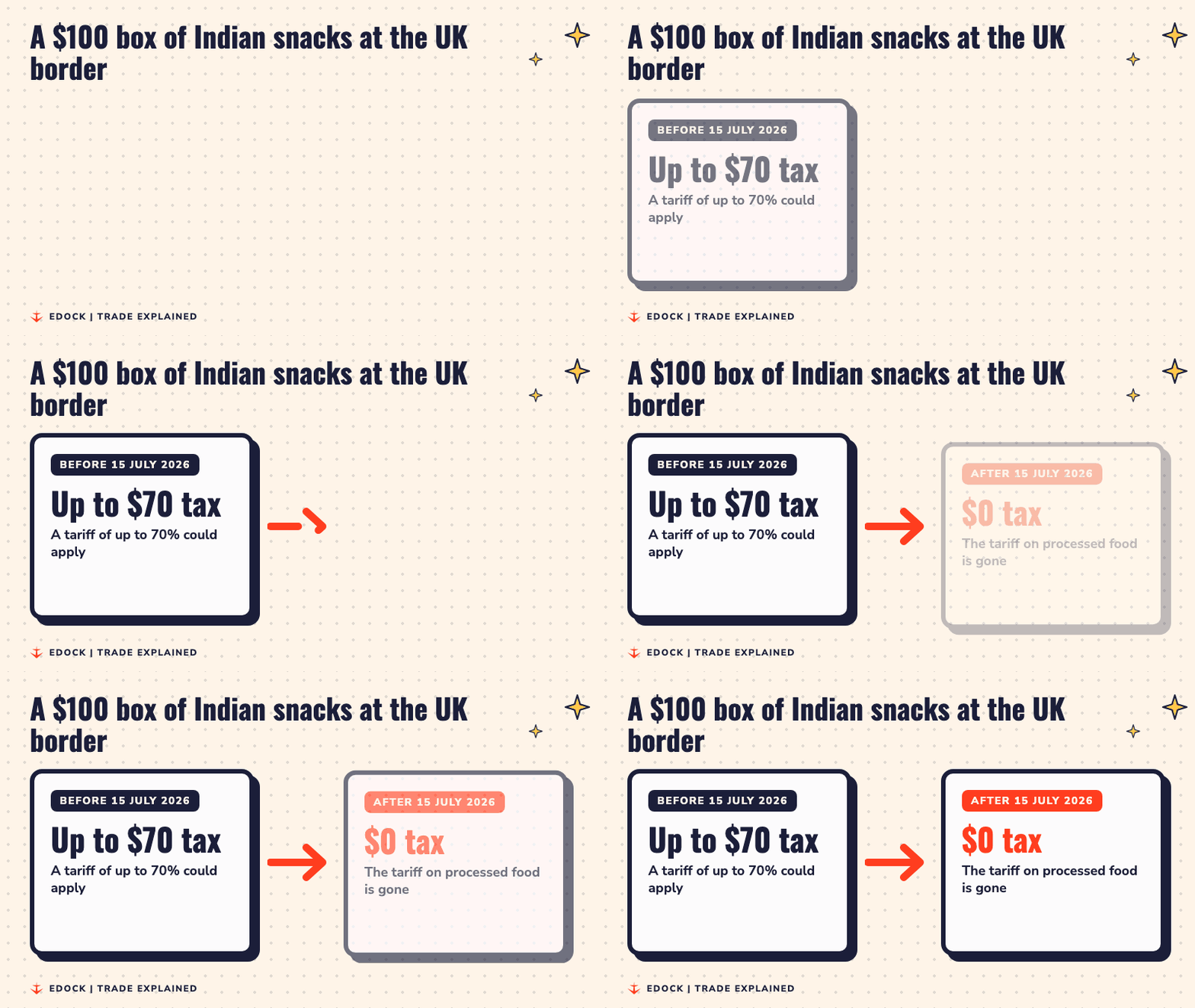
A tariff is a tax that a country charges on goods when they cross its border. Think of it as an entry fee. If an Indian company sends a box of snacks to the UK, the UK can charge a fee before the box can be sold there. The shop then often adds this fee to the price. So the snacks cost more for British shoppers, and they may pick a cheaper pack from somewhere else.
What is a trade pact?
A trade pact is a deal between two countries to make buying and selling with each other easier. It is like two friends agreeing to swap lunch items without asking anything extra in return each day.
India and the UK signed such a deal, called the Comprehensive Economic and Trade Agreement, or CETA. It was signed in July 2025 after 14 rounds of talks and came into force on 15 July 2026. On the first day alone, more than 50 shipments worth over $140 million left India for the UK under the new rules.
The deal gives Indian goods zero-duty access to 99% of tariff lines in the UK market. A tariff line is simply one item in the long list of goods that a country taxes. So almost every type of Indian product can now enter the UK without that entry fee.
How big were the old fees?
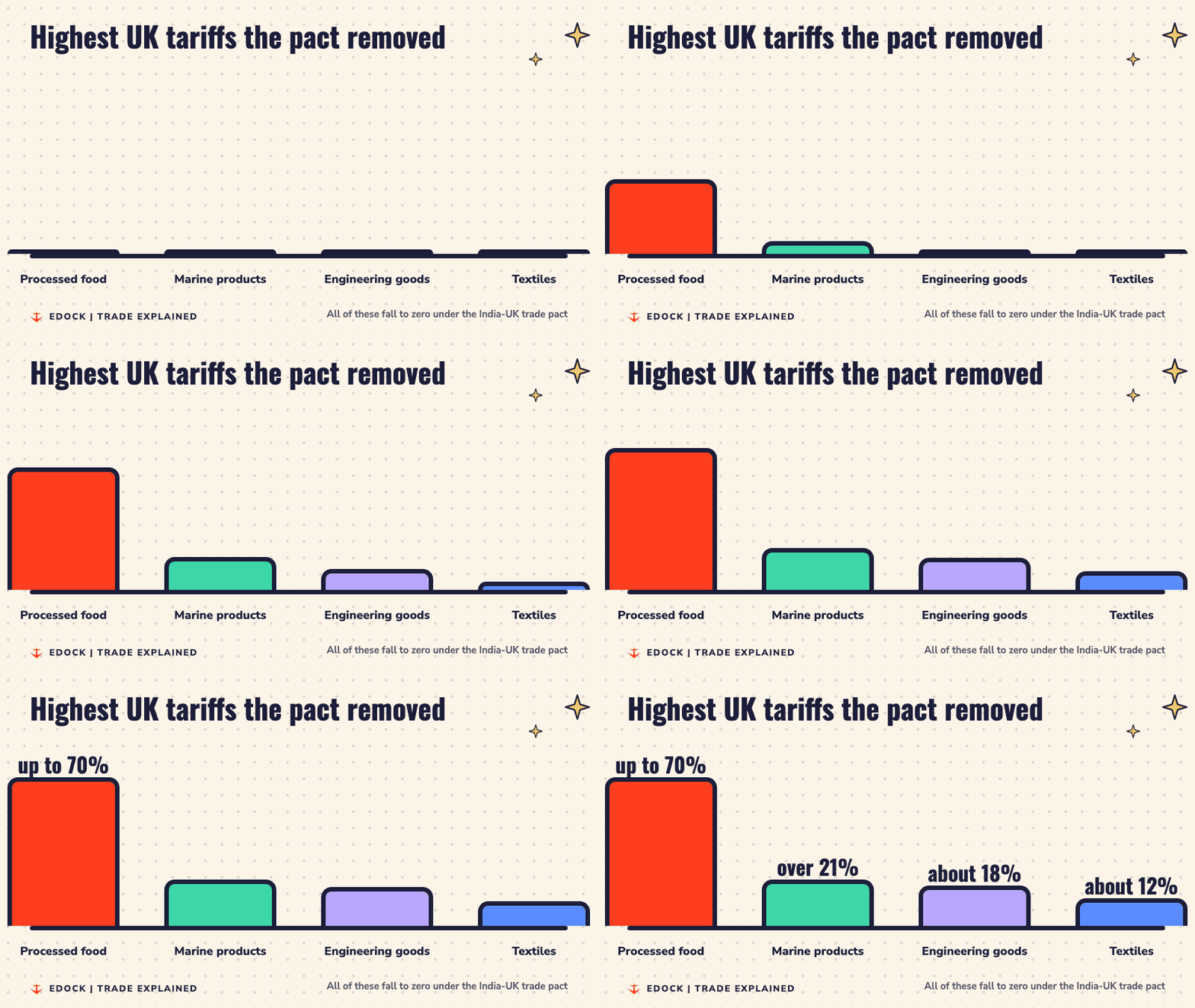
For food, the change is large. TPCI says the pact has removed UK tariffs of up to 70% on processed foods, 4.2% to 8.5% on shrimp, and the duties on instant coffee. Singla said this gives Indian makers "immediate competitive parity". That means they can now compete on the same level as sellers from other places.
India's public broadcaster listed more fees that are going to zero: over 21% on marine products, around 18% on engineering goods and auto parts, and around 12% on textiles and clothing. Processed food had the biggest fee of them all.
India also kept some things safe on its own side. It did not open up dairy products, cereals, millets, edible oils, oilseeds, apples and several vegetable products to cheaper UK goods.
Who is helping Indian food makers?
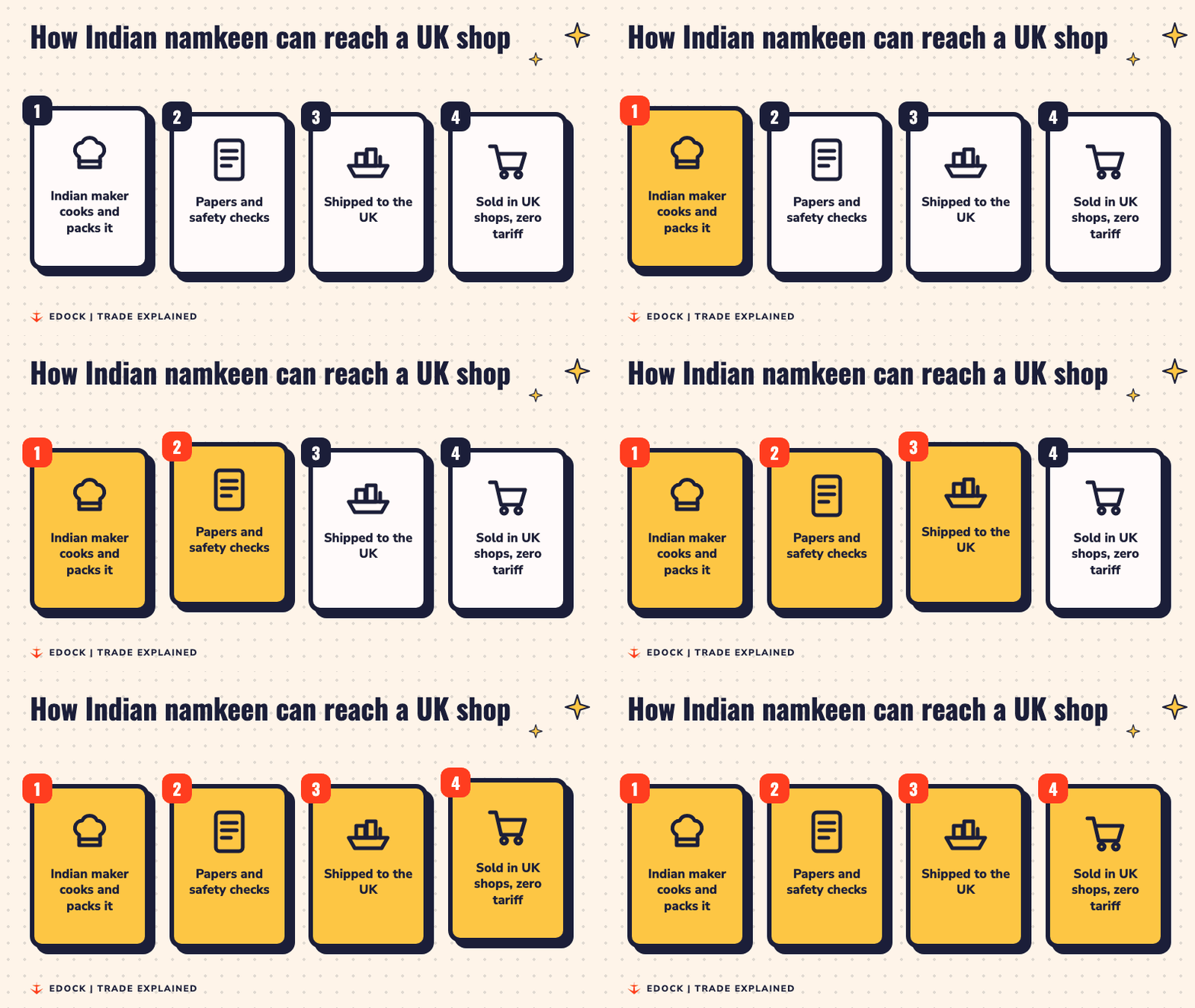
Lowering a fee does not, by itself, put a pack of Indian snacks on a London shelf. Someone has to connect Indian sellers with British buyers.
That is why TPCI has signed an MoU with the UK-India Business Council (UKIBC). An MoU, or memorandum of understanding, is a written promise to work together. It is not a sale or an order. The two groups say they will connect businesses, plan trade trips, share market information and help small and medium firms in both countries.
They have already started. On 15 October, they held a food and drinks trade event in London. It brought together 48 Indian exporting companies and 150 UK-based importers. An exporter sells goods to another country. An importer buys goods from another country to sell at home. So this was like a speed-meeting day between sellers and buyers, with about three buyers in the room for every seller.
So will exports jump right away?
Not by magic. The GTRI report gave a clear warning. It said tariff cuts alone will not guarantee higher exports unless Indian sellers meet the UK's strict rules on food safety, tracing where food comes from, and labels.
Think of it like a school exam. The trade pact has removed the entry fee for the exam hall. But you still need to study and answer the paper correctly. For food makers, that means clean factories, correct labels and proper test reports for every batch.
The same report said the foods with the best chance include ready-to-eat foods, bakery and sweets, sauces and ethnic foods. Ethnic foods are dishes linked to a culture, like Indian curries, pickles or snacks.
Why this matters for young Indians
More food exports can mean more work in food factories, packing units, food testing centres, shipping firms and trade offices. The TPCI and UKIBC partnership says it wants to create growth chances for small and medium firms in both countries.
The bigger goal is clear too. Trade between India and the UK stands at nearly $56 billion, and both governments want to double it by 2030.
For now, the scoreboard is simple. The UK spends about $50 billion a year on processed food from abroad. India gets about 60 cents of every $100 of it. The entry fee is gone. The rest depends on how well Indian food makers play the game.
Sources
- BusinessLine: India has huge scope to expand processed food exports to UK after trade pact, says TPCI
- News On AIR: India-UK Comprehensive Economic and Trade Agreement comes into force
- Maritime Gateway: India-UK CETA comes into force
- Rural Voice: India-UK CETA opportunities in agri products, processed foods and seafood
- Cover photo: Spicy and namkeen garlic mixture snack with peanuts, by Billjones94, CC0
