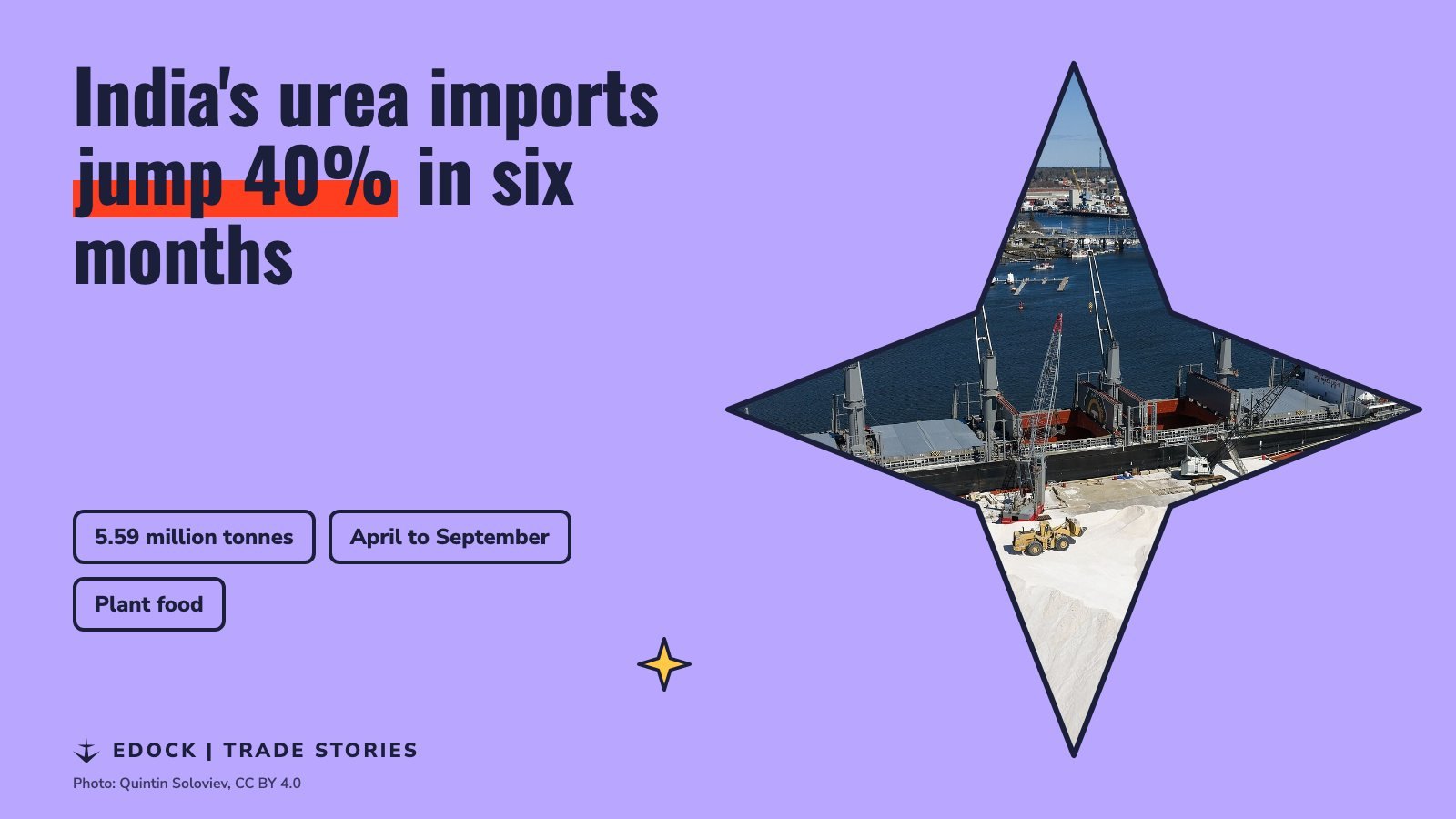
India's urea imports jump 40% in six months even as farmers buy less
India brought in 5.589 million tonnes of urea from April to September 2026. Here is what urea is, why India imports it and where it comes from.

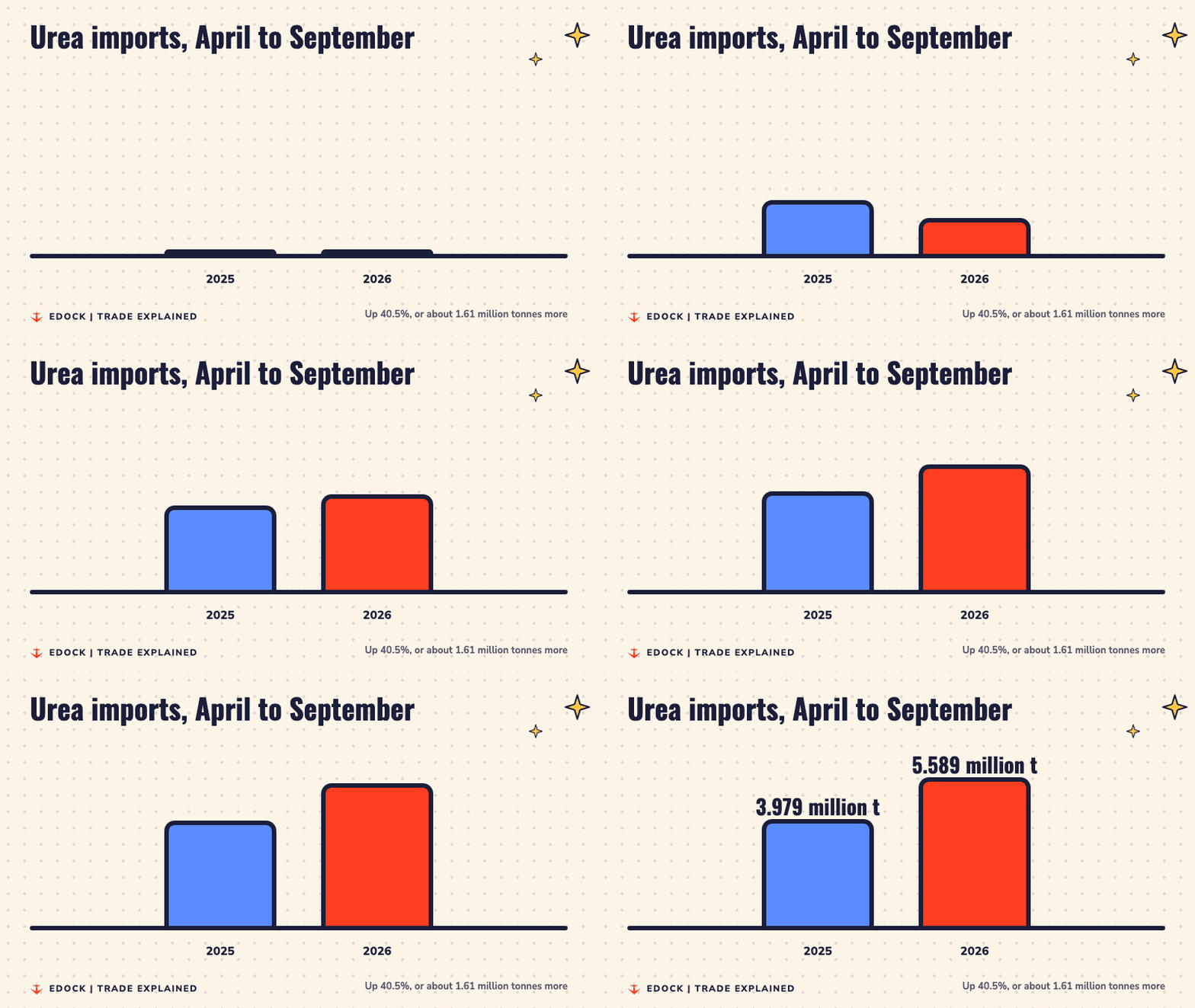
Picture this. Between April and September 2026, India brought in enough urea from other countries to fill about 124 million bags of 45 kg each. That is 5.589 million tonnes of urea, up 40.5% from 3.979 million tonnes in the same six months of 2025, as The Economic Times reported on 22 October 2026.
Here is the strange part. In the same six months, farmers in India bought less urea, not more. So why did the ships keep coming? Let us break it down, step by step.
First, what is urea?
Urea is a plant food. Farmers mix it into the soil so crops like rice and wheat can grow strong, a bit like how protein helps a cricketer build muscle. It is rich in nitrogen, which plants need to make green leaves. Urea carries 46% nitrogen, which makes it a cheap and strong source of this nutrient.
In India, urea is the most used fertiliser. A fertiliser is anything farmers add to soil to feed crops. Think of it as the tiffin box for plants.
The numbers, month by month
The data comes from the Fertiliser Association of India, an industry group, and was shared by industry executives, as per The Economic Times. Imports started slow. In April, India brought in only 583,000 tonnes, because the West Asia crisis had disrupted supply chains. A supply chain is the full journey of a product, from the factory to the shop, like the path a samosa takes from the kitchen to your plate.
Then imports picked up fast. They peaked in July at 1.534 million tonnes in a single month. By the end of September, the six month total had reached 5.589 million tonnes. That works out to more than 30,000 tonnes landing every day on average.
The puzzle: less buying, more importing
While imports went up, local sales of urea went down. Sales fell 4.1% to 18.52 million tonnes in the six months, as per the same report. Making urea at home also went up. Domestic urea production rose 4%.
So India made more, sold less, and still bought much more from abroad. The report does not give one clear reason for this. What it does say is why sales fell. The monsoon season ended with 13% less rain than normal. It was the weakest monsoon in more than a decade. With poor rain, many farmers chose not to spend on soil nutrients.
The report also notes that this rise came even though the government has been pushing to cut the use of chemical fertilisers.
Why does India import urea at all?
Think of a chai stall. If the stall owner cannot boil enough tea in the shop, the extra cups must come from outside. India is in the same spot with urea.
In the year to March 2026, India used 40 million tonnes of urea and imported about 10 million tonnes of it, as per the Financial Express. The country has 33 urea plants with a total capacity of 26.9 million tonnes a year. So home plants cannot make all the urea the country needs, and the gap is filled by imports.
There is another twist. Even the urea made in India mostly depends on imported feedstock, which is the raw material used to make it. For urea, a key raw material is natural gas, shipped in as LNG (gas cooled into a liquid so it fits on ships). So even local urea is tied to world markets.
Mint reports that India is the world's largest urea importer and the second largest user of fertilisers on the planet.
Where does the urea come from?
When the West Asia war disrupted shipping routes, India started buying from new places. In April to June 2026, India imported 2.5 million tonnes of urea. More than half of it, 52%, came from four countries that had sent nothing in the same quarter a year earlier, according to commerce ministry data reviewed by Mint:
- Egypt: 609,000 tonnes
- Algeria: 245,000 tonnes
- Nigeria: 244,000 tonnes
- Georgia: 211,000 tonnes
Add them up and you get 1,309,000 tonnes, which is about 52% of 2.5 million tonnes. The government has also been buying urea from Oman, Malaysia, Vietnam, Russia, Finland, Turkey and the Netherlands, among others. Spreading orders across many sellers is like a shop owner keeping three suppliers for milk, so one late van does not empty the fridge.
Prices fell, but farmers pay the same
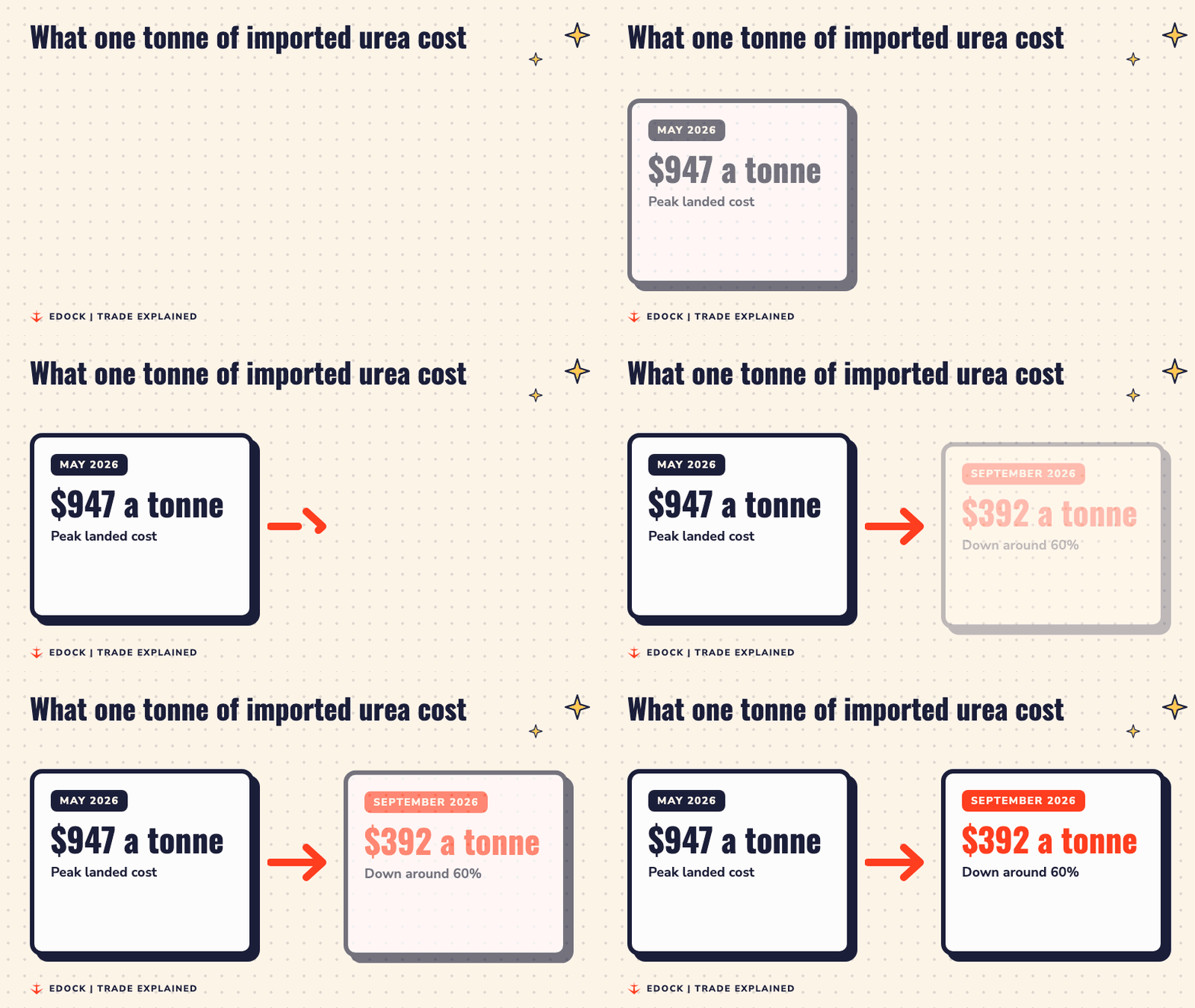
The landed cost of urea is the full price of one tonne once it reaches India, including the ship ride. It hit a peak of $947 a tonne in May 2026. By September, it had dropped about 60% to $392 a tonne, as per the Financial Express.
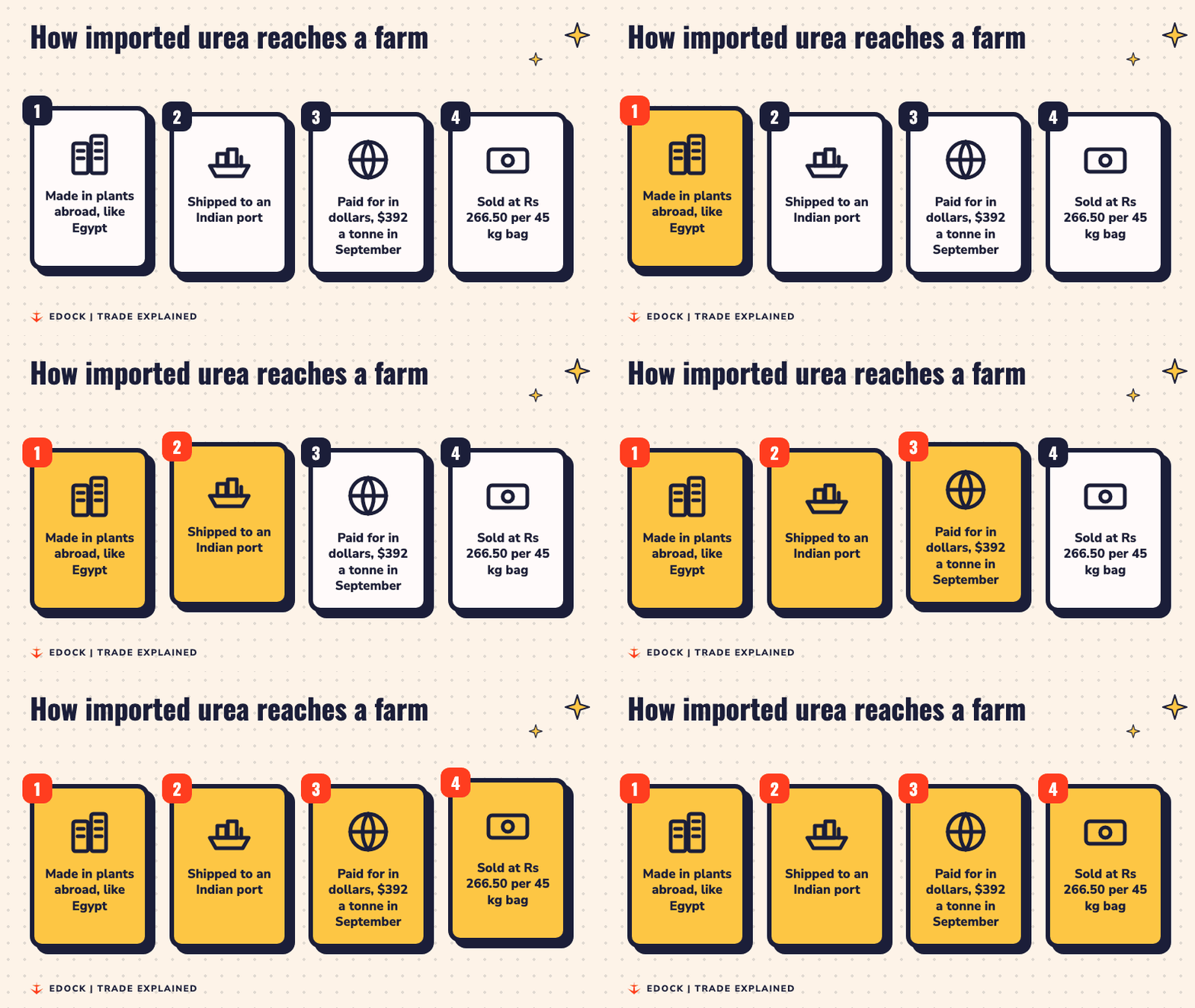
Indian farmers did not feel these ups and downs. Urea is still sold at Rs 266.50 per 45 kg bag, a price unchanged since March 2018. Global prices, in contrast, went above Rs 4,000 a bag. The government covers the difference.
That support costs a lot. In the first half of this financial year, the government spent over Rs 1.14 lakh crore on fertiliser support, and Rs 87,316 crore of that went to urea, made at home and bought from abroad.
Can India make more at home?
India has a plan to build more urea plants. The Union cabinet approved the National Investment Policy for Urea 2026, which aims for 10 million tonnes of extra yearly capacity, as per Mint.
Why does it matter for trade? Every 1 million tonnes made at home in place of imports can save about $500 million a year in foreign money, according to Satyam Shivam Sundaram of EY India, quoted by Mint. Foreign money, or forex, is the dollars a country needs to buy things from abroad. Less spent on urea means more left for other imports.
Two new plants are on the way. One in Odisha, using coal turned into gas, is expected to be ready in the year to March 2028. Another in Assam is expected to start by December 2030, as per Hindustan Urvarak and Rasayan, one of its promoters. Each can make 1.27 million tonnes a year.
What to watch next
For now, ships keep carrying urea to Indian ports. The big things to watch are how much rain the next season brings, how world prices move, and how fast new plants come up at home. Each of these decides how many tonnes India has to buy from abroad.
Sources
- The Economic Times: Urea imports surge 40% despite push to cut chemical fertilisers (22 October 2026)
- Mint: India increases urea imports from Egypt, Algeria, Nigeria and Georgia
- Financial Express: Import prices of urea down 60% since May peak
- Mint: India to meet 90% of its domestic urea demand by 2030
- Mint on YouTube: India turns to Egypt, Algeria, Nigeria as urea supply risks rise
- Cover photo: Bulk carrier unloading road salt in New Hampshire, by Quintin Soloviev, CC BY 4.0

You may republish this story under CC BY 4.0: credit Arshdeep Singh and link to this page.