India's private project pipeline hits Rs 99.7 lakh crore as IT services and power lead
Plans announced by private companies grew 39% in a year, a Union Bank of India report says, but a few giant projects and five states drive most of it.

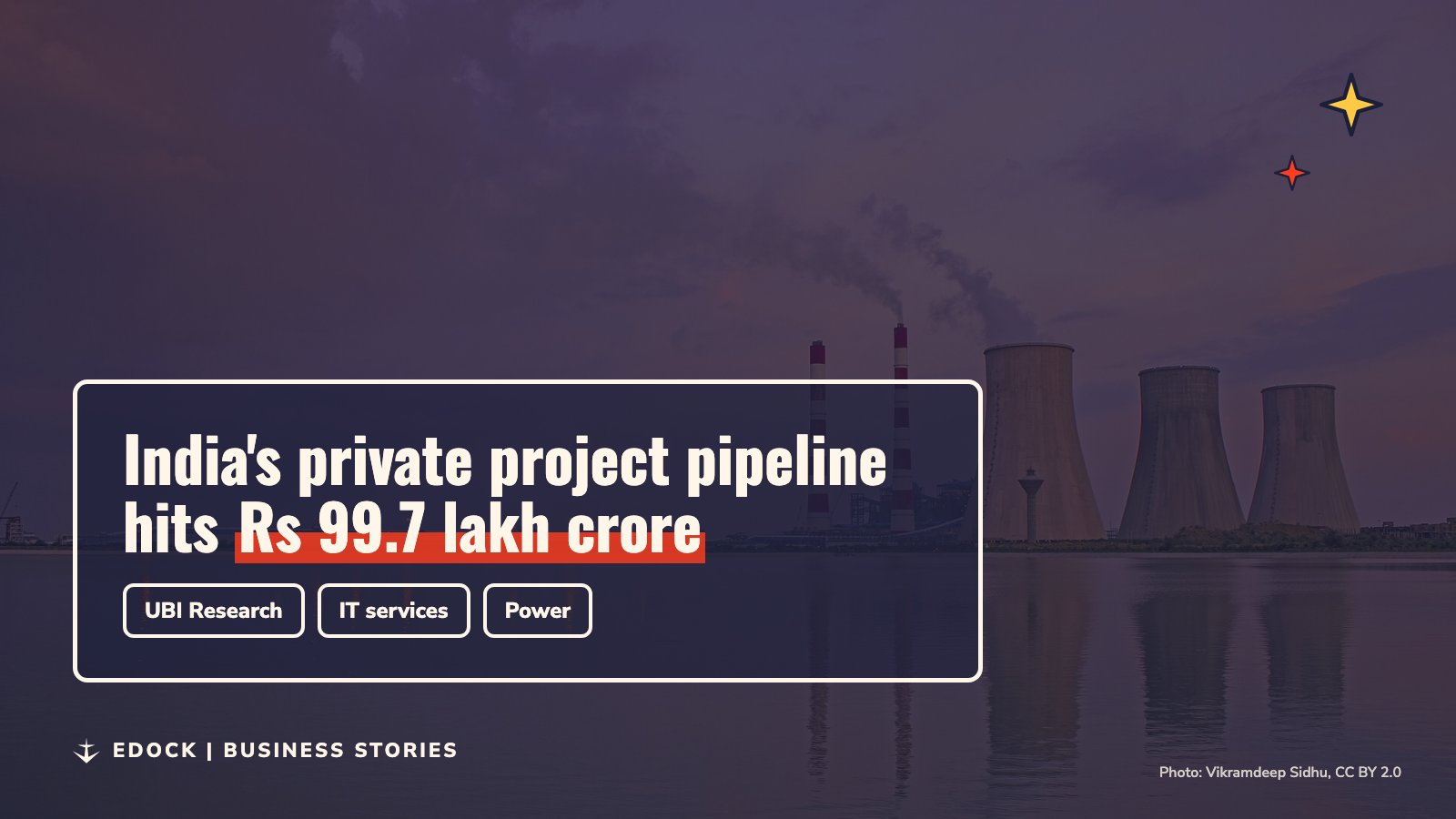
Picture a long street with empty plots. Shop owners have put up boards on many of them: "New bakery coming here", "Mobile store opening soon". Nothing is built yet, but the plans are real and public. Now imagine that street is all of India, and the boards add up to Rs 99.7 lakh crore. That is the size of India's private investment pipeline today.
On 22 October 2026, a report by Union Bank of India's research team (UBI Research) said that the pipeline of projects announced by private companies grew 39% in a year, to Rs 99.7 lakh crore in September 2026. IT services and power plants led the jump. Here is what all of this means, in plain words.
First, what is an "investment pipeline"?
When a company wants to grow, it spends money on big, long-lasting things: a new factory, a power plant, a huge office campus, a data centre full of computers. This kind of spending is called capital expenditure, or capex for short. Think of it like a samosa seller saving up to buy a bigger stove and a proper cart. The stove is not a daily cost like oil or potatoes. It is a one-time buy that helps the stall earn more for years.
The pipeline is the list of such projects that companies have announced and are planning or building, but have not finished. It is like those boards on the empty plots. They show what is coming, not what is already open.
This report counts only private projects, meaning those planned by companies, not by the government.
And how big is a "lakh crore"?
In the Indian way of counting, one lakh is 1,00,000 and one crore is 1,00,00,000. A lakh crore is a lakh times a crore: a 1 with twelve zeros after it. In the Western style, that is one trillion.
So Rs 99.7 lakh crore is almost Rs 100 lakh crore. Written out in full, it is nearly a 1 with fourteen zeros. If you try to count that in Rs 500 notes, you would never finish in your lifetime.
How fast has it grown?
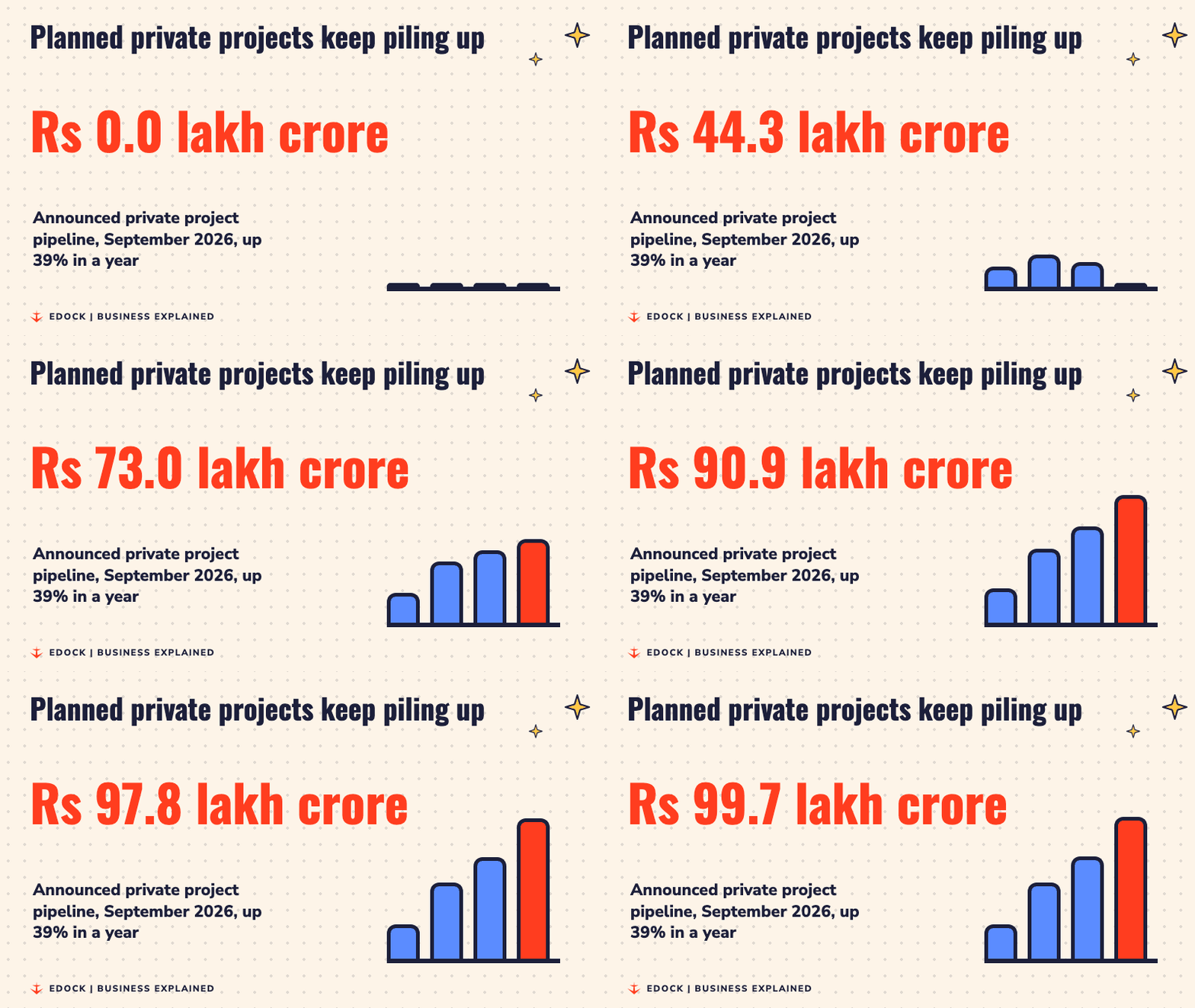
The growth is fast. A 39% rise in one year means the pipeline was about Rs 72 lakh crore a year earlier. According to the report, as covered by The Economic Times, the pipeline has grown 87% in two years and is now 4.1 times its size in March 2014.
Another way to see it: in just the past two years, announced project costs went up by Rs 46.4 lakh crore. In the eight years to March 2022, they went up by only Rs 7 lakh crore. That is like a cricket team that scored slowly for most of the match and then hit boundaries in the last few overs.
IT services: the surprise star
The biggest jump came from IT-enabled services, often called ITES. These are companies that use computers and the internet to do work for clients, like running data, software and back-office tasks. Think of the giant office campuses and data centres that come up in big cities.

In one year, the ITES pipeline grew from Rs 2.2 lakh crore to Rs 18.9 lakh crore, across 160 projects. That is more than eight times bigger. The ITES sector alone added Rs 16.8 lakh crore to the pipeline, and old-style power plants, which the report calls conventional power, added Rs 7.6 lakh crore. Together, these two made up 87% of the past year's increase.
The wider services group grew the fastest of all, by 347% in a year, to Rs 21.9 lakh crore.
Where is the money going?
Factories and electricity are still the two biggest buckets. BW Businessworld reports that manufacturing has Rs 41.3 lakh crore of planned projects and electricity has Rs 32.2 lakh crore. Together, that is Rs 73.5 lakh crore, or about 74% of the whole pipeline.
By state, Maharashtra is far ahead, with Rs 28.6 lakh crore of announced projects. That is around 29% of the total. Maharashtra, Andhra Pradesh, Telangana, Odisha and Uttar Pradesh together brought in 94% of the past year's increase.
So why is the report also worried?
Big numbers are exciting, but the report points out three things to watch.
1. A few giant projects, not many small ones. Over two years, the total cost of announced projects rose 87%, but the number of projects rose only 18%. So the growth comes mostly from very large projects. It is like a class average going up because two toppers scored huge marks, while most students stayed the same.
2. Only a few sectors and states. Most of the growth sits in two sectors and five states. The report says the recovery is not yet broad-based, which means it has not spread across the whole country and economy.
3. Power plants without enough power lines. Planned investment in making electricity stands at about Rs 32 lakh crore. But planned investment in transmission, the big wires and towers that carry power from plants to cities, is just Rs 0.17 lakh crore. That is less than one rupee of wires for every Rs 100 spent on making power. A plant without enough lines is like a huge kitchen with no road for delivery bikes.
What banks are told to do
All these projects need loans. The report says the pipeline offers big lending chances for banks, but asks them to check each project carefully before saying yes.
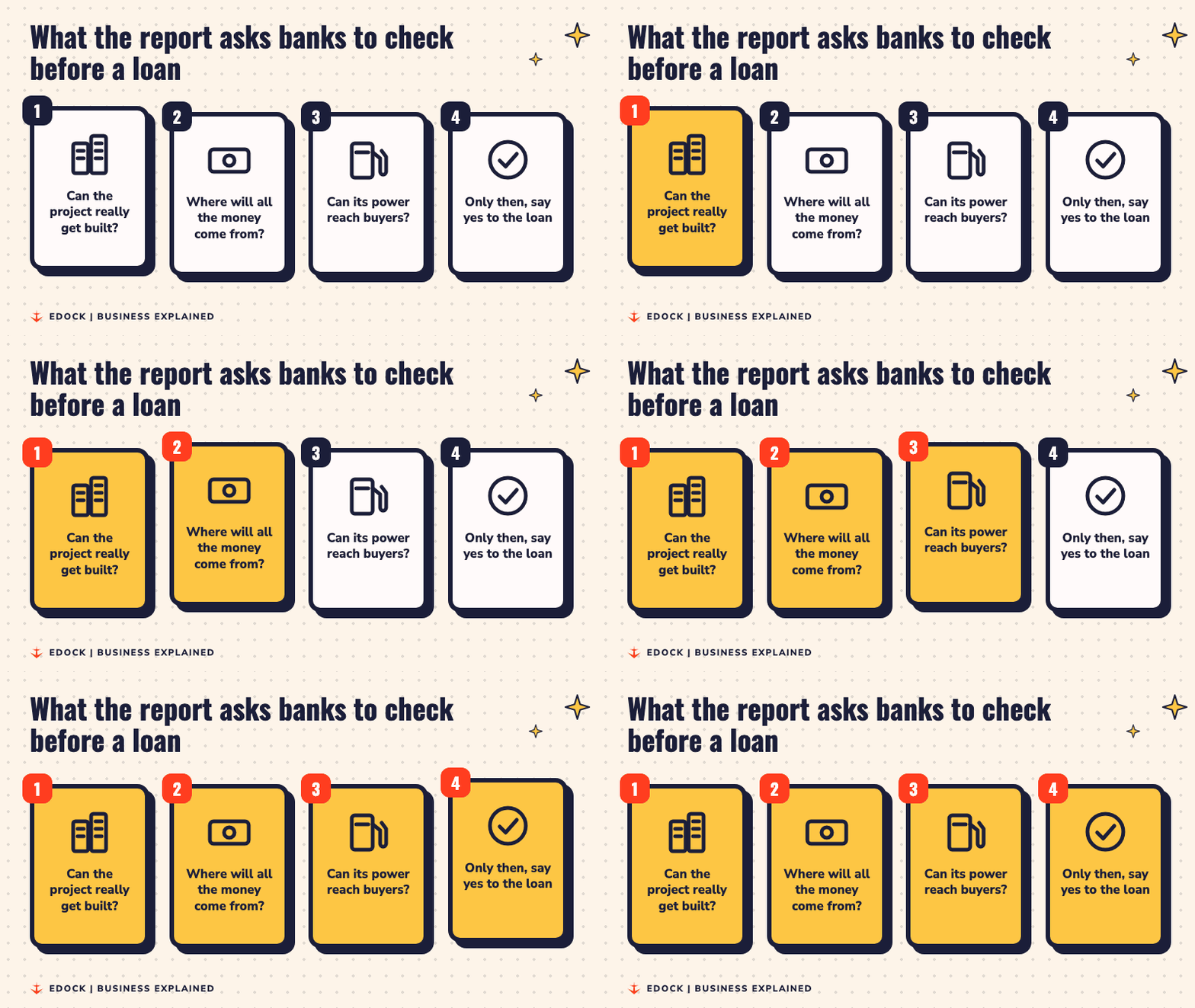
In simple words: can the company really finish the project, where will all the money come from, and for power plants, can the electricity actually reach buyers? Only then should the loan be approved.
Here is a short video that explains capex in very simple words.
Why should a student care?
Announced projects are plans, not finished buildings. But when they do get built, they need engineers, IT staff, electricians, drivers, cooks and many more people. They also need steel, cement, cables and computers, which helps other businesses grow.
The report itself says the capex cycle is in line with India's Viksit Bharat 2047 goals. The big question now is whether these boards on the empty plots turn into real, working buildings, and whether that happens in more states than five.
Sources
- BusinessLine: India's private investment pipeline hits Rs 99.7 lakh crore
- The Economic Times: Corporate capex pipeline rises 39%, led by IT services and power
- BW Businessworld: Private capex pipeline hits Rs 99.7 lakh crore
- Wikipedia: Indian numbering system
- Cover photo: Haryana Thermal Power Plant India 2012, by Vikramdeep Sidhu, CC BY 2.0 (flipped)

You may republish this story under CC BY 4.0: credit Pranav Sharma and link to this page.