India's occupied office space nears 1 billion sq ft as Pune crosses 100 million
Version 1 of 1 saved 21 Oct 2026, 1:53 pm IST · Chain line 113
As it was first published
India's occupied office space nears 1 billion sq ft as Pune crosses 100 million
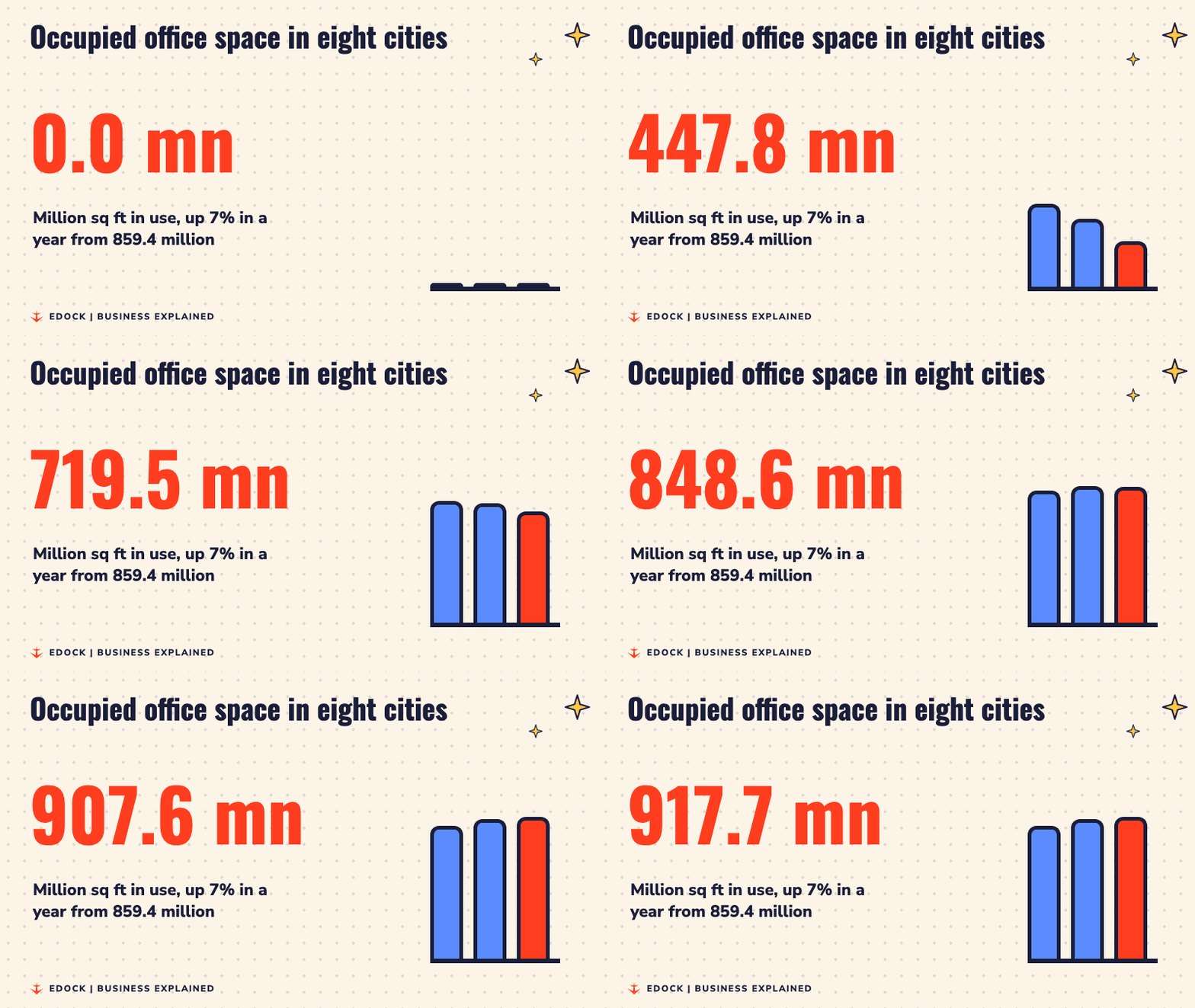
Knight Frank data shows 917.7 million sq ft in use across eight cities, up 7% in a year, with Bengaluru the biggest and Hyderabad the fastest.
Picture a room that is 10 feet long and 10 feet wide. That is 100 square feet, about the size of a small bedroom. Now picture more than nine million such rooms, all filled with desks, laptops and people at work. That is roughly how much office space is in use across eight big Indian cities, as of the end of September 2026.
On 21 October 2026, The Economic Times reported new numbers from the property consultant Knight Frank India. India's occupied office stock across eight markets rose 7% in a year to 917.7 million square feet. That is close to a big round number: 1 billion square feet.
First, what is "occupied office stock"?
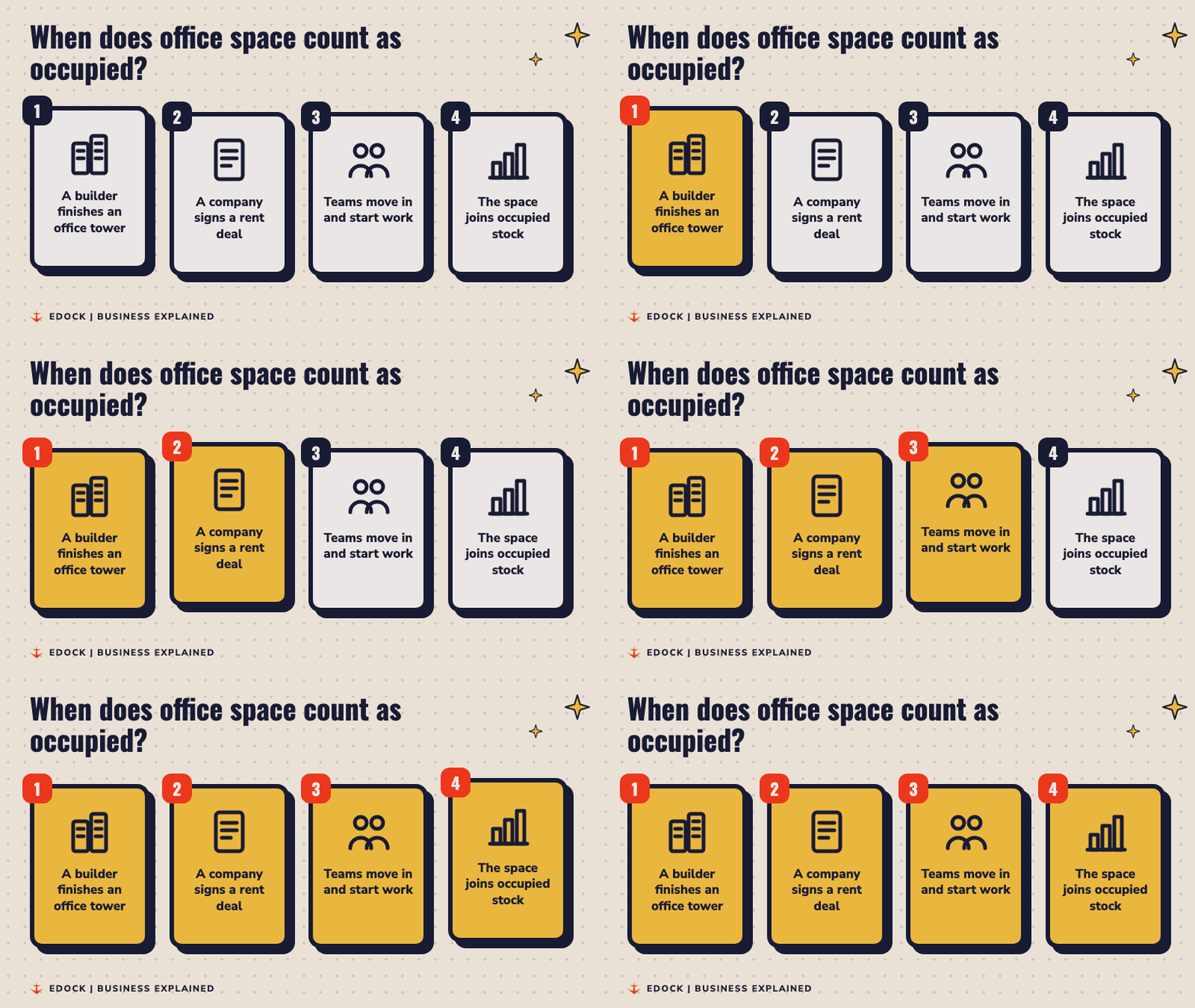
Think of all the office buildings in a city as a big cupboard. "Stock" simply means everything in the cupboard. "Occupied" means the part that someone is actually using.
So occupied office stock is the office space that companies have taken and are using. Empty floors waiting for a tenant do not count. A tenant is the company that pays rent to use the space, just like a family that rents a flat.
This is different from total office stock, which counts every finished office building, used or not. In an earlier Knight Frank report from August, total office stock in the country was put at 1.05 billion sq ft, while occupied stock was 901.1 million sq ft as of 30 June 2026.
How big is 917.7 million sq ft?
Let us use our 100 sq ft room again. 917.7 million sq ft divided by 100 gives about 9.18 million rooms. In Indian counting, that is nearly 92 lakh small rooms full of office desks.
The jump in one year is also huge. According to the Knight Frank figures reported by Deccan Herald, occupied stock grew by 58.3 million sq ft between 30 September 2025 and 30 September 2026. That is like adding about 5.8 lakh of our small rooms in just one year.
To reach 1 billion sq ft (which is 1,000 million), the eight cities need 82.3 million sq ft more. That gap is bigger than what was added in the last year, so the milestone has not been crossed yet.
Which cities are leading?
Here is the city list from the Knight Frank data in ET, as of 30 September 2026:
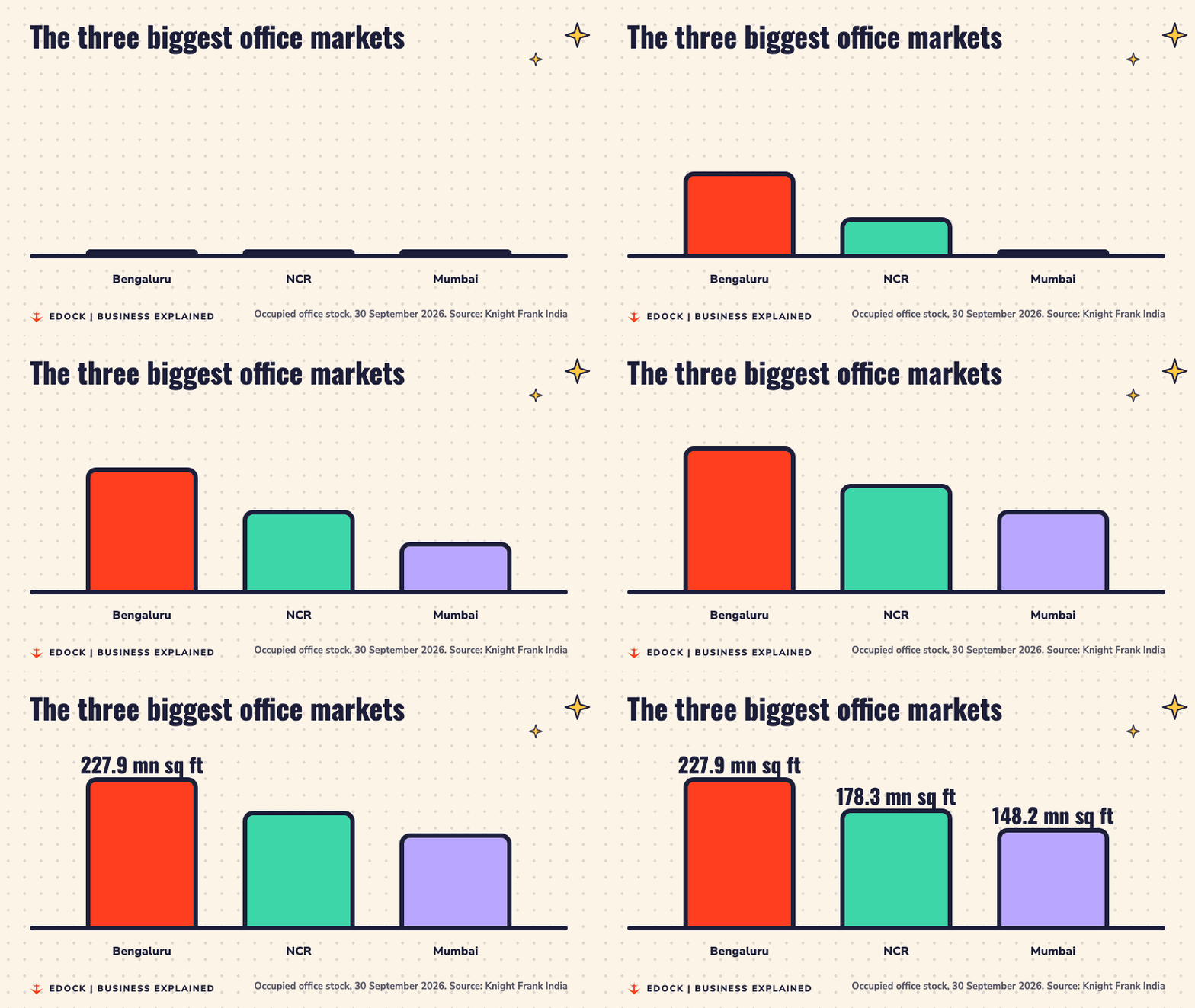
- Bengaluru: 227.9 million sq ft, up 9%
- NCR (Delhi and nearby cities): 178.3 million sq ft, up 2%
- Mumbai: 148.2 million sq ft, up 5%
- Hyderabad: 119.8 million sq ft, up 11%
- Pune: 101.0 million sq ft, up 9%
- Chennai: 89.5 million sq ft, up 5%
- Ahmedabad: 28.0 million sq ft, up 10%
- Kolkata: 25.0 million sq ft, up 9%
Add all eight and you get exactly 917.7 million sq ft. Bengaluru alone holds about one in every four square feet of it.
Think of it like a cricket points table. Bengaluru is the clear table topper. But Hyderabad is the team winning the most matches right now: it grew 11%, the fastest of all eight cities, as Deccan Herald reported. Among all eight, Ahmedabad also grew fast, at 10%.
Pune just crossed a big line
Pune's occupied office stock reached 101.0 million sq ft, up from 92.4 million sq ft a year earlier, says the same report. That makes Pune the fifth city in this list above 100 million sq ft.
Pune was already busy this year. In January to June 2026, the city saw office deals for 6.6 million sq ft, up 29% from a year before, its highest ever for a half year, according to Knight Frank's H1 2026 report as covered by Punekar News. The average rent there was Rs 81.7 per sq ft per month. So a 1,000 sq ft office would cost about Rs 81,700 a month in rent.
Who is renting all this space?
A big name in this story is the GCC, or Global Capability Centre. A GCC is an office that a foreign company opens in India to do its own work, like tech, finance or research, using Indian talent. Think of a global company setting up its own kitchen in India instead of ordering food from outside.
The ET report says BFSI firms are now the biggest GCC-type office users. BFSI stands for banking, financial services and insurance. Other services are also growing, which means demand is coming from more kinds of companies.
At the same time, demand from IT and ITES firms (software and tech support companies) has slowed, which the report links to changes in global technology. Demand from manufacturing companies has stayed fairly steady.
In Pune, Punekar News says leasing came from GCCs, flex operators and IT firms. A flex operator rents big office floors and then lets smaller companies or teams use desks for shorter periods, a bit like a shared hostel room versus renting a whole flat.
Why should a young Indian care?
Every square foot of occupied office space means a company is paying rent to sit, work and hire in that city. In the August report, a Knight Frank director, Viral Desai, said GCC growth and Indian companies' expansion keep office demand going, as IANS reported.
The city list also shows where offices are growing fastest. Bengaluru is still the biggest, Hyderabad is growing quickest, and Pune has joined the 100 million sq ft club.
For a student deciding which city to move to after college, these numbers are a simple map of where office life in India is getting bigger.
Sources
- India's occupied office stock approaches 1 billion sq ft milestone, The Economic Times, 21 October 2026
- Bengaluru continues to lead in India's occupied office stock, Deccan Herald
- India's occupied office space surpasses 900 million sq ft in Jan to June, IANS, 26 August 2026
- Pune records highest ever half year office leasing in H1 2026, Punekar News, 9 July 2026
- Cover photo: Hitec City buildings, by Syced, CC0
