India's LNG imports rise 9% as the US, Oman and Nigeria step in for Qatar
Version 1 of 1 saved 23 Oct 2026, 11:34 am IST · Chain line 168
As it was first published
India's LNG imports rise 9% as the US, Oman and Nigeria step in for Qatar
Qatar's share of India's gas cargoes fell from 45% to 3% in March to September 2026, and India is paying more on the spot market.
Picture India's gas shopping list a year ago. Out of every 100 tonnes of imported gas that came in on ships, about 45 came from one country: Qatar. Now that number has dropped to just 3. And yet India is bringing in more gas than before, not less.
On 22 October 2026, The Economic Times reported that India's LNG imports rose 9% from March to September 2026, compared with the same months a year earlier. The figures come from Kpler, a company that tracks ships and cargo around the world. The big change is who is selling. The US, Oman and Nigeria have stepped in where Qatar and the UAE used to be.
First, what is LNG?
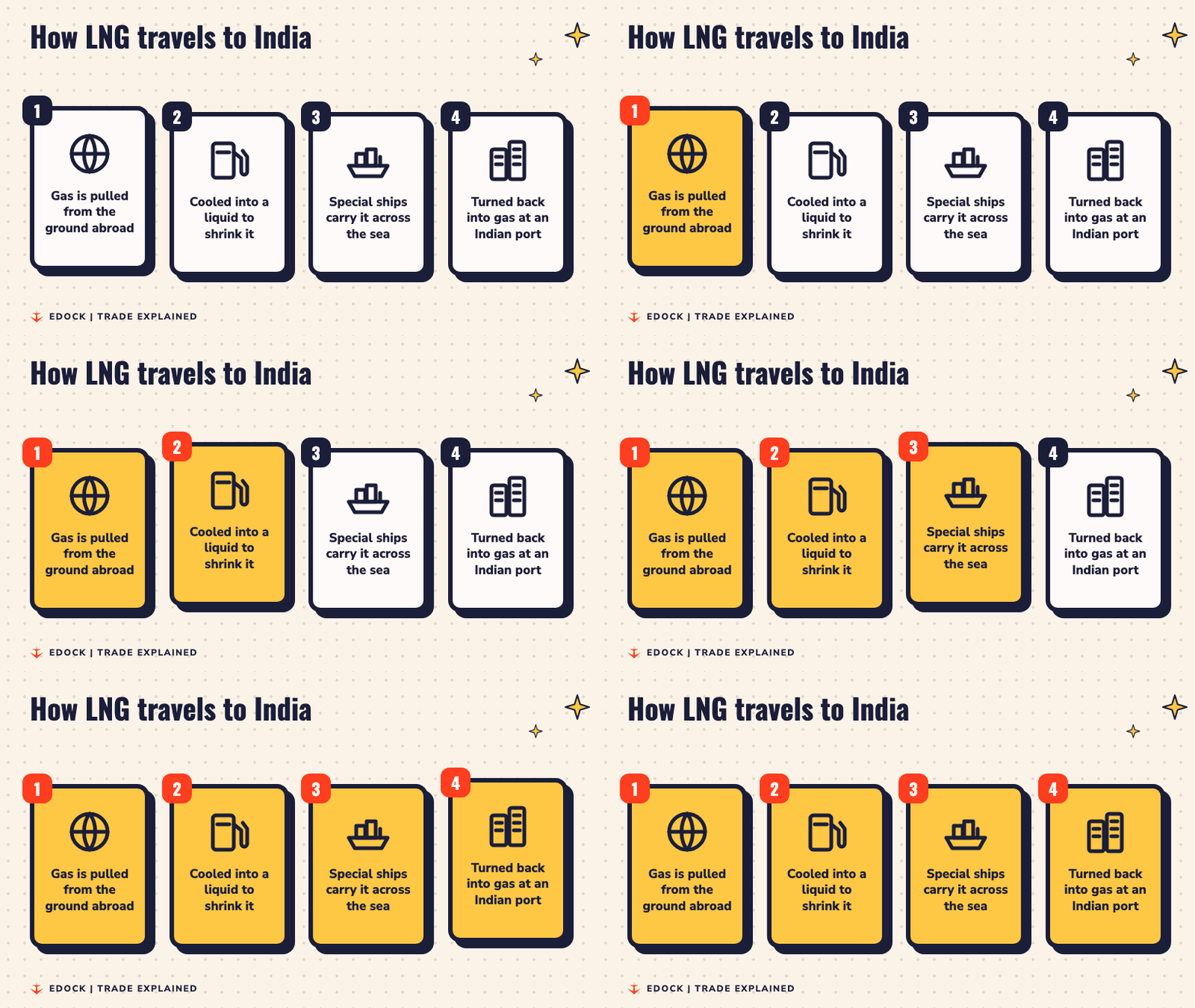
LNG stands for liquefied natural gas. Natural gas is the same kind of gas that cooks food in many city kitchens through a pipe. As a gas, it takes up a huge amount of space. So gas companies cool it until it turns into a liquid. In liquid form it fits into a tiny part of the space it needed before.
Think of a big fluffy sleeping bag that you squeeze into a small sack before a trip. The bag is the same, it just fits in your backpack now. LNG is gas squeezed into a sack so that it fits on a ship.
Special ships carry this liquid across the sea. When it reaches an Indian port, a terminal warms it up and turns it back into gas. Then pipelines send it to factories, power plants and homes.
Who is selling to India now?
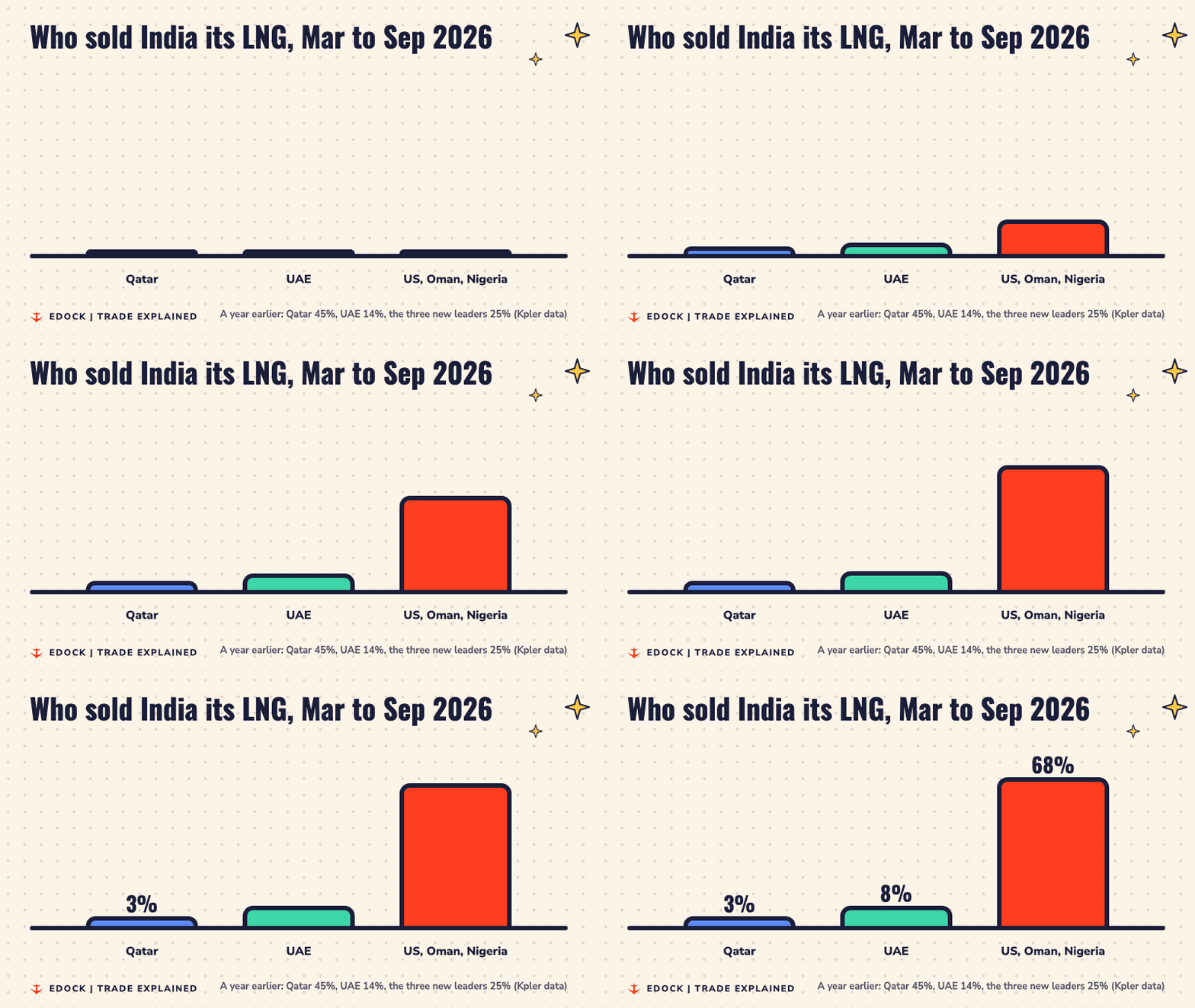
Here are the numbers from Kpler for March to September 2026. The US, Oman and Nigeria together supplied about 68% of India's LNG imports, up from 25% a year earlier. That is almost three times their old share.
At the same time, Qatar's share fell to 3% from 45%. The UAE's share went down to 8% from 14%. Before this year, these two were India's top two suppliers.
Look at it country by country, counting from 28 February. The US share rose to 26% from 11.5%. Oman went to 22% from 6%. Nigeria went to 19% from 7%. Angola, in Africa, grew a little, to 9.5% from 7.5%.
Why did the supplier list change?
It is a story about sea routes. Ships from Qatar and the UAE must pass through a narrow stretch of water called the Strait of Hormuz. According to the International Energy Agency, quoted by The Wire, about 93% of Qatar's LNG exports and 96% of the UAE's pass through this strait, and there is no other route to bring those cargoes out.
After the conflict in West Asia began, that route was disrupted. So Indian buyers had to find gas from places whose ships do not need that strait. Think of a school canteen whose usual samosa supplier cannot reach the gate because the road is blocked. The canteen does not shut. It calls other suppliers from other roads.
Long deals helped too. ET reports that GAIL's long-term purchase contracts with US suppliers pushed up America's share. GAIL is a large government-owned gas company in India.
The leader keeps changing month to month
The list is not fixed. Between May and July 2026, the US was India's biggest seller. It shipped 2.19 million tonnes out of a total of 7.08 million tonnes in those three months, Business Today reported. Qatar sent only 0.23 million tonnes in that time, down 91% from a year earlier.
Then September brought a new name at the top. Oman became India's biggest LNG supplier that month, with a 27% share of India's LNG imports, Telangana Today reported, using Kpler data. Nigeria came second with 351,000 tonnes. The US slipped to third. Qatar fell to sixth place, with about 94,000 tonnes.
India's total LNG imports in September were 2.17 million tonnes, down 14% from 2.5 million tonnes in August. So a single month can dip, even while the seven-month total is higher than last year.
Who uses all this gas?
The biggest user of LNG in India is the fertiliser industry, ET says. Fertiliser is the plant food that farmers spread on fields.
Fertiliser prices in India are set by the government, not by the market. So when gas costs more, farmers do not pay more. Instead, the government's bill for keeping fertiliser cheap goes up. ET says this is why the fertiliser sector is less sensitive to price rises.
The other big user is city gas. This means CNG for autos, taxis and cars, and piped gas for kitchens. ET reports that India's gas use has stayed steady because more people are using CNG vehicles, and more factories are switching to gas. In June, city gas used about 58 million standard cubic metres of gas a day, and fertiliser about 55, according to the Equirus report quoted by Business Today.
The catch: India is paying more
There are two ways to buy LNG. The first is a long-term contract. It is like a monthly deal with your milkman: fixed amount, price set by a formula, for years. The second is the spot market. It is like walking into the vegetable market and paying whatever today's price is.
India now buys more than a third of its LNG from the spot market, industry executives told ET. And spot prices have jumped.
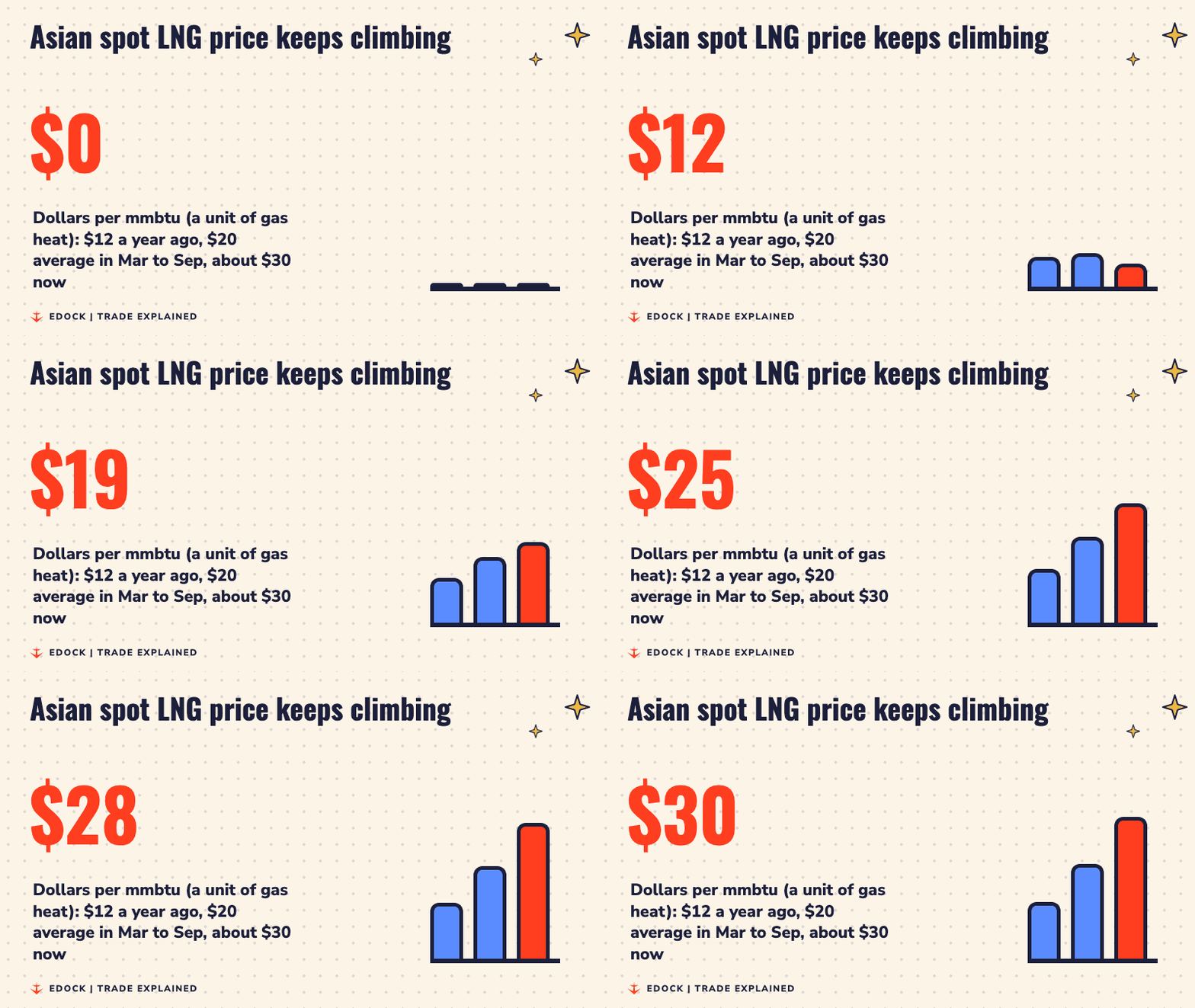
The main Asian spot price, called the Japan Korea Marker, is now around $30 per mmbtu. An mmbtu is simply a unit that measures how much heat the gas gives, a bit like counting milk in litres. This price averaged $20 from March to September, up from $12 a year earlier.
Gas bought under long-term deals linked to crude oil would have cost around $14 per mmbtu, ET says. So spot gas today costs more than double that.
What this means for trade
The lesson is simple. A country that buys from one main seller can get stuck when that seller's road is blocked. India managed to keep gas flowing by spreading its orders across many sellers. Kpler analyst Sonal Ranjan told ET the shift shows India can find other supply, but that it has meant more exposure to flexible markets and higher prices.
For a student of trade, this is a live lesson in supply chains. Where a product comes from, which sea route it takes, and what kind of deal stands behind it all decide how much a country finally pays.
Sources
- The Economic Times: LNG imports up 9% in Mar to Sep; US, Oman and Nigeria bridge supply gap (22 October 2026)
- Telangana Today: India's LNG imports fall 14 per cent, Oman tops supplier list in September (5 October 2026)
- Business Today: US becomes India's largest LNG supplier during May to July (7 August 2026)
- The Wire: US share in India's LNG imports rises as Qatar's falls
- Cover photo: LNG Carrier Fuji LNG, by Ken Hodge, CC BY 2.0
